Roadside Assistance Coverage in Arizona (2026): Towing, Jump Starts, Lockouts, and Desert-Ready Protection
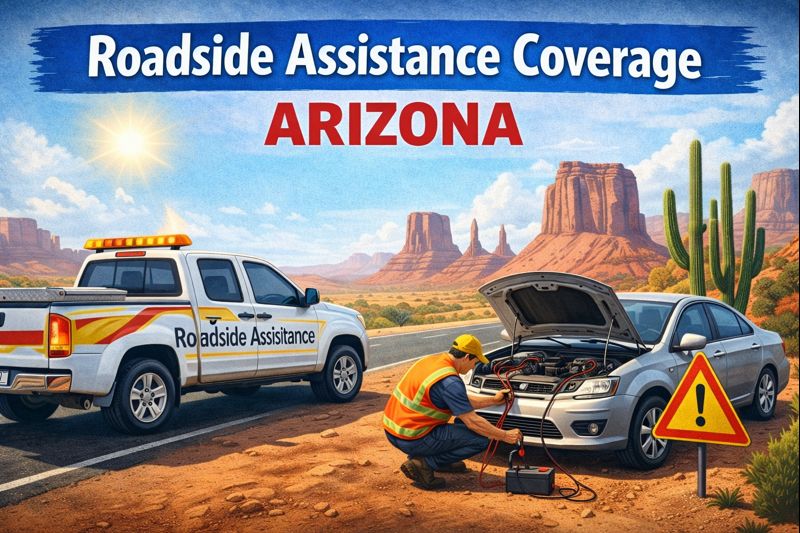
Arizona driving is hard on vehicles. Heat, long stretches between exits, and sudden monsoon hazards make a simple breakdown feel like a big event—unless you’re covered.
Roadside assistance coverage is one of the simplest upgrades you can add to an auto policy because it solves the “right now” problem: you’re stranded, you need help, and you need it fast. In Arizona, that “right now” moment is different than it is in cooler states. A dead battery in summer heat, a blowout on a highway shoulder, or a lockout at a trailhead can turn into a safety issue—not just an inconvenience. The right roadside plan protects your time, your budget, and your peace of mind.
This page explains what roadside assistance typically includes (towing, jump starts, flat tire help, fuel delivery, lockouts, and winching), what it usually does not include, and how to choose the best setup for Arizona driving. We also show a clean comparison: adding roadside through your auto policy vs a membership plan vs pay-per-use services. The goal is simple: choose the option that matches how you drive, where you drive, and how much risk you want to carry.
Quick answer: what roadside assistance coverage is (and why it matters in Arizona)
Roadside assistance is an add-on that pays for on-the-spot help when your car becomes disabled. In 2026, most plans center around a familiar set of services: towing, jump starts, flat tire service, lockouts, emergency fuel delivery, and winching. Arizona drivers benefit more than most because heat and distance increase the odds that a small issue becomes a long delay.
- Best fit: commuters, older vehicles, long-distance drivers, and anyone who drives in heat or remote stretches.
- Big win: predictable help and predictable costs when you’re stuck.
- Key decision: towing distance and how many service calls you get per year (or per breakdown).
If you only optimize one thing: choose towing coverage that matches how far you realistically might need to be moved to a safe repair location.
What roadside assistance typically covers
Roadside assistance is designed for quick help—not major repairs. Think “get me moving” or “get me to a shop.” The table below shows the core services and what to confirm so you know exactly what will happen during a call.
| Service | What it helps with | Common Arizona scenario | What to confirm |
|---|---|---|---|
| Towing | Tows your vehicle to a repair facility or safe destination (subject to limits) | Overheat or mechanical failure far from a shop | Miles covered, per-disablement rules, and destination flexibility |
| Battery jump start | Jump start when the vehicle won’t crank | Heat-related battery failure in summer | Whether battery testing/replacement is included or separate |
| Flat tire service | Change a tire using your spare or assist with a safe move | Blowout from road debris or heat expansion | Requirement for a usable spare and safe access |
| Lockout service | Assistance getting back into a locked vehicle | Keys locked inside at a gas station or trailhead | Coverage limits and any excluded vehicle types |
| Emergency fuel delivery | Delivery when you run out of fuel (terms vary) | Long stretch between exits or misjudged range | Whether you pay for fuel itself and gallon limits |
| Winching / stuck vehicle | Pull-out assistance when stuck in mud/sand (limits apply) | Monsoon washouts, soft shoulders, light off-road access | Distance from a paved road and eligibility rules |
Why Arizona drivers feel the difference
- Heat: batteries and cooling systems are tested harder.
- Distance: towing limits matter more when you’re far from a shop.
- Safety: being stuck on a shoulder in extreme temperatures is a different risk.
The #1 surprise: limits and “what counts”
- Some plans cap towing by miles or by dollar amount.
- Some plans cap service calls per year.
- Some plans cover the service call but not consumables (like fuel).
What roadside assistance usually does not cover
Roadside assistance is not a maintenance plan and not a full repair warranty. It’s designed for emergency help, and most plans have boundaries. Knowing those boundaries is how you avoid frustration during a call.
- Major repairs: parts and labor at the shop are separate from roadside service.
- New tires or a missing spare: flat tire service usually assumes you have a usable spare.
- Fuel cost: many plans deliver fuel but you pay for the fuel itself.
- Unsafe conditions: providers may refuse service if conditions are unsafe or access is restricted.
- Off-road recovery: deep off-road recovery is often excluded or limited to light winching.
The purpose is getting you to safety and to a repair path—fast. That’s the win.
Compare roadside assistance options: policy add-on vs membership vs pay-per-use
Arizona drivers typically choose one of three setups. The “best” option depends on how often you drive, how far you travel, and whether you want coverage to follow the vehicle or the person. Use this comparison table to choose the most efficient solution.
| Option | Best for | Strengths | Watch-outs |
|---|---|---|---|
| Add-on through auto insurance | Drivers who want simple bundling and one policy solution | Easy to add; often cost-effective; one carrier relationship | Limits vary by carrier; may be tied to the covered vehicle |
| Membership roadside plan | Households with multiple vehicles or frequent drivers | Often follows the member; broad usage scenarios | Cost and towing tiers vary; membership rules apply |
| Pay-per-use towing/roadside | Low-mileage drivers who rarely need help | No ongoing fees; pay only when needed | Unpredictable cost during emergencies; availability varies by location/time |
| Credit card / bank perk | Drivers who already have a travel/benefit card | May offer limited assistance | Benefit rules, reimbursement steps, and limits can be restrictive |
If you want the cleanest “one call” outcome, make sure you understand tow mileage, winching rules, and service-call limits before you decide.
Towing mileage and winching limits: the Arizona-specific decision that matters most
Arizona has areas where “the nearest repair shop” is not close. That’s why towing limits are the single most important feature to review. The plan that looks cheapest can become expensive if it only covers a short tow and you’re stranded far from a shop.
| Feature | What it means | When it matters most | Best practice |
|---|---|---|---|
| Towing distance | Miles covered per tow event | Highways, rural routes, long commutes | Choose a limit that matches your most common “far drive” |
| Service call limits | How many service events per year (or policy term) | Older vehicles, multiple drivers | Plan for your household reality—don’t guess low |
| Winching rules | Pull-out help when stuck (often limited) | Monsoon storms, sandy shoulders, light off-road access | Confirm distance-from-road limits and “light-duty” definitions |
| Destination flexibility | Whether you can choose the tow destination | Preferred repair shops, dealer service | Confirm you can tow to a shop you trust when possible |
Safety first on Arizona roads
If you’re stranded on a freeway shoulder or in a dangerous traffic area, prioritize safety and call for emergency help. Roadside assistance is great for breakdowns, but immediate hazards should be treated as emergencies.
Heat changes the timeline
In extreme heat, the “wait and see” approach is the wrong move. Keep water in the car, move to a safer location when possible, and request help early—especially with kids or pets.
Arizona-ready roadside checklist: what to keep in your vehicle
Roadside coverage is your backstop. This checklist is your “reduce risk” layer—especially in summer heat and long drives. It’s not about overpacking; it’s about having the basics that keep a breakdown from becoming a safety problem.
| Item | Why it matters | Arizona example | Fast tip |
|---|---|---|---|
| Water | Reduces heat-risk while you wait | Summer breakdowns can mean long waits | Keep water year-round; rotate regularly |
| Phone charger / power bank | Requesting help requires battery life | Navigation and calling drains phones fast | Keep a dedicated car cable |
| Reflective triangles / flares | Improves visibility for approaching traffic | Night breakdowns on unlit roads | Visibility is safety—use them |
| Spare tire tools | Flat tire service often assumes a usable spare | Blowout on heat-stressed tires | Check spare pressure periodically |
| Basic first aid | Minor support while waiting | Scrapes, heat discomfort, small incidents | Keep it simple and accessible |
Your coverage pays for help. Your checklist keeps you safe while help arrives.
Quote checklist: what we need to set up roadside coverage correctly
Roadside assistance is fast to add when your policy details are clean. Use this table to prepare the information that makes quoting and binding quick.
| Item | Examples | Why it matters | Fast tip |
|---|---|---|---|
| Vehicles | VINs, year/make/model, usage | Ensures coverage attaches to the right cars | VINs first = fastest quoting |
| Drivers | Household driver list | Helps keep policy accurate and consistent | List all regular drivers |
| Driving pattern | Commute distance, frequent long trips | Determines the right tow limit strategy | Tell us your “furthest normal drive” |
| Current coverage | Declarations page (if you have it) | Lets us compare options apples-to-apples | Upload or copy key lines |
| Priority | Lowest cost vs higher tow miles | Sets the plan choice instantly | Pick one goal so we optimize correctly |
Roadside assistance coverage near me in Arizona: cities we commonly help
Arizona driving conditions vary by city and route type. Here are common areas we help with policy setup and roadside-ready coverage choices—especially towing and heat-related breakdown planning.
| Area | Common roadside triggers | Best coverage focus | Fast win |
|---|---|---|---|
| Phoenix / West Valley | Heat-related battery issues, tire blowouts, lockouts | Jump start + tow limits + lockout service | Keep a charger and water in the vehicle |
| Scottsdale / East Valley | Flat tires, parking lot incidents, long commute routes | Tow distance + tire service + rental add-ons | Confirm spare tire readiness |
| Tucson | Heat plus longer drives to service locations | Tow mileage strategy | Optimize tow distance for your normal routes |
| Northern AZ (Flagstaff/Prescott) | Weather shifts, longer distances between services | Tow miles + safety readiness | Visibility gear and charger matter |
| Western routes (Lake Havasu/Kingman) | Long stretches, fuel misjudgment, heat breakdowns | Fuel delivery + tow distance | Don’t run the tank low on long runs |
| Southern AZ (Yuma/Sierra Vista) | Extreme heat exposure and vehicle strain | Heat-ready checklist + towing | Request help early if symptoms show |
Roadside assistance coverage Arizona FAQs
Does roadside assistance cover towing and flat tires?
Most roadside plans include towing (subject to limits) and flat tire service (often requiring a usable spare). Always confirm tow miles and any service call limits.
How many miles does roadside towing usually cover?
Towing limits vary by plan and can be set by miles, dollar caps, or tier levels. In Arizona, choose a towing limit that matches your longest normal drives and your route reality.
What is winching, and is it covered?
Winching is pull-out assistance when a vehicle is stuck (mud, sand, soft shoulder). Many plans limit this to light-duty recovery and may set restrictions on distance from a paved road.
Does roadside assistance replace a dead battery?
Roadside assistance often covers jump starts. Battery replacement and the cost of the battery may be separate depending on the program. Confirm what the plan includes before you rely on it.
What should I do if I’m stranded on a highway shoulder?
Prioritize safety first. If you’re in a dangerous traffic situation, call for emergency help. Once you’re safe, request roadside assistance for towing or on-the-spot services.
Related topics
Independent agency: Blake Insurance Group LLC is an independent insurance agency and is not affiliated with any single insurance company.
Licensing: Licensed insurance producer (NPN 16944666).
Important: Roadside services, limits, response availability, exclusions, and pricing vary by carrier and can change. This page is general information, not legal advice.
Safety note: If you’re in immediate danger on a roadway, contact emergency services first. Roadside assistance is for breakdown support, not emergency response.
Trademarks: All product and company names are trademarks™ or registered® trademarks of their respective holders. Use of them does not imply affiliation or endorsement.





Reviews are loaded from Google when you click “View reviews.”