

Geico Drive Easy review
**Geico Drive Easy: An Independent Review by Blake Insurance Group**
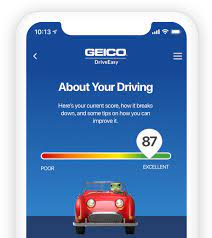 As an independent insurance agent at Blake Insurance Group, I’ve analyzed and compared numerous insurance products and services. One that has caught my attention recently is the Geico Drive Easy program.
Here’s my take: Geico Drive Easy is a telematics program that monitors driving habits to offer discounts to safe drivers. The program uses a mobile app to track behaviors like speeding, hard braking, and phone usage while driving.
The Geico Drive Easy program offers discounts to safe drivers based on their driving habits. When you enroll in the program, you can receive an initial discount of 15% on your premium. As you continue demonstrating safe driving habits, you may be eligible for additional savings of up to 25%.
The program uses the Geico Mobile app to monitor driving behaviors such as speeding, hard braking, and phone usage. The app automatically records trip data as you drive as long as you remain logged in. It’s important to note that while most customers can save based on their safe driving habits, riskier drivers may see a higher rate depending on their state.
In this article, I will explore the key features and benefits of Geico DriveEasy and how it can be a valuable tool for drivers in states like Arizona, Alabama, Florida, Georgia, New Mexico, New York, North Carolina, Oklahoma, Ohio, Texas, and Virginia. Whether you’re a seasoned driver or new to the road, understanding how DriveEasy works can help you make informed decisions about your car insurance and potentially save money while promoting safer driving habits.
START FREE ONLINE QUOTE NOW
At Blake Insurance Group, we respect your privacy. Your personal information is used solely for quote purposes and is not shared or sold
Share This




Blake Insurance Group
Phone: (888) 387-3687
Email: info@blakeinsurancegroup.com
Hours: Mon-Fri 9:00 am to 5:00 pm
Sat-Sun: Closed
Understanding How DriveEasy Works
Geico DriveEasy uses the technology in your smartphone to collect real-time driving data. Once you download the Geico Mobile app and log in, it automatically records trip data as you drive. The app can distinguish between drivers and passengers even when you’re using public transportation. The data collected includes:
– **Speed**: Monitoring how often you exceed speed limits.
– **Braking**: Detecting hard braking events.
– **Phone Usage**: Tracking phone interactions while driving.
– **Cornering**: Assessing the speed at which you take turns.
– **Acceleration**: Evaluating rapid acceleration events.
– **Time of Day**: Considering the times you drive, night driving is often seen as riskier.
– **Distance Traveled**: Measuring the total miles driven.
– **Weather Conditions**: Factoring in adverse weather conditions during your trips.
Benefits and Drawbacks of Geico DriveEasy
Benefits
**Potential Savings**: Geico DriveEasy offers discounts on insurance premiums for safe driving habits. The maximum discount can be up to 25%, although some sources suggest it is typically around 10%.
**Encourages Safe Driving**: The program promotes safer driving by providing feedback on driving habits like speed, braking, and phone usage. This can help drivers improve their driving skills and reduce the likelihood of accidents.
**Automatic Trip Tracking**: The app automatically tracks trips without requiring the driver to start it, making it convenient to use manually.
**Crash Assist Feature**: DriveEasy includes a crash assist feature that detects hard braking and can help file a claim or contact emergency services if an accident occurs.
**User-Friendly Interface**: The app is designed to be easy to use, with features like a dashboard that displays driving scores, trip details, and improvement tips.
Drawbacks
**Privacy Concerns**: Continuous driving behavior tracking may be seen as intrusive. The app collects detailed data on driving habits, which could concern those who are wary of sharing personal information.
**Potential Rate Increases**: While the program offers discounts for safe driving, it can also lead to higher premiums if risky driving behaviors are detected. This makes it a potential risk for drivers who may not consistently exhibit safe driving habits.
**Penalties for Phone Usage**: The app penalizes any handheld phone use while driving, which can negatively impact the driving score even if the phone is used for GPS or by a passenger.
**Battery and Data Usage**: The app requires location services to be always on, which can drain the phone’s battery and use data. Although data usage is generally low, it can still be of concern to some users.
**Accuracy Issues**: There can be inaccuracies in distinguishing between drivers and passengers, which might require manual corrections in the app. This can be inconvenient and affect the driving score if not addressed promptly.
| Benefits | Drawbacks |
|---|---|
| Potential Savings: Safe drivers can earn discounts on their insurance premiums, potentially up to 25%. | Potential Rate Increases: Risky driving behaviors can lead to higher premiums, which may concern some drivers. |
| Crash Assist Feature: The app includes a crash assist feature that detects hard braking and offers assistance in case of an accident. | Accuracy Issues: The app may inaccurately distinguish drivers and passengers, requiring manual corrections. |
| Encourages Safe Driving: Provides feedback and tips to help drivers improve their habits and drive more safely. | Penalties for Phone Usage: Any handheld phone use while driving is penalized, even if a passenger uses the phone. |
| User-Friendly Interface: The app is designed to be easy to use, with features like a dashboard displaying driving scores and trip details. | Privacy Concerns: Some users may see continuous tracking of driving behavior as intrusive. |
| Automatic Trip Tracking: The app automatically tracks trips without manual input, making it convenient. | Battery and Data Usage: The app requires location services to be always on, which can drain the phone's battery and use data. |
How to Enroll in Geico DriveEasy
To enroll in Geico DriveEasy, follow these steps:
**Download the Geico Mobile App**:
– Ensure you have a compatible smartphone (iOS 10 or higher or Android Marshmallow 6.0 or higher) with a data plan.
– Download the Geico Mobile app from the App Store or Google Play Store.
**Set Up the App**:
– Open the Geico Mobile app and log in with your Geico account credentials.
– Enter your mobile phone number and input the confirmation code sent to you via text message.
**Enable Permissions**:
– Set your privacy and location permissions to allow the app to track your driving behavior.
– Ensure that location services are always on and that the app has permission to sense motion.
**Invite Other Drivers**:
– Provide mobile phone numbers for all drivers listed on your policy.
– The app will send a text message with a link for each driver to download the app and log trips.
**Start Driving**:
– Once set up, the app will automatically start logging your trips and tracking your driving behavior.
– You do not need to open the app each time you drive; stay logged in, and the app will record your driving data automatically.
**Monitor Your Driving Score**:
– After each trip, check the Geico Mobile app for feedback on your driving habits and current driving score.
– Use the tips to improve your driving behavior and potentially increase your discount.
Geico DriveEasy Reviews
Geico DriveEasy offers significant benefits for safe drivers, including potential savings and features that encourage safer driving habits. However, it also comes with drawbacks such as privacy concerns, potential rate increases, and penalties for phone usage. Customer satisfaction is generally positive, but the program may not suit everyone, particularly those concerned about privacy or who frequently use their phone while driving.
GEICO's DriveEasy Pro Program-Commercial Auto Insurance
GEICO’s DriveEasy Pro is a performance-based commercial auto insurance program designed for small businesses. It rewards safe driving and promotes fleet safety by providing fleet management tools and insights into driving habits.
How it Works
To participate in the DriveEasy Pro program, you must download the GEICO DriveEasy Pro app and sign up using your phone number. After enrollment, GEICO will ship a DriveEasy Pro tag that you attach to your vehicle’s windshield. The app identifies the driver, and the tag identifies the business vehicle—the app and tag monitor driver performance based on factors such as braking, speeding, and cornering.
The DriveEasy Pro app provides personalized driver scores based on driving performance. These scores can be used to coach drivers and improve their driving habits. The app also allows you to review trips on an interactive map, showing details like hard braking, acceleration, phone handling, distance driven, and time of day.
Benefits
The primary benefit of the DriveEasy Pro program is the potential for savings on your insurance premium. The better you and your employees drive, the better your driver scores will be, leading to potential savings at renewal. While the exact discount varies, safe driving habits could lead to significant savings on your insurance bill.
In addition to potential savings, the DriveEasy Pro program offers free fleet management tools. These tools can help you track your business vehicles, monitor and coach your drivers, provide insights into trip routes, and offer real-time vehicle locations. These features can help you run your business more efficiently and safely.
Promoting Fleet Safety
The DriveEasy Pro program promotes fleet safety by providing insights into driving habits and performance. The app provides feedback and tips on improving driving habits, which can lead to safer driving behaviors. This reduces the risk of accidents and can lead to lower insurance premiums.
Comparison of Geico DriveEasy with Other Telematics Programs
Telematics-based insurance programs are becoming increasingly popular as they offer personalized insurance rates based on driving behavior. Here is a comparison of Geico DriveEasy with other notable telematics programs:
Geico DriveEasy
– **Discount Potential**: Up to 25%.
– **Metrics Monitored**: Speed, braking, phone usage, cornering, smoothness, road type, distance driven, time of day, and weather conditions.
– **Device**: Mobile app only.
– **Availability**: 33 states and Washington, D.C.
– **Special Features**: Crash assist feature, automatic trip tracking, and driving feedback.
Progressive Snapshot
– **Discount Potential**: Average savings of $156 per year.
– **Metrics Monitored**: Braking, acceleration, late-night driving, time on the road, and phone use.
– **Device**: Mobile app and OBD-II device.
– **Availability**: Nationwide.
– **Special Features**: Snapshot does not raise rates for bad driving habits in some states.
State Farm Drive Safe & Save
– **Discount Potential**: Up to 30%.
– **Metrics Monitored**: Mileage, speed, braking, acceleration, and time of day.
– **Device**: Mobile app and OnStar or OBD-II device.
– **Availability**: Nationwide.
– **Special Features**: Mileage is a major factor, ideal for low-mileage drivers.
Allstate Drivewise
– **Discount Potential**: Up to 40%.
– **Metrics Monitored**: Speed, braking, time of day, and mileage.
– **Device**: Mobile app and OBD-II device.
– **Availability**: 21 states.
– **Special Features**: Pay-per-mile option available (MileWise).
Nationwide SmartRide
– **Discount Potential**: Up to 40%.
– **Metrics Monitored**: Mileage, speed, braking, acceleration, and time of day.
– **Device**: Mobile app and OBD-II device.
– **Availability**: Almost every state.
– **Special Features**: 10% discount just for signing up.
| Program | Discount Potential | Metrics Monitored | Device | Availability | Special Features |
|---|---|---|---|---|---|
| Geico DriveEasy | Up to 25% | Speed, braking, phone usage, cornering, smoothness, road type, distance, time, weather | Mobile app | 33 states + D.C. | Crash assist, automatic trip tracking, driving feedback |
| Progressive Snapshot | $156/year | Braking, acceleration, late-night driving, time on road, phone use | Mobile app, OBD-II device | Nationwide | No rate increase for bad driving in some states |
| State Farm Drive Safe & Save | Up to 30% | Mileage, speed, braking, acceleration, time of day | Mobile app, OnStar, OBD-II | Nationwide | Major focus on mileage, ideal for low-mileage drivers |
| Allstate Drivewise | Up to 40% | Speed, braking, time of day, mileage | Mobile app, OBD-II device | 21 states | Pay-per-mile option (MileWise) |
| Nationwide SmartRide | Up to 40% | Mileage, speed, braking, acceleration, time of day | Mobile app, OBD-II device | Almost every state | 10% discount for signing up |
FAQs Related to Geico DriveEasy
What is Geico DriveEasy?
Geico DriveEasy is a telematics-based insurance program that tracks your driving behavior through the Geico Mobile app to promote safer driving habits and potentially offer discounts on your insurance premiums.
How does DriveEasy work?
The app uses your phone's sensors to monitor driving metrics such as speed, braking, phone usage, cornering, and more. It calculates a driving score based on these behaviors, which can influence your insurance rates.
What is the potential discount for using DriveEasy?
Safe drivers can earn up to 25% discounts on their insurance premiums.
How do I enroll in DriveEasy?
Download the Geico Mobile app, log in with your Geico account, and follow the setup instructions. Ensure your phone's operating system is up to date and enable necessary permissions for the app to track your driving.
Do all drivers on my policy need to participate?
Yes, all drivers listed on your policy need to participate in the DriveEasy program to receive its benefits.
Can I participate in DriveEasy more than once?
Yes, you can re-enroll in DriveEasy if you have previously unenrolled. Log into your Geico account, go to "additional discounts," find the DriveEasy enrollment, and complete the steps to re-enroll.
Does DriveEasy use a lot of data and battery?
DriveEasy's data and battery usage are generally low. The app uses about 60 to 70 MB of monthly data and saves battery by staying inactive when you're not driving.
Do I need to open the app every time I drive?
No, once you complete the setup and stay logged in, the app will automatically record your driving data without opening it each time you drive.
How does DriveEasy determine if I'm the driver or a passenger?
The app uses your phone's sensors to detect movement and determine if you are the driver or a passenger. You can also manually update your role in the app if it logs a trip incorrectly.
Is my driving data secure?
Yes, Geico encrypts your driving data and stores it in secure data centers in the United States. The data is only collected during trips and is not shared with third parties.
What data does DriveEasy collect?
DriveEasy collects data on driving behaviors such as speed, braking, phone usage, cornering, distance driven, time of day, and weather conditions. It does not access messages or phone calls.
Can my rates go up if I exhibit poor driving habits?
Yes, your rates could increase depending on your state if DriveEasy detects risky driving behaviors. However, safe driving can lead to discounts.
How often does DriveEasy update my driving score?
Driving scores are updated after each trip, typically within 24-48 hours. Your insurance rate will adjust based on your most recent driving score at each policy renewal.
What is the Crash Assist feature?
The Crash Assist feature detects hard braking events and sends a notification to check if you're okay. It can help you contact emergency services, request a tow, or initiate a claim.
Does DriveEasy stop me from using my phone while driving?
No, DriveEasy does not prevent you from using your phone. However, it tracks phone usage and considers it in your driving score.

Blake Nwosu
Owner & Principal Agent
Expertise: All personal and commercial line insurance, including auto, home, business, health, and life insurance.
License: 16117464