Cheap DUI Insurance (2026): How to Lower Your Rate Without Cutting Coverage
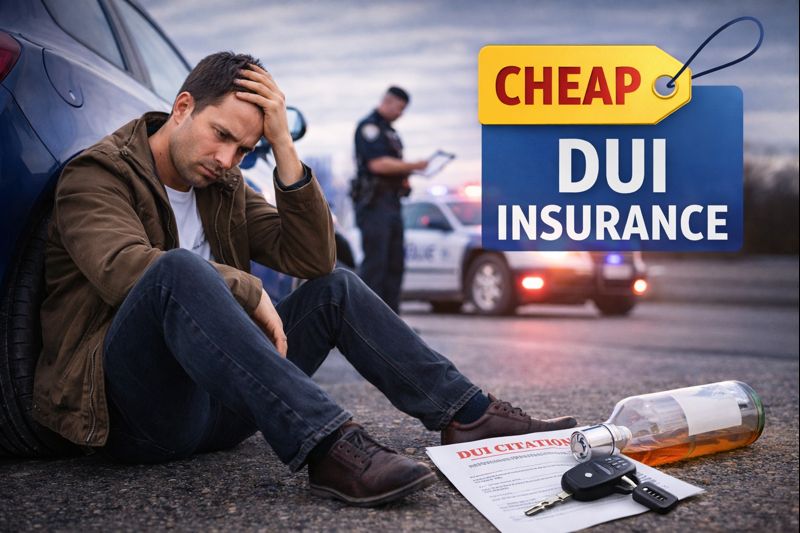
The fastest way to find cheap DUI insurance in 2026 is to keep coverage consistent across quotes, avoid lapses, and compare both standard and non-standard carriers.
If you’re searching for cheap DUI insurance, you’re probably dealing with a renewal jump, a license reinstatement requirement, or a carrier that no longer wants to renew after a serious violation. In 2026, “cheap” should not mean “bare-minimum coverage that fails when you need it.” It should mean the lowest total cost for the coverage you actually need, from a company that will accept your driving record and keep the policy stable.
Here’s the truth: after a DUI, not every insurer will quote you, and the companies that will quote can price the same driver very differently depending on state, ZIP code, prior history, vehicle, and how recently the violation occurred. That’s why independent comparison matters. We build a clean baseline (limits + deductibles + must-have options), then compare carriers that are known to write “non-standard” or “high-risk” drivers alongside any standard carriers that still want your business.
Quick answer: what “cheap” should mean after a DUI
Cheap DUI insurance in 2026 comes from three moves: (1) avoid any lapse in coverage, (2) compare multiple carriers (including non-standard markets), and (3) tune deductibles and coverage options without stripping protections you need. If you only do one thing, do this: keep the same limits and deductibles across every quote so the price comparison is real.
If your state requires a filing (SR-22 or FR-44), you must choose a company that can file it correctly and keep it active with zero lapses.
Top companies people compare for DUI insurance (2026)
After a DUI, shoppers usually compare a mix of mainstream carriers that still write the risk and specialty/non-standard insurers that are built for high-risk profiles. The “best” company depends on your state, how recent the DUI is, prior incidents, and whether you need an SR-22/FR-44 filing. Use this as a starting shortlist, then confirm eligibility by quoting with the same baseline.
| Company type | Examples drivers often compare | Best for | Watch-out |
|---|---|---|---|
| Mainstream carriers | Progressive, GEICO, State Farm, Nationwide, Allstate | Drivers with a single DUI and otherwise stable history | Some may decline or re-rate heavily depending on timing/state |
| Non-standard / high-risk specialists | The General, Dairyland, Bristol West, Mercury (select states), local/regional programs | Drivers needing SR-22/FR-44 or with multiple violations/lapses | Premium can be higher; focus on stability and compliance |
| Local/independent access programs | Independent-agency markets that accept tickets/DUIs (varies) | Hard-to-place drivers who need options beyond one brand | Availability changes by state and underwriting appetite |
We can also compare DUI-friendly markets alongside your current insurer to see whether switching, adjusting deductibles, or bundling creates the best result.
Set your baseline before comparing quotes
Most “cheap DUI insurance” searches go wrong because the quotes aren’t comparable. One quote may be liability-only, another full coverage. One may change UM/UIM limits, another may change medical payments, and another may raise deductibles. Set the baseline first so you can shop honestly.
| Baseline item | What to keep consistent | Why it matters | Fast decision rule |
|---|---|---|---|
| Liability limits | Same bodily injury/property damage limits across quotes | Low limits can be financially devastating after a serious crash | Choose limits you can defend in a worst-case scenario |
| Comp/Collision (if financed) | Keep comp/collision on if you have a loan/lease | Lenders usually require full coverage | If you still owe, keep it on and tune deductibles instead |
| Deductibles | Match deductibles across quotes to compare price fairly | Deductibles drive premium more than most add-ons | Pick what you can pay immediately without debt |
| UM/UIM | Keep uninsured/underinsured limits consistent | Protects you when the other driver can’t pay | Don’t drop it just to make a quote look cheap |
| Driver & vehicle details | Same garaging ZIP, mileage, usage, and driver list | Incorrect inputs cause re-quotes or cancellations | Use your current declarations page when possible |
SR-22 or FR-44 after a DUI: what it means for “cheap”
If your state requires an SR-22 (or in some states an FR-44), that requirement changes the game: you need a policy that can file the form correctly and stay active the entire required period. The cheapest strategy is often the one that avoids mistakes—because a cancellation or lapse can trigger a re-suspension and restart your compliance headache.
| Item | What to do | Why it matters | Common pitfall |
|---|---|---|---|
| Confirm filing type | Verify whether you need SR-22 or FR-44 | Different states use different compliance rules | Assuming “SR-22” applies everywhere |
| Owner vs non-owner policy | Choose owner if you own/regularly drive; non-owner if you don’t | Wrong policy type can fail compliance | Buying the cheapest policy that doesn’t match your situation |
| Zero lapses | Keep the policy active with uninterrupted payment | Lapses can trigger re-suspension | Late payment or switching mid-term without proper timing |
| Ask about filing confirmation | Confirm the filing was submitted and accepted | Prevents “I thought it was filed” issues | Not confirming with the state/DMV record |
Need an SR-22 policy? See our related guide: SR-22 Insurance (2026).
How to lower DUI insurance costs in 2026 (without weakening coverage)
Once your baseline is set and compliance needs are clear, there are a few levers that usually produce the best results. The goal is to reduce premium while keeping the policy “claim-ready” and avoiding any coverage gaps.
| Lever | What it changes | When it helps most | Watch-out |
|---|---|---|---|
| Shop multiple carriers | Different underwriting appetite for DUI profiles | Nearly always (pricing varies widely) | Don’t compare mismatched coverages |
| Deductible tuning | Higher deductibles can lower premium | Full coverage drivers with emergency reserves | Choose only what you can pay immediately |
| Vehicle strategy | Cheaper-to-insure vehicles often cost less to cover | When you can change vehicles or reduce coverage needs | Financed vehicles usually require comp/collision |
| Avoid lapses | Continuous coverage improves stability | SR-22/FR-44 and high-risk drivers | Lapses can be more expensive than the premium you “saved” |
| Re-check at renewal | Rates can improve over time with clean driving | Each renewal cycle | Don’t assume your current company will reduce pricing automatically |
Common mistakes that make “cheap” DUI insurance expensive
| Mistake | What happens | Better approach | Fast check |
|---|---|---|---|
| Buying the minimum without a plan | You may be underinsured or non-compliant with a lender | Set limits and coverage type based on your real needs | Do you have a loan/lease or assets to protect? |
| Letting coverage lapse | Higher rates, possible license issues, SR-22 restart risk | Keep continuous coverage, even when switching | Is your next policy effective before the old cancels? |
| Comparing different deductibles | “Cheap” quote is just a higher out-of-pocket risk | Match deductibles across all quotes | Are comp/collision deductibles identical? |
| Using inaccurate inputs | Re-quotes, underwriting changes, cancellation risk | Use accurate driver/vehicle/garaging details | Do you have your current declarations page? |
Cheap DUI insurance “near me”: how to shop fast in any ZIP code
When you search “near me,” you want speed and certainty. The fastest method is to (1) set your baseline, (2) confirm whether you need SR-22/FR-44, (3) compare multiple carriers, and (4) choose the option that stays compliant without a lapse. If you need coverage quickly, start your quote now and we’ll help align it to the right carrier lane.
Cheap DUI insurance FAQs (2026)
What is the cheapest insurance company after a DUI?
It depends on your state, how recent the DUI is, your prior record, and your vehicle. The cheapest path is comparing multiple carriers using the same baseline (limits and deductibles). Many drivers compare both mainstream and non-standard markets.
Will I need SR-22 insurance after a DUI?
Some states require an SR-22 (or FR-44) after a DUI to reinstate or keep driving privileges. The requirement is state-specific, so the first step is confirming the exact filing type and choosing a carrier that can file it and keep it active with zero lapses.
Should I switch companies after a DUI?
Switching can help, but only if the new policy matches your baseline and avoids any gap. The right move is comparing multiple options and choosing the best total value for the next year, then re-checking at renewal as your record ages.
Can I lower my premium by dropping full coverage?
If your vehicle is financed or leased, you usually must keep comprehensive and collision. If you own your vehicle outright, liability-only may be an option—but it increases your out-of-pocket risk. A safer savings strategy is often deductible tuning and carrier comparison.
How long will my DUI affect my insurance rate?
Timeframes vary by state and company. Many drivers see improvement as they maintain continuous coverage and keep a clean record over time. The best habit is to shop at each renewal using the same baseline.
Independent agency: Blake Insurance Group LLC is an independent insurance agency and is not affiliated with any single insurance company.
Licensing: Licensed insurance producer (NPN 16944666).
Important: Rates, eligibility, SR-22/FR-44 rules, and coverage options vary by state, ZIP code, driving history, and underwriting. This page is general information, not legal advice.




