Business insurance guide
Box Truck Insurance
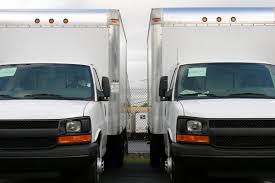
Box truck insurance is commercial auto coverage for trucks used to haul goods or equipment for a business. A personal auto policy likely won’t cover a vehicle used primarily for business, so here’s what to carry.
Blake Insurance Group is an independent agency serving clients by phone, email, and online in states where we are licensed; coverage depends on the insurer, the policy, and underwriting.
Request business insurance quotes
Tell us what you would like to cover, and a licensed agent will follow up with options available to us. Submitting the form does not bind coverage.
If the form does not load, call 888-387-3687, Monday through Friday, 9:00 to 5:00, or email info@blakeinsurancegroup.com.
Commercial auto for box trucks
If a vehicle is used primarily for business, there’s likely no coverage under a personal auto policy, the Insurance Information Institute says. Company-owned vehicles generally need commercial auto coverage, and hired and non-owned auto coverage handles employees driving their own cars for work. Insurers often recommend a $1 million liability limit, with $500,000 as a minimum.
Box truck businesses often also need coverage for the goods they carry and for tools and equipment, plus general liability for work done at customers’ locations. Insurers price commercial auto based on the vehicles, drivers, radius of operation, and what you haul.
General liability insurance
Commercial general liability (CGL) insurance covers claims that your business caused bodily injury or property damage to others (Coverage A), personal and advertising injury such as libel, slander, or copyright infringement (Coverage B), and no-fault medical payments for non-employees (Coverage C), according to the Insurance Information Institute. It pays defense costs and damages up to the policy limits.
CGL policies exclude workers’ compensation, employment practices, most pollution, and liquor liability, and professional liability may also be excluded. You can buy CGL on its own, in a business owner’s policy, or in a commercial package policy.
Workers’ compensation
Workers’ compensation pays medical bills and lost wages for employees hurt on the job and, in most states, protects the employer from most employee lawsuits over those injuries. Every state sets its own rules for who must carry it; some require coverage from the first employee, others at three, four, or five, and Texas lets most private employers opt out. Ohio and Washington require employers to buy through a state fund or self-insure.
Certificates of insurance
Clients, landlords, and general contractors often ask for a certificate of insurance (COI) showing your coverage and limits, and sometimes ask to be added as an additional insured. Many insurers issue COIs online; ERGO NEXT, for example, says it offers unlimited certificates at no extra cost. Check contract requirements before you buy so your limits match.
Liability limits
General liability limits are usually stated as a per-occurrence limit, the most the policy pays for one claim, and an aggregate limit, the most it pays in a policy period. Contracts and licenses often set minimums: Georgia, for example, requires $300,000 or $500,000 per occurrence depending on the contractor license, and New Jersey home improvement contractors need at least $500,000 per occurrence. Higher limits cost more, and an umbrella policy can add limits above your general liability, auto, and employers’ liability coverage.
How to compare quotes
- List your risks. Customers on site, work at client locations, vehicles, employees, advice you give, and equipment.
- Check what’s required. State workers’ comp rules, licensing boards, leases, and client contracts.
- Choose coverages. General liability or a BOP, plus workers’ comp, commercial auto, and professional liability as needed.
- Compare quotes on the same limits. Use the same per-occurrence and aggregate limits and deductibles.
- Review service. Certificates, claims, and payment options.
Business owner’s policy
A business owner’s policy (BOP) packages the major property and liability coverages with business income (business interruption) coverage, for small and mid-size businesses that meet insurer criteria. The Insurance Information Institute notes that professional liability, workers’ compensation, business auto, and key-person coverage are separate policies; a BOP doesn’t include workers’ comp, health, or disability insurance.
CGL coverage parts
| Part | Covers |
|---|---|
| Coverage A | Bodily injury and property damage to others |
| Coverage B | Personal and advertising injury |
| Coverage C | No-fault medical payments for injured non-employees |
| Common exclusions | Workers’ comp, employment practices, most pollution, liquor liability |
Source: Insurance Information Institute.
Professional liability
Professional liability, or errors and omissions (E&O) insurance, is for businesses that give advice, make recommendations, design, provide care, or represent others. It pays judgments and defense costs, even when you did nothing wrong, according to the Insurance Information Institute.
Small businesses by the numbers
The SBA Office of Advocacy counts 36,207,130 small businesses in the U.S., 99.9% of all businesses, employing 62.3 million people, or 45.9% of private-sector workers.
Example online carrier: ERGO NEXT
ERGO NEXT Insurance, formerly NEXT Insurance, has been wholly owned by Munich Re’s ERGO since July 1, 2025, after a deal that valued NEXT at $2.6 billion, and adopted the ERGO NEXT name on January 15, 2026. The company says it serves more than 750,000 small businesses and sells online, with quotes in about 10 minutes and coverage that can start the next day, as well as through agents.
Its products include general liability, business owner’s policies, workers’ compensation, and professional liability, with commercial property, commercial auto, tools and equipment, and other coverages listed on its site; agents can’t sell its commercial auto. Its workers’ compensation page lists 41 states and Washington, D.C., and doesn’t include Indiana, Nebraska, North Dakota, Ohio, Rhode Island, Vermont, Washington, West Virginia, or Wyoming.
Home-based businesses
If you run a business from home, a typical homeowners policy gives only about $2,500 of coverage for business equipment, according to the Insurance Information Institute, and often excludes business liability. A home-based business endorsement, an in-home business policy, or a BOP can fill the gap.
Which policy covers what
| Risk | Policy that usually covers it |
|---|---|
| A customer is hurt at your business | General liability or a BOP |
| A fire damages your equipment | Commercial property or a BOP |
| You can’t operate after covered damage | Business income (often in a BOP) |
| An employee is hurt on the job | Workers’ compensation |
| A work vehicle crash | Commercial auto |
| A client says your advice cost them money | Professional liability (E&O) |
| A key owner dies or becomes disabled | Key-person life or disability insurance |
Source: Insurance Information Institute small business guidance. Policies vary.
Ways to lower your premium
- Buy only what you need. Match coverage to your real risks and contract requirements.
- Bundle in a BOP if you qualify; it packages property, liability, and business income coverage.
- Choose your deductible carefully. A higher deductible lowers premiums but raises what you pay per claim.
- Pay for coverage only when you work if your work is occasional; some providers sell coverage by the hour, day, or month.
- Compare quotes on the same limits from several insurers.
Checking a plan and insurer
- Contract requirements. Match limits and additional-insured wording to your contracts and licenses.
- Exclusions. Read what the policy doesn’t cover, such as professional services or autos.
- Workers’ comp rules. Confirm your state’s requirement for your headcount and industry.
- Insurer license. Check the insurer with your state insurance department.
- Certificates. Ask how quickly you can get COIs.
What an independent agency does
An independent insurance agency is licensed to sell policies from several insurance companies. Instead of quoting one company's products, an independent agent can compare options from the insurers the agency represents, explain the differences in coverage, and help you re-shop at renewal. The insurance company, not the agent, makes underwriting and claim decisions.
Blake Insurance Group is an independent agency. We work with clients by phone, email, and online in states where we are licensed, and we will tell you which insurers we can quote for your situation.
How we work
Blake Insurance Group serves clients by phone, email, and online in states where we are licensed. The insurers and plans we can offer depend on our appointments and your location; a company named on this page may not be available through us.
How to verify an insurer or agency
Before buying through any website or app, confirm who is selling you the policy and who will issue it:
- Find the licensed agency or insurer named in the site's footer, terms, or license page.
- Look up the agency or producer on your state insurance department's license search, or through the National Insurance Producer Registry (NIPR).
- Look up the insurer on your state insurance department's company search to confirm it is authorized in your state.
- Save the insurer's name and policy number once issued, since that is who handles claims.
A legitimate service will make this information easy to find. Be cautious if you cannot identify the licensed entity.
Sources
We checked the facts on this page against the sources below in October 2026. Plans, prices, and rules change, so confirm current terms before you buy.
- Insurance Information Institute: Commercial general liability insurance
- Insurance Information Institute: Small business insurance basics
- Insurance Information Institute: Business vehicle insurance
- Insurance Information Institute: Insuring your home-based business
- SBA Office of Advocacy: Frequently asked questions about small business (Feb. 2026)
- ERGO NEXT: NEXT Insurance rebrands as ERGO NEXT Insurance
- ERGO: Acquisition of NEXT Insurance completed (July 2025)
- ERGO NEXT: Workers’ compensation insurance
- ERGO NEXT: Become an agent
- NerdWallet: Thimble insurance review (Mar. 2026)
- Thimble Broker Success Center: Policy durations
- NAIC: State insurance departments
What to have ready for a business insurance quote
These details help an agent quote accurately.
- Business type and description. What you do and where.
- Revenue and payroll. Used to price liability and workers’ comp.
- Employees. Full-time, part-time, and contractors.
- Locations and vehicles. Premises and any business autos.
- Contract requirements. Limits and additional insureds required.
Box truck insurance FAQs
What does business insurance cover?
Different policies cover liability, property, vehicles, employee injuries, and professional errors.
What’s a BOP?
A business owner’s policy packages property, liability, and business income coverage.
Is workers’ comp included in a BOP?
No. Workers’ compensation is a separate policy.
How much does business insurance cost?
It depends on your industry, revenue, payroll, location, limits, deductibles, and claims history; compare quotes.
Related guides
Partner quote options
Sponsored
Blake Insurance Group works with the partners below. Each link opens the partner's own website, where its terms, eligibility rules, and privacy policy apply. Blake Insurance Group may be compensated if you buy through these links.
- First Connect application: Start an application through our First Connect portal, which we use to quote coverage from multiple insurance carriers.
- ERGO NEXT Insurance (formerly NEXT Insurance): Online quotes for small business coverage, including general liability, workers’ compensation, business owner’s policies, professional liability, and commercial auto.
Important information
Compensation. Links in the partner section of this page are sponsored, and Blake Insurance Group may be paid if you make a purchase. Sponsored placement does not affect the other information on this page.
Independent agency. Blake Insurance Group LLC is an independent insurance agency. Licensed insurance producer NPN 16117464. Licensed states: AZ, AL, TX, CA, NY, OH, FL, NC, VA, GA, OK, NM, IA, KS, MI, NE, SC, SD, WV, IL, NJ, PA, TN, and WA. Which insurance companies we can quote depends on our current appointments, the product, and your state. Mentioning a company on this page does not mean we represent it.
Business coverage. State requirements on this page were checked against official sources in October 2026 and can change; confirm with the agency named. Coverage depends on the policy, insurer, and underwriting.
Coverage terms. Descriptions are general. The policy contract controls what is covered.
Availability. Coverage, prices, and eligibility vary by company, state, and applicant, and are subject to underwriting. The issued policy controls.
Your next step
Request a quote, and a licensed agent will compare business insurance options available to us.




