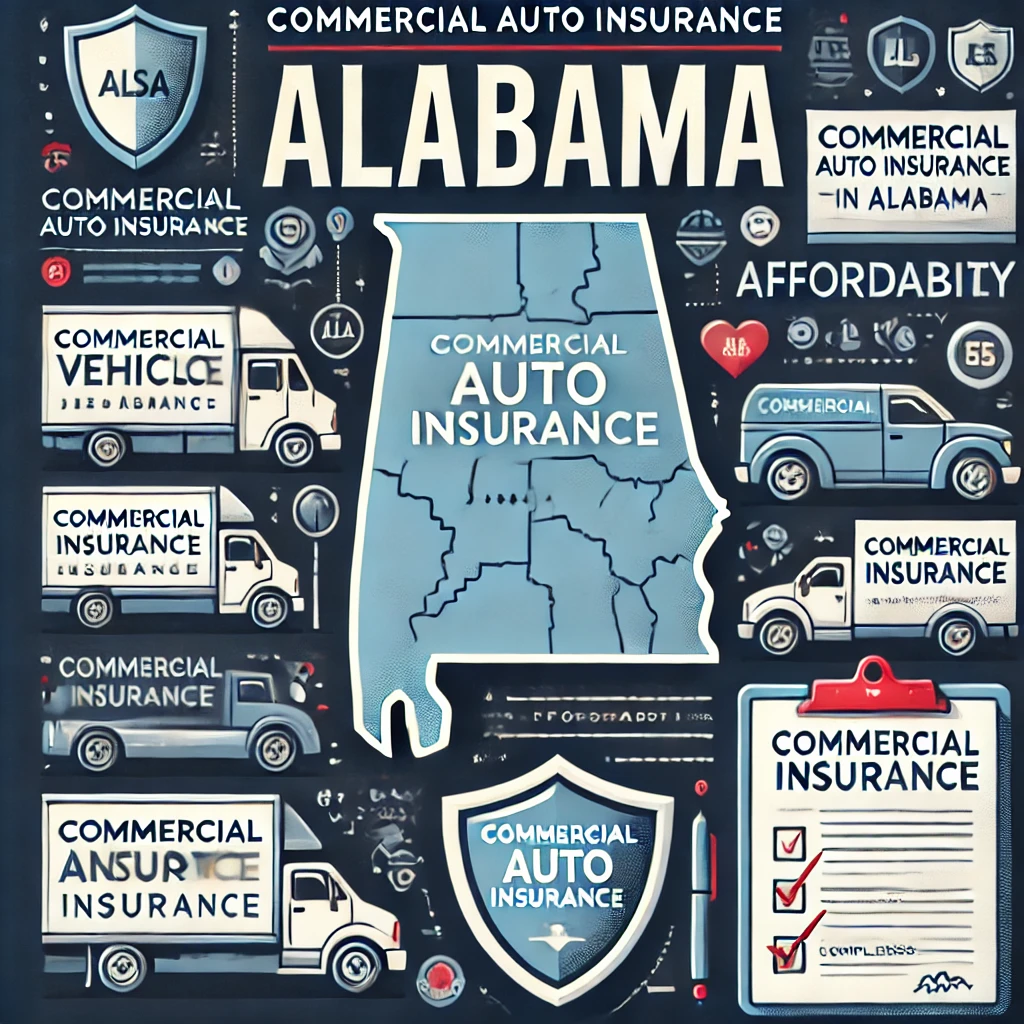
Commercial auto insurance in Alabama protects business-owned vehicles and the business itself when an accident, claim, or contract requirement shows up.
Whether you run one work truck or a growing fleet, the right policy must do two things: keep you legally and contract compliant and keep your
cash flow stable when a vehicle is down. Alabama minimum liability is commonly referenced as 25/50/25, but most businesses choose higher limits
(often $1M) because one serious accident can exceed minimums quickly.
If you’re searching for commercial auto insurance near me, don’t shop by premium alone. Shop by vehicle use (service calls vs hauling),
driver quality (MVR and experience), garaging ZIP, and whether you need Hired and Non-Owned Auto (HNOA) for
employees who run errands in personal vehicles. This guide explains what to buy, how to compare quotes correctly, and what information makes underwriting move fast.
What to buy for Alabama commercial auto (a practical 2026 stack)
The “right” commercial auto policy depends on what the vehicle does. A plumber’s service van, a contractor hauling materials, and a delivery fleet are priced and
underwritten differently. The best outcome is matching your insurance classification to your real operations so the carrier doesn’t re-rate you later or fight a claim.
Start with liability, then build physical damage and downtime protections around how critical that vehicle is to revenue.
Owner-operators and single vehicles
For one-vehicle businesses, prioritize contract-ready liability limits, then add physical damage if the vehicle is financed or essential to work. If downtime means lost jobs,
add towing and rental options. Most “easy savings” come from accurate mileage/radius and correct garaging—not from stripping coverage.
Fleets and multiple drivers
Fleets win with discipline: driver standards, MVR monitoring, clear garaging addresses, and accurate schedules. Consistent vehicle classification (service vs hauling vs delivery)
prevents mid-term surprises. For contracts, build a repeatable COI process so proof is issued quickly for every project.
Core coverages (what each one actually does)
For a fair comparison, match limits and deductibles before comparing premium.
Auto liability
Liability pays for injuries and property damage you cause. It’s the line that protects the business when a claim turns severe.
If your contracts require $1M, that’s your baseline. Higher limits can be smart for heavier vehicles, trailers, passenger transport, or dense-route driving.
Physical damage (comprehensive + collision)
Collision repairs your vehicle after a crash. Comprehensive covers theft, fire, glass, storms, and animal impact. Choose deductibles that match cash flow—
you need to pay them quickly to get back to work.
UM/UIM
UM/UIM protects your business when the other driver has no insurance or not enough. For businesses with employees driving daily, it can prevent a major out-of-pocket hit.
Downtime coverages
Towing/roadside and rental reimbursement help keep revenue moving. If a vehicle is a revenue engine, downtime protection often pays for itself in saved jobs.
Coverage snapshot (Alabama • 2026)
Compare apples-to-apples: same limits, same deductibles, same vehicle use.
Coverage line
What it does
When you need it
What to confirm
Liability
Pays for injury/property damage you cause
Always; commonly required by contracts/leases
Limits, driver schedule, radius
Comprehensive
Theft, fire, weather, glass, animal impact
Financed vehicles; higher theft/weather exposure
Deductible + garaging ZIP
Collision
Repairs your vehicle after a crash
Financed vehicles; essential work vehicles
Deductible vs downtime budget
UM/UIM
Protection when hit by uninsured/underinsured drivers
High driving exposure; employee drivers
Limits aligned to liability
MedPay
Small injury expenses regardless of fault
Optional; reduces friction on minor injuries
Who is covered as an occupant
Towing & rental
Reduces downtime
Any vehicle that can’t sit
Daily max, days, triggers
HNOA
Business liability for hired and non-owned vehicles
Employee vehicles, rentals, vendor agreements
Employee driving + rental exposure
HNOA (Hired & Non-Owned Auto): the most common missing piece
HNOA protects the business when the vehicle involved isn’t titled to the company. It’s a common requirement in vendor agreements and a common gap for growing businesses.
Hired autos: rentals or leased autos used for business.
Non-owned autos: employee-owned vehicles used for work errands, client visits, or deliveries.
Important: HNOA covers business liability—it does not repair the employee’s car.
If employees ever drive personal vehicles for business, disclose it during quoting. Underwriting prices and covers what you describe.
COIs, proof requirements, and contract readiness
Most commercial auto headaches are proof problems: wrong entity name, missing limits, or a vendor portal that rejects your certificate holder details. Build a clean COI workflow and you remove friction from winning and starting work.
Item
Why it matters
What to do
Correct business entity name
COIs get rejected if LLC/DBA doesn’t match contract
Use the exact legal entity shown on contracts
Certificate holder details
Vendor systems match exact names/addresses
Provide exact holder name, address, job reference
Liability limits
Many contracts specify $1M and umbrella totals
Match contract minimums and keep proof consistent
Driver/vehicle accuracy
Misstated garaging/usage causes re-rating
Quote with true garaging, radius, VINs, drivers
HNOA requirement
Common in vendor agreements
Add HNOA when employees drive or you rent vehicles
Best long-term strategy: consistent driver controls, accurate use classification, and a downtime plan. Cheap coverage that doesn’t match use becomes expensive after the first claim.
Commercial auto insurance in Alabama: city and metro focus
We quote single vehicles and fleets statewide and keep COIs consistent for contractors and vendors.
Do I need commercial auto or can I use personal auto?
If the vehicle is titled to the business, used for hauling/delivery, or required by a contract, commercial auto is typically the correct solution. Personal auto often restricts business use.
What liability limit should I carry in Alabama?
Alabama minimums are commonly referenced as 25/50/25, but most businesses carry higher limits (often $1M) for contract compliance and severe loss protection.
What is HNOA and when is it required?
HNOA covers business liability from hired vehicles (rentals) and non-owned vehicles (employee cars used for work). It’s commonly required in vendor agreements.
How fast can I get a COI?
After coverage is bound and details are accurate, COIs are typically issued quickly. Provide certificate holder details, job reference, and required limits up front.
What do you need to quote commercial auto?
VINs, garaging ZIPs, drivers, use (service/hauling/towing/passengers), radius/mileage, and any contract requirements. Accuracy drives speed.
Independent agency: Blake Insurance Group LLC is an independent insurance agency.
Licensing: Licensed insurance producer (NPR/NPN 16944666). Coverage availability, underwriting, and pricing vary by carrier and ZIP code. This page is informational and does not modify policy terms.
commercial auto insurance Alabama 2026, Birmingham commercial auto insurance, Huntsville work truck insurance, Mobile fleet insurance,
Montgomery commercial auto policy, HNOA Alabama, hired non-owned auto coverage, commercial auto COI Alabama, 1 million liability commercial auto,
truck van fleet quote Alabama, commercial auto policy for contractors Alabama