Workers’ Compensation Insurance: A Practical Guide for Employers
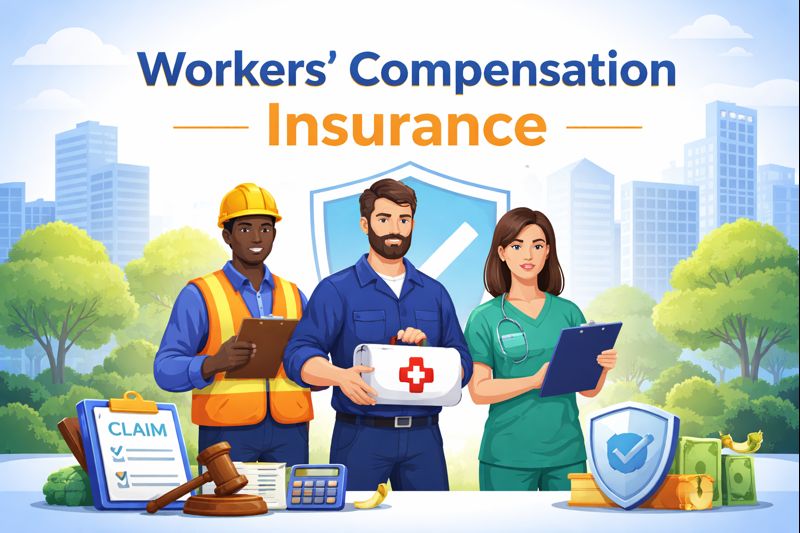
Workers’ compensation insurance helps pay legally required benefits for covered job-related injuries and occupational illnesses. Whether your business must carry it depends on the state, the people doing the work, and sometimes the contract or industry.
A useful quote starts with the work your people actually perform, where they work, and a realistic payroll estimate. Those details affect classification, premium, state coverage, and the certificate of insurance a customer may request. Blake Insurance Group can help you understand the information a quote needs and compare available paths for your operation.
These links open separate third-party quote flows and may be compensated referral links. Eligibility, product availability, terms, and issuance depend on the destination and insurer. A quote or certificate request does not bind coverage.
Workers’ comp quick facts
Workers’ comp is tied to employment and state law. It is different from general liability, which typically addresses covered claims involving third parties. The policy and the state law both matter when a work injury occurs.
Who benefits?
An eligible injured employee may receive covered medical and wage benefits. Employers gain an established claim process and, where applicable, protections under the state system.
What drives a quote?
Operations, state of work, payroll by duty, classification, prior losses, owner elections, and insurer underwriting all matter. A headcount alone cannot produce a reliable price.
What is a certificate?
A certificate of insurance, or COI, summarizes an issued policy for a customer or project. It is evidence of stated coverage, not a substitute for the policy or an automatic amendment to it.
Why is there an audit?
Many premiums begin with estimated exposures. The insurer later checks actual payroll and other records, then determines whether additional premium or an adjustment applies under the policy.
What workers’ compensation covers
The first part of a standard workers’ compensation and employers’ liability policy responds to benefits owed under applicable workers’ compensation law for eligible work injuries or occupational disease. Depending on the jurisdiction and claim, those benefits can include reasonable medical treatment, a portion of lost wages, permanent disability benefits, vocational services, or survivor benefits. The claim administrator determines eligibility and benefits under the governing rules; buying a policy does not guarantee payment for every reported event.
The employers’ liability part addresses certain employee-injury-related legal claims that are outside the ordinary statutory benefit obligation, subject to limits, exclusions, and legal defenses. It should not be confused with the statutory benefits in the first part. An employer may need higher employers’ liability limits for a contract, but a higher limit does not change who qualifies for workers’ compensation benefits.
| Issue | What to verify | Why it matters |
|---|---|---|
| Work locations | States listed for covered operations and any temporary work elsewhere. | A policy written for one state may need review before employees start work in another. |
| Employees and owners | Who is treated as an employee; whether an owner or officer is included or excluded. | State rules and permitted elections differ by entity and jurisdiction. |
| Employers’ liability | The limits shown on the quote and any contract minimum. | Contract requirements can exceed a quote’s default limits. |
| Special work | Whether an activity calls for a separate federal or state coverage arrangement. | Some maritime, federal, and other exposures require specialized handling. |
General liability, commercial auto, health insurance, and disability insurance answer different questions. A general liability policy should not be assumed to cover an employee’s ordinary workplace injury. Likewise, a personal health plan does not replace an employer’s legal workers’ comp obligation. Review the actual forms and declarations when a customer asks for a particular endorsement or waiver of subrogation; a COI cannot create coverage that the policy does not provide.
When does an employer need workers’ comp?
There is no single nationwide employee threshold. A business must check the rules where people perform work, including part-time, seasonal, family, temporary, and borrowed labor where applicable. Entity type and owner status may change the analysis. A contractual requirement can also create a practical need for a policy even where a private employer has a choice under state law.
Arizona: Employers generally must maintain coverage for their employees. A business hiring its first worker should resolve coverage before that worker starts, rather than assume a small payroll creates an exemption.
Texas: Most private employers may choose whether to subscribe to the state workers’ compensation system. Texas public employers must provide coverage. A private employer that opts out has notice and reporting duties and may face different injury-liability exposure. An alternative occupational accident policy is not the same as Texas workers’ compensation coverage. Government contract requirements and other special circumstances need separate review.
New York: Virtually all employers must provide coverage, with specific exceptions and rules for owners and business forms. An out-of-state operation sending employees or subcontractors to work in New York should verify the state’s policy requirements before work begins; an ordinary out-of-state certificate may not suffice.
These examples show why a generic “required at five employees” answer is unsafe. A contractor, restaurant, home-care employer, or professional practice may also face distinct hiring arrangements and client contracts. If your workers travel across state lines, identify each work state and each legal employer during quoting. Do not rely on the company’s mailing address as a proxy for where the employees perform their jobs.
What affects workers’ comp cost?
A workers’ comp quote uses exposure information, especially payroll assigned to the proper classifications. Rates and rating rules vary by state and insurer. Claim history, experience rating when applicable, schedule or other permitted rating adjustments, minimum premiums, assessments, endorsements, and payment arrangements may affect the final amount. A general online estimate without actual duties and payroll is a poor basis for a budget or bid.
A classification code describes an insured operation under the rating system used for that policy. Job titles alone are often too broad. A person described as a “manager” might supervise a desk team or regularly work on a roof; those duties should not be treated as identical. The insurer and applicable classification rules determine which codes can be used and whether payroll can be divided among them. Keep accurate role descriptions and payroll records rather than selecting a code because it has a lower rate.
An experience modification factor may apply after a business meets the relevant eligibility criteria. It reflects a comparison of its qualifying loss experience with expected experience under a rating plan. A new or small business may have no mod. Even when a mod exists, it is only one part of the premium calculation, and a single claim does not translate into a universal percentage increase.
When comparing quotes, ask whether they use the same payroll by class, work states, effective dates, owner elections, employers’ liability limits, subcontractor assumptions, and requested endorsements. Otherwise, two prices may represent materially different coverage or audit exposure. Some policies use estimated annual payroll; others offer payment methods tied more closely to reported payroll. The payment schedule changes cash flow but does not remove the obligation to report accurate exposure.
| Input | What to prepare | Common mistake to avoid |
|---|---|---|
| Operations | Plain-language description of each service, worksite, tools, driving, and hazards. | Using only an industry label when employees perform different tasks. |
| Payroll | Expected wages by role and state for the requested policy period. | Omitting new hires, seasonal peaks, or planned expansion. |
| People | Employee count, owner roles, temporary labor, and subcontractor arrangements. | Assuming an independent-contractor label settles legal or audit treatment. |
| History and contract | Prior policy, loss runs if requested, effective date, COI requirements, and endorsements. | Waiting until after purchase to show the customer’s insurance exhibit. |
Payroll audits and subcontractors
At the start of a policy, the insurer may use projected payroll. During or after the term, it may request payroll journals, tax forms, job descriptions, subcontractor payments, and proof of other coverage. Actual exposures are reconciled under the policy’s audit terms. A business that hires more workers or expands into a higher-rated operation may owe additional premium. A lower exposure may produce a credit or refund under the policy’s rules, although minimum premium and other charges can still apply.
Subcontractors deserve attention early. A contract calling someone an independent contractor does not by itself decide whether a worker is an employee under state law or whether payments are included in an insurer’s audit. The classification of a worker and the premium treatment of an uninsured subcontractor are related but distinct questions. Ask the insurer what documentation it needs and have qualified counsel or the appropriate state agency address contested legal status.
Request certificates from subcontractors before work begins and check the policy dates, named insured, and coverage type. Save the certificate with the written scope, contract, and payment records. A certificate can show that a policy existed when issued, but it is not a guarantee against later cancellation or a substitute for checking the subcontractor’s actual work and policy terms. If the sub’s coverage expires midproject, request updated evidence.
Set a monthly review for payroll by state and duty. Tell your insurance contact when you add a new trade, bring field work in-house, open a location, or begin work across a state line. A brief midterm review is easier than reconstructing a year of records after an audit notice. If you dispute an audit, ask for the classifications, payroll allocations, and supporting calculation, then provide the records that show what should change within the insurer’s deadlines.
How to request coverage and a certificate
- Describe the business accurately. Use its legal name, entity type, address, services, jobsites, and states of work. Explain unusual tasks, even if they are a small part of revenue.
- Estimate payroll by duty. Include planned hires and seasonal changes. Identify owners and discuss whether an available inclusion or exclusion election fits their work and the applicable law.
- Share contract requirements before binding. Send the insurance exhibit, certificate holder details, required limits, and any requested waiver or alternate-employer language. Ask whether each item is available and whether it changes premium.
- Compare the actual terms. Check the insurer, work states, classifications, estimated payroll, employers’ liability limits, endorsements, premium basis, payment plan, and audit conditions.
- Confirm issuance and effective date. Complete underwriting and payment steps required by the chosen insurer. Request the COI only after coverage is issued and verify that its information matches the policy.
The three online paths below are starting points. They may differ in eligibility and available products. A complex operation, difficult claim history, unusual contract, or multiple work states may need a more detailed review. Do not assume that every third-party flow can issue workers’ comp for every applicant or satisfy every contract.
The links lead to separate platforms. Blake Insurance Group may receive compensation from a qualifying referral or sale. Product access and any agency role must be confirmed in the actual transaction.
Related business insurance resources
For a broader coverage review, see business insurance. If employees drive for work, review commercial auto insurance. Businesses comparing several coverage needs can also start at the insurance quote page. Each product has its own eligibility and exclusions.
Workers’ compensation questions
Do I need workers’ comp for one part-time employee?
Possibly. Some states require coverage when the first employee is hired, and part-time status may not create an exemption. Check the law where that person works, the type of business, and the person’s employment status before the first shift.
Does a general liability policy cover injuries to my employees?
Generally, general liability addresses covered third-party claims rather than the ordinary statutory benefits owed to employees injured at work. Review both policies and your state’s requirements; do not use a general liability certificate in place of required workers’ comp proof.
Can I get a COI immediately after applying?
Only after the coverage is actually issued and its effective date is confirmed can a certificate accurately evidence it. Underwriting, required payment, and the availability of requested endorsements can affect timing. Provide contract language early.
Are business owners automatically covered?
No universal rule applies. Treatment depends on the state, entity type, ownership role, permissible elections, and policy. An owner who opts out or is excluded should understand the consequences and any contract requirements before signing an election.
Will a subcontractor’s COI prevent an audit charge?
A valid certificate is useful evidence, but the insurer’s audit rules, policy period, type of work, actual relationship, and other records still matter. Retain the COI, contract, invoices, and renewals, and ask the insurer how subcontractor payments are treated.
What if employees work in more than one state?
List every work state when requesting a quote and notify the insurer before new operations begin elsewhere. States have different insurance and benefit rules. New York in particular has detailed requirements for out-of-state employers whose people work there.
Start with accurate work and payroll details
Gather your business description, state-by-state work locations, payroll by duty, owner information, prior policy and claims information, and any contract insurance exhibit. Then use a quote path to see what may be available for your operation. Review the actual issued policy before relying on a certificate for a job.
Blake Insurance Group is an independent insurance agency. Coverage, limits, eligibility, pricing, and insurer availability vary by applicant, state, policy, and underwriting. This guide is general information; the issued policy and applicable law control. Third-party names are used to identify the linked quote destinations; no endorsement or universal appointment is implied.





Reviews are loaded from Google when you click “View reviews.”