Allstate Roadside Assistance Review (2026): What’s Covered, What’s Not, and How to Avoid Surprise Fees
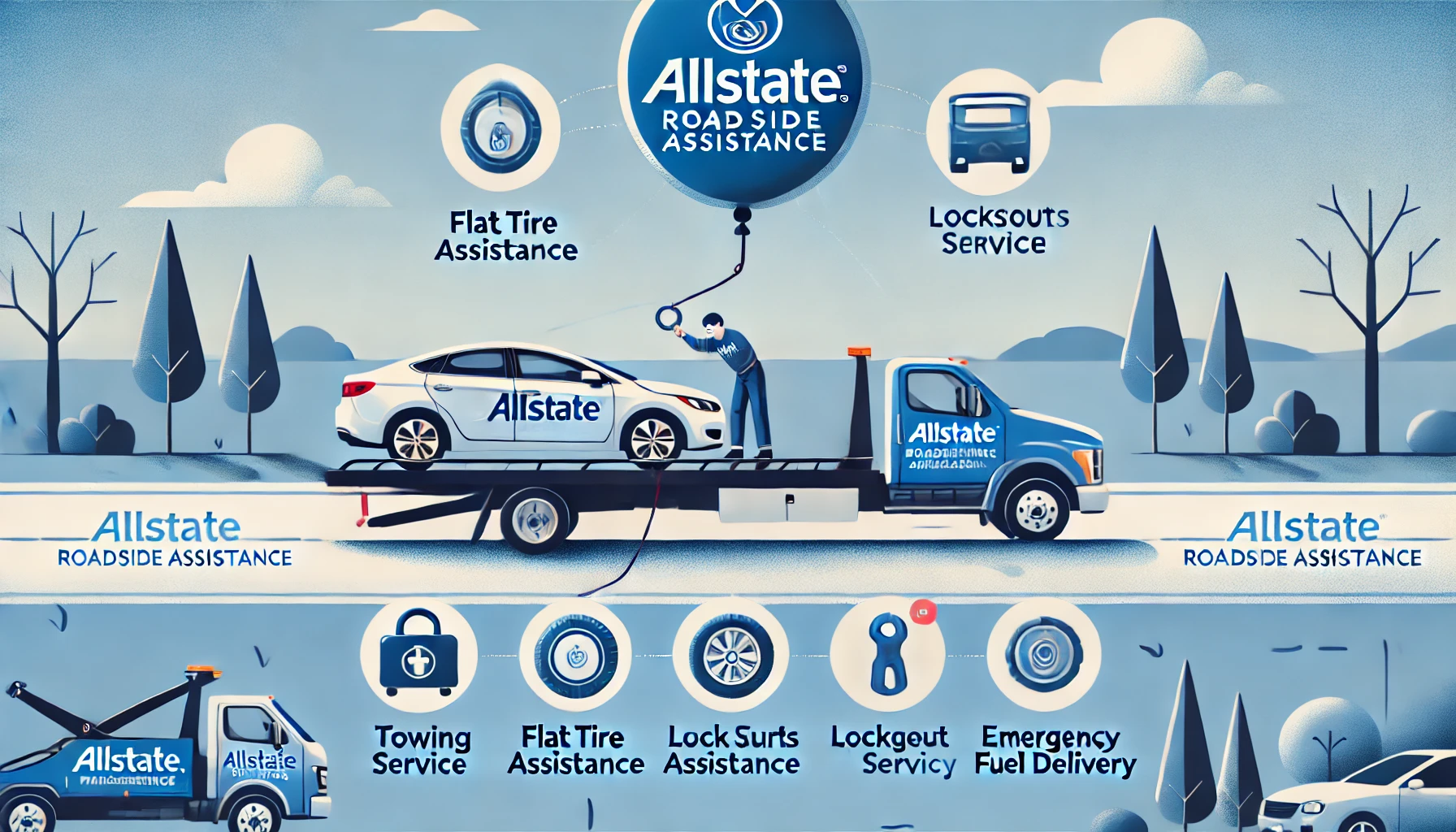
Allstate roadside can be a smart add-on for everyday drivers—if you understand tow miles, service-call limits, and what “covered” really means at dispatch time.
Stuck with a dead battery, flat tire, or locked keys in the car? Roadside assistance is designed to turn an expensive disruption into a predictable, manageable event. The best roadside plans do two things well: fast dispatch and clear limits. Where drivers get burned is assuming “roadside” means unlimited towing or that every rescue is fully paid. In reality, most programs have some combination of included tow miles, per-incident caps, and limits on how many rescues you can use in a year.
Allstate roadside offerings are commonly available either as a policy add-on or as a stand-alone roadside plan (availability and pricing vary by location). The value is convenience: towing, jump-starts, lockouts, fuel delivery, tire changes, and limited winching. The risk is assumptions: surprise bills typically happen when a tow exceeds the included mileage, when special handling is required, when the vehicle isn’t accessible, or when a second service is triggered (example: a jump-start attempt followed by a tow).
At-a-glance overview
What drivers like
- Fast help for common breakdowns: tow, jump, lockout, flat tire.
- Predictable budgeting versus paying full price for each rescue.
- Simple add-on while you’re already shopping auto insurance.
Where to be careful
- Towing limits: included miles vary by plan; overages can be out-of-pocket.
- Service events: some situations can trigger more than one event.
- Recovery limitations: winching/recovery is often limited by time, distance, and accessibility.
How we review it
- We match roadside to your driving pattern: local commuting vs long-distance travel.
- We tune deductibles and rental coverage so the whole policy works together.
- We teach the dispatch script that prevents surprise fees.
What’s typically covered (and what to verify)
Roadside is built for “get me moving again” events. Specific benefits vary by plan and location, but these are the core services most drivers expect—plus the exact detail to verify before you rely on it.
Towing
- Tow to a repair facility or safe location, subject to included mileage/caps.
- Overages (extra miles, special handling) are usually out-of-pocket.
- Verify: included tow miles for your plan tier (commonly shown as 10, 25, or 100 miles depending on plan).
Jump-starts
- Jump service to restart a disabled battery.
- If the vehicle won’t start, towing may become a second service event.
- Verify: whether a follow-up tow counts as another event.
Flat tire service
- Typically requires a usable spare tire.
- If you don’t have a spare, towing may apply.
- Verify: what happens if lug nuts are locked/damaged or multiple tires are flat.
Lockout assistance
- Help getting back into the vehicle, subject to labor/limit rules.
- Key/fob replacement and programming are typically not included.
- Verify: whether there’s a dollar cap on locksmith labor.
Emergency fuel delivery
- Delivery may be included; the fuel itself may be billed depending on plan terms.
- Fuel delivery can be limited by quantity and frequency.
- Verify: whether fuel cost is included or charged at service time.
Winching / limited recovery
- Often limited to accessible areas near a drivable roadway.
- Coverage is commonly limited by time and/or a dollar cap.
- Verify: accessibility requirement (distance from roadway) and maximum time/cap.
What’s commonly not covered (or can trigger extra charges)
Roadside is not a blank check. Most extra charges come from scenarios that go beyond “standard dispatch.” Plan language and local contractor rules determine what’s included, but these are common situations that produce out-of-pocket costs:
Long tows and special handling
- Tows beyond included mileage or beyond a per-incident dollar cap.
- After-hours access fees, restricted locations, or special equipment.
- Multiple tows triggered by one event (example: no spare tire available).
Off-road recovery and deep extraction
- Vehicle stuck far from a paved/public roadway.
- Deep mud/snow recovery that requires specialized gear or extra time.
- Unsafe locations where a provider can’t reach the vehicle normally.
Parts, repairs, and consumables
- Fuel cost, new tire purchase, new battery, replacement keys/fobs.
- Mechanical repairs beyond minor adjustments.
- Collision losses that should be handled through an auto claim.
Coverage snapshot: Allstate roadside vs motor clubs vs card perks
Use this table as a decision compass, then confirm the exact miles/caps for your plan while quoting.
| Feature | Allstate Roadside | Motor club membership | Card perk / pay-per-use |
|---|---|---|---|
| Towing | Included towing with plan-based mileage/caps; overages billed to you | Often longer base tows with tier upgrades | Usually reimbursement caps or per-use pricing |
| Jump-start | Typically included; a tow may be separate if the vehicle won’t start | Included by tier | Often reimbursed up to a cap |
| Lockout | Typically included with labor/limit rules; key replacement usually not included | Included by tier | Often limited reimbursement |
| Flat tire | Change with usable spare; otherwise tow may apply | Included by tier | May be per-use or reimbursed |
| Fuel delivery | Delivery may be included; fuel itself may be billed depending on plan | Varies; some include a small amount of fuel | Often billed per use |
| Best for | Everyday drivers who want a practical, budget-friendly safety net | Frequent travelers who want longer towing and travel perks | Occasional users who can handle caps/limits |
The dispatch questions that prevent surprise fees
When you call for roadside help, the driver’s bill is determined by what the dispatcher records and what the provider encounters onsite. Ask these questions before you authorize service—this is the single best way to prevent surprise charges.
| Question to ask | What you’re confirming | Why it matters | Red flag wording |
|---|---|---|---|
| How many tow miles are included? | Included miles and how “from-to” distance is measured | Overage miles are the most common surprise fee | “We’ll know when the driver arrives.” |
| What is the overage rate per mile? | Exact cost if you exceed included miles | Lets you decide whether to tow to a nearer shop first | “It varies; no estimate.” |
| Does this count as one event—or could it become two? | Whether a jump attempt + tow is one or two events | Service-event limits can matter if you’ve used roadside before | “We’ll see what happens.” |
| Is my vehicle accessible to a standard tow? | Access limitations and special equipment needs | Special handling can produce out-of-pocket charges | “If we need a different truck, you pay.” |
| Is winching covered—and what’s the cap? | Time/distance and dollar cap for recovery | Winching is often limited (time and/or dollar cap) | “Recovery isn’t included.” |
| Do I pay for fuel? | Whether the fuel itself is billed at service | Some plans cover delivery but not fuel cost | “Fuel is always separate.” |
Where surprise charges usually come from
Roadside is most valuable when it covers the “standard” version of a problem. Charges appear when the event becomes non-standard. This table shows common fee triggers and how to avoid them.
| What happened | Why it triggers extra cost | How to reduce it | Best replacement decision |
|---|---|---|---|
| Tow exceeds included miles | Overage miles billed at a per-mile rate | Tow to the nearest safe shop first | Choose a plan tier with longer towing if you travel far |
| No spare tire available | Tire change becomes a tow event | Carry a spare or confirm your vehicle’s tire kit strategy | Pair roadside with realistic rental reimbursement |
| Vehicle not accessible | Special equipment or recovery time may be billed | Tell dispatch exactly where the vehicle is and access conditions | Consider a higher-tier plan if you drive in remote areas |
| Lockout involves key programming | Labor may be limited; key/fob programming is typically not included | Confirm labor cap and plan for replacement key costs | Keep a spare key strategy (home/family/secure storage) |
| Fuel delivered but fuel billed | Some plans cover delivery but not the fuel itself | Ask dispatch if fuel cost is included or charged | Choose plan terms that match your expectations |
Is Allstate roadside right for you?
Great fit if you…
- Want coverage for common issues (tows, jumps, lockouts, flats) without paying premium club pricing.
- Mostly drive locally and can live with standard tow limits.
- Prefer bundling convenience: one quoting flow, one policy strategy, one annual review.
Consider alternatives if you…
- Take frequent long-distance trips where long towing is a must.
- Drive remote roads where towing distances are naturally longer.
- Need specialty vehicle roadside rules (RV/trailer/motorcycle) that may differ from standard auto.
Best-value strategy
- Pick the roadside option that matches your driving pattern first.
- Then optimize your auto quote: liability limits, deductibles, rental reimbursement, and roadside add-on.
- Finally, save the dispatch script and use it every time.
How to use roadside without surprise bills
Most surprise fees are avoidable. Use this exact playbook when you request service:
- Get safe first: hazards on, move off lanes if possible, and share a clear location (landmark + cross street).
- Request through the official dispatch path: that’s how direct billing and tracking usually work best.
- Confirm the service type: tow vs jump-start vs lockout vs tire vs fuel (wrong category can change what’s covered).
- Ask the money questions: included miles/caps and the overage rate before approving service.
- Clarify service events: ask whether a follow-up tow counts as a second event.
- Document everything: take photos, save texts/emails, and keep itemized receipts if you self-pay.
Local help & “near me” comparisons
If you’re searching for roadside assistance near me, the right comparison is not just “who offers roadside.” It’s: tow miles/caps, service-event limits, accessibility rules, and how it complements your deductibles and rental coverage. We compare roadside add-ons inside your auto quote so you know what you’re buying before you need it.
FAQs
How many tow miles are included with Allstate roadside?
Tow miles vary by plan tier and location. Confirm included miles and the overage rate before dispatch. If you regularly travel farther from home, choose a plan level that matches your risk.
Does roadside use raise my auto premium?
Roadside events are typically treated differently than at-fault accidents, but heavy or repeated use can affect eligibility for certain programs. Choose a benefit level that fits your driving pattern and use it intentionally.
Are lockouts and fuel delivery covered?
Many roadside plans include lockout assistance and fuel delivery, but labor limits and fuel charges can apply. Confirm whether the fuel itself is billed and whether additional services count as separate events.
Does roadside cover RVs, trailers, or motorcycles?
Specialty vehicles can be limited or excluded depending on the program. If you drive an RV, trailer setup, or motorcycle, confirm the roadside rules for that vehicle type instead of assuming standard auto roadside applies.
Can I call any tow truck and submit a receipt?
The safest approach is using the official dispatch route for direct billing. If you self-pay, keep itemized receipts and submit promptly—reimbursement, when available, typically has caps and time windows.
Related topics
Independent agency: Blake Insurance Group LLC is an independent agency and is not owned by Allstate. Program availability, towing miles, limits, pricing, and service-event rules vary by state, vehicle, and plan selection. Brand names belong to their respective owners. Licensed insurance producer (NPN 16944666).




