
License Bond vs Permit Bond (2026): What Business Owners, Contractors, and Permit Applicants Need to Know
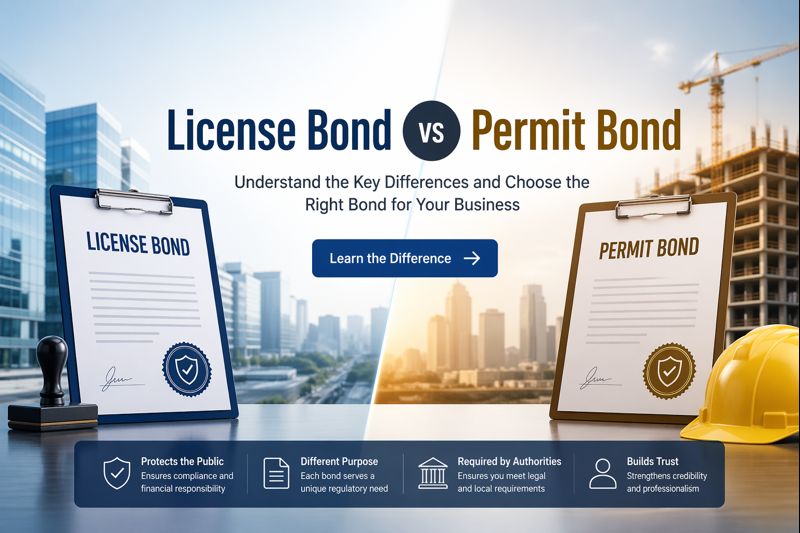
A license bond and a permit bond can sound almost identical because both are surety bonds tied to government or regulatory requirements. The difference is usually the reason the bond is required. A license bond is commonly tied to obtaining or keeping a business or professional license. A permit bond is commonly tied to a specific permit, project, activity, job location, or one-time approval.
In plain English: a license bond helps a business qualify to operate legally in a regulated line of work. A permit bond helps a person or business perform a specific permitted activity while protecting the public body, property owner, or community from noncompliance. Both are different from standard insurance. A surety bond is a three-party financial guarantee involving the principal, the obligee, and the surety. If a valid claim is paid, the bonded business may be responsible for reimbursing the surety.
If you are searching for license bond or permit bond help near me, the best starting point is the requirement notice. Do not guess from the bond name alone. Gather the obligee name, required bond amount, license or permit type, bond form, business legal name, project address if applicable, and deadline. Blake Insurance Group helps business owners, contractors, service providers, and applicants understand the difference before they start a quote.
Quick facts: license bond vs permit bond
Use this snapshot before applying for a business license, contractor license, municipal permit, building permit, right-of-way permit, street-cut permit, utility permit, or other local approval. The title of the bond matters, but the obligee’s written requirement controls the exact bond form and amount.
| Review point | License bond | Permit bond | Why it matters |
|---|---|---|---|
| Main purpose | Helps satisfy a licensing requirement for a business, contractor, dealer, professional, or regulated activity. | Helps satisfy a permit requirement for a specific project, location, public improvement, or temporary activity. | The bond must match the agency requirement, not just the applicant’s general business category. |
| Typical obligee | State licensing board, city licensing office, county agency, or regulatory department. | City, county, public works department, building department, transportation agency, or permit authority. | The obligee name must usually appear correctly on the bond form. |
| Common timing | Before license approval, renewal, reinstatement, or continued operation. | Before a permit is issued or before permitted work can begin. | Starting early reduces delays with licensing, bid scheduling, inspections, or mobilization. |
| Best first step | Gather the licensing notice, bond amount, business name, license classification, and required form. | Gather the permit notice, project address, scope, permit number, bond amount, and required form. | Surety quotes are faster when the requirement is clear. |
License bond vs permit bond: side-by-side comparison
License bonds and permit bonds both support compliance, but they usually operate at different points in the business or project lifecycle. A license bond is often about whether you are allowed to conduct a regulated business. A permit bond is often about whether you are allowed to perform a specific permitted action. That action may involve construction, excavation, utility work, temporary use, signage, hauling, street occupancy, public right-of-way work, or another activity controlled by a public agency.
| Category | License bond | Permit bond | Before you apply |
|---|---|---|---|
| Core question | Can this business or professional be licensed to operate? | Can this applicant perform this permitted activity or project? | Read the requirement notice carefully and confirm the exact bond name. |
| Scope | Usually tied to a license classification, occupation, trade, or business activity. | Usually tied to a permit, project site, work description, or specific public approval. | Do not assume one bond covers both licensing and project-permit obligations. |
| Common examples | Contractor license bond, auto dealer bond, mortgage broker bond, freight broker bond, notary bond, collection agency bond. | Building permit bond, right-of-way bond, street excavation bond, utility cut bond, temporary use permit bond, encroachment permit bond. | Examples vary by state, city, county, agency, and industry. |
| Who is protected | Government agency, consumers, clients, or parties protected by the licensing law or regulation. | Government agency, public body, property owner, taxpayers, or others affected by the permitted work. | The bond form explains claim rights and obligations. |
| Renewal pattern | Often annual or tied to the license term. | May be project-specific, permit-specific, annual, or tied to completion and release. | Confirm whether the bond must remain active after work is complete. |
| Wrong-bond risk | License approval may be delayed or rejected. | Permit issuance, inspection, or project start may be delayed. | Submit the exact bond form requested by the obligee whenever one is provided. |
What is a license bond?
A license bond is usually required before a business or individual can receive, renew, or maintain a license. The obligee may be a state board, municipal licensing office, county department, or another regulator. The bond gives the obligee and protected parties a financial guarantee that the licensed business will follow applicable laws, rules, codes, and licensing obligations.
For contractors, a license bond may be part of the licensing process. For other industries, license bonds may appear in auto sales, mortgage services, tax preparation, collection work, freight brokerage, notary services, professional licensing, and local business licensing. Each bond has its own form, bond amount, and compliance language.
What is a permit bond?
A permit bond is usually tied to permission to perform a specific activity. It may be required before a city, county, state agency, building department, public works department, or transportation authority issues a permit. Permit bonds are common when work could affect public property, safety, infrastructure, streets, sidewalks, utilities, drainage, temporary land use, or code compliance.
A permit bond may be needed even when the applicant already has a valid business license or contractor license bond. That is because the license bond addresses the right to operate, while the permit bond addresses the right to do a particular job or activity under specific permit conditions. If the permitted work is not completed properly, the bond may provide a remedy according to the bond form and agency rules.
| Permit situation | Why a bond may be requested | Documents to gather | Smart move |
|---|---|---|---|
| Right-of-way work | Protects public streets, sidewalks, curbs, or access areas affected by work. | Permit application, project address, scope, obligee, and bond amount. | Confirm whether the city requires its own bond form. |
| Street excavation or utility cut | Helps ensure restoration after trenching, cutting, utility work, or public-area disturbance. | Plans, permit number, location, contractor information, and completion timeline. | Ask whether the bond is released after inspection or held longer. |
| Building or construction permit | May support code compliance, completion, cleanup, or public protection requirements. | Building department notice, contract scope, job value, and required bond wording. | Do not substitute a license bond unless the agency approves it. |
| Temporary use or event-related permit | May ensure cleanup, restoration, or compliance with temporary-use conditions. | Event or use approval, location, dates, permit conditions, and bond amount. | Check the deadline before the permit date. |
How cost and underwriting work
The cost of a license bond or permit bond depends on the required bond amount, bond type, applicant information, credit profile, business history, financial strength, prior bond claims, industry risk, and surety underwriting rules. Some small license and permit bonds can be quoted quickly with a short online application. Larger, riskier, unusual, or highly customized bonds may require more review.
The bond amount is not the same as the premium. The bond amount is the maximum penal sum shown on the bond. The premium is the price paid to obtain the bond for the required term. For example, a $10,000 bond does not automatically cost $10,000. The final premium depends on the surety’s rating and underwriting factors.
Applicants improve the process by using the exact legal business name, matching the obligee wording, providing the required form, and avoiding last-minute applications. Permit bonds are especially time-sensitive because a delayed bond can hold up a permit, inspection, public works approval, or job start.
| Factor | Why it matters | What to prepare | Best practice |
|---|---|---|---|
| Bond amount | Sets the surety’s maximum obligation under the bond. | Requirement notice, statute reference, or permit letter. | Confirm the amount directly from the obligee. |
| Bond form | Controls the legal obligation and claim language. | Agency-provided form or written instructions. | Use the obligee form when available. |
| Applicant details | Surety needs the correct principal name and business structure. | Legal entity name, owner names, address, license or permit number. | Match the license or permit application exactly. |
| Credit and history | Some bonds are credit-based, especially higher-risk obligations. | Owner information and business background. | Apply early if credit, claims, or prior bond issues may need review. |
| Project or permit scope | Permit bonds may depend on location, timeline, work type, and public exposure. | Scope of work, address, plans, permit number, and completion schedule. | Send complete permit documents before work begins. |
Bond quote checklist: what to gather before applying
The fastest bond quote usually starts with the written requirement. If you only know that you “need a bond,” the next step is to identify whether the requirement is for licensing, permitting, public work, project completion, consumer protection, cleanup, restoration, or another compliance obligation.
| Item | What to provide | Why it matters | Best practice |
|---|---|---|---|
| Bond type | License bond, permit bond, contractor bond, dealer bond, right-of-way bond, or other stated requirement. | Determines the correct surety category and application path. | Use the wording from the agency notice. |
| Obligee | City, county, state agency, licensing board, public works department, or other requiring party. | The bond must be issued to the correct party. | Confirm the legal obligee name and mailing address. |
| Principal | Your legal business name or individual applicant name. | The bond must match the license or permit applicant. | Check spelling, entity type, and DBA details. |
| Bond amount | Required penal sum from the agency or permit office. | The surety quote depends on the required amount. | Do not estimate if the requirement lists a fixed amount. |
| Bond form | Agency-provided PDF, form number, or required language. | Some obligees reject generic forms. | Upload or share the form before binding when possible. |
| Deadline | License renewal date, permit issuance date, inspection deadline, bid date, or project start date. | Controls urgency and delivery requirements. | Start before the agency deadline, not the day the bond is due. |
Surety bond support in our licensed states
Bond requirements vary by state, city, county, agency, license classification, permit office, and project type. Blake Insurance Group helps applicants review license and permit bond needs across our licensed footprint. For state-specific or city-specific obligations, always verify the exact agency form and requirement before you submit payment, start work, or assume an existing bond is enough.
| Region | States | Common license and permit bond focus |
|---|---|---|
| Southwest and West | AZ, CA, NM, TX | Contractor license bonds, right-of-way permits, municipal permits, dealer bonds, and construction-related compliance bonds. |
| Southeast and Mid-Atlantic | AL, FL, GA, NC, SC, VA, WV | Trade license bonds, local permit bonds, public improvement bonds, contractor compliance, and service-provider bonds. |
| Midwest and Plains | IA, KS, MI, NE, OH, OK, SD | License, permit, municipal, construction, utility, and commercial compliance bond reviews. |
| Northeast | NY | Local license bonds, permit obligations, commercial compliance bonds, and public-agency bond requirements. |
Get a license bond or permit bond quote
Start the bond quote as early as possible. If you already have the license notice, permit instructions, agency form, or required bond amount, keep that document ready before beginning the quote. If you only know the business type or project type, you can still begin the review and update the details as they become available.
The right bond is the one that matches the obligee’s requirement. For a license bond, that usually means matching the license type, legal business name, bond amount, and renewal term. For a permit bond, that usually means matching the permit number, project location, public agency, scope of work, bond amount, and release conditions.
Have your obligee name, bond amount, required form, license or permit type, and deadline ready before applying.
Related topics
License bond vs permit bond FAQs
What is the main difference between a license bond and a permit bond?
A license bond is usually tied to obtaining, renewing, or maintaining a business or professional license. A permit bond is usually tied to a specific permit, project, location, or temporary activity. Both support compliance, but they are not automatically interchangeable.
Can one bond cover both my license and my permit?
Sometimes an agency may accept one broader bond, but you should not assume that. A license bond and a permit bond often have different obligees, forms, amounts, and obligations. Always follow the written requirement from the licensing or permit authority.
Is a license or permit bond the same as business insurance?
No. A surety bond is not the same as general liability, workers compensation, commercial auto, or professional liability insurance. A surety bond protects the obligee or eligible claimants under the bond form. If the surety pays a valid claim, the bonded applicant may be required to reimburse the surety.
How much does a license bond or permit bond cost?
Cost depends on the required bond amount, bond type, applicant credit, business history, risk level, surety underwriting, and whether the bond is simple or customized. The bond amount is not the premium. The premium is the price paid to obtain the bond for the required term.
What information do I need before starting a quote?
Gather the bond type, obligee name, required bond amount, agency form, license or permit number, applicant legal name, project address if applicable, and deadline. The more exact your documents are, the easier it is to match the bond correctly.
Independent agency notice: Blake Insurance Group LLC is an independent insurance agency and surety referral resource. We are not affiliated with any single surety company, contractor, obligee, municipality, licensing board, or government agency.
Licensing: Licensed insurance producer (NPN 16944666).
Important: Bond approval, pricing, underwriting, forms, release rules, claim handling, cancellation rules, indemnity obligations, and eligibility vary by surety, applicant, obligee, bond type, state, municipality, agency, project, permit, and license requirement. Your issued bond, indemnity agreement, contract, permit, and licensing documents govern obligations.
No legal advice: This page is general information and is not legal, tax, contract, licensing, claims, or compliance advice. Confirm specific requirements with the licensing authority, permit office, contract administrator, or qualified legal professional when needed.
Trademarks: All product, company, agency, and program names are trademarks™ or registered® trademarks of their respective holders. Use of them does not imply affiliation or endorsement.




