Adapting a Home for Special Needs: Practical Upgrades, Insurance Tips, and Ways to Pay
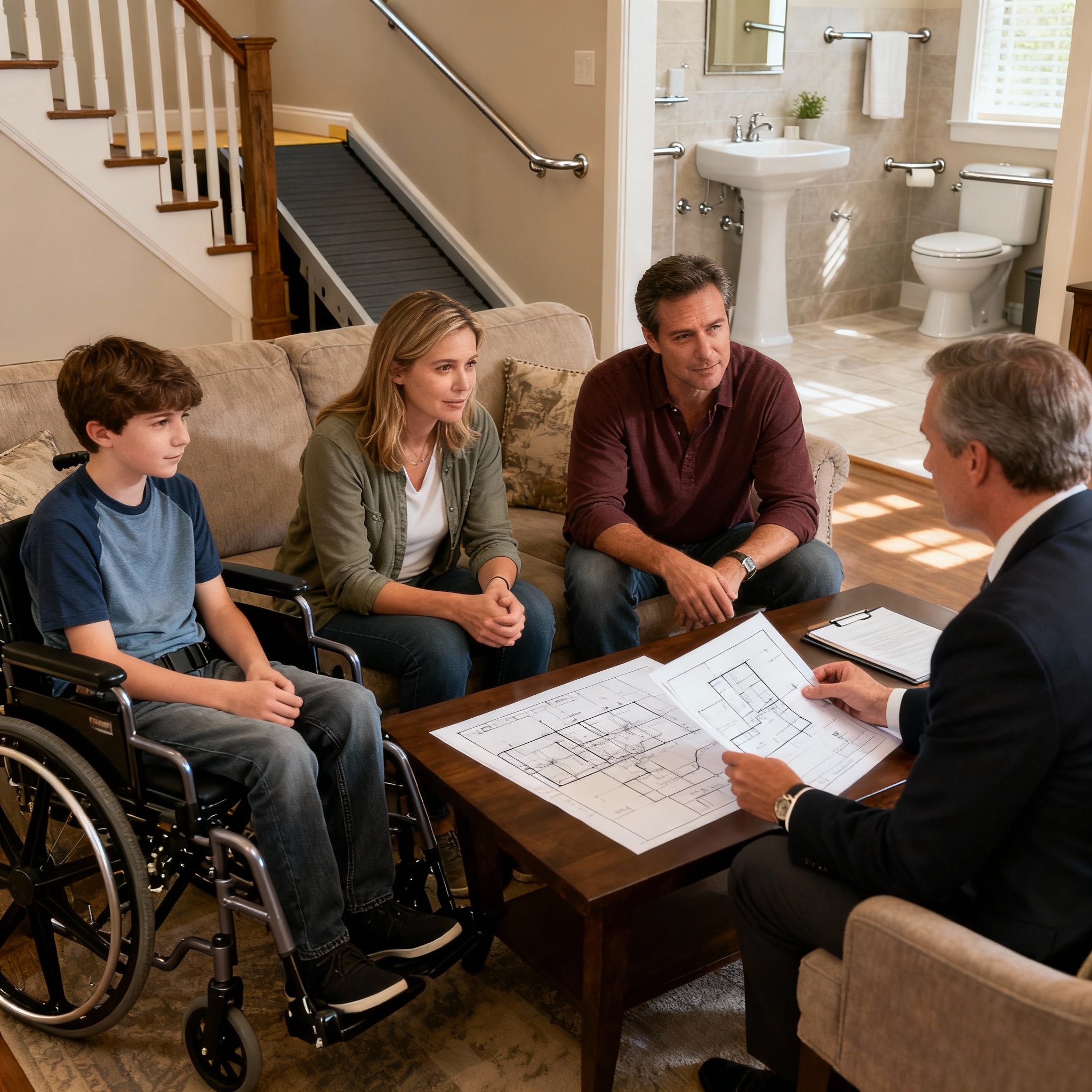
Whether you’re supporting aging-in-place, a new disability, or a long-term condition, smart home modifications can restore independence and safety. This guide covers what to change, how to budget, and the insurance and funding paths that may help—plus documentation tips so you’re not paying more than you should.
Universal Design Basics (Built for Everyone)
Universal design means choosing layouts and products that work for most people—regardless of age, height, mobility, or sensory needs. It’s not just for wheelchairs; it’s about comfort and safety for all. Hallmarks include: step-free entries, wide doorways (often 36"), lever handles instead of knobs, contrasting colors for depth perception, and lighting that reduces glare and shadows.
- Plan circulation: Target 5' turning circles where possible and uncluttered pathways at least 36" wide.
- Choose fixtures once: Rocker light switches, lever handles, and anti-scald faucets improve access with minimal cost.
- Future-proof: Add blocking behind walls now for later grab bars or ceiling lifts—even if you’re not installing them yet.
Room-by-Room Checklist (High-Impact Upgrades)
| Area | Priority Changes | What to Watch |
|---|---|---|
| Entry & Exterior | Ramp or zero-threshold entry; motion lights; non-slip surfaces; house numbers with high contrast | Ramp slope (commonly 1:12 target), railings both sides, drainage to avoid ice/water pooling |
| Doors & Halls | 36" doors; swing-clear hinges; lever handles; threshold reducers | Check turning space at landings/corners; avoid raised thresholds that catch wheels or shuffles |
| Bathroom | Curbless shower; grab bars; handheld shower; comfort-height toilet; non-slip tile | Reinforce walls; slope-to-drain; trench drains; consider shower benches and thermostatic valves |
| Kitchen | Pull-out shelves; D-shaped cabinet pulls; under-cabinet lighting; side-opening wall oven; induction cooktop | Clear knee space for seated use; landing areas near fridge/sink; anti-tip brackets for ranges |
| Bedroom | Pathway lighting; adjustable bed height; closet rods on pull-downs | Nighttime fall prevention: sensor lights, clear floors, secured rugs |
| Stairs | Continuous handrails both sides; high-contrast nosings; stair lift if needed | Check headroom, landing size, and dedicated circuits for powered lifts |
Local building codes vary. Private homes aren’t governed by ADA the same way public spaces are, but ADA/ANSI concepts can inspire safer choices.
Safety & Smart-Home Tech (Small Changes, Big Confidence)
- Fall prevention: Non-slip flooring, sturdy rails, bright task lighting, and tidy cords.
- Emergency readiness: Video doorbells, smart locks with caregiver codes, and voice-activated assistants.
- Medication & routine support: Smart pill dispensers, reminders, and bed/chair sensors that alert caregivers.
- Thermostat & air quality: Simple controls with large displays; filter reminders for respiratory sensitivity.
Insurance & Ways to Pay (What’s Typically Covered)
Coverage for home modifications is different from coverage for medical equipment. Here’s how the common paths usually work:
- Medicare (Original): Generally does not pay for structural home changes. It may cover certain durable medical equipment (DME) if medically necessary (e.g., walkers, commodes). Always keep a letter of medical necessity and itemized invoices.
- Medicare Advantage (Part C): Some plans offer supplemental benefits like limited home safety upgrades or post-discharge modifications. Benefits vary by plan and county—compare carefully.
- Medicaid & Waivers: State Medicaid Home- and Community-Based Services (HCBS) waivers may cover accessibility modifications that help you remain at home. Eligibility and caps vary by state.
- VA Programs: Veterans may qualify for grants (e.g., SAH/SHG) or HISA for medically necessary improvements. Rules and amounts differ by program.
- Homeowners Insurance: Typically doesn’t pay for upgrades unless tied to a covered loss (e.g., fire rebuild). However, you should update your dwelling coverage after major renovations and ask about ordinance or law coverage if codes require extra work.
- Contractor Insurance: Always request a Certificate of Insurance (general liability and workers’ comp). Uninsured crews can shift injury liability to you.
- Grants, Loans, & Tax: Local agencies, nonprofits, and USDA/State programs may help with accessibility costs. In some cases, medically necessary modifications are tax-deductible; consult a tax professional.
A Smooth Project in 6 Steps
- Clinical assessment: Ask an OT/PT to evaluate mobility, transfers, and home hazards; request a written recommendation.
- Scope & budget: Translate clinical needs into a prioritized list (must-have vs. nice-to-have). Identify funding sources (insurance, grants, savings).
- 3 qualified bids: Require licenses, references, COI, and written warranties. Ask about product lead times.
- Permits & inspections: Pull required permits. Schedule inspections for ramps, electrical, or structural changes.
- Documentation: Save invoices, serial numbers, photos, and the OT letter—useful for insurance adjustments and taxes.
- Training & tune-ups: Learn how to use lifts/fixtures safely; set a maintenance calendar for grab bars, ramps, and batteries.
Related Guides
- Dental • Vision • Hearing for Seniors
- Critical Illness Insurance — Cash for Serious Diagnoses
- Identity Theft Coverage — Protect What’s Yours
Special-Needs Home Modifications — FAQs
Does Medicare pay for ramps, stair lifts, or bathroom remodels?
Original Medicare typically doesn’t cover structural modifications. It may cover certain medically necessary DME. Some Medicare Advantage plans offer limited home safety benefits—plan rules vary.
Do I need to tell my homeowners insurer about renovations?
Yes—major upgrades can change your home’s replacement cost. Ask about updating the dwelling limit and whether “ordinance or law” coverage is appropriate.
How do I avoid contractor problems?
Verify licenses, pull permits, get three bids, and require a Certificate of Insurance. Pay by milestone with a written contract and clear scope.
What documentation should I keep?
OT/PT recommendations, letters of medical necessity, itemized invoices, product warranties, serial numbers, and photos before/after. These help with insurance, taxes, and resale.
Can Medicaid or the VA help with accessibility?
Many states offer Medicaid HCBS waivers that may cover modifications. Veterans may qualify for SAH/SHG or HISA programs. Eligibility, amounts, and approved items vary.
Licensed insurance producer (NPR/NPN 16944666). Blake Insurance Group is an independent agency and is not connected with or endorsed by the U.S. government or the federal Medicare program. This article is general information—not legal, tax, medical, or architectural advice. Coverage and rules vary by plan and state; building codes vary by city/county.
Share This




Customer Reviews
Blake Insurance Group
Phone: (888) 387-3687
Email: info@blakeinsurancegroup.com
Hours: Mon-Fri 9:00 am to 5:00 pm
Sat-Sun: Closed

Blake Nwosu
Owner & Principal Agent