How to Avoid Medicare Phone Scams: 2027 Protection Guide
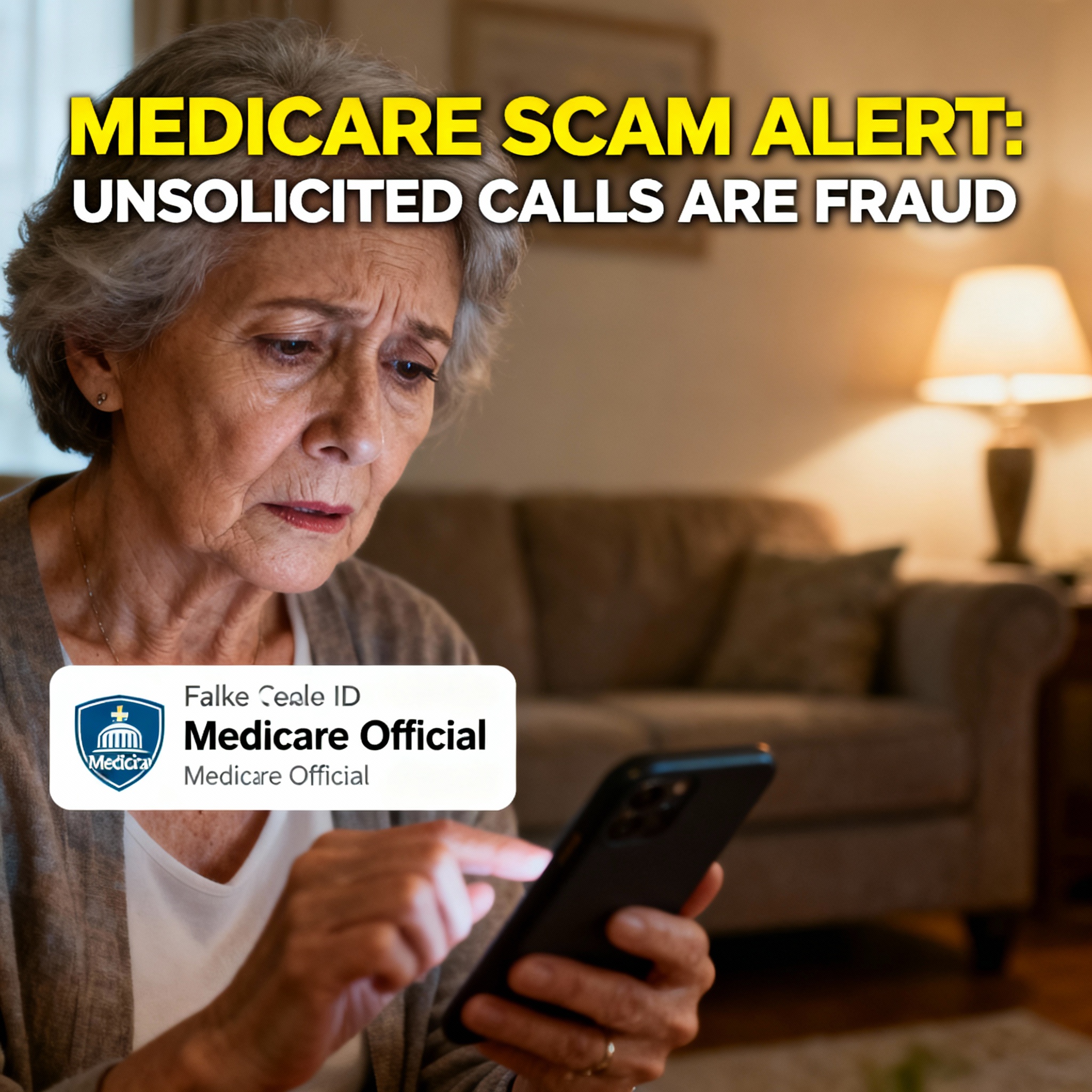
Medicare phone scams change their stories, but the goal is usually the same: get your Medicare number, Social Security number, financial information, account credentials, money, or permission to bill for something you did not request. A caller may claim to represent Medicare, Social Security, a health plan, a pharmacy, a medical-equipment company, a testing laboratory, or a vague “benefits center.” Caller ID can be manipulated, so a familiar local number or government-looking name is not proof.
The safest response is simple: do not confirm personal information, do not pay, do not click a link, do not install software, and do not let the caller rush you. End the call and independently contact Medicare, your health plan, or your provider using a trusted number from your card, official account, or document. A legitimate issue will still exist when you call back through a verified channel.
Quick warning signs of a Medicare scam call
No single phrase proves fraud, and legitimate health plans or agents may contact people in limited situations permitted by Medicare rules. The clearest warning is a combination of unexpected contact, a sensitive request, and urgency. You do not need to decide whether the caller is honest while the caller is still on the line.
Do not correct the caller when the caller guesses your name, address, doctor, plan, or birth date. Even saying “that is my old address” confirms information that can be combined with public records or stolen data. Do not press a keypad option to reach an operator, and do not follow instructions to move the conversation to text, email, encrypted messaging, or a different phone number.
Common Medicare phone-scam scripts
Scam language changes with the season, news cycle, and caller’s information about you. Some callers use a generic robocall and wait for people to respond. Others know a name, age range, provider, or insurance-company name from marketing lists, public sources, or a prior data breach. Knowing one correct fact does not make the rest of the call legitimate.
| Caller’s story | What may be sought | Safer response |
|---|---|---|
| “Your Medicare card is expiring.” | Medicare number, Social Security number, birth date, payment, or address confirmation. | Hang up. Use your secure Medicare account or call 1-800-MEDICARE yourself if a replacement card is actually needed. |
| “You qualify for a free brace or supply kit.” | Permission to bill Medicare, a recorded “yes,” provider information, or delivery address. | Accept equipment only when it is medically appropriate and ordered through a clinician you trust. |
| “Your doctor approved a genetic test.” | Medicare information, consent, a cheek swab, or permission for laboratory billing. | End the call and contact your own doctor through the office’s established number. |
| “You have unclaimed benefits or a refund.” | Bank account, debit card, Medicare number, or a fee required to release money. | Do not pay or provide an account. Verify any plan benefit through the number on your member card. |
| “You must confirm your plan for 2027.” | Enrollment data, a rushed plan switch, Medicare number, or recorded consent. | Ask for the exact plan name in writing, end the call, and compare through a channel you initiated. |
| “Medicare detected suspicious activity.” | Credentials, one-time codes, remote computer access, or money for supposed protection. | Do not share codes or install software. Independently contact Medicare and relevant financial institutions. |
“Free” and “no cost to you” do not mean no claim will be submitted. Fraudulent suppliers may bill Medicare for items that were not ordered, were not medically necessary, or were never delivered. Unauthorized billing can affect program funds and may complicate later access to equipment that is genuinely needed. Review every Medicare Summary Notice or plan Explanation of Benefits even when you owe nothing.
Scammers also exploit legitimate topics such as Annual Enrollment, supplemental benefits, prescription costs, new identification cards, telehealth, preventive tests, and durable medical equipment. A real program can be used as cover for a false request. Verify the exact program through Medicare, your plan, or your established health-care provider before disclosing information.
When Medicare, a health plan, or an agent may contact you
Avoid an overly broad rule such as “Medicare never calls.” Medicare explains that it will never call to sell you anything or visit your home for that purpose. Medicare or someone representing Medicare may call and ask for personal information only in limited circumstances, such as returning a call after you joined a plan, reported fraud, or left a message. When uncertain, end the call and use the number on your Medicare card.
Health plans and licensed agents must follow Medicare marketing rules. A plan representative generally cannot make an uninvited home visit, call without an allowed relationship or your permission, require you to speak with a sales agent to receive plan information, pressure you to enroll, or request payment online or by telephone. During an agreed sales appointment, the discussion is limited to the products you agreed to address under applicable rules.
A legitimate agent should clearly identify the person, agency, reason for contact, and organizations represented. The agent should not display misleading Medicare branding or claim to be Medicare. The agent cannot promise that a plan is best for everyone or threaten that you will lose Medicare if you do not enroll. You should receive time to review the exact plan and official materials before signing.
| Question | Lower-risk indicator | Higher-risk indicator |
|---|---|---|
| Did you expect the call? | You requested contact through a known plan, agency, provider, or Medicare channel. | The caller appeared without permission and will not explain how consent was obtained. |
| Can you verify independently? | The caller encourages you to hang up and use the trusted number on your card or document. | The caller insists you stay connected or calls back repeatedly when you try to verify. |
| What information is requested? | General needs for a plan discussion, with sensitive data reserved for a legitimate enrollment process. | Medicare, Social Security, banking, payment-card, password, or one-time-code information immediately. |
| Is there pressure? | You can review documents, ask questions, and decide during a valid enrollment period. | A threat, secret offer, same-day deadline, prize, penalty, or demand to act before speaking with family. |
| What is being offered? | A specific plan or medically appropriate item that can be verified in official documents. | A vague “benefit,” unordered medical item, cash, gift card, or guaranteed savings without plan details. |
If you are seeking Medicare help near me, initiate the contact yourself and confirm state licensing, agency identity, represented organizations, and the exact plans being discussed. An independent agency may represent multiple organizations but not every plan. Medicare Plan Compare, 1-800-MEDICARE, and SHIP can help you review choices beyond an agency’s represented scope.
What to do during a suspicious call
- Pause. Do not confirm your name, address, date of birth, doctors, medications, Medicare number, Social Security number, financial information, or current health plan.
- Decline the request. A simple response is: “I do not provide information on an unexpected call. I will contact Medicare, my plan, or my provider directly.” You do not need to debate the caller.
- Do not interact with links or software. Do not open a text or email link, scan a code, install an application, share your screen, or read a security code aloud.
- Hang up. Do not use a number the caller gives you. A scammer may operate the callback number or keep the telephone line open in an attempt to intercept the next call.
- Verify independently. Use the number on your Medicare card, health-plan card, prescription card, provider statement, or official account. Type a known official address rather than using a search advertisement.
- Write down what happened. Record the date, time, displayed number, claimed organization, caller name, requested information, promises, threats, and any number or website provided.
Do not rely on a caller’s ability to transfer you to a “supervisor,” play hold music, quote a badge number, or recite public information. Those are easy to stage. Do not trust a conference call that supposedly adds Medicare, a bank, or a family member; the original caller may control the entire connection.
If the caller claims an urgent health issue, contact your established clinician. If the caller claims your plan is terminating or a premium is overdue, use the member-service number on the plan card. If the caller claims your Medicare card must be replaced, use your secure Medicare account or call 1-800-MEDICARE. Never pay for a standard replacement Medicare card.
What to do if you shared information or money
Act quickly, but do not panic. The right steps depend on what was disclosed. Make a written list while the call is fresh. Include whether you gave a Medicare number, Social Security number, birth date, address, plan information, bank or payment-card details, account password, one-time code, signature, recorded consent, or remote access to a device.
If you shared your Medicare number
Call 1-800-MEDICARE and explain what happened. Review recent claims through your secure Medicare account and examine each Medicare Summary Notice. If you have Medicare Advantage or Part D coverage, contact the plan using the number on the member card and review Explanation of Benefits statements. Ask how to report activity you do not recognize.
If you shared Social Security or financial information
Contact the relevant bank or card issuer through a trusted number and explain that information may be compromised. Ask about securing accounts, replacing cards, changing access credentials, and reviewing transactions. If a Social Security number or broader identity information was exposed, follow the Federal Trade Commission’s identity-theft recovery process and consider the appropriate fraud alert or credit freeze.
If you installed software or granted remote access
Disconnect the device from the internet, stop using it for sensitive accounts, and seek help from a trusted technical professional. From a separate trusted device, change passwords for email, banking, Medicare, health portals, and other important accounts. Use unique passwords and multifactor authentication. Contact financial institutions if the device was used to access money.
If an unordered package arrives
Do not assume that receiving medical equipment makes the transaction legitimate. If your trusted clinician did not order it, refuse delivery when possible or contact the sender about returning it. Keep the sender’s name, tracking information, return instructions, dates, and photographs. Then check claim statements and report suspicious billing.
Monitor claims, report suspected fraud, and reduce repeat calls
Detection matters because fraudulent medical billing may not create an immediate charge to you. Review every Medicare Summary Notice or plan Explanation of Benefits for providers, equipment, tests, visits, diagnoses, or dates you do not recognize. Compare statements with your calendar and receipts. An entry can be unfamiliar without being fraudulent, so first ask the provider or plan to explain it, then report unresolved suspicious activity.
Medicare instructs beneficiaries to report suspected fraud through 1-800-MEDICARE. Have the provider or supplier name, service or item, payment amount, date on the statement, Medicare number, and reason for concern ready. You can also report government-impersonation and identity-theft concerns to the appropriate federal authorities. Preserve call logs, voicemails, texts, emails, screenshots, envelopes, shipping labels, bills, and notes.
Blocking one number may not stop the same operation because spoofed numbers can change constantly. Still, phone filtering can reduce interruptions. Enable built-in spam identification, ask your telephone provider about call-screening tools, send unknown callers to voicemail, and block repeat numbers. Do not respond to a suspicious text with “STOP,” because the response may confirm an active number. Delete it after saving evidence needed for a report.
Make a household verification plan. Decide which family member or trusted contact can help review unexpected Medicare calls, mail, or equipment. Place 1-800-MEDICARE and health-plan member service in an easy-to-find location. Teach everyone that ending a call is not rude and that no benefit should depend on keeping a caller secret from family, a doctor, or Medicare.
The Blake Insurance Group form requests assistance from a licensed insurance agent. It does not enroll you in a Medicare plan, report fraud to the government, or replace contacting Medicare or law enforcement.
Frequently asked questions
Does Medicare ever call beneficiaries?
Calls can occur in limited circumstances
Medicare will not call to sell you something. Medicare or someone representing Medicare may call and request information in limited situations, such as returning a call after you joined a plan, reported fraud, or left a message. When uncertain, hang up and call 1-800-MEDICARE using the number on your card.
Does Medicare issue a plastic, chipped, gold, or expiring card?
Do not trust an unexpected replacement-card pitch
If your official Medicare card is lost or damaged, order a replacement through your secure Medicare account or 1-800-MEDICARE. Do not give information or payment to an unsolicited caller who says you must activate, upgrade, or pay for a new card to keep coverage.
What if the caller already knows my name, doctor, or insurance company?
Known information does not prove identity
Personal details can come from public records, marketing lists, social media, discarded documents, or data breaches. Do not confirm or correct the information. End the call and contact the claimed organization through a number you independently trust.
Are free braces, genetic tests, and medical supplies always scams?
The unsolicited Medicare-number request is the warning
Some equipment and tests may be legitimately covered when medically necessary and properly ordered. A cold caller offering an item you did not discuss with your clinician and asking for Medicare information is a major warning sign. Verify the medical need through your established provider.
Can a Medicare plan agent call me?
Agents may call only under permitted circumstances
A plan or agent may contact you when Medicare marketing rules allow it, such as after you gave permission or under an existing permitted relationship. The person must follow licensing and marketing requirements. You may still hang up and initiate a new call through a verified agency or plan number.
Can the Wellcare button report a scam or compare every Medicare plan?
No, it is a separate Wellcare-only pathway
The supplied Wellcare link is not a fraud-reporting service or government website, and it does not compare every plan. Use it only to explore Wellcare Medicare Advantage options after confirming the correct plan year, service area, eligibility, and election period. Contact Medicare directly to report suspected Medicare fraud.