Need 2026 vision coverage?

Compare vision plans, allowances & copays in minutes.

How Much Is Vision Insurance in 2026? Cost Ranges, What Affects Price, and How to Save

How much is vision insurance—exam and eyewear costs with budget-friendly vision plans

Most people overpay for glasses—not for insurance. The right vision plan can cut the price of annual exams, lenses, and frames or contacts by hundreds of dollars—especially for families that update eyewear every 12–24 months. This independent guide explains typical monthly costs, how allowances and copays actually work, and which plan features move your price the most.

How much does vision insurance cost in 2026?

Monthly premiums you can expect

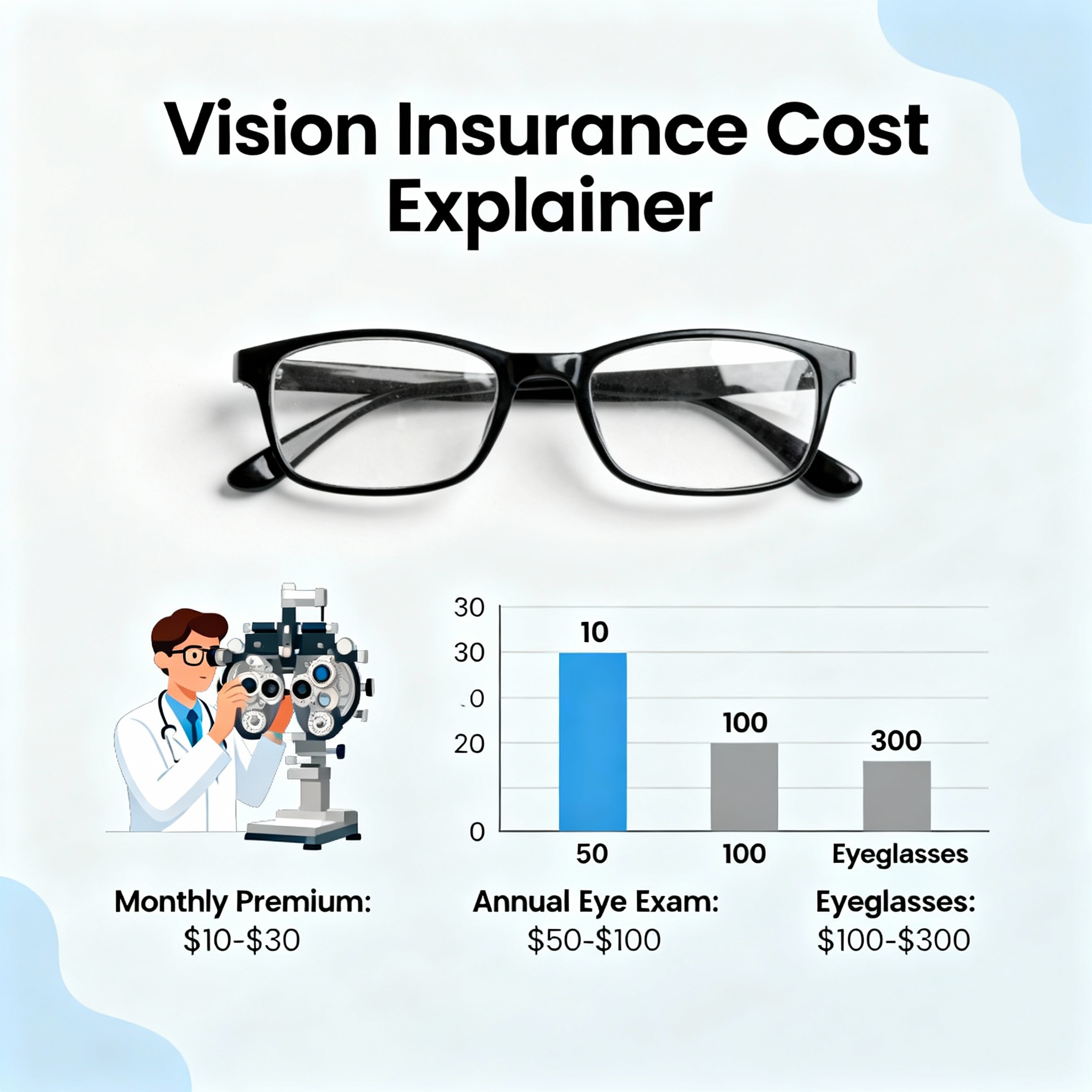
Individual vision plans commonly range from $8–$15/month for budget options to $16–$28/month for richer plans with larger frame/contacts allowances and lower lens copays. Family pricing scales with household size, often with small multi-person discounts.

Where the real savings happen

Most value comes from materials—lenses and frames or contacts. Exams are relatively inexpensive either way, but frames, progressive lenses, and coatings can get pricey. A plan with a generous materials allowance ($150–$250+) and reasonable copays on progressives and coatings usually beats the absolute cheapest premium over a two-year eyewear cycle.

Network power

Large national networks negotiate discounts and copays for lens upgrades (anti-reflective, blue-light, photochromic, progressive). If you have a favorite optical shop, verify it’s in-network. Out-of-network reimbursements help, but in-network is where most savings live.

Contacts vs. glasses users

Most plans are either/or for frames vs. contacts in each benefit period. Heavy contacts users should prioritize a higher contacts allowance and lower fitting copays; occasional wearers may do better with moderate allowances and strong lens benefits.

Independent agent advantage

We normalize exam copays, frame/contacts allowances, lens option copays, out-of-network reimbursements, and frequency rules—then estimate your two-year out-of-pocket so you can see which plan offers the best value per dollar for how you actually shop.

What vision insurance is—and isn’t

Vision plans focus on routine eye exams and eyewear. Eye injuries, glaucoma, diabetic eye disease, and other medical issues typically bill through your health insurance—not your vision plan.

Vision plan styles — budget vs premium

Always verify availability and exact benefits in your ZIP. Networks, copays, and allowances vary by carrier.

Category Budget Vision Plan Premium Vision Plan
Typical monthly cost$8–$15 (individual)$16–$28 (individual)
Exam copay$10–$20$0–$10
Frame allowance$100–$150 every 24 months$150–$250 every 12–24 months
Contacts allowance$100–$130 (either/or with frames)$130–$200+ (either/or)
Lens optionsBasic single-vision; higher copays for upgradesLower copays on progressives, AR, blue-light, polycarbonate
Best forInfrequent eyewear updates, tight budgetsFrequent updates, premium frames/lenses, teens/college

What actually changes your vision insurance price

To compare fairly, match frequencies, allowances, and lens option copays—then look at your total cost over one or two years, not just monthly premium.

FactorHow it moves your ratePro tip
Frame/contacts allowanceHigher allowance increases premiumDon’t buy a $250 allowance if you always choose $120 frames.
Lens option copaysLower copays often mean higher premiumIf you wear progressives or specialty coatings, paying for lower copays can save over time.
Benefit frequency12-month benefits raise costStretch frames to 24 months if you rarely change styles.
Network sizeLarger networks can cost slightly moreWorth it when your preferred optical shops are included.
Bundling with dentalMay raise total premium but simplifies billingBundle only if at least one family member uses eyewear every 12–24 months.
Billing modeMonthly may include modal feesAnnual or EFT can trim cost and prevent accidental lapses.

Vision insurance “near me” — where we help

Searching for how much is vision insurance near me? We check networks for your preferred optical shops, compare allowances and lens copays, and help you enroll with accurate, clean applications.

Sample states & cities we serve for vision plans

Availability note: Not all carriers or plan designs are offered in every state, county, or city.

State Example cities we often help
Arizona (AZ)Phoenix, Tucson, Mesa, Chandler, Gilbert, Glendale
California (CA)Los Angeles, San Diego, San Jose, Sacramento, Fresno, Riverside
Texas (TX)Houston, Dallas, San Antonio, Austin, Fort Worth, El Paso
New Mexico (NM)Albuquerque, Santa Fe, Las Cruces, Rio Rancho
Colorado (CO)Denver, Colorado Springs, Aurora, Fort Collins
Utah (UT)Salt Lake City, Provo, Ogden, St. George
Nevada (NV)Las Vegas, Henderson, Reno, Carson City
Washington (WA)Seattle, Spokane, Tacoma, Bellevue
Oregon (OR)Portland, Eugene, Salem, Bend
Florida (FL)Miami, Orlando, Tampa, Jacksonville, Fort Lauderdale
Georgia (GA)Atlanta, Augusta, Savannah, Columbus
North Carolina (NC)Charlotte, Raleigh, Greensboro, Durham
South Carolina (SC)Charleston, Columbia, Greenville, Myrtle Beach
Virginia (VA)Richmond, Virginia Beach, Norfolk, Arlington
Michigan (MI)Detroit, Grand Rapids, Ann Arbor, Lansing
Ohio (OH)Columbus, Cleveland, Cincinnati, Dayton
Pennsylvania (PA)Philadelphia, Pittsburgh, Harrisburg, Allentown
New Jersey (NJ)Newark, Jersey City, Paterson, Trenton
New York (NY)New York City, Buffalo, Rochester, Albany, Syracuse
Illinois (IL)Chicago, Aurora, Naperville, Rockford

Local patterns we watch

  • Big metros: Premium plans shine for designer frames and yearly progressive lens upgrades.
  • College towns: Heavy contacts users often benefit from richer contacts allowances and lower fitting copays.
  • Rural areas: When in-network options are thin, we prioritize plans with strong out-of-network reimbursements and mail-order contacts support.

Get personalized, budget-friendly vision quotes

Share your ZIP, preferred optical shops, how often you upgrade eyewear, and whether you use progressives, coatings, or contacts. We’ll compare multiple carriers, estimate your two-year out-of-pocket, and highlight the plan that fits your budget and habits.

Frequently asked questions

Is vision insurance worth it if I only get an exam?

Vision insurance delivers the most value when you also purchase frames, lenses, or contacts. If you rarely change eyewear, a low-premium plan or cash-pay exam may be cheaper overall.

Can I use vision insurance for out-of-network shops?

Many vision plans offer out-of-network reimbursements, but you typically receive fixed dollar amounts rather than in-network copays and allowances. If you prefer a non-network or boutique provider, we’ll compare those reimbursements to in-network savings.

Do plans cover blue-light filters, anti-reflective, or photochromic lenses?

Most plans offer discounted copays for lens options. Premium plans usually provide lower copays for progressives, anti-reflective coatings, blue-light filters, polycarbonate, and photochromic lenses—important for heavy screen users and night drivers.

What if I wear both glasses and contacts?

Because many plans treat frames and contacts as an either-or benefit per period, people who use both regularly often alternate years or choose plans with shorter frequency on the benefit they use most.

Is vision insurance the same as medical coverage for eye conditions?

No. Vision insurance typically covers routine eye exams and eyewear. Eye injuries, infections, glaucoma, and diabetic eye disease are usually billed to your medical insurance.

Disclosure

Licensed insurance producer (NPR/NPN 16944666). Blake Insurance Group is an independent agency. Availability, networks, copays, and allowances vary by carrier and ZIP code. Brand names belong to their owners; use does not imply endorsement. Always review official policy forms and summaries of benefits for exact terms and costs.

Blake Insurance Group
Call: (888) 387-3687 Email: info@blakeinsurancegroup.com Mon–Fri 9:00–5:00
Blake Nwosu, Owner and Principal Agent
Blake Nwosu Owner & Principal Agent

Expert in personal and commercial insurance, including auto, home, business, health, and life insurance.

License: 16117464

Bio: blakeinsurancegroup.com/blake-nwosu/

★★★★★ Google reviews Loading…
Share: Facebook icon X (Twitter) icon LinkedIn icon Email icon