North Carolina Insurance Agents
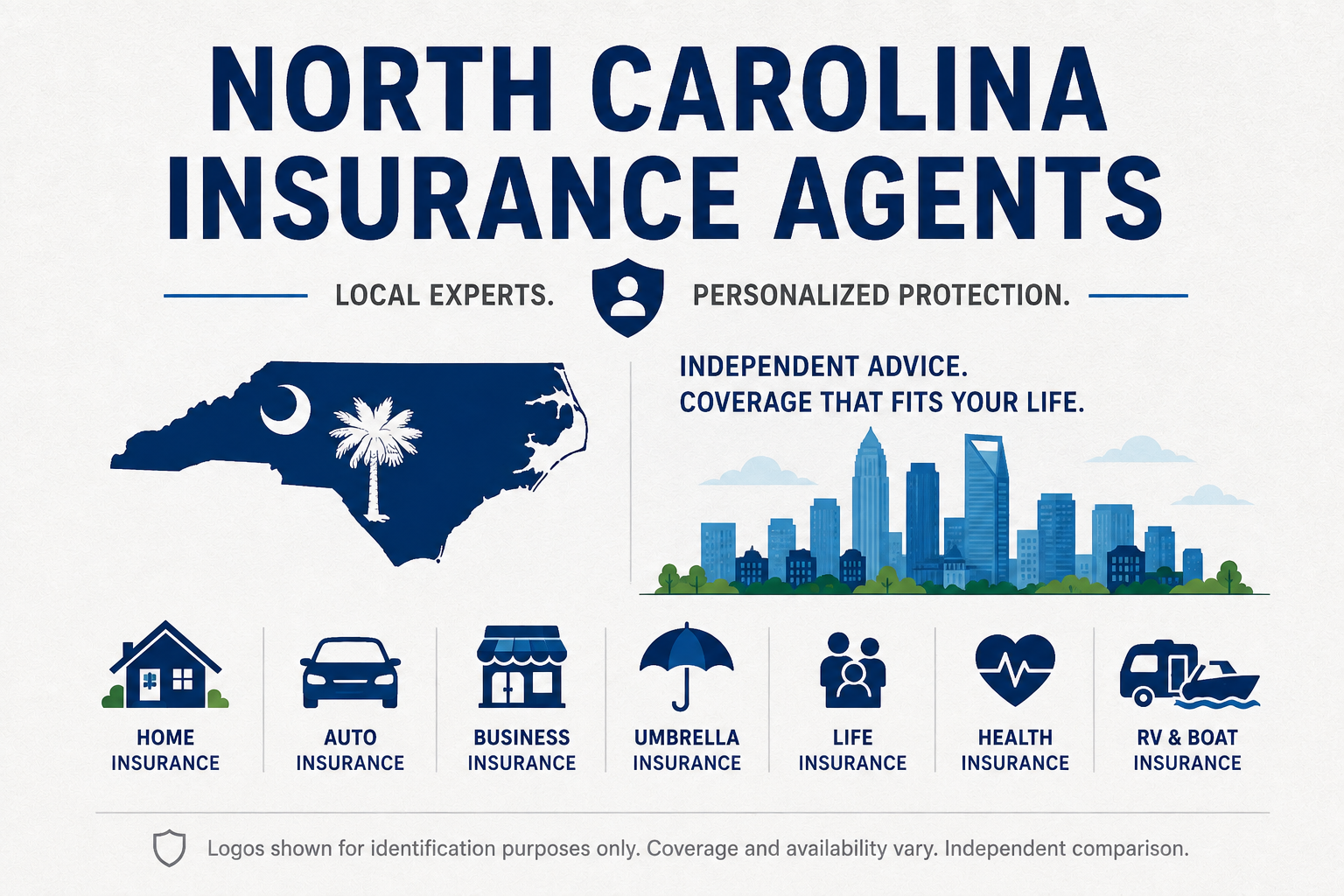
North Carolina insurance agents can help you sort through coverage for your vehicles, home, business, health, and family without reducing the decision to price alone. Blake Insurance Group is an independent agency serving clients remotely across North Carolina. We help identify available options, explain important differences, and prepare applications for the insurance companies and products we are licensed and appointed to offer.
Insurance needs look different from the Outer Banks to Asheville. Coastal wind exclusions, Piedmont hail, mountain winter weather, urban traffic, rebuilding costs, business contracts, and changing health needs can all affect which policy structure makes sense. The goal is not simply to collect quotes. It is to compare limits, deductibles, exclusions, networks, endorsements, and financial tradeoffs before you choose.
Insurance Products for North Carolina Families and Businesses
An independent insurance conversation starts with the risk, not a preselected company. Tell us what you need protected, when coverage should begin, and what has changed since your last review. Depending on eligibility, appointments, location, and carrier availability, an agent may help with one policy or coordinate several.
Auto and Vehicle Insurance
Liability, uninsured and underinsured motorist, collision, comprehensive, medical payments, rental reimbursement, roadside assistance, and coverage for youthful or high-risk drivers may be available. Motorcycles, classic cars, boats, recreational vehicles, and commercial autos usually require their own policy forms.
Home, Condo, Renters, and Landlord
Property coverage can address the dwelling or improvements, belongings, loss of use, personal liability, and medical payments. Landlords, vacant homes, short-term rentals, manufactured homes, and secondary residences need forms designed for their actual occupancy and use.
Business Insurance
Options can include general liability, a business owners policy, commercial property, workers’ compensation, commercial auto, professional liability, cyber insurance, inland marine, and umbrella coverage. Contract wording and certificate requirements should be reviewed before work begins.
Life and Income Protection
Term life, permanent life, final expense, and disability income products address different needs. A useful review considers income replacement, debts, education goals, dependents, business obligations, benefit periods, waiting periods, and the budget you can sustain.
Individual and Family Health
Marketplace and other available health options should be compared by total cost, provider network, prescription formulary, deductible, out-of-pocket maximum, referral rules, and eligibility for financial assistance—not premium alone. Enrollment timing and qualifying events matter.
Medicare Coverage
People eligible for Medicare may compare Original Medicare with Medicare Supplement and Part D options, or consider Medicare Advantage where offered. Plan availability, provider networks, formularies, benefits, and costs can vary by county and year. Enrollment rules must be considered before making a change.
North Carolina Auto Insurance: Start With the Right Liability Structure
For policies issued or renewed on or after July 1, 2025, North Carolina’s minimum liability limits are 50/100/50. Those numbers describe the maximum the policy pays for covered bodily injury to one person, bodily injury to everyone injured in one accident, and property damage from one accident, subject to the policy terms. They are not a promise that every claim will be fully paid, and they do not represent the most an injured party could seek.
Households with savings, property, higher incomes, teen drivers, long commutes, or frequent passengers may want to evaluate limits above the statutory minimum. An umbrella policy can add another layer of liability protection, but it generally requires specified underlying auto and home limits. The umbrella’s eligibility rules, exclusions, and retained limits must be checked.
Collision and comprehensive are separate from liability. Collision generally addresses covered damage to your insured vehicle from an impact or rollover; comprehensive generally addresses covered non-collision causes such as theft, falling objects, glass damage, or certain weather events. A lender or lessor may require both. “Full coverage” is informal shorthand and does not mean every cause of loss, driver, item, or expense is covered.
| Coverage | What it is designed to address | Review point |
|---|---|---|
| Liability | Covered injuries or property damage you cause to others | Compare required minimums with assets, income, driving exposure, and umbrella needs |
| UM/UIM | Covered losses involving uninsured or inadequately insured motorists | Confirm bodily injury and property damage terms, limits, and applicable deductibles |
| Collision | Covered physical damage to your vehicle from collision or rollover | Balance deductible, vehicle value, loan requirements, and claim affordability |
| Comprehensive | Covered non-collision physical damage | Review glass treatment, deductibles, exclusions, and vehicle value |
| Optional benefits | Rental reimbursement, towing, roadside, or other listed benefits | Check daily limits, maximum days, service conditions, and duplication |
Homeowners Insurance, Coastal Wind, and Flood Risk
A North Carolina homeowners policy can combine dwelling, other structures, personal property, loss of use, personal liability, and medical payments coverage. The details are crucial. Replacement cost and actual cash value can produce very different claim outcomes. Roof settlement provisions, water backup, ordinance or law, equipment breakdown, service line, scheduled valuables, and home-business endorsements should be evaluated for the property and household.
Rebuilding cost is different from market value. The land beneath a home is not rebuilt after a covered loss, while labor, materials, debris removal, contractor demand, architectural work, and code upgrades can drive reconstruction cost above a purchase price or tax value. Report renovations, additions, new roofs, accessory structures, pools, solar installations, and occupancy changes so the insurer can evaluate the correct exposure.
Coastal wind and percentage deductibles
Along the coast, windstorm or hail may be excluded from the primary residential policy depending on location and underwriting. A separate policy may be needed, including possible coverage through the North Carolina Insurance Underwriting Association’s Coastal Property Insurance Pool for eligible properties. Separate wind, hail, hurricane, or named-storm deductibles may be percentages of Coverage A rather than flat dollar amounts. For example, a 2% deductible on $400,000 of dwelling coverage equals $8,000. The declarations and endorsements control when a deductible applies.
Flood is a separate decision
Standard homeowners and renters policies do not cover flood or rising water. Flood protection may be available through the National Flood Insurance Program or a private flood insurer, subject to eligibility and underwriting. NFIP coverage usually has a 30-day waiting period, with limited exceptions, so it should be considered before a storm is approaching or a closing deadline arrives. A lender may require it for some properties, but lender requirements are not a complete measure of flood risk.
Do not confuse flood with water backup, overflow from plumbing, wind-driven rain, or gradual seepage. Each cause can be treated differently by a policy. Ask the agent to explain the covered cause of loss, waiting period, building and contents limits, deductibles, basement limitations, loss-of-use treatment, and whether replacement cost or actual cash value applies.
Renters and condo owners still have property exposure
A landlord’s policy generally does not insure a tenant’s belongings or personal liability. Renters coverage can help with covered personal property, additional living expenses, liability, and medical payments. Condo owners should compare the association’s master policy with the unit-owner policy, paying close attention to interior finishes, loss assessment, deductibles charged back to unit owners, water losses, and improvements or betterments.
Business Insurance for North Carolina Companies
Business insurance should reflect what the company actually does—not just its industry label. A contractor, consultant, retailer, restaurant, landlord, online seller, trucking operation, and nonprofit can all face different combinations of injury, property, professional, cyber, employment, vehicle, and equipment risks. Revenue, payroll, locations, subcontractors, products, contracts, and prior claims influence underwriting.
North Carolina generally requires businesses with three or more employees to obtain workers’ compensation coverage or qualify as self-insured, although the statute includes exceptions and special counting rules. Corporate officers may count toward the threshold even when they elect exclusion. Calling a worker an independent contractor or issuing a Form 1099 does not decide employment status, and an upstream contractor may face exposure when a subcontractor lacks required coverage. Businesses should obtain legal or regulatory guidance when classification is uncertain.
Core property and liability
- General liability for covered third-party injury or property damage claims
- Commercial property for buildings, contents, inventory, and covered income losses
- Business owners policies that package eligible property and liability coverages
- Inland marine for certain tools, equipment, or property in transit
Operational and professional risks
- Professional liability or errors and omissions
- Cyber liability and data breach response
- Commercial auto and hired/non-owned auto
- Workers’ compensation and employer liability
A certificate of insurance is evidence of coverage on the date issued; it does not create coverage or change the policy. Additional insured status, waiver of subrogation, primary and noncontributory wording, completed operations, and notice requirements depend on the policy and endorsements. Send contract requirements early so there is time to determine whether they can be met.
Health, Life, Disability, and Medicare Guidance
Personal insurance planning extends beyond cars and buildings. Individual and family health plans should be checked for physician and hospital networks, prescription formularies, referral requirements, deductibles, coinsurance, out-of-pocket maximums, and eligibility for premium tax credits. HealthCare.gov is the official federal Marketplace. Coverage outside the annual enrollment window generally requires a qualifying life event, and eligibility must be confirmed through the applicable enrollment pathway.
Life insurance planning begins with the purpose and time horizon. Term insurance may fit a defined period such as income replacement during working years or a mortgage obligation. Permanent life insurance may serve longer-term objectives when appropriate and affordable. Final expense policies usually offer smaller death benefits. Underwriting, contestability provisions, exclusions, riders, cash values, surrender charges, and policy costs vary; the issued contract controls.
Disability insurance addresses income rather than medical bills. Compare the definition of disability, elimination period, benefit duration, monthly benefit, occupation class, exclusions, offsets, and whether benefits may increase with income. Employer coverage can be a useful foundation, but its benefit amount, taxation, portability, and definition of disability may differ from an individual policy.
For Medicare, a review should begin with how the person wants to receive benefits. Medicare Advantage is an alternative way to receive Medicare-covered benefits through a private plan. Medicare Supplement insurance works with Original Medicare; it is not used with Medicare Advantage. Prescription coverage, provider access, travel patterns, formularies, preferred pharmacies, health needs, and total annual cost all matter. Plans and service areas can change, so verify current evidence of coverage and network information rather than relying on last year’s benefits.
How an Independent North Carolina Insurance Review Works
If you have searched for an insurance agent near me, the most useful next step is a structured conversation. Geography matters, but so do licensing, product knowledge, responsiveness, and the ability to explain exclusions without pressure. Blake Insurance Group provides remote service; this page does not represent that the agency maintains a physical office in North Carolina.
1. Describe the risk
Share the people, property, vehicles, operations, current policies, deadlines, and concerns involved. Accurate information helps prevent unusable quotes and later underwriting problems.
2. Identify available markets
The agent reviews products available through applicable licenses and company appointments. Not every insurer or policy is available in every county, ZIP code, occupation, health situation, or risk class.
3. Compare more than premium
Review limits, deductibles, exclusions, endorsements, networks, formularies, claim settlement provisions, financial obligations, and the assumptions used in each quote.
4. Apply and confirm
A quote is not coverage. Complete the application, review the final terms, satisfy underwriting requirements, pay required premium, and obtain written confirmation of the effective date before canceling prior insurance.
Information that can make your quote review more productive
- Current declarations pages
- Driver and vehicle details
- Property address and occupancy
- Mortgage or lienholder requirements
- Renovation and roof information
- Prior insurance and loss history
- Business operations and revenue
- Payroll and employee counts
- Contracts or certificate requirements
- Preferred doctors and prescriptions
- Desired effective date
- Questions about exclusions or deductibles
Serving communities throughout North Carolina
Remote guidance may be available for eligible residents and businesses in Charlotte, Raleigh, Durham, Greensboro, Winston-Salem, Fayetteville, Cary, Wilmington, Asheville, Concord, High Point, Greenville, and other North Carolina communities. The relevant risk can change by location: coastal wind and flood, mountain weather, dense urban traffic, university housing, older building stock, and fast-growing suburbs each create different questions. Product, carrier, and agent availability must be confirmed for the applicant and address.
Request a North Carolina Insurance Quote
Use the secure form below to tell us what coverage you want to review. Submission begins a request for contact and does not purchase, enroll in, bind, change, or cancel insurance. Do not cancel existing coverage until you receive written confirmation that replacement coverage is active.
[Frequently Asked Questions
What are North Carolina’s minimum auto liability limits in 2026?
For policies issued or renewed on or after July 1, 2025, the minimum limits are $50,000 bodily injury per person, $100,000 bodily injury per accident, and $50,000 property damage per accident. North Carolina also requires uninsured and underinsured motorist coverage. Your declarations and policy show the limits and terms that apply to you.
Does North Carolina homeowners insurance cover flooding?
Standard homeowners and renters policies do not cover flood or rising water. Separate coverage may be available through the NFIP or private insurers. Waiting periods, eligibility, lender rules, limits, and coverage terms vary, so address flood insurance before an approaching storm or closing deadline.
Do coastal homeowners need separate wind coverage?
Possibly. Depending on the location and insurer’s underwriting, windstorm or hail may be excluded from the primary policy. Eligible property owners may need separate coverage, including possible access to the Coastal Property Insurance Pool. Review all policies together to understand deductibles, gaps, and claim coordination.
When is workers’ compensation required in North Carolina?
North Carolina generally requires businesses with three or more employees to carry workers’ compensation or qualify as self-insured, with exceptions and special rules for worker and officer status. Classification can be fact-specific. Consult the North Carolina Industrial Commission, legal counsel, or a qualified insurance professional when uncertain.
Can one agent help with both personal and business insurance?
Often, yes, when the agency has the necessary licenses, appointments, expertise, and available markets. Coordinating policies may help identify gaps such as personal vehicles used for work, a home-based business, rental properties, or inadequate umbrella underlying limits. Each product is separately underwritten.
Is the lowest insurance quote always the best choice?
No. A lower premium may reflect lower limits, a higher deductible, narrower coverage, different claim settlement provisions, a restricted provider network, fewer endorsements, or different underwriting assumptions. Compare the complete offer and policy documents, not the headline price alone.
Does submitting this form start my coverage?
No. Form submission and quote generation do not bind coverage. Coverage begins only after the insurer accepts the risk, all conditions are met, required premium is paid, and an authorized party confirms the effective date in writing.
Build a North Carolina Insurance Plan Around Your Actual Risks
A useful insurance review connects the details: liability limits that reflect what you could lose, property coverage based on realistic rebuilding needs, separate protection for excluded hazards, business policies that match contracts and operations, and health or life coverage that fits your family. Start with the form, share your current declarations when available, and bring the questions you want answered.
Request Your Coverage ReviewImportant disclosure: This content is educational and is not legal, tax, financial, medical, or insurance advice. Blake Insurance Group is an independent insurance agency and is not affiliated with or endorsed by the North Carolina Department of Insurance, HealthCare.gov, Medicare, or any government agency. Product access is limited to the insurers, plans, and markets available through applicable licenses and appointments. Not all products or companies are available in every county or to every applicant. Eligibility, rates, discounts, subsidies, benefits, networks, formularies, underwriting, policy issuance, and effective dates are determined by the applicable insurer or government program. Policy forms, declarations, endorsements, contracts, and official plan documents control. No coverage is bound, changed, or canceled by this webpage, a form submission, or a quote.




