Lemonade vs Assurant Renters Insurance (2026): Coverage, Pricing & Which Fits You
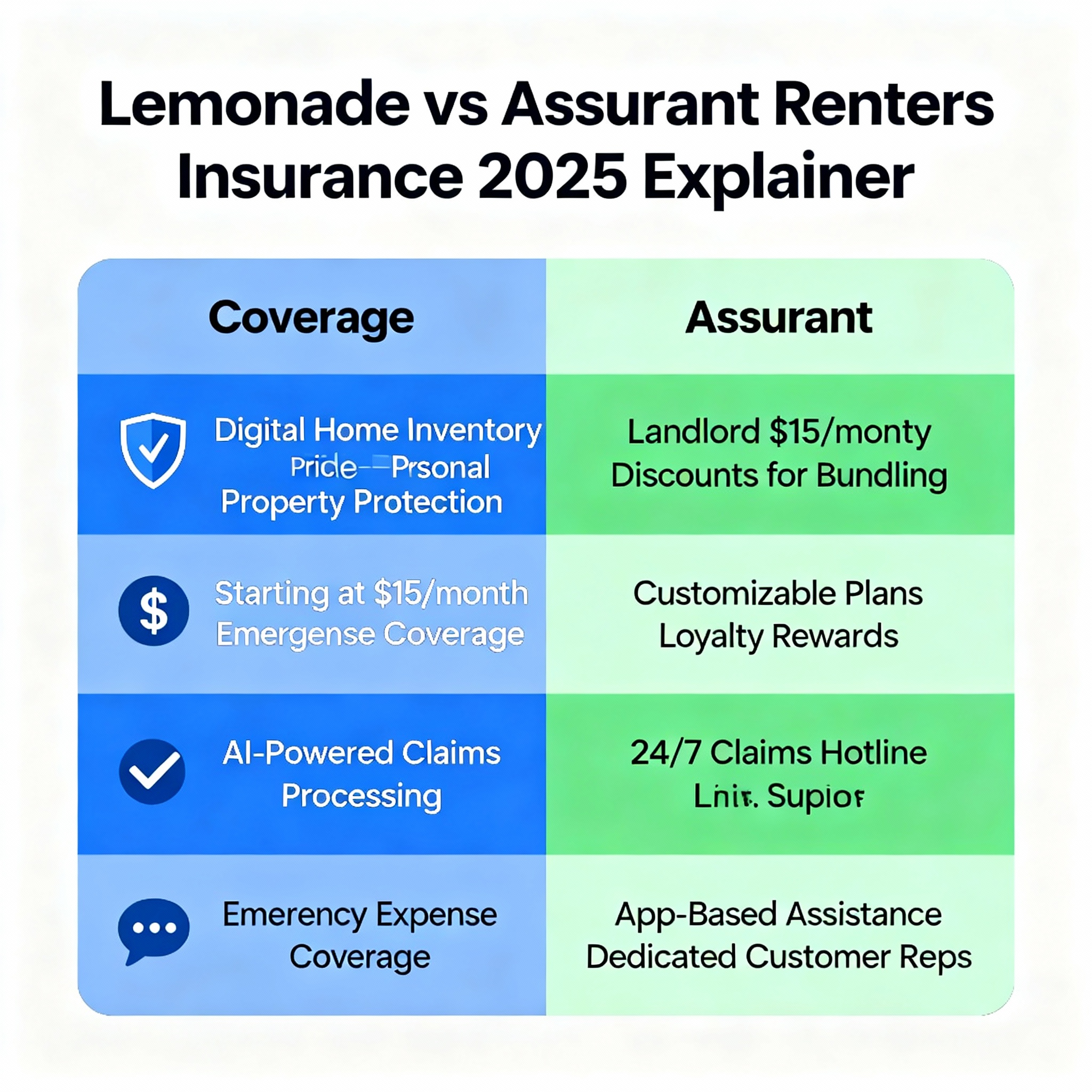
Choosing between Lemonade vs Assurant renters insurance is less about the logo and more about your day-to-day experience: how you prefer to manage the policy (app-first vs program/portal-friendly), how your building is rated, and which endorsements actually matter for your lease and belongings. If you’re comparing renters insurance “near me,” the smartest move is to quote both with the same limits and deductibles so the price difference is real—not a coverage gap.
This 2026 guide shows what typically differs between Lemonade and Assurant, how pricing is shaped by your building and ZIP code, and how to avoid the most common “cheap quote” traps (underinsuring personal property, skipping water backup, or choosing liability that doesn’t satisfy your lease). Blake Insurance Group LLC is an independent insurance agency. We help you compare Lemonade, Assurant, and other local options side-by-side so you can bind the right coverage without overbuying.
Quick overview: who each brand may fit best
Why renters choose Lemonade
- App-first management: a digital flow that’s easy for tech-forward renters to start, adjust, and track.
- Simple quoting: straightforward limits and deductible choices so you can see price changes quickly.
- Good for “simple households”: many renters with standard property needs prefer a clean digital experience.
Why renters choose Assurant
- Apartment program presence: common within property manager ecosystems and compliance workflows.
- Lease-friendly proof: many residents find it easy to provide evidence of coverage when a portal is involved.
- Program flexibility: some communities use structured minimums or liability-only options in specific partner setups.
Your best fit depends on your building type, location, lease requirements, and whether you want an app-centric claims path or a property-manager-friendly program experience.
Lemonade vs Assurant: side-by-side comparison (2026)
Use this table as your baseline. Then, when you quote, lock your personal property, liability, deductible, and key add-ons so you can compare true cost—premium plus coverage fit.
| Category | Lemonade | Assurant |
|---|---|---|
| Quote & bind | Digital-first flow; easy self-serve setup for many renters. | Often integrated with apartment programs/portals; proof-of-coverage workflows are common. |
| Claims style | App-based claim intake; some simple claims may be handled quickly depending on details. | Traditional claim handling plus online account/claim support options depending on program. |
| Endorsements & add-ons | Common renters add-ons vary by state; review valuables and water-related options before buying. | Program-specific options may include water-related riders and other endorsements depending on community and state. |
| Lease compliance focus | Works well for renters managing their own compliance documents. | Strong fit where property managers track compliance and require specific certificate details. |
| Who it may fit | Tech-forward renters who prefer self-serve and a simple product structure. | Renters who want smooth lease compliance and portal-friendly proof-of-coverage processes. |
What affects price in 2026 (and discounts that usually matter)
Renters insurance is often affordable, but pricing can still swing based on territory, building characteristics, and the limits you choose. The fastest way to control premium is to right-size personal property and set a deductible you can pay today—then add endorsements only where they protect real exposure.
| Factor | How it may impact premium | Practical savings ideas |
|---|---|---|
| Building protection | Sprinklers, secure entry, alarms, and building loss history can influence rates. | Confirm safety features with your property manager; don’t guess on the application. |
| Personal property limit | Higher limits raise premium; too-low limits create claim pain. | Do a quick inventory (rooms + photos). Choose a limit you can defend. |
| Liability limit | Higher liability can cost more, but protects you from bigger exposures. | Match your lease minimums; consider stronger limits if you entertain guests or have a pet. |
| Deductible | Higher deductibles usually reduce premium. | Pick a deductible you can pay without stress; don’t “save $” by choosing an unrealistic deductible. |
| Endorsements | Water backup, scheduled valuables, identity features, or special items can add cost. | Add only what you need; schedule valuables instead of overinflating base property limits. |
| Payment method & multi-policy | Some programs credit certain payment setups or bundling. | Ask us to check bundling options—sometimes total household cost drops even if renters stays similar. |
The goal is the “smart-cheapest” option: the lowest premium that still covers your lease requirements and your real risk (liability + water issues + valuables).
Coverage notes & limits to review before you bind
Most renters policies share the same core building blocks: personal property, liability, and loss of use. The difference is in sublimits, endorsements, deductibles, and how claims are handled. Review these items before you purchase:
- Personal property coverage: choose a limit that reflects what you own today (electronics, furniture, clothes, kitchen, tools). Inventory helps you avoid underinsuring.
- Loss of use (ALE): helps pay extra living expenses if a covered loss makes your unit unlivable. Confirm the limit and any time constraints.
- Liability: protects you if someone is injured in your unit or if you accidentally damage someone else’s property. Match your lease minimums and your risk tolerance.
- Valuables sublimits: jewelry, watches, collectibles, and certain electronics may have low base limits. Scheduling can be the better fix than “just raising the limit.”
- Water damage vs water backup: accidental water events and sewer/drain backup are not the same thing—backup typically requires an endorsement.
- Flood is separate: renters policies generally don’t cover flood; if your location has flood exposure, ask us about separate flood options.
- Pet liability: terms vary by carrier and state; confirm any restrictions and whether your lease requires extra liability.
Claims & service expectations: what “good experience” looks like
A claims-friendly renters policy is one where you can provide clean documentation, understand your deductible, and have a clear path to resolution—especially for theft, smoke/fire, or water incidents. No carrier can guarantee claim speed, but you can set yourself up for the smoothest outcome:
- Document your belongings now: photos, receipts, and serial numbers for electronics make claim proof dramatically easier.
- Report incidents quickly: file the police report for theft, notify the landlord for water/fire issues, and keep a timeline of what happened.
- Know your deductible: deductibles typically apply to property claims; liability claims work differently under most policies.
- Use the right endorsements: water backup and scheduled valuables are common “regret gaps” when they’re missing.
If you want an “apples-to-apples” claim-readiness comparison, we’ll quote both with matching deductibles, limits, and endorsements, then show you which option provides the cleanest protection for your lease and lifestyle.
How to pick the right policy and quote fast
Use this quick framework to make the decision simple:
- Start with your lease: confirm minimum liability and whether your landlord requires specific wording or proof-of-coverage uploads.
- Set your property limit: inventory your belongings by room and choose a limit you can justify.
- Choose the deductible: balance premium savings against a deductible you can pay immediately after a loss.
- Add only the endorsements you need: water backup and scheduled valuables are common “must-check” items.
- Quote with consistent inputs: same limits, same deductible, same endorsements—then pick the best value.
If you want to avoid re-quotes, be accurate on occupancy, pets, security devices, and building details. Small input errors can change premium and underwriting.
Lemonade vs Assurant renters insurance: FAQs (2026)
Is Lemonade or Assurant cheaper for renters insurance?
It depends on your location, building characteristics, chosen limits, deductible, and endorsements. We quote both using the same baseline so you can compare true cost and coverage fit.
Which carrier is better for lease compliance?
If your apartment uses a compliance portal or has specific proof requirements, many renters find Assurant-style program workflows convenient. Lemonade can still work well if you manage your own proof and uploads.
Do both cover water backup or pet-related damage?
Water backup typically requires an endorsement. Pet-related liability and any special terms vary by carrier and state—so we verify the exact policy features for your address and pets before you bind.
How much personal property coverage should I carry?
Inventory your belongings room-by-room. Many renters land in the $20k–$50k range, but the right amount depends on electronics, furniture, and valuables. If you own high-value items, scheduling is often the better solution.
What’s the fastest way to get a renters quote?
Use the quote link on this page and keep your limit choices consistent (property, liability, deductible). If you have a lease requirement screenshot, keep it handy so we can match your proof-of-coverage needs.
Independent agency: Blake Insurance Group LLC is an independent insurance agency.
Licensing: Licensed insurance producer (NPN 16944666).
Important: Coverage availability, endorsements, limits, exclusions, and pricing vary by carrier, state, and address. This page is general information, not legal advice.
Trademarks: Lemonade®, Assurant®, and all other marks are property of their respective owners. Use does not imply affiliation or endorsement.




