Home Inventory Checklist (2026): What to List, What to Photograph, and How to Organize Proof Before You Ever Need a Claim
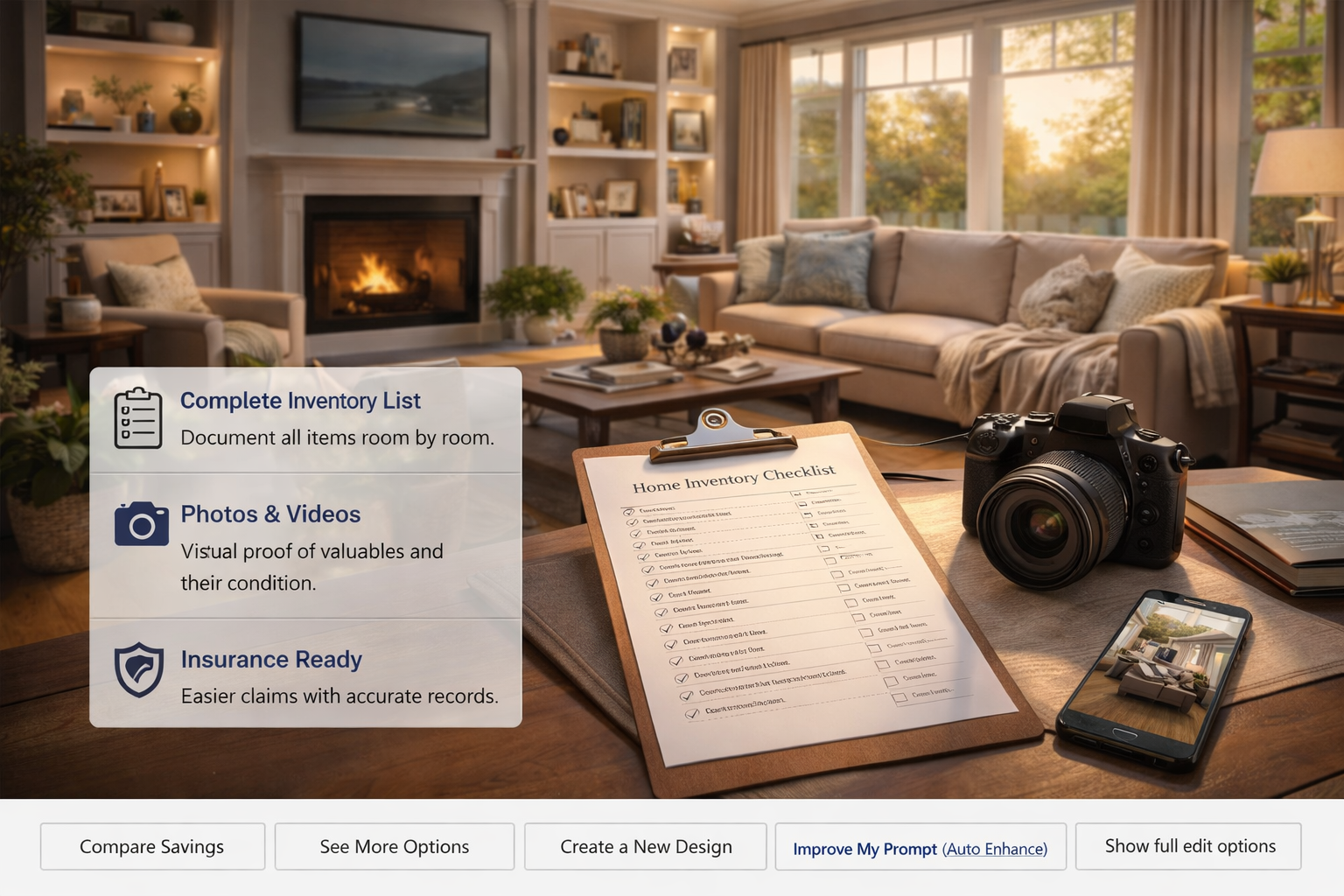
A home inventory checklist is one of the most useful homeowners insurance tools you can create near me or anywhere else. When a fire, theft, storm loss, or other covered event happens, people rarely struggle to remember the sofa or the television. They struggle to remember everything else. Jewelry receipts disappear. Model numbers are missing. Small electronics, tools, kitchen gear, hobby items, and clothing are harder to value than expected. A strong inventory solves that problem before a stressful claim ever begins.
The best home inventory is not fancy. It is complete, organized, and stored safely. In 2026, that usually means a room-by-room list, current photos or video, receipts for higher-value items, serial numbers for major electronics and appliances, and at least one backup stored outside the home or in a secure cloud account. If you own a home, rent an apartment, or manage a condo unit, this checklist gives you a practical system you can actually finish.
Why a home inventory checklist matters more than most people expect
A homeowners or renters policy can only do so much if the documentation behind a claim is thin. After a loss, you may be asked to describe what was damaged or stolen, when you bought it, what brand or model it was, and what it would cost to replace. The more complete your answers are, the easier it is to move the conversation forward. A home inventory is not just a convenience. It is supporting evidence.
The strongest inventories usually include five things: the item name, the approximate purchase date, the estimated value or original cost, a photo or short video, and any proof documents available. If the item is high-value, add model numbers, serial numbers, appraisals, or receipts. If it is part of a collection, group it logically and document the full set.
Core home inventory checklist: the fields every inventory should include
This table is the backbone of the process. Whether you use a spreadsheet, notes app, cloud folder, or a dedicated inventory tool, start with these fields.
| Field | What to record | Why it matters | Best practice |
|---|---|---|---|
| Item description | Brand, type, color, size, and any identifying details | Generic descriptions slow down replacement discussions | Be specific enough that another person could recognize the item clearly |
| Room or location | Where the item is normally kept | Helps organize losses after theft, fire, or water damage | Group inventory by room first, then by category |
| Purchase date | Exact or approximate month and year | Gives context for age and value | Estimate honestly if you do not know the exact date |
| Original cost or replacement estimate | What you paid or what a similar item costs now | Supports value discussions during a claim | Use current retail examples for items without receipts |
| Photo or video | Visual proof of the item and its condition | Makes the inventory much easier to support | Capture wide room shots and close-ups for key items |
| Receipt, manual, appraisal, or proof file | Any supporting document tied to the item | Especially useful for expensive or specialized belongings | Store scans in the same folder as the inventory record |
| Model and serial number | Manufacturer identifiers for electronics, tools, and appliances | Helps confirm exact items | Photograph labels directly if typing every number feels slow |
Room-by-room inventory method: the easiest way to finish the project
Most people abandon a home inventory because they try to do it by category only. The faster method is room by room. Start at the front door and move clockwise through the home. In each room, begin with a wide video sweep, then list major items, then add the smaller things that are easy to forget.
| Area | Items to prioritize | Commonly missed items |
|---|---|---|
| Living room | TVs, speakers, furniture, artwork, gaming gear | Remote systems, lamps, side tables, decor, streaming devices |
| Kitchen | Major appliances, cookware, countertop electronics | Knife sets, specialty pans, small appliances, pantry storage systems |
| Bedrooms | Beds, dressers, clothing, shoes, jewelry, electronics | Handbags, watches, linens, accessories, tucked-away valuables |
| Office | Computers, monitors, printers, cameras, business gear | External drives, microphones, chargers, software equipment, desk accessories |
| Garage or workshop | Tools, power equipment, bikes, storage racks | Hand tools, batteries, ladders, yard gear, compressor attachments |
| Attic, basement, storage closets | Seasonal items, heirlooms, archived boxes, hobby gear | Holiday decorations, camping gear, memorabilia, collectible bins |
Photos and video: the fastest way to strengthen the inventory
A written list is good. A written list with current photos and a walk-through video is much better. Use your phone and keep it simple. Open closet doors, drawers, cabinets, and storage bins. Narrate what you are looking at if that helps you remember details later. Zoom in on higher-value items, electronics labels, collectibles, and anything custom or hard to replace.
| Documentation type | What to capture | Smart move |
|---|---|---|
| Wide room photos | Overall layout and major belongings in each room | Take one or two clean shots from different corners |
| Close-up item photos | Electronics, jewelry, appliances, collectibles, tools | Include labels, brands, and any obvious identifying marks |
| Walk-through video | A narrated sweep through the home | Open drawers, cabinets, closets, and storage areas on camera |
| Serial number photos | Back plates, underside labels, manual stickers | Photograph the tag instead of manually typing everything during the first pass |
Receipts, serial numbers, appraisals, and proof documents
Not every household item needs a receipt, but higher-value property deserves stronger backup. Keep receipts for jewelry, watches, computers, tablets, cameras, home theater equipment, premium tools, exercise equipment, musical instruments, designer accessories, and major appliances. If you have appraisals, keep digital copies with the inventory. If you upgraded a kitchen or bought expensive custom furniture, attach the invoice or contract.
Where to store your home inventory so it survives the same loss
This part is critical. A perfect inventory is not very useful if it sits on one laptop inside the same house. Keep at least two copies. One should be digital and easy to access from anywhere. The other can be a backup copy on a secure drive, password-protected storage folder, or trusted off-site location. Some people also keep a printed summary for quick reference, but the best long-term version is digital because photos, receipts, and video are easier to organize there.
| Storage method | Main advantage | Watch-out |
|---|---|---|
| Cloud folder | Easy access to photos, receipts, and spreadsheets from anywhere | Protect the account with strong passwords and two-factor authentication |
| External drive | Useful offline backup for a full photo and video archive | Do not store it only inside the house without another backup |
| Shared family folder | Allows spouse or trusted family member to access the records | Keep permissions limited and organized |
| Printed summary | Fast reference for major items and coverage review | Paper alone is not enough for a full modern inventory |
Common home inventory mistakes to avoid
The biggest mistake is waiting for a loss to start the list. The second biggest mistake is making the project too complicated to finish. Do not worry about perfection on day one. Capture the major rooms, expensive items, photos, and backups first. You can refine the inventory later.
- Do not skip small items: kitchen tools, clothing, linens, and office accessories add up fast.
- Do not rely on memory: use photos and video to catch what you would otherwise miss.
- Do not keep the only copy at home: use cloud or off-site backup.
- Do not forget updates: refresh the inventory after big purchases, renovations, or moves.
- Do not assume all valuables are fully covered: review policy sublimits and scheduled-item needs.
Get homeowners insurance quotes after you build the inventory
Once your inventory is underway, your insurance review gets better. You can compare personal property limits more realistically, spot possible gaps around jewelry or collectibles, and make smarter decisions about deductibles, endorsements, and scheduled property. The best quote is not just the cheapest premium. It is the one that lines up with what you actually own.
Use your inventory to review personal property limits, special sublimits, and any items that may need scheduled coverage.
Related topics
Home inventory checklist FAQs (2026)
What should a home inventory include?
A strong home inventory includes item descriptions, room location, purchase date, estimated value or cost, photos or video, and supporting documents like receipts, serial numbers, manuals, or appraisals when available.
Do I need receipts for every item in my house?
No. Receipts are most important for higher-value items. For everyday belongings, clear photos, video, item descriptions, and reasonable replacement estimates can still make the inventory much more useful.
How often should I update my home inventory?
Update it after major purchases, renovations, moves, or room changes. At minimum, review it once a year so the file stays useful.
Is a phone video enough for a basic inventory?
For many households, a phone video plus room photos is a very strong starting point. It becomes even better when paired with a written list and digital copies of receipts or appraisals for major items.
Why does a home inventory help with insurance?
It helps you document what you owned, where it was kept, and what it was worth. That can make claims easier to organize and can also improve how you review personal property limits before a loss happens.
Independent agency: Blake Insurance Group LLC is an independent insurance agency and is not affiliated with any single insurance company.
Licensing: Licensed insurance producer (NPN 16944666).
Important: A home inventory supports claim organization and coverage review, but it does not change policy terms, exclusions, limits, deductibles, or insurer claim requirements.
Trademarks: All product and company names are trademarks™ or registered® trademarks of their respective holders. Use of them does not imply affiliation or endorsement.




