Business Owner’s Policy Guide: BOP Insurance for Small Business Liability, Property, and Income Protection
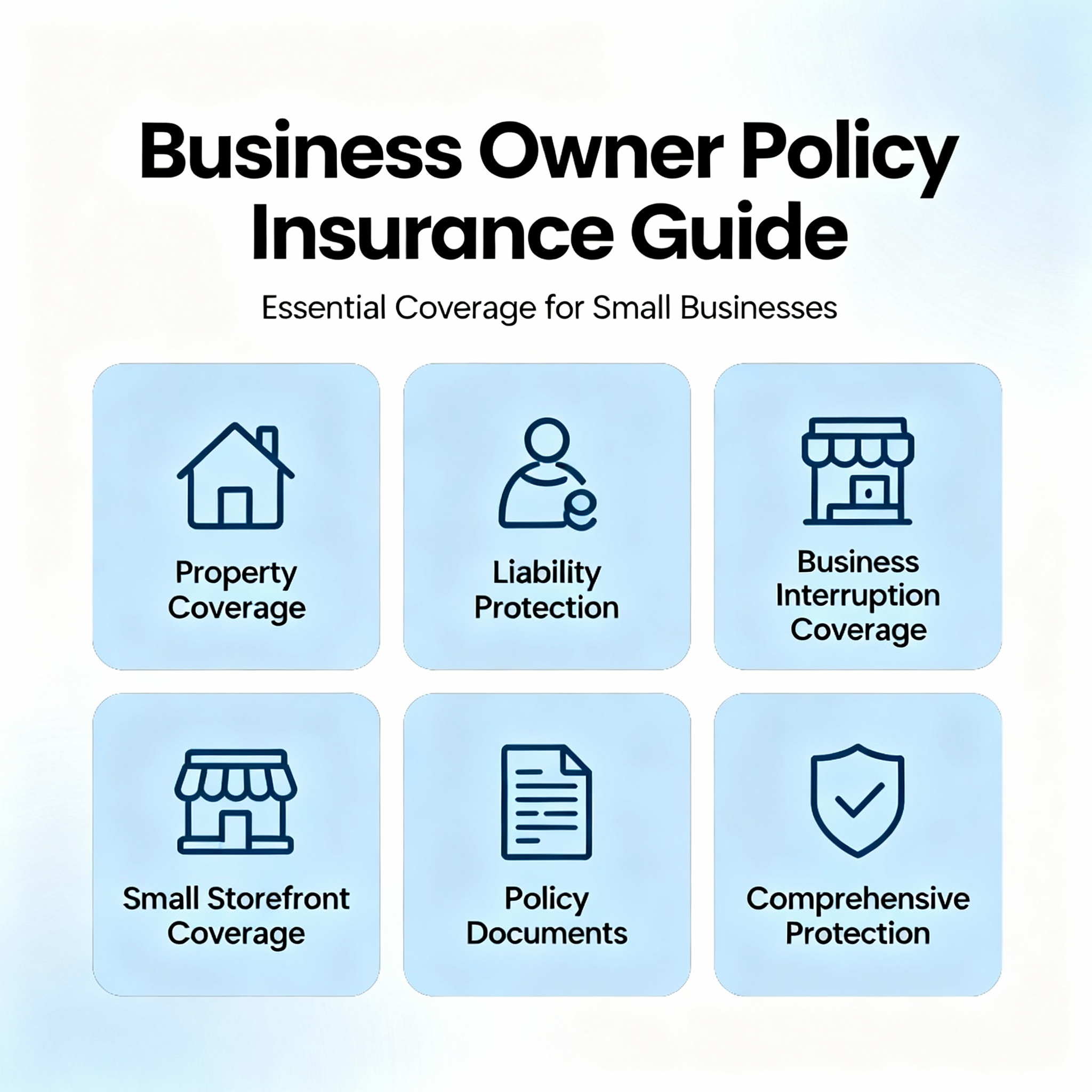
A Business Owner’s Policy, commonly called a BOP, is one of the most practical insurance packages for small businesses that need protection beyond a basic liability policy. A BOP typically combines general liability insurance, commercial property insurance, and business income coverage into one policy structure. For many eligible businesses, that makes it easier to manage certificates, protect business property, satisfy landlord or client requirements, and keep coverage organized without buying every policy separately.
Business Owner’s Policy insurance is especially useful for small businesses with a physical location, leased office, storefront, studio, salon, shop, clinic, warehouse space, inventory, tools, computers, furniture, fixtures, or customer foot traffic. It can also help businesses that need proof of coverage before signing a lease, bidding on a contract, working with a property manager, or onboarding with a commercial client. The right BOP is not just the cheapest certificate. It is the policy that matches your business operations, protects the property you actually own, and gives you a clean way to add common business endorsements when your contract requires them.
A BOP should be reviewed around your real risk: what you do, where you operate, what property you own, what contracts require, and how long your business could survive after a covered shutdown.
Quick snapshot: what a Business Owner’s Policy does
A BOP packages common small business coverages into one policy. It is usually designed for eligible small to mid-sized businesses with similar risk profiles, not every industry or every exposure.
| BOP feature | What it usually does | Why it matters |
|---|---|---|
| General liability | Helps respond to covered third-party bodily injury, property damage, and personal or advertising injury claims. | Many leases, vendors, and client contracts require this before work begins. |
| Commercial property | Helps protect covered business property such as equipment, furniture, inventory, tools, and tenant improvements. | Your business property may not be protected by your landlord or homeowners policy. |
| Business income | May help replace covered lost income and continuing expenses after a covered property loss shuts down operations. | Revenue protection can be just as important as replacing damaged property. |
| One policy package | Combines common business protections into a more organized policy form for eligible risks. | It can simplify coverage management, renewals, and certificate requests. |
What a Business Owner’s Policy may cover
A BOP starts with the small business risks that show up again and again: someone gets hurt at your premises, your business damages someone else’s property, a customer alleges advertising injury, a covered fire damages your office, a theft affects business property, or a covered loss shuts down your location and interrupts income. Instead of building every coverage separately, a BOP packages core coverage into one practical policy for eligible businesses.
The liability side helps with covered claims made by others. That can include customer injuries, third-party property damage, and certain personal or advertising injury allegations. The property side helps protect covered business property, which can include furniture, computers, inventory, equipment, fixtures, tenant improvements, and supplies. The business income portion may help when a covered property loss causes a temporary suspension of operations, subject to policy terms, limits, waiting periods, and covered cause of loss.
| Coverage area | Common examples | Important review point |
|---|---|---|
| General liability | Customer slips and falls, third-party property damage, product-related injury claims, personal and advertising injury. | Check required limits, additional insured wording, waiver of subrogation, and primary noncontributory wording. |
| Business personal property | Furniture, computers, equipment, tools, inventory, displays, fixtures, and supplies. | Use current replacement values, not old purchase prices or rough estimates. |
| Building coverage | Owned buildings, permanently installed property, improvements, and some attached fixtures. | Only applies when the business owns or is responsible for the building or improvements. |
| Business income | Lost income and continuing expenses after a covered property loss interrupts operations. | Confirm the coverage period, waiting period, extra expense, and limit structure. |
| Extra expense | Temporary relocation, expedited repairs, replacement services, and added operating costs after covered damage. | Critical for businesses that need to reopen quickly after a covered loss. |
A BOP should be matched to your lease, contracts, equipment values, inventory levels, and revenue exposure. A generic quote can miss important details if your business has special operations or contract wording.
Who should consider BOP insurance?
A Business Owner’s Policy is often a strong fit for businesses that rent or own commercial space, serve customers in person, store inventory, use business equipment, or need certificates of insurance. It is also useful for home-based businesses that have property, client visits, contract requirements, or business activities that are not properly covered by a personal homeowners or renters policy. If your business signs leases, receives vendor agreements, provides services at client locations, or wants a clean package for liability and property, a BOP should be reviewed.
Not every business qualifies. Eligibility depends on the industry, revenue, payroll, location, property values, claims history, operations, and insurer rules. Higher-risk businesses, large operations, specialized contractors, heavy manufacturing, certain hospitality risks, transportation operations, and businesses with unusual exposures may need a commercial package policy, standalone general liability, professional liability, inland marine, commercial auto, or other tailored coverage.
| Business type | Why a BOP may fit | Coverage to double-check |
|---|---|---|
| Retail stores | Customer traffic, inventory, shelving, displays, POS systems, and lease requirements. | Inventory limits, business income, spoilage if applicable, and peak season values. |
| Offices and consultants | Client contracts, office equipment, leased space, certificates, and premises liability. | Professional liability is usually separate from a BOP. |
| Salons and studios | Customer visits, furniture, tools, tenant improvements, product sales, and leased space. | Special equipment, treatment-related exclusions, and product liability limits. |
| Contractors and trades | Some smaller trades may use BOP-style packages for liability and property. | Tools in transit, installation work, completed operations, and contractor-specific exclusions. |
| Restaurants and cafes | Customer traffic, equipment, tenant build-outs, food inventory, and business income exposure. | Spoilage, equipment breakdown, liquor liability, hired/non-owned auto, and employment practices. |
Common BOP gaps that small businesses miss
The biggest mistake is assuming a BOP covers every business risk. It does not. A BOP is a strong foundation, but it has limits, definitions, conditions, and exclusions. Businesses often need separate or added coverage for professional mistakes, employee injuries, owned vehicles, cyber incidents, employment-related allegations, flood, earthquake, tools away from the premises, contractor equipment, liquor liability, pollution, crime, or umbrella limits.
Contract language can also create gaps. A property manager may require additional insured status. A general contractor may require waiver of subrogation. A client may require primary and noncontributory wording. A landlord may require specific limits, property coverage, business income coverage, or a certificate before the lease begins. These details must be reviewed before binding coverage because not every online policy automatically includes every endorsement.
| Gap | Why it matters | Smart review step |
|---|---|---|
| Professional liability missing | A BOP usually does not cover errors, advice, design mistakes, or professional service disputes. | Quote errors and omissions coverage if you provide professional services or advice. |
| Business property undervalued | Equipment, inventory, furniture, and improvements may cost more to replace than expected. | Create a replacement cost inventory before selecting limits. |
| Cyber exposure ignored | Customer data, payment systems, email accounts, and online operations create cyber risk. | Review cyber liability or data breach coverage separately. |
| Auto exposure excluded | Owned vehicles and many delivery or driving exposures are not solved by a BOP. | Quote commercial auto or hired and non-owned auto when vehicles are used for business. |
| Contract wording not matched | A certificate alone may not satisfy additional insured, waiver, or primary wording. | Review the contract before binding and request required endorsements early. |
BOP endorsements and add-ons worth reviewing
Many BOP policies can be customized with endorsements. The right add-ons depend on the business. A retail store may need spoilage, signs, glass, and higher inventory limits. A consultant may need hired and non-owned auto, cyber, and professional liability. A restaurant may need equipment breakdown, food spoilage, liquor liability, and employment practices coverage. A contractor may need tools, installation floater, blanket additional insured wording, and completed operations attention.
| Coverage option | When to review it | BOP or separate? |
|---|---|---|
| Professional liability / E&O | Advice, consulting, design, marketing, technology, health, finance, or professional service work. | Often separate. |
| Workers’ compensation | Businesses with employees or state requirements. | Separate policy. |
| Commercial auto | Owned vehicles, delivery, transportation, or regular business driving. | Separate policy. |
| Cyber liability | Data, payment cards, email, client records, online sales, or cloud software reliance. | Endorsement or separate. |
| Umbrella / excess liability | Contracts requiring higher liability limits or businesses with meaningful lawsuit exposure. | Separate policy. |
What affects the cost of a Business Owner’s Policy?
BOP pricing depends on the type of business, location, revenue, payroll, square footage, property values, coverage limits, deductible, claims history, years in business, customer traffic, operations, and selected endorsements. A small office with modest property values will usually price differently than a restaurant, retail store, contractor, or business with higher inventory and customer traffic. The certificate requirements in a lease or contract can also affect the final premium because required endorsements or higher limits may change the quote.
When comparing quotes, look beyond the premium. Review the general liability limit, property limit, business income wording, deductible, covered causes of loss, excluded operations, endorsement availability, certificate turnaround, payment options, and whether the insurer can meet contract wording. A lower premium can be expensive if it leaves out the one endorsement your client requires or undervalues the property you need to replace after a covered loss.
| Cost factor | Why it changes pricing | What to prepare |
|---|---|---|
| Business class | Different industries have different liability and property loss patterns. | Clear description of operations, services, products, and client locations. |
| Revenue and payroll | Higher activity can increase exposure and premium rating basis. | Current annual revenue estimate and payroll or subcontractor details. |
| Property values | More equipment, inventory, furniture, and improvements require higher limits. | Replacement cost estimate for property by category. |
| Location | Territory, building construction, fire protection, crime, and weather exposure matter. | Business address, lease details, building age, and square footage. |
| Contracts | Required endorsements and limits may affect quote structure. | Lease, vendor agreement, client contract, or certificate requirements. |
Quote and buy Business Owner’s Policy insurance online
Blake Insurance Group helps small business owners compare practical online quote options for BOP insurance, general liability, commercial property, and related business coverage. The best starting point depends on how your business operates. Some owners want fast certificate-ready coverage for a lease. Others need property limits, business income coverage, and contract wording. Others need to compare multiple online options before deciding.
Before starting your quote, gather your legal business name, DBA if applicable, business address, industry description, annual revenue, payroll, number of owners and employees, years in business, square footage, landlord or client certificate requirements, property values, equipment list, inventory estimate, prior insurance details, and loss history. If you have a contract or lease, review the insurance section before selecting coverage. That helps avoid buying a policy that looks acceptable but fails to meet the wording required by the other party.
Coverage is not bound until the application is completed, underwriting requirements are satisfied, payment is accepted where required, and the insurer confirms the policy effective date.
Business Owner’s Policy FAQs
What is a Business Owner’s Policy?
A Business Owner’s Policy, or BOP, is a package policy for eligible small businesses. It commonly combines general liability, commercial property, and business income coverage into one organized policy.
Is a BOP the same as general liability insurance?
No. General liability is one part of a BOP. A BOP usually adds commercial property coverage and business income coverage, giving eligible businesses broader protection than a liability-only policy.
Does a BOP cover professional mistakes?
Usually not. Professional liability, also called errors and omissions insurance, is commonly separate. Businesses that provide advice, consulting, design, technology, or professional services should review E&O coverage.
Does a BOP cover employee injuries?
No. Employee injuries are generally handled through workers’ compensation insurance, which is separate from a BOP and may be required by state law depending on your business and employee count.
Can I use a BOP for a landlord or client certificate?
Often yes, if the policy meets the required limits and wording. Always review the contract for additional insured, waiver of subrogation, primary noncontributory, and certificate requirements before binding coverage.
Which online quote option should I start with?
Start with the platform that best matches your business type and coverage need. Thimble, NEXT, and Coterie can each be useful for different small business situations, so compare limits, endorsements, pricing, and certificate needs.
Independent agency: Blake Insurance Group LLC is an independent insurance agency and is not affiliated with any single insurance company, quote platform, carrier, landlord, lender, or government program.
Licensing: Licensed insurance producer (NPN 16944666).
Important: Business Owner’s Policy insurance availability, eligibility, premiums, limits, deductibles, endorsements, contract wording, certificate acceptance, underwriting approval, online quote availability, and claim outcomes vary by business, state, insurer, industry, and policy. Your issued policy controls coverage. This page is general information only and is not legal, tax, lending, accounting, risk-management, or claims advice.
Trademarks: Thimble®, NEXT Insurance®, Coterie Insurance®, and any carrier, quote platform, or program names are trademarks™ or registered® trademarks of their respective owners. Use of these names does not imply affiliation or endorsement.





Reviews are loaded from Google when you click “View reviews.”