Commercial Auto • NEMT • 2026
Cheap NEMT Insurance
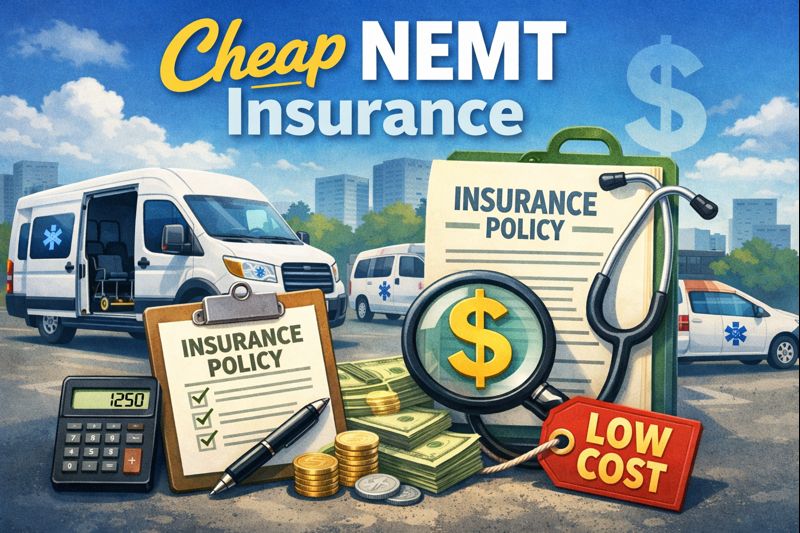
“Cheap” NEMT insurance only helps if it still clears the paperwork that gets you trips: the right commercial auto form, the right liability limit, and the right certificate wording. If you operate non-emergency medical transportation (NEMT)—wheelchair vans, ambulatory transport, dialysis runs, discharge rides, facility shuttles—you need coverage written for passenger transport and contract compliance. Blake Insurance Group is an independent agency. We quote multiple markets side-by-side and build a policy that meets requirements while lowering your total cost of risk over time.
What “Cheap NEMT Insurance” Really Means
NEMT insurance is a commercial transportation package built around passenger-for-hire auto liability, with optional lines that facilities and brokers often require. The lowest premium isn’t the goal. The goal is a policy that:
Passes compliance
- Meets the highest written contract requirement you carry.
- Supports the exact COI language a facility or broker demands.
- Can issue certificates quickly for new accounts.
Protects cash flow
- Deductibles you can actually pay on short notice.
- Rental/roadside strategy to keep vehicles moving.
- Claim-ready documentation (driver lists, training logs, vehicle inventories).
Lowers renewals over time
- Driver screening and coaching to reduce frequency.
- Telematics/cameras to reduce disputes and severity.
- Annual remarket timed before renewal so you keep leverage.
What NEMT Insurance Covers
Your core coverage starts with commercial auto liability while transporting passengers. From there, the right package depends on how you operate: own-vehicle fleets, leased units, subcontractors/1099 drivers, wheelchair securement, assisted loading/unloading, and facility contract language.
Commercial auto liability
- Primary protection for injuries/property damage you cause.
- Often written as a combined single limit (CSL) depending on contracts.
- Can require endorsements tied to certificate wording.
Physical damage
- Comprehensive (theft, vandalism, hail, glass) and collision (crash) for your vans.
- Deductible selection is a major pricing lever.
- Important for financed units and high-utilization fleets.
UM/UIM and MedPay
- UM/UIM can protect drivers/passengers when the other driver has low/no insurance.
- Medical payments can help with immediate bills (rules vary by state and plan design).
Hired & non-owned auto
- Helps when you rent/lease, borrow, or sometimes dispatch overflow work.
- Critical if you use personal vehicles in any part of operations.
- Also relevant when contracts involve subcontractors and proof-of-insurance workflows.
General liability
- Non-auto incidents (premises, office/yard exposure, certain operational claims).
- Often requested alongside auto on COIs for facilities or brokers.
Equipment & specialty add-ons
- Wheelchair securement systems, ramps/lifts, onboard devices, dispatch hardware.
- Optional coverages may be contract-driven for assisted passenger movement.
Coverage Snapshot for NEMT Fleets
| Coverage | What it does | Why it affects “cheap” pricing | What we verify |
|---|---|---|---|
| Auto liability | Pays others’ injuries/property when you’re at fault | Limits and passenger-for-hire classification drive price most | Required limit/CSL + correct form for NEMT use |
| UM/UIM | Protects you from underinsured drivers | Often high-value relative to cost | Limits that align with liability strategy |
| Comp / collision | Repairs your van after theft/weather/crash | Deductibles are a key lever; financed vans usually need it | Deductibles vs vehicle value and cash reserves |
| Hired & non-owned | Liability for non-owned/rented/borrowed vehicles | Can be cheaper than insuring every vehicle as owned—when it fits | How vehicles are titled/used + contract rules |
| General liability | Premises/operations exposure | Common facility requirement; improves COI acceptance | Additional insured / waiver requirements |
| Roadside / rental | Towing and temporary vehicle help | Prevents revenue loss from downtime | Distance limits and rental days |
COIs, Filings, and Contract Language That Can Make or Break a Job
For NEMT operators, “cheap” also means “fast and acceptable paperwork.” Many facilities, brokers, and healthcare systems won’t assign trips until your COI reflects the exact limits and wording they require. We set up your COI workflow so you can add accounts without chaos.
| Common request | What it means | Why it matters | How we handle it |
|---|---|---|---|
| Additional Insured | Adds an entity to your policy for certain liability protections | Frequently required by facilities, airports, municipalities, and brokers | We collect the exact name/format and confirm it’s properly endorsed |
| Primary & Non-Contributory | Your policy responds before other insurance | Contract language often demands it for auto and/or GL | We confirm which line requires it and match the endorsement |
| Waiver of Subrogation | Insurer waives recovery rights against a party | Common in healthcare/vendor agreements | We verify whether it’s required for auto, GL, and/or WC |
| Certificate holder wording | Exact text displayed on the COI | Incorrect wording can cause trip delays | We create reusable templates for repeat clients/locations |
| Proof cadence | How often proof must be provided | Some accounts require updates or renewals on schedule | We set reminders and keep documents organized for renewals |
What Makes NEMT Insurance Cheaper in 2026
NEMT pricing is driven by frequency (how often vehicles are on the road) and severity (passenger injuries can create large losses). The best “cheap” strategy is reducing loss potential while meeting contract requirements.
| Pricing driver | What increases cost | What reduces cost | Action we take |
|---|---|---|---|
| Driver quality | Frequent violations/accidents, inconsistent screening | Written standards, clean MVRs, documented training | Help you build a driver file and screening checklist |
| Vehicle type | Higher passenger capacity, older units with high mileage | Well-maintained units, safety equipment, clear maintenance logs | Segment vehicles by use and build schedules correctly |
| Radius/territory | Dense routes, night operations, long radius | Defined service radius and predictable routes where possible | Align routing disclosures to underwriting for stability |
| Deductibles | Low deductibles on every unit | Higher deductibles where cash reserves support it | Model deductible options without breaking contracts |
| Claims handling | Poor documentation, delayed reporting | Cameras/telematics, fast reporting, clean incident logs | Set a claims-ready incident checklist for drivers |
| Billing structure | Frequent late payments leading to cancellation risk | Stable payment plan with fewer reinstatements | Choose a billing plan that reduces lapse risk |
Operations Checklist for Lower NEMT Renewals
Underwriters reward clarity. The fastest way to get better terms is to look like a controlled operation, even if you’re a small fleet. Here’s what we recommend building once—and using all year:
Driver file
- MVR screening standard and re-check schedule
- Documented onboarding/training checklist
- Incident reporting steps and escalation path
Vehicle file
- VIN list with garaging ZIPs and usage categories
- Maintenance schedule and inspection records
- Photos of ramps/lifts/securement and safety equipment
Contract file
- Each facility/broker insurance requirements page
- Reusable COI wording templates
- Renewal dates and proof cadence per account
Service Areas We Help
We support NEMT operators across multiple states. If you run a multi-state route or dispatch to multiple metros, we’ll align your insurance structure and certificates to the strictest contract requirement you carry.
| Licensed states | Example metros we commonly support | Common NEMT use cases |
|---|---|---|
| AZ, AL, TX, CA, NY, OH, FL, NC, VA, GA, OK, NM, IA, KS, MI, NE, SC, SD, WV | Phoenix, Birmingham, Houston, Los Angeles, NYC, Columbus, Miami, Charlotte, Richmond, Atlanta, Oklahoma City, Albuquerque, Des Moines, Wichita, Detroit, Omaha, Charleston, Sioux Falls, Charleston (WV) | Dialysis routes, discharge rides, assisted mobility transport, facility contracts, broker platforms, overflow/after-hours coverage |
Cheap NEMT Insurance — FAQs
Is “cheap NEMT insurance” safe?
It’s safe when it still meets your contract limits and includes the right passenger-for-hire form and endorsements. The cheapest premium often fails when COIs are rejected or when deductibles and caps don’t match your real risk.
Do I need commercial auto for NEMT?
In most cases, yes. Personal auto policies typically exclude transporting passengers for a fee. NEMT operations generally need commercial auto written for the correct use class and contract requirements.
What documents should I send to get a fast quote?
Send your driver list (DOBs), vehicle list (VINs), garaging ZIPs, operating radius, loss runs or claim history if available, and any contract insurance requirements page (COI wording/limits).
How do I avoid a lapse when switching carriers?
Bind the new policy first with the correct effective date, confirm any required filings or certificate language, then cancel the old policy after the new one is active. Keep proof on your phone and in your dispatch office.
Do cameras and telematics really help?
They can. Cameras and telematics often reduce claim disputes, improve coaching, and support better underwriting outcomes over time—especially when paired with documented driver standards.
Blake Insurance Group LLC is an independent agency. We are not the insurer; policies are issued by the selected carrier. Availability, eligibility, limits, endorsements, and certificate requirements vary by state, contract, and underwriting. Licensed insurance producer (NPR/NPN 16944666). Policy terms, conditions, exclusions, and endorsements govern.




