
Workers Compensation Insurance Florida (2026): Employee Thresholds, Construction Rules, Payroll Rating, Certificates, and Online Quotes
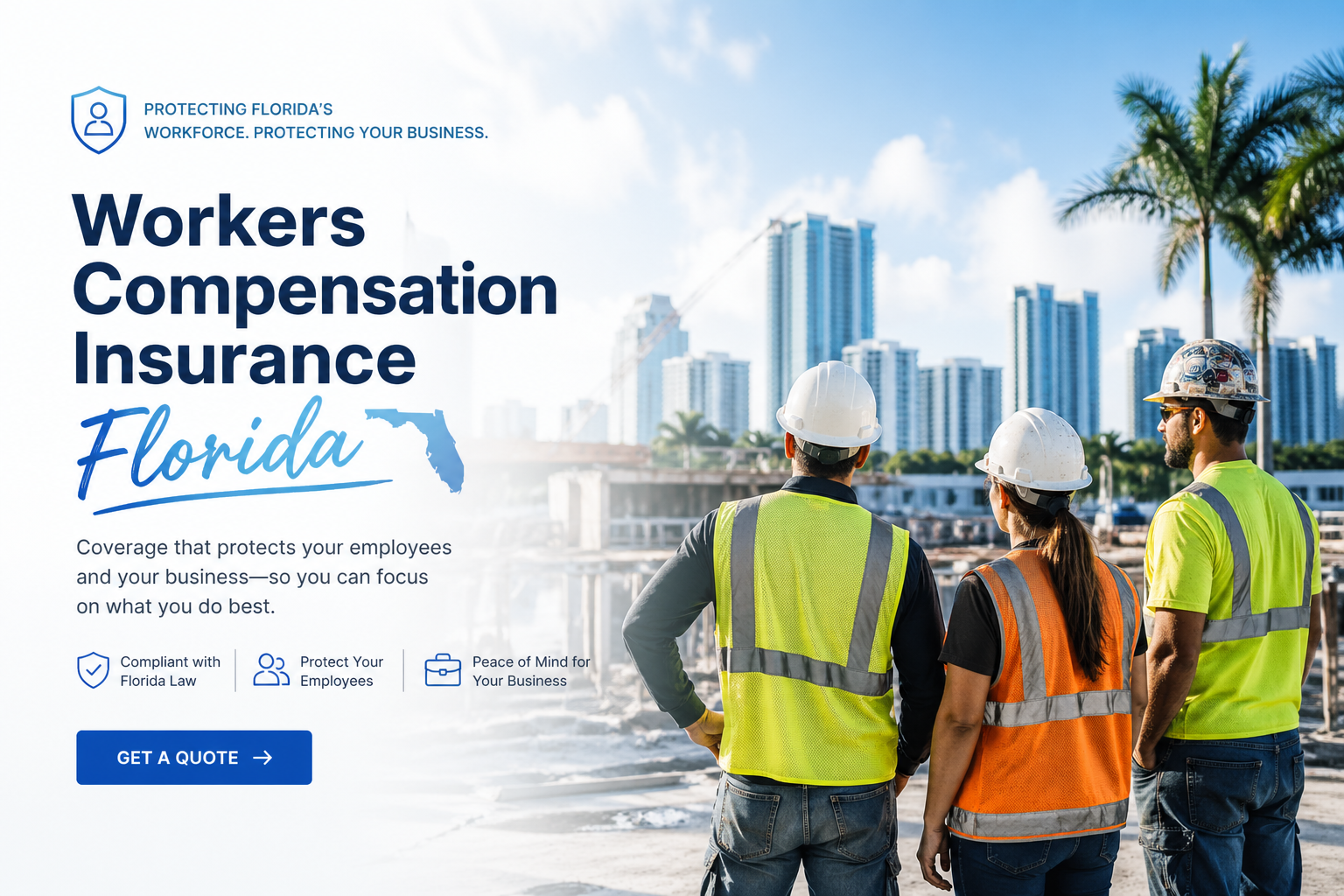
Workers compensation insurance in Florida helps employers respond when an employee is injured or becomes ill because of work. If you are searching for workers compensation insurance near me in Florida, the first step is identifying which rule applies to your business. Florida requirements can change depending on whether your company is in construction, non-construction, agriculture, government, or working in Florida from another state.
Florida generally requires non-construction employers with four or more employees to carry workers compensation coverage. Construction employers face a stricter threshold: one or more employees can trigger the requirement. Agricultural employers have their own employee-count rules, and out-of-state employers working in Florida may need Florida-approved coverage that specifically applies to Florida work. Contractors also need to verify that subcontractors have the required workers compensation coverage before work starts.
For Florida business owners, workers compensation should be handled before hiring, bidding a project, sending workers to a jobsite, or signing a contract that asks for proof of coverage. The policy is designed for employee work injuries, not customer injuries, property damage, commercial vehicle accidents, professional errors, cyber incidents, or stolen tools. Those exposures may require separate business insurance policies.
Quick facts: Florida workers compensation insurance in 2026
Florida workers compensation rules depend on the type of business and the number of employees. The most important split is construction versus non-construction. A non-construction employer generally reaches the requirement at four or more employees, while construction employers generally need coverage with one or more employees. Owners, officers, LLC members, exemptions, subcontractors, and out-of-state work can change the analysis.
| Topic | What it means | Why it matters |
|---|---|---|
| Non-construction threshold | Non-construction employers with four or more employees generally must carry workers compensation coverage. | Full-time and part-time employees can count toward the coverage requirement. |
| Construction threshold | Construction employers with one or more employees generally must carry workers compensation coverage. | Construction has stricter rules and higher certificate scrutiny. |
| Agricultural employers | Agricultural employers have separate rules tied to regular and seasonal workers. | Farm and agricultural operations should verify employee counts before assuming they are exempt. |
| Out-of-state employers | Employers working in Florida may need a Florida-approved policy with Florida properly listed for coverage. | Working across state lines can create gaps if Florida is not handled correctly. |
| Contractor responsibility | Contractors must verify that subcontractors have required workers compensation coverage before project work begins. | Missing subcontractor proof can create compliance and audit problems. |
| Exemptions | Some owners or officers may qualify for exemptions, but exemptions are rule-specific and must be handled correctly. | An exemption is not the same as broad business protection. |
Florida workers compensation requirements by employer type
Florida coverage requirements are based on industry, employee count, entity organization, and work arrangement. Construction employers, non-construction employers, agricultural employers, government employers, and out-of-state employers working in Florida should not use the same checklist. Use the table below as a practical starting point before completing an application or bidding work.
| Employer type | Common coverage trigger | What to verify | Business action step |
|---|---|---|---|
| Non-construction business | Four or more employees, including many owners/officers depending on structure and exemption status. | Employee count, officer/member status, part-time workers, and any exemptions. | Review coverage before hiring the fourth employee or signing contracts requiring proof. |
| Construction business | One or more employees, with strict industry rules and subcontractor verification duties. | Trade classification, subcontractor COIs, exemptions, payroll, and jobsite requirements. | Do not begin work without confirming coverage and required documentation. |
| Agricultural business | Separate thresholds can apply based on regular employees and seasonal labor. | Regular employee count, seasonal worker count, duration, and payroll. | Confirm requirements before seasonal hiring ramps up. |
| Out-of-state employer working in Florida | Florida work can require a Florida-approved policy or Florida properly listed on the policy. | Policy state listings, carrier approval, job location, duration, and employee travel. | Notify the carrier before employees begin work in Florida. |
| State or local government employer | Government employers are required to carry workers compensation coverage. | Public employer rules, claim process, payroll, and employee classifications. | Maintain active coverage and clear employee reporting procedures. |
Florida exemptions require care. An owner, corporate officer, or LLC member may qualify for an exemption only under specific rules. Some exemptions require an application, approval, renewal, and active status. Construction exemptions are especially important because a contractor may need copies of exemption certificates or proof of coverage from every subcontractor before work begins.
What Florida workers compensation insurance can cover
A Florida workers compensation policy is designed to help with eligible work-related injuries and occupational illness. It can help pay covered medical care, wage replacement, impairment-related benefits in certain situations, death benefits, claim administration, and employer protection under the workers compensation system. The actual benefit decision depends on the injury, employee status, claim facts, medical information, policy terms, and Florida law.
| Coverage area | What it can help with | Example Florida business scenario | Important note |
|---|---|---|---|
| Medical treatment | Covered medical care for eligible work-related injuries or occupational illness. | A restaurant employee burns a hand while working in the kitchen. | Report injuries promptly and follow the carrier’s claim process. |
| Lost wage benefits | Income benefits when a covered injury prevents an employee from working. | A warehouse employee misses work after a lifting injury. | Eligibility and timing depend on claim facts and Florida rules. |
| Impairment benefits | Benefits tied to certain permanent or long-term injury outcomes. | A trade worker has a serious injury with lasting physical limitations. | Medical evaluation and claim review determine the outcome. |
| Death benefits | Benefits may apply in certain fatal work-injury situations. | A severe jobsite accident results in a covered fatality. | Fatal claims require careful documentation and claim administration. |
| Employer protection | Workers comp supports an organized system for employee injury claims. | An employee injury is handled through the workers compensation claim process instead of an ordinary liability claim. | Exceptions, intentional acts, and legal issues should be reviewed with qualified counsel. |
Workers compensation does not replace general liability, commercial auto, professional liability, cyber liability, employment practices liability, inland marine, umbrella coverage, or a business owners policy. If your Florida business has vehicles, jobsite contracts, rented space, tools, customer property exposure, or professional advice exposure, review those coverages separately.
Who needs workers compensation insurance in Florida?
Florida employers should review workers compensation before hiring, onboarding crews, signing contracts, accepting subcontractors, opening a new location, or sending employees to a project. The need appears quickly for contractors, trades, restaurants, hotels, healthcare businesses, home care agencies, retail shops, warehouses, cleaning companies, landscapers, repair services, transportation operations, and professional offices with employees.
| Business type | Why coverage is commonly needed | What to prepare before quoting |
|---|---|---|
| Construction and trades | One-employee threshold, jobsites, ladders, subcontractors, tools, and strict certificate requirements. | Trade descriptions, payroll by duty, owner exemption status, subcontractor documents, and project locations. |
| Restaurants and hospitality | Kitchen burns, slips, lifting, delivery exposure, seasonal staff, and high employee turnover. | Payroll by role, employee count, location count, tip reporting where applicable, and safety procedures. |
| Healthcare and home care | Patient handling, lifting, home visits, facility work, driving between clients, and caregiver injury exposure. | Care model, employee vs contractor structure, driving exposure, payroll, and location details. |
| Retail and office employers | Non-construction businesses can reach the requirement at four or more employees. | Clerical payroll, sales payroll, part-time workers, officer/member status, and location details. |
| Landscaping and property services | Outdoor work, equipment, heat exposure, trailers, lifting, and commercial property contracts. | Payroll, equipment use, tree work, irrigation work, subcontractor proof, and route details. |
| Transportation and delivery | Drivers, loading, route work, vehicle-related duties, warehouse interaction, and multi-state exposure. | Driver payroll, delivery radius, cargo handling, vehicle use, and states where employees work. |
Worker classification, owner exemptions, officer treatment, subcontractor status, and agricultural thresholds can be fact-specific. Review the details before assuming a person is automatically excluded.
What affects workers compensation insurance cost in Florida?
Florida workers compensation cost is driven by payroll, employee duties, class codes, claims history, experience modification where applicable, ownership status, safety controls, and underwriting. A clerical office, roofing contractor, home healthcare agency, restaurant, delivery company, mechanic shop, and warehouse can all price differently because employee injury exposure is different.
| Factor | Why it affects pricing | Smart move |
|---|---|---|
| Payroll | Premium is commonly calculated using payroll estimates by classification. | Use realistic annual payroll and update the policy if hiring changes quickly. |
| Class codes | Employee duties determine rating categories and expected claim risk. | Separate clerical, sales, field, driver, and trade payroll correctly. |
| Construction classification | Construction work has strict rules and often higher injury exposure. | Describe each trade accurately and keep subcontractor proof organized. |
| Claims history | Prior injuries, open claims, and loss trends can affect eligibility and pricing. | Be ready to explain safety improvements and prior loss details. |
| Experience modification | Larger or experienced accounts may have an experience mod that adjusts premium. | Keep loss runs and prior policy information available when quoting. |
| Owner and officer exemptions | Exemptions can affect payroll inclusion, employee counts, and coverage expectations. | Confirm exemption status before binding and renew exemptions when required. |
Audits, certificates, subcontractors, and Florida contract requirements
Workers compensation policies are commonly subject to premium audit. After the policy term, the carrier may compare estimated payroll to actual payroll, review employee duties, request payroll reports or tax filings, and check subcontractor certificates. Florida contractors should be especially careful because subcontractor documentation is a major compliance issue.
| Item | What to keep organized | Why it helps |
|---|---|---|
| Payroll records | Payroll summaries, owner payroll, overtime details, employee duty breakdowns, and location information. | Cleaner records reduce audit delays and classification problems. |
| Class-code support | Job descriptions, duties, field vs office separation, and daily work performed. | Underwriters and auditors need accurate work descriptions. |
| Subcontractor COIs | Certificates showing subcontractors carried required workers compensation and liability coverage. | Missing certificates can create audit, compliance, and jobsite problems. |
| Exemption documents | Approved exemption certificates for qualified owners or officers when applicable. | Contractors may need proof before allowing work to begin. |
| Contract requests | Certificate holder names, waiver requests, project requirements, and special wording. | Some jobs require proof before your business can step on site. |
Certificates of insurance are common across Florida construction, real estate, property management, facility maintenance, healthcare, municipal, vendor, and subcontractor relationships. Before you bind coverage, review the contract language. Special wording, waiver of subrogation requests, alternate employer needs, out-of-state work, and project-specific requirements may require underwriting review.
Florida workers compensation insurance support by city and metro
Blake Insurance Group helps Florida businesses compare workers compensation options for eligible operations across major metros, coastal communities, tourism corridors, and regional business hubs. Whether your business is in Miami, Orlando, Tampa, Jacksonville, Fort Lauderdale, West Palm Beach, Naples, Sarasota, Tallahassee, or a smaller Florida community, the policy should match your employee duties, payroll, certificates, industry, and subcontractor exposure.
| Region | Example cities | Common requests we help compare |
|---|---|---|
| South Florida | Miami, Fort Lauderdale, Hollywood, Hialeah, Boca Raton, West Palm Beach | Construction, hospitality, healthcare, restaurants, property services, and certificates. |
| Central Florida | Orlando, Kissimmee, Winter Park, Sanford, Lakeland, The Villages | Hospitality, contractors, transportation, home services, medical offices, and retail staff. |
| Tampa Bay and Gulf Coast | Tampa, St. Petersburg, Clearwater, Brandon, Sarasota, Bradenton, Naples, Fort Myers | Contractors, restaurants, cleaning companies, landscaping, healthcare, and vendor requirements. |
| North Florida | Jacksonville, St. Augustine, Gainesville, Tallahassee, Lake City, Ocala | Warehouses, trades, offices, transportation, service businesses, and multi-location employers. |
| Panhandle | Pensacola, Panama City, Destin, Fort Walton Beach, Crestview, Navarre | Tourism, construction, property services, seasonal payroll, and certificate requests. |
Quote and buy workers compensation insurance online
Use the online quote paths below to compare options for eligible Florida businesses. The best fit depends on your industry, employee count, construction or non-construction status, payroll, class codes, prior coverage, loss history, owner/officer exemptions, subcontractor usage, certificate requirements, and whether you also need general liability, commercial auto, tools and equipment, professional liability, or a business owners policy.
Coverage is not bound until an application is completed, accepted, payment is processed where required, and policy documents confirm the effective date, insured information, endorsements, exclusions, and coverage terms.
Before you quote, gather this:
- Legal business name, DBA, entity type, FEIN, Florida location, mailing address, and contact information.
- Construction or non-construction status, employee count, payroll estimates, job duties, and class-code details.
- Owner, officer, LLC member, partner, or sole proprietor details and any exemption certificates.
- Subcontractor certificates, project requirements, waiver requests, certificate holder details, and contract deadlines.
- Prior policy information, loss runs, claim history, experience modification worksheet if available, and current policy declarations.
Related topics
Florida workers compensation insurance FAQs (2026)
Is workers compensation insurance required in Florida?
Florida generally requires non-construction employers with four or more employees to carry workers compensation coverage. Construction employers generally need coverage with one or more employees. Agriculture, government, out-of-state employers, exemptions, and subcontractor relationships can create additional rules.
Do Florida construction businesses need workers comp with one employee?
Yes. Construction employers in Florida generally need workers compensation coverage when they have one or more employees. Construction businesses should also verify subcontractor coverage or exemption documents before allowing work to begin.
Do part-time employees count for Florida workers compensation?
Part-time employees can count toward Florida workers compensation requirements. Employers should review total employee count, industry classification, ownership structure, and exemption status before assuming coverage is not required.
Is general liability the same as workers compensation?
No. General liability usually focuses on third-party bodily injury, property damage, and certain personal or advertising injury claims. Workers compensation focuses on employee work injuries and occupational illness.
Why does payroll matter so much for workers comp?
Workers compensation premium is commonly based on payroll by class code. If payroll is underestimated, an audit may create an additional premium bill. If employee duties are misclassified, the quote may not reflect the real exposure.
Can I get a certificate of insurance for Florida workers compensation?
Many policies can provide proof of coverage after the policy is approved and bound. Special wording, waiver requests, exemption documents, project requirements, or subcontractor agreements may require additional review.
Independent agency: Blake Insurance Group LLC is an independent insurance agency and is not affiliated with any single insurance company, carrier, marketplace, or platform.
Licensing: Licensed insurance producer (NPN 16944666).
Important: Coverage availability, pricing, payroll classifications, construction status, non-construction status, agricultural rules, exemption eligibility, owner inclusion or exclusion, eligibility, limits, deductibles, endorsements, exclusions, certificates, audits, underwriting decisions, and binding rules vary by insurer, platform, business type, location, payroll, class code, and application details. Your issued policy controls all coverage terms.
Florida compliance note: Workers compensation insurance is not the same as contractor licensing, business registration, payroll tax compliance, OSHA compliance, employment-law compliance, subcontractor management, exemption approval, or commercial auto coverage. Review those obligations separately for your business and jurisdiction.
Trademarks: Carrier, platform, and partner names are trademarks™ or registered® trademarks of their respective owners. Use of them does not imply affiliation or endorsement.




