
General Liability Insurance Oklahoma (2026): Limits, COIs, Cost Factors, and How Small Businesses Compare Coverage
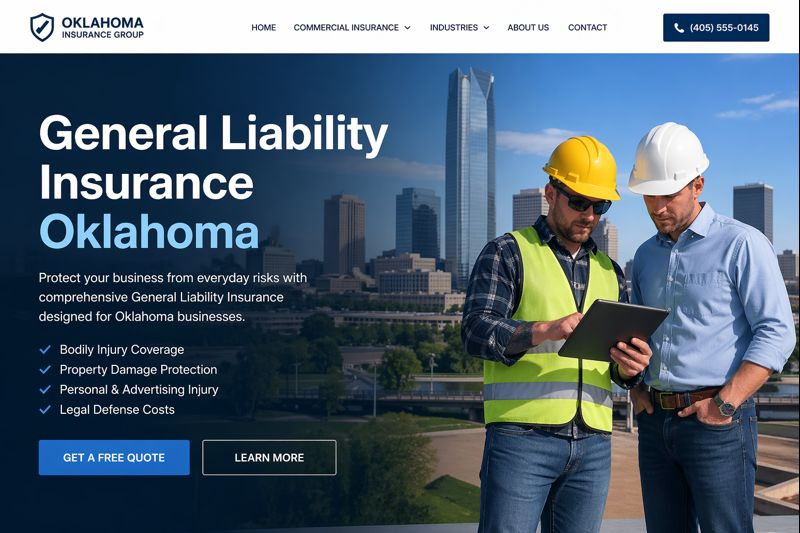
Shopping for general liability insurance near me in Oklahoma usually starts with a simple goal: get proof of coverage fast and keep the premium reasonable. The better move is to slow down just enough to match the policy to how your business really operates. A contractor in Oklahoma City, a service company in Tulsa, a retail storefront in Norman, and a landscaper in Edmond can all buy general liability coverage, but the right structure can look very different once project owners, landlords, subcontractors, and certificates of insurance enter the picture.
In 2026, Oklahoma businesses still use general liability as the core foundation for third-party bodily injury, property damage, and advertising-related claims. It is often the first policy clients, landlords, and vendor agreements ask about because it supports the contract side of doing business. The real question is not whether your company should look at general liability. The real question is how much coverage makes sense, how quickly you can issue a COI, and whether the quote you choose can hold up once contracts, jobsites, and endorsements start mattering.
How general liability insurance works for Oklahoma businesses
General liability insurance is built to help a business respond when someone outside the company alleges that your operations caused bodily injury, property damage, or certain advertising-related harm. That sounds broad because it is broad. A customer slips inside your shop, a technician damages a client’s flooring during a visit, or a project owner asks for proof of insurance before you can start work—general liability is usually the first policy everyone looks at.
For Oklahoma businesses, the practical use case is straightforward: you need a policy that supports both real-world claims and real-world paperwork. That means reviewing occurrence limits, aggregate limits, damage to rented premises, products-completed operations, additional insured needs, waiver requests, primary and noncontributory wording where contracts require it, and how quickly your business can turn around a certificate of insurance. Many companies do not realize these details matter until a landlord, city, property manager, or client asks for specific wording and timing.
- Start with the contract: review limit requirements and certificate language before you shop.
- Match the quote to operations: office-only work, service visits, installation, and subcontracted labor do not underwrite the same way.
- Think past the minimum: a policy that satisfies a simple lease may still be too thin for commercial jobs or vendor agreements.
- Plan for COI speed: if your business needs frequent certificates, make sure the quote path can support that workflow.
- Coordinate with the rest of the insurance stack: commercial auto, workers’ compensation, tools, inland marine, cyber, or professional liability may still be necessary.
Coverage snapshot: what Oklahoma business owners should review before binding
Most general liability policies look similar on the surface. The value differences usually appear when contracts, claims handling, and endorsements are tested. Use this table as a practical checklist before choosing an Oklahoma quote.
| Coverage area | What it usually addresses | What to verify | Why it matters |
|---|---|---|---|
| Bodily injury | Third-party injury claims tied to your operations | Occurrence limit, exclusions, and premises vs off-site work details | Slip-and-fall and jobsite allegations are common starting points |
| Property damage | Damage to someone else’s property allegedly caused by your business | Operations description, exclusions, and damage-to-rented-premises language | Service and installation companies usually need this section reviewed carefully |
| Personal and advertising injury | Certain claims tied to marketing or reputational allegations | Policy wording and exclusions | Marketing-heavy or public-facing businesses should not ignore this section |
| Products-completed operations | Claims that arise after work is finished or a product is delivered | Completed-ops inclusion, class fit, and contract expectations | Important for contractors, installers, and trade businesses |
| Medical payments | Small no-fault payments in certain claim situations | Whether included and at what limit | Not the main reason to buy the policy, but still useful to understand |
| COI and endorsements | Certificate support and contract-related add-ons | Additional insured, waiver, primary wording, and location detail | This is often what decides whether the policy works in day-to-day business |
Who usually needs which general liability setup in Oklahoma
A one-size-fits-all policy usually creates problems later. The businesses below may all buy general liability insurance, but they often buy it for different reasons. Some need it for a lease, some for vendor approval, and others for commercial jobs, completed operations, or project access. That is why comparing only the monthly premium can lead to the wrong decision.
| Business type | Why they buy it | Common limit path | What to watch |
|---|---|---|---|
| Retail stores and offices | Lease compliance and visitor injury/property damage protection | Often starts with 1M / 2M | Landlord wording, signage exposure, and location count |
| Cleaning and janitorial services | Client-site work and property damage concerns | Often 1M / 2M or higher by contract | Damage to customer property and subcontracted labor |
| Handyman and trade businesses | Bid access, client requirements, and completed operations protection | Usually contract-driven | Class accuracy, excluded work, and tool or auto gaps |
| Roofing and specialty contractors | Project access, registration support, and COI needs | Often starts higher depending on job size | Subcontractor controls, completed ops, and contract wording |
| Consultants and low-footprint service firms | Basic client requirements and business foundation coverage | Often 1M / 2M | Professional liability may still be needed |
| Food, beauty, and wellness businesses | Customer-facing exposure and landlord requirements | Often standard package or BOP path | Products exposure, property needs, and employee count |
The strongest quote is the one that matches your actual work, your contracts, and your paperwork needs—not the one with the lowest headline premium.
Oklahoma contractor and employer notes that matter when you shop
Oklahoma business owners should separate what is universally required from what is driven by local rules, trade registrations, and contract language. Oklahoma does not currently impose a statewide general contractor license for general contracting in the broad sense, but trade licenses or registrations can still apply, and local jurisdictions may impose their own requirements. That is why contractors and project-facing businesses should not assume that a low-cost liability quote will automatically satisfy the local or trade-specific side of the work.
Roofing and other construction-related registrations in Oklahoma also bring insurance planning into sharper focus. In Oklahoma’s contractor and home-hardening program materials, proof of general liability insurance of at least $500,000 appears as a baseline requirement for certain registration or certification paths, while some related credential lanes call for higher liability limits and proof of workers’ compensation or exemption. That does not mean every business needs the same setup. It means Oklahoma contractors should line up the quote with the exact registration, trade work, and project requirements they face before they bind anything.
Employers should also keep workers’ compensation in view. Oklahoma workers’ compensation rules are broad, even though certain narrow exemptions still exist. For businesses with employees, helpers, crews, or growing payroll, it is smart to review general liability and workers’ compensation together instead of treating them as unrelated purchases.
| Oklahoma issue | What it means | Why it affects your quote | Smart move |
|---|---|---|---|
| No broad statewide general contractor license | General contracting itself is not currently licensed statewide in a blanket way | Local rules and trade-specific requirements can still control what you need | Check city, county, and trade registration rules before you buy |
| Trade licenses and registrations | Electrical, plumbing, roofing, mechanical, and other trade work may trigger separate requirements | The quote must fit the work you actually perform, not just the name of the business | Use the most accurate operations description possible |
| Roofing and related contractor programs | Some Oklahoma registration or certification paths require proof of GL and workers’ comp or exemption | Cheap policies can fail registration or project expectations | Match the quote to the exact contractor lane and paperwork you need |
| Workers’ compensation coordination | Workers’ comp is separate from GL, but often reviewed together when employees or crews are involved | Applications and contracts may expect both issues to be handled correctly | Review employee count, payroll, and subcontractor structure carefully |
What usually changes the cost of general liability insurance in Oklahoma
Oklahoma general liability pricing is driven by exposure more than by state name alone. A Tulsa contractor, a Norman consultant, an Oklahoma City retail business, and a Broken Arrow service company may all want the same limit, but not receive the same pricing. Carriers are underwriting what you do, where you do it, how often you do it, who you hire, and how severe a claim could become if something goes wrong.
| Factor | Why it changes premium | What helps keep the quote accurate |
|---|---|---|
| Business class | Higher-hazard operations usually price differently than office-only work | Use the most accurate operations description possible |
| Revenue and payroll | More activity can mean more opportunity for a claim | Provide current figures, not outdated estimates |
| Subcontracting | Carrier concern increases when others perform work under your name | Track subcontractor COIs and written agreements carefully |
| Claims history | Prior losses can affect premium and carrier appetite | Be complete and consistent across all applications |
| Limits and endorsements | Higher limits and contract add-ons can increase cost | Buy for real contract needs, not random extras |
| Package structure | A BOP may price differently than monoline GL depending on property needs | Check whether bundling improves total value |
One of the cleanest ways to compare quotes is to line up the same limit, the same business description, and the same endorsement needs across all quote paths. Then compare not just price, but also certificate speed, contract support, carrier fit, and whether the policy can grow with the size of your jobs.
Oklahoma general liability help by city and metro area
We help Oklahoma business owners compare liability options with the contract side of the job in mind. That includes landlord requests, vendor onboarding, city or trade paperwork, and fast COI turnaround. Whether you need a basic small-business policy or a more contractor-focused setup, the goal is the same: get coverage that is usable in the real world, not just inexpensive on paper.
| Region | Examples of nearby cities | What we help compare |
|---|---|---|
| Oklahoma City Metro | Edmond, Norman, Moore, Yukon, Midwest City | Contract-ready limits, landlord requirements, and COI needs |
| Tulsa Metro | Broken Arrow, Owasso, Bixby, Jenks, Sand Springs | Service-business and contractor liability comparisons |
| Central and North-Central Oklahoma | Stillwater, Enid, Ponca City, Guthrie | Small business package options and trade-friendly GL setups |
| South and Southwest Oklahoma | Lawton, Duncan, Altus, Chickasha | Practical quote comparisons for growing local operations |
| Eastern Oklahoma | Muskogee, Tahlequah, McAlester, Bartlesville | Retail, service, and contractor coverage matching |
Get general liability insurance quotes in Oklahoma
Use the quote path that best matches how you want to shop. If you want a fast digital option, start with the primary quote link. If you want to compare a broader commercial route, use the secondary option too. The strongest result comes from starting with your exact business description, estimated revenue or payroll, employee count, and any insurance language a landlord, project owner, or client has already requested.
Have your business name, operations summary, estimated revenue, employee count, and contract insurance wording ready before you apply.
Related topics
Oklahoma general liability insurance FAQs (2026)
Do Oklahoma small businesses legally need general liability insurance?
Not every Oklahoma business is required to carry general liability under one broad statewide rule. In practice, many companies still need it because landlords, customers, trade registrations, project owners, and vendor agreements often require proof of coverage before work begins.
What limit do Oklahoma businesses usually start with?
Many small businesses begin by comparing a 1 million per occurrence / 2 million aggregate structure, but the right answer depends on your contracts, trade work, landlord requirements, and overall exposure. Some contractor-related setups need more than a basic starting point.
Does Oklahoma require a statewide general contractor license?
Oklahoma does not currently require a blanket statewide license for general contracting in the broad sense. However, trade-specific licenses or registrations can still apply, and local jurisdictions may impose their own requirements, so contractors should verify the exact rules tied to their work.
Is general liability the same as workers’ compensation in Oklahoma?
No. General liability is designed for third-party claims. Workers’ compensation addresses employee work-related injuries and illnesses. Businesses with crews, helpers, or payroll should review both policies together because contracts and registrations may expect both issues to be handled correctly.
Can I get a certificate of insurance quickly after I buy coverage?
In many cases, yes, but it depends on the carrier and quote platform. If your business regularly needs COIs for landlords, jobsites, or vendor onboarding, make sure the quote path you choose can support that workflow efficiently.
Independent agency: Blake Insurance Group LLC is an independent insurance agency and is not affiliated with any single insurance company.
Licensing: Licensed insurance producer (NPN 16944666).
Important: Coverage availability, pricing, underwriting eligibility, limits, exclusions, endorsement options, and certificate requirements vary by carrier, business class, claims history, payroll, revenue, subcontracting, and contract terms.
Oklahoma note: Insurance requirements can come from leases, contracts, local jurisdictions, trade registrations, or program rules. Review the exact wording tied to your business before you bind coverage.
Trademarks: All product and company names are trademarks™ or registered® trademarks of their respective holders. Use of them does not imply affiliation or endorsement.