
Ten RV Insurance Companies in California (2026): Full-Timer Options, Roadside Help, Replacement Features, and How to Compare Real Value
Shopping for RV insurance near me in California is different from shopping for a standard auto policy. A drivable motorhome has to satisfy California motor-vehicle liability rules, but a strong RV policy often goes well beyond the legal minimum. Owners also compare campsite liability, personal belongings, travel interruption, roadside breakdown help, full-timer protection, and how a total loss is settled.
That is why the best RV insurance company in California is rarely the one with the lowest headline premium. A Class A coach used for long West Coast trips needs a different setup than a travel trailer parked seasonally near San Diego, and both are different from a fifth wheel used for extended stays up and down the state. The right comparison starts with how you use the rig, where you store it, how far you travel, and whether you need residence-style protection when the RV is parked and functioning like living space.
California RV owners also face practical issues regular auto shoppers do not think about as much: coastal weather exposure, wildfire zones, storage periods, mountain travel, desert heat, long-distance roadside towing, and accessory-heavy rigs with awnings, solar equipment, electronics, and camping gear. The goal of this page is not to crown one universal winner. It is to help you shortlist ten RV insurance companies California shoppers commonly compare, then match your quote to the real way you travel.
Quick facts: what California RV owners should know first
California comparison shopping works best when you separate the legal minimum from the practical protection you actually want. State minimum liability may satisfy registration rules for a drivable RV, but many owners choose stronger limits because RV losses can get expensive quickly.
| Topic | What to know | Why it matters |
|---|---|---|
| California liability minimum | $30,000 bodily injury per person, $60,000 bodily injury per accident, and $15,000 property damage for private passenger vehicles | That may satisfy state law for drivable RVs, but many owners prefer higher limits |
| Motorhome vs towable | Motorhomes are driven and need vehicle-style liability; towables usually center more on physical damage, contents, and campsite protections | The way the rig moves changes how the policy should be built |
| Vacation liability | Many RV-focused policies offer liability protection when the RV is parked and used temporarily as living space | This is one of the biggest differences between RV insurance and ordinary auto coverage |
| Emergency expense | Some policies help with lodging, transportation, or related travel costs after a covered loss away from home | Important for longer California road trips and breakdowns far from home |
| Full-timer protection | Some carriers offer residence-style liability or full-timer coverage for RVs used like a home | Critical if the RV is more than a casual weekend unit |
How to compare RV insurance companies in California so the winner is real
Most weak RV insurance decisions happen because shoppers compare premium only. That misses the issues that usually decide the real value: how the unit is used, what happens when it breaks down far from home, whether attached accessories and personal belongings are handled correctly, and whether the policy has a serious full-timer or vacation-liability option.
- Start with the RV type: Class A, Class B camper van, Class C, fifth wheel, toy hauler, and travel trailer should not be compared the same way.
- Match the same liability limits: do not compare one quote at state minimums and another at stronger limits and call the cheaper one better.
- Price the travel extras: roadside assistance, emergency expense, vacation liability, and personal effects often separate RV-focused programs from generic vehicle coverage.
- Test the loss settlement: replacement cost, total loss replacement, and actual cash value are not the same result.
- Decide whether you are a full-timer: if the RV functions like a residence, that needs to be treated as a major underwriting and coverage question.
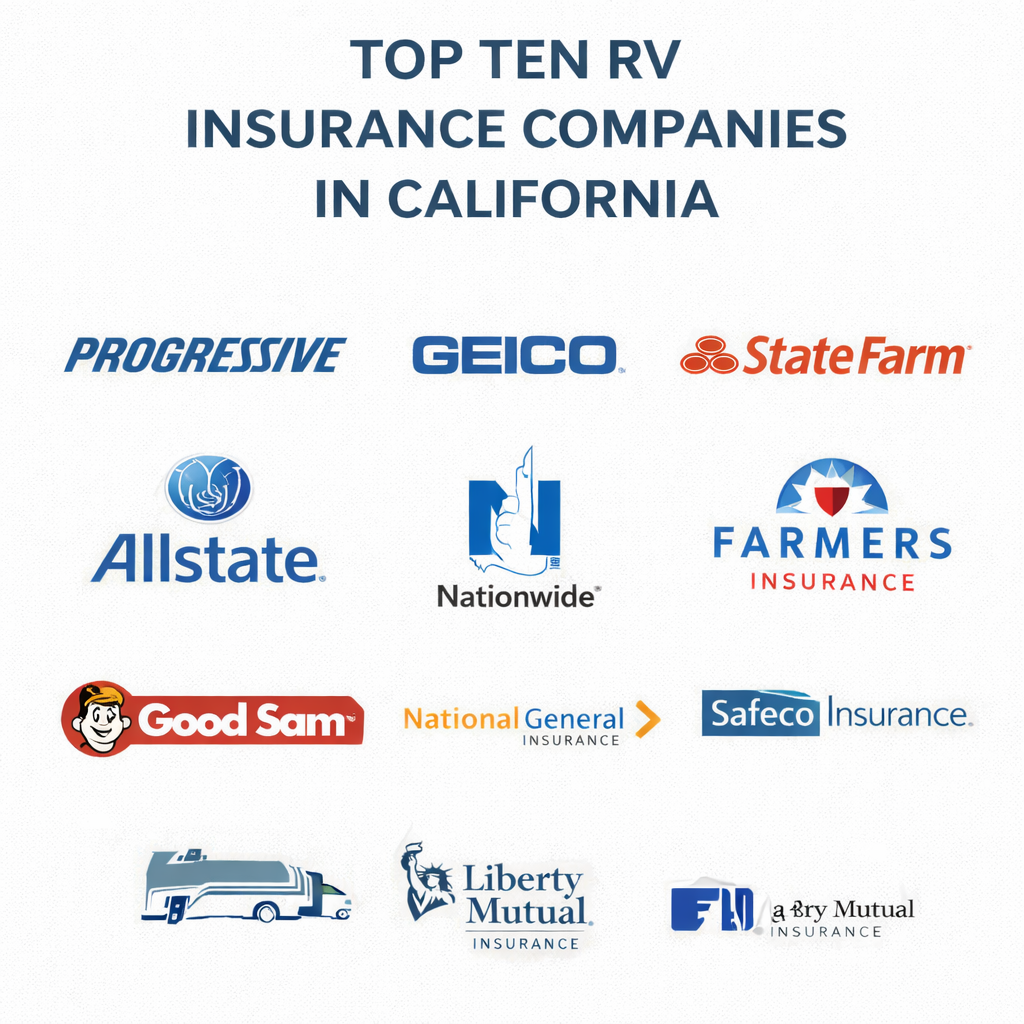
Ten RV insurance companies California shoppers commonly compare
The companies below are common comparison points for California RV shoppers because they publicly emphasize at least one of the coverage themes that matter most in the RV market: roadside help, full-timer protection, vacation liability, replacement-style settlement, or personal-property handling. This is an informational comparison, not a guarantee of availability or a promise that every option is offered on every quote.
| Company | Often a strong fit for | Common strengths | Watch-outs |
|---|---|---|---|
| Progressive | Owners who want one of the broadest publicly visible RV coverage menus | Roadside assistance, total loss replacement, replacement cost/personal effects, vacation liability, full-timer liability | Make sure the California quote includes the exact options your rig needs |
| National General | Buyers comparing replacement-style settlement and travel-oriented extras | Full replacement cost, personal belongings, emergency expense, full-timer paths | Review model-year rules and how replacement features apply to your unit |
| Foremost | RV owners focused on specialty-style coverages and campsite use | Emergency expense, personal property replacement cost, vacation liability, towing and roadside | Confirm which endorsements apply to your specific RV category |
| GEICO | Shoppers who want a national brand with automatic travel-use features on some setups | Vacation liability, emergency expense, personal effects replacement, roadside options | Feature depth can vary by rig type and quote structure |
| Nationwide | Owners comparing pleasure-use RV setups with replacement features | Vacation liability, safety glass replacement, replacement cost, scheduled personal effects | Check whether the quote is strongest for your usage pattern and RV type |
| Safeco | Independent-agent shoppers who want RV coverage plus personal property options | Personal property coverage, 24-hour roadside assistance, agent-based shopping path | Compare specialty RV depth against more RV-specific competitors |
| Allstate | Buyers who want familiar branding and broad optional RV add-ons | Vacation liability, emergency expense, personal effects, full-timer liability options | Read the contents and residence-use details carefully instead of assuming all options are included |
| State Farm | Owners who prefer a strong local-agent model and standard motorhome or trailer protection | Motorhome and trailer coverage, theft and weather-loss protection, roadside eligibility | Feature depth may feel less RV-specialty-heavy than some dedicated RV competitors |
| Farmers | Owners who want agent guidance on full-timer and trailer-specific options | Full-timer coverage, replacement cost for personal belongings, towing and roadside assistance | Best fit often depends on working through the right rig category and usage details |
| American Family | Shoppers comparing standard RV protection with strong personal-property language | Personal property coverage, liability protection, vacation-oriented coverage explanations | Availability and final options can vary by state and program structure |
Informational comparison only. Availability, pricing, discounts, eligibility, and endorsement details vary by state, unit type, underwriting profile, and date of quote.
Coverage features that matter most when comparing California RV insurance
For many California RV owners, the real contest is not just company versus company. It is generic vehicle coverage versus a more RV-specific policy structure. RV-focused programs usually stand out when you compare parked-use liability, replacement-style settlement, personal belongings, roadside help, and travel interruption side by side.
| Feature | What it usually does | Why California owners should care |
|---|---|---|
| Vacation liability | Provides liability protection while the RV is parked and being used as temporary living space | Helpful for campground, beach, lake, and seasonal travel use |
| Emergency expense | Helps with lodging, transportation, or food after a covered loss away from home | Important for long-distance California trips and breakdowns far from your home base |
| Personal effects / personal property | Helps cover belongings carried inside the RV | Useful when the rig carries electronics, gear, tools, bikes, and camping equipment |
| Replacement cost / total loss settlement | Can improve how a total loss is settled compared with basic actual cash value | Especially important for newer motorhomes and higher-value trailers |
| Full-timer liability | Adds residence-style liability for RVs used like a primary home | Critical for full-timers, long-stay users, and extended snowbird patterns |
| Roadside assistance / towing | Helps when the RV is disabled because of flat tires, dead battery, fuel issues, or towing needs | Mountain roads, desert travel, and long towing distances make this more than a convenience |
California RV insurance help by city and travel pattern
RV insurance needs can change a lot by region. Southern California owners often compare coastal exposure, theft, and heavy travel patterns. Inland owners may think more about heat, storage, and wildfire-prone areas. Northern California shoppers may prioritize mountain travel, weather swings, and longer-distance roadside support.
| Area | Common local focus | What to compare first |
|---|---|---|
| Los Angeles / Orange County | Dense traffic, storage questions, theft exposure, high-value rigs | Liability limits, comprehensive, roadside help, deductible strategy |
| San Diego | Coastal storage, long road trips, campground and beach travel patterns | Vacation liability, emergency expense, contents handling |
| Inland Empire | Travel trailers, toy haulers, desert heat, off-season storage | Physical damage, attached accessories, personal effects, towing |
| Bay Area | Mixed urban storage, theft concerns, coastal and Northern California trips | Comprehensive, replacement settlement, roadside response |
| Sacramento / Central Valley | Family trailer use, heat, wildfire-adjacent storage patterns, Sierra travel | Comprehensive, roadside, emergency expense, liability upgrades |
Get RV insurance quotes in California
Start with a quote path that lets you compare multiple RV structures, then review the details that actually matter: the same liability limits, the same physical-damage setup, the same deductible logic, and the same assumptions about vacation use or full-time use. That is the only reliable way to know whether one company is actually better than another for your RV.
Best practice: compare the same California liability limits, the same deductibles, and the same usage pattern before deciding which RV insurer wins.
Related topics
California RV insurance FAQs (2026)
Do motorhomes in California need liability insurance?
Yes. Drivable RVs are motor vehicles, so California liability requirements matter. Many owners choose limits above the state minimum because RV accidents can create larger losses than ordinary car claims.
What is the biggest difference between a regular auto policy and RV insurance?
RV insurance can include features such as vacation liability, emergency expense, personal effects, replacement-style settlement, and full-timer liability that a regular auto policy may not handle as well.
Which RV insurance companies are strongest for full-timers?
The stronger full-timer comparisons are usually the carriers that publicly emphasize full-timer liability or residence-style protection. That should be reviewed carefully before you bind because not every RV policy is built the same way.
Should I insure a travel trailer differently from a motorhome?
Usually yes. A motorhome is drivable and needs vehicle-style liability considerations, while a towable often puts more attention on physical damage, campsite liability, attached equipment, and contents.
What should I compare first when two RV quotes look similar?
Compare the same liability limits, deductibles, roadside help, emergency expense, vacation liability, personal-property handling, and total-loss settlement method. That is where the real difference usually shows up.
Independent agency: Blake Insurance Group LLC is an independent insurance agency and is not affiliated with any single insurance company.
Licensing: Licensed insurance producer (NPN 16944666).
Important: Availability, discounts, pricing, deductibles, roadside programs, full-timer features, emergency expense, replacement-style settlement, and endorsement details vary by insurer, unit type, use, garaging, underwriting, and date of quote.
Trademarks: All product and company names are trademarks™ or registered® trademarks of their respective holders. Use of them does not imply affiliation or endorsement.




