App-Based Car Insurance Review (2026): When a Phone-First Policy Makes Sense—and When a Traditional Carrier Still Wins
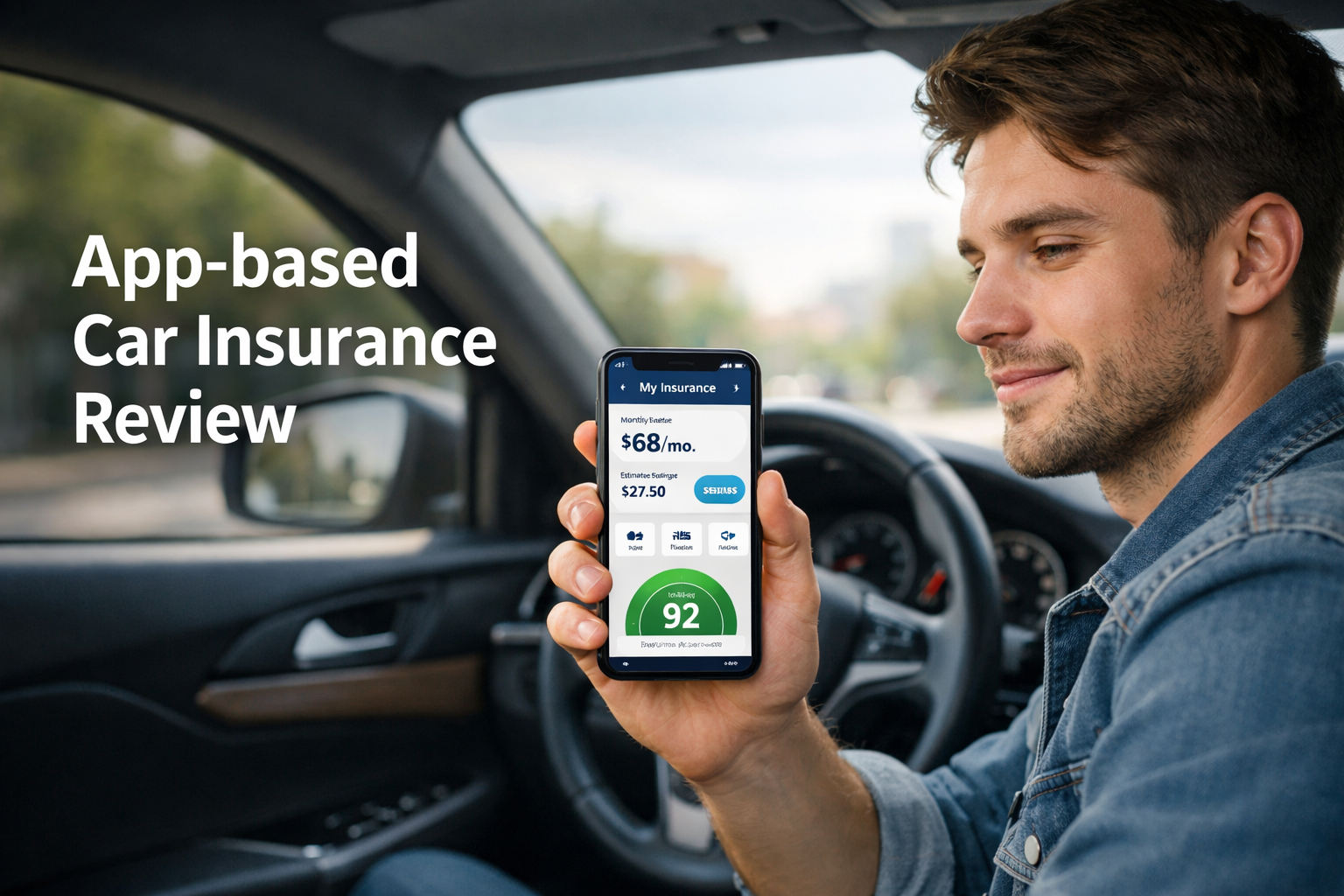
App-based car insurance sounds simple: get a quote on your phone, manage your policy without paperwork, file claims digitally, and in some cases let the app help determine pricing through mileage or driving behavior. In 2026, that promise is real—but it is not automatically the best option for every driver. The strongest app-based policy is the one that combines good coverage, fair pricing, usable claims tools, and a digital experience you will actually keep using. If the app looks polished but the policy fit is weak, the convenience is not enough.
If you are searching for app-based car insurance near me, the right comparison is not app versus no app. It is best full-value quote path for your driving profile: digital-first carrier, telematics lane, standard carrier with a strong mobile app, or an independent comparison route.
Quick facts: what “app-based car insurance” usually means in 2026
App-based insurance is not one single product type. Some companies are simply digital-first. Others use the phone as a service tool. Others add telematics or mileage tracking that can affect pricing.
| Topic | What it means | Why it matters |
|---|---|---|
| Digital-first experience | Quote, ID cards, billing, changes, and claims are designed to happen mostly inside the app | Great for self-service shoppers; frustrating if you prefer phone-heavy support |
| Telematics option | The app may measure mileage, braking, acceleration, trip timing, or phone distraction signals | Can help good-fit drivers, but not every household benefits from tracking-based pricing |
| Claims convenience | Photo upload, claim status, roadside requests, and documents may be available from the phone | Digital claims tools save time only if the service behind them is responsive |
| Price variability | App-based insurers do not always beat standard carriers on price | The best digital experience still has to win on coverage structure and total cost |
| Support style | Some carriers lean toward chat, email, or in-app workflows instead of agent-first service | Know whether you want speed and self-service or deeper human help before you buy |
How app-based car insurance works
A true app-based auto policy usually does four things well: quoting, policy management, claims handling, and ongoing alerts. You can often buy coverage, download ID cards, update vehicles or drivers, pay bills, and start a claim from the same interface. That is the upside. The question is whether the insurer also supports you well when the situation stops being simple—like a coverage question before binding, a mid-claim repair issue, or a renewal increase that needs context.
Some app-based programs are purely about convenience. Others add a scoring layer. That is where many shoppers need to slow down. If the app is collecting driving data, you are no longer just comparing a digital service model. You are comparing a digital service model plus a pricing model. For safe, low-mileage, low-distraction drivers, that can be a win. For households with multiple drivers, late-night schedules, urban stop-and-go traffic, or privacy concerns, it may not be.
The strongest review standard is simple: Would you still choose this carrier if the app were only average? If the answer is no, you may be overvaluing the tech layer and undervaluing coverage fit, underwriting stability, and claims support.
Comparison: the main app-based auto insurance lanes
| Shopping lane | Best for | Main upside | Main watch-out |
|---|---|---|---|
| Digital-first insurer | Drivers who want clean self-service quoting, billing, and claims tools | Fast mobile experience and fewer old-school paperwork bottlenecks | Support may feel lighter if you want complex coverage guidance |
| App + telematics option | Safe drivers comfortable with mileage or behavior tracking | Potential pricing upside if your habits fit the scoring model | Savings are not guaranteed and privacy tradeoffs matter |
| Standard carrier with strong app | Drivers who want established underwriting plus decent mobile tools | Balance of traditional support and digital convenience | The app may be good, but not as seamless as a pure digital-first product |
| Independent comparison path | Shoppers who care more about the best overall fit than any single app brand | Lets you compare coverage structure, rate, and digital experience side by side | Takes a little more discipline to compare apples to apples |
Review takeaway: the best app-based policy is not always the most app-heavy one. It is the one that still holds up when you compare coverage, service style, tracking requirements, and renewal value together.
Is app-based car insurance worth it?
Yes—when the app improves the experience without forcing you into a weaker policy. App-based auto insurance is usually worth it for drivers who like self-service, want fast document access, prefer digital claims tools, and are comfortable handling routine policy tasks on their phone. It becomes even more attractive when the quote is competitive and the app reduces friction instead of adding another layer of monitoring or confusion.
It is usually not worth it when the app is the only strong feature. If the rate is mediocre, the deductible setup is wrong, the support channel feels too thin, or the telematics requirement makes you uneasy, a more traditional route can still be the better buy. Modern insurance should make things easier, not merely look easier.
Pros, tradeoffs, and what to review before you enroll
Before enrolling, review the liability limits, uninsured motorist options where available, comp and collision deductibles, rental/towing choices, payment rules, and how easy it is to reach real support when a claim gets complicated. A slick interface cannot fix a weak policy layout.
Who app-based car insurance fits best—and who should compare very carefully
| Driver profile | Usually a good fit? | Why | Best move |
|---|---|---|---|
| Phone-first, self-service shopper | Often yes | You will likely use the app’s policy tools and benefit from the speed | Compare digital-first and standard-carrier app options side by side |
| Safe, low-mileage driver comfortable with tracking | Often yes | Telematics or mileage-sensitive pricing may improve value | Check the tracked quote against a non-tracked option |
| Urban stop-and-go driver | Maybe | Driving behavior scoring can feel less favorable in heavy traffic environments | Read the tracking rules carefully before opting in |
| Household with teen or multiple drivers | It depends | Shared driving habits can complicate results and service needs | Compare a standard policy against the app-based lane |
| Privacy-sensitive shopper | Usually no | The monitoring tradeoff can outweigh convenience or modest savings | Focus on strong traditional quotes with mobile tools instead |
Practical review: app-based auto insurance is strongest when the carrier’s digital model matches the way you already manage your life. It is weaker when the app asks you to change your habits, tolerate tracking you dislike, or accept thinner support just to get a quote that is only average.
Ready to compare app-based auto insurance options?
The smartest move is to compare app-based and non-app-based quotes using the same vehicle, same drivers, same garaging address, same limits, and same deductibles. That is how you find out whether the digital experience is adding real value or just adding a different wrapper to the same coverage decision.
Coverage is not bound until the application is completed, underwriting is accepted, and the insurer issues the policy.
App-based car insurance FAQs (2026)
What is app-based car insurance?
It is auto insurance built around a mobile-first experience. You may be able to quote, buy, manage billing, access ID cards, request roadside help, and start claims through an app instead of relying mainly on phone or paper workflows.
Is app-based car insurance the same as telematics insurance?
Not always. Some app-based policies are simply digital-first service models. Others also use telematics or usage-based scoring that can factor in mileage or driving behavior.
Can app-based car insurance actually save money?
It can, but savings are not guaranteed. The best value comes when the rate is competitive, the coverage structure fits your needs, and any tracking-based features actually match your driving habits.
Who should skip app-based auto insurance?
Drivers who dislike monitoring, want frequent agent-level help, share vehicles heavily, or already have strong traditional quotes should compare carefully before switching just for the app experience.
What should I compare before buying?
Compare liability limits, deductibles, comp and collision, uninsured motorist options where available, claims workflow, billing rules, support style, and whether the app collects driving data that could affect renewal pricing.
Independent agency: Blake Insurance Group LLC is an independent insurance agency and is not affiliated with any single insurance company, app-based insurer, or telematics program.
Licensing: Licensed insurance producer (NPN 16944666).
Important: Availability, pricing, app features, telematics rules, discounts, claims workflows, and underwriting standards can vary by carrier, driver profile, vehicle, and state. Your issued policy governs coverage.
Trademarks: Any carrier, app, or service names mentioned for identification remain the property of their respective owners. Use of them does not imply endorsement or affiliation.




