
Boat and RV Insurance (2026): Liability, Physical Damage, Personal Effects, Storage Risks, and How to Compare Real Coverage
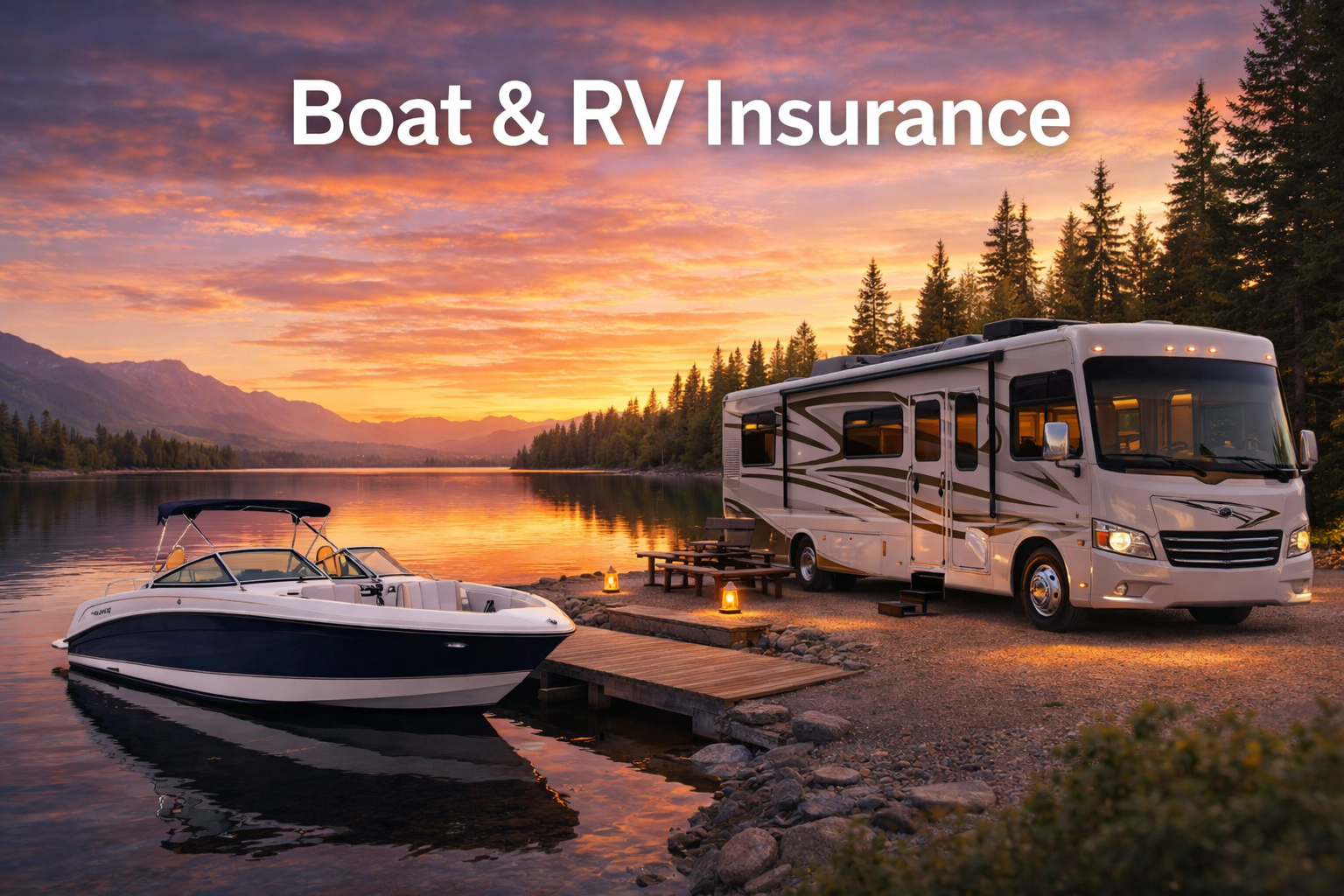
Boat and RV insurance look similar from a distance because both protect expensive recreational property, but the real comparison is more nuanced. Boat insurance is built around water liability, hull damage, passenger injury exposure, docking and storage risks, and optional protections such as fuel-spill or haul-out coverage. RV insurance is built around road liability, campsite liability, weather and theft losses, and the reality that the vehicle may also function as temporary living space.
The practical mistake is assuming your regular auto or home policy automatically fills all the gaps. The National Association of Insurance Commissioners notes that a personal auto policy does not cover recreational vehicles. Boat insurers also structure coverage around watercraft-specific liability and physical damage exposures, while RV insurers build policies around comprehensive, collision, personal effects, and campground-style liability scenarios. In other words, the right policy should match how you actually use the boat or RV: where you store it, who uses it, how far you travel, how much gear you carry, and how hard it would hit your budget if a major covered loss happened tomorrow.
Quick facts
Boat and RV insurance are specialty coverages. They work best when they are matched to how you store, transport, tow, use, and protect the property throughout the year.
| Topic | Quick answer | Why it matters |
|---|---|---|
| Can personal auto cover an RV? | Not automatically | The NAIC says a personal auto policy does not cover RVs, so a dedicated RV policy matters |
| Boat liability focus | Water injury and property damage exposure | Boat liability can include damage to other boats, docks, pilings, and injuries tied to boating activity |
| RV physical damage focus | Comprehensive and collision are central | RV comprehensive can address theft, vandalism, fire, glass, weather, and animal strikes, while collision addresses impact losses |
| Personal effects matter | Often yes for both | People commonly store gear, electronics, fishing equipment, camping items, and travel belongings in these vehicles |
| Settlement type matters | Actual cash value and agreed value are not the same | A total-loss payout can look very different depending on how the policy settles covered losses |
| Best buying move | Match the policy to real usage | The cheapest quote is weak value if it ignores storage, towing, seasonal lay-up, watersports, or campsite liability |
How to compare boat and RV insurance so the policy works when the season changes
The cleanest comparison starts with usage rather than brand. A trailered bass boat kept in dry storage does not create the same risk profile as a wake boat used every weekend with tubing and watersports passengers. A weekend travel trailer parked at a campground does not create the same insurance needs as a drivable motorhome used for long interstate trips. The right policy should reflect where the unit lives, how often it moves, who operates it, how much gear is carried, and what a serious covered loss would do to your budget.
- Start with the exposure: water use, towing, campsite use, seasonal storage, and theft risk all change the coverage mix.
- Review liability first: damage you cause to other people or property can be financially bigger than the value of the boat or RV itself.
- Compare physical damage next: collision, comprehensive, and hull or unit-value settlement shape the repair-or-total-loss outcome.
- Check gear and personal effects: many owners underinsure the property they keep inside the boat, trailer, motorhome, or camper.
- Ask how you would actually use the policy: storage, roadside incidents, campsites, docks, and watersports all create real-world claim differences.
Core boat and RV coverages to review before you buy
The table below separates the main protections most owners should review. This makes it easier to compare a quote based on actual use instead of headline pricing.
| Coverage | Boat insurance angle | RV insurance angle | Why it matters |
|---|---|---|---|
| Liability | Can help with damage or injuries you cause while boating, including damage to docks, pilings, or other boats | Can help with injuries or property damage you cause while operating the RV and, in some cases, when it is parked at a campsite | Liability losses can easily exceed the value of the unit itself |
| Physical damage | Often called hull or watercraft physical damage; can address collision or other covered damage to the boat | Built around comprehensive and collision to cover different causes of physical loss | This is the coverage that helps repair or replace the boat or RV after a covered loss |
| Personal effects / gear | Can help protect carry-on items, fishing gear, and onboard belongings depending on the policy | Can help protect personal property inside a motorhome or travel trailer up to selected limits | Many owners carry thousands of dollars of property that is easy to forget during quoting |
| Optional specialty protections | May include mechanical breakdown, fuel-spill coverage, haul-outs, and watersports-related liability | May include roadside help, vacation liability, full-time liability, and replacement-cost style options depending on policy design | Specialty options often decide whether the policy feels generic or truly usable |
Boat-specific issues: what owners usually miss until after the claim
Boat insurance is not only about the hull. Water liability, passenger activity, docking damage, fuel spill exposure, and seasonal lay-up all matter. Progressive’s current boat materials note that policies can be personalized to cover carry-on items, mechanical breakdowns, haul-outs, fuel spills, and injuries to you and your passengers. It also notes that watersports such as tubing, wakeboarding, and waterskiing are typically addressed under its watercraft policies, while activities involving someone being pulled through the air are not covered.
The practical lesson is to quote the way you actually boat. If the boat is used for fishing only, your needs are different than an owner who regularly pulls tubes or wakeboards. If the unit sits in dry storage most of the year, storage risk matters more. If it is kept at a marina, dockside liability and storm exposure deserve more attention.
| Issue | What to review | Why it matters | Best move |
|---|---|---|---|
| Watersports use | Passenger and towing activity rules | Not every boat is used the same way, and activity-based differences can matter | Tell the insurer how the boat is actually used |
| Storage and trailer risk | Off-water theft, weather, and transport-related exposures | Many losses happen when the boat is not actively on the water | Review year-round protection, not just on-water coverage |
| Fuel spill and haul-out exposure | Optional protections and expense-handling terms | These are specialty costs many owners never think about until they matter | Check optional protections if the boat is higher value or more actively used |
| Hull settlement | How total-loss value is handled | A cash-value style settlement can feel very different from an agreed-value structure | Review settlement type before assuming the quote tells the whole story |
RV-specific issues: what owners should compare before the trip starts
RV insurance combines vehicle and lifestyle exposures. Progressive’s current RV coverage materials say comprehensive can address theft, vandalism, fire, glass breakage, weather-related incidents, and collisions with animals, while collision can help repair or replace the RV after an accident with another vehicle or object. Its RV educational materials also note that liability may apply while a motorhome is parked at a campsite or RV park and that personal property can be protected inside the RV up to selected limits.
That means RV insurance should be quoted the way you actually travel. A towable trailer used a few weekends each year is different from a motorhome that makes long trips, carries electronics and gear, and spends time parked at campsites around other people. Storage, towing, glass, theft, and campsite liability all deserve a direct conversation.
| Issue | What to review | Why it matters | Best move |
|---|---|---|---|
| Comprehensive vs collision | What causes of loss fall into each bucket and what deductible applies | The source of the damage affects how the claim is handled | Choose deductibles that fit your real budget tolerance |
| Personal effects | How much property inside the RV needs protection | Laptops, phones, camping gear, and travel items add up quickly | Estimate the real replacement value of what you carry |
| Campsite liability | How the policy responds when the RV is parked and being used | The exposure does not end when the engine turns off | Review whether your travel pattern needs parked-use liability features |
| Travel style | Weekend use, longer seasonal trips, or full-time living style | The more the RV functions like living space, the more coverage design matters | Quote honestly based on how often and how long you use the RV |
Settlement options: why agreed value, actual cash value, and replacement-style features matter
One of the biggest mistakes owners make is assuming every physical damage policy settles a total loss the same way. It does not. Foremost’s current educational materials explain that under agreed loss or agreed value, the insurer and policyholder agree on a specific value when the policy is written, and in a covered total loss the predetermined amount is paid. That can feel very different from an actual cash value settlement that reflects depreciation.
This does not mean one option is always better for every boat or RV. It means the settlement method should match the age, value, condition, and replaceability of the unit. If you would be frustrated by a heavily depreciated payout on a specialty boat or carefully maintained RV, settlement structure deserves just as much attention as the premium.
| Settlement style | How it generally works | Potential upside | Main caution |
|---|---|---|---|
| Actual cash value | Loss payment typically reflects depreciation and current value considerations | Can produce a lower premium on some units | Total-loss payouts may feel smaller than owners expect |
| Agreed value / agreed loss | The policy is written around a predetermined value for covered total-loss settlement | Creates more payout clarity before a major loss occurs | The agreed amount must still be set thoughtfully when the policy is written |
| Replacement-style features | Some policies offer more favorable loss settlement for certain units or personal effects | Can improve recovery after a major covered loss | Terms vary significantly by insurer, property type, and age of the unit |
Get boat and RV insurance quotes and compare the real recreational-risk stack before you commit
Start with a quote, then compare how the policy handles liability, physical damage, gear, storage, seasonal use, and total-loss settlement. The strongest boat or RV insurance decision happens when the policy matches how you really travel, tow, store, launch, camp, and use the unit—not when the first cheap quote looks convenient.
Use your actual storage setup, travel style, watersports use, campsite use, and gear values as the baseline when you compare coverage.
Related topics
Boat and RV insurance FAQs (2026)
Does my personal auto insurance cover my RV?
Not automatically. The NAIC says a personal auto policy does not cover recreational vehicles, so RV owners should review a dedicated RV policy instead of assuming their regular auto insurance is enough.
What does boat liability insurance usually help with?
Boat liability can help with damages or injuries you are responsible for while boating, including damage to docks, pilings, and other boats, depending on the policy and limits you select.
What is the difference between RV comprehensive and collision?
Comprehensive usually addresses non-collision losses such as theft, vandalism, fire, glass breakage, weather, and animal strikes. Collision usually applies when the RV hits another vehicle or object. Both typically involve a deductible.
Should I insure personal property inside my RV or boat?
Usually yes if you carry meaningful gear or travel belongings. Electronics, fishing equipment, camping items, and personal effects can add up quickly and are easy to undervalue during quoting.
Why does agreed value matter on a boat or RV policy?
Because total-loss settlement can look very different depending on whether the policy uses a depreciated actual-cash-value approach or a pre-agreed value structure. Owners should review settlement terms before assuming the quote tells the full story.
Independent agency: Blake Insurance Group LLC is an independent insurance agency and is not affiliated with any single insurance company.
Licensing: Licensed insurance producer (NPN 16944666).
Important: Availability, pricing, settlement terms, watersports eligibility, personal-effects limits, comprehensive and collision deductibles, campsite-liability features, and storage-related coverage vary by insurer, state, unit type, usage, and exact policy design.
Trademarks: All product and company names are trademarks™ or registered® trademarks of their respective holders. Use of them does not imply affiliation or endorsement.




