Workers’ Compensation Insurance (2026): Coverage, Class Codes, Payroll Audits, COIs, and Online Quote Options
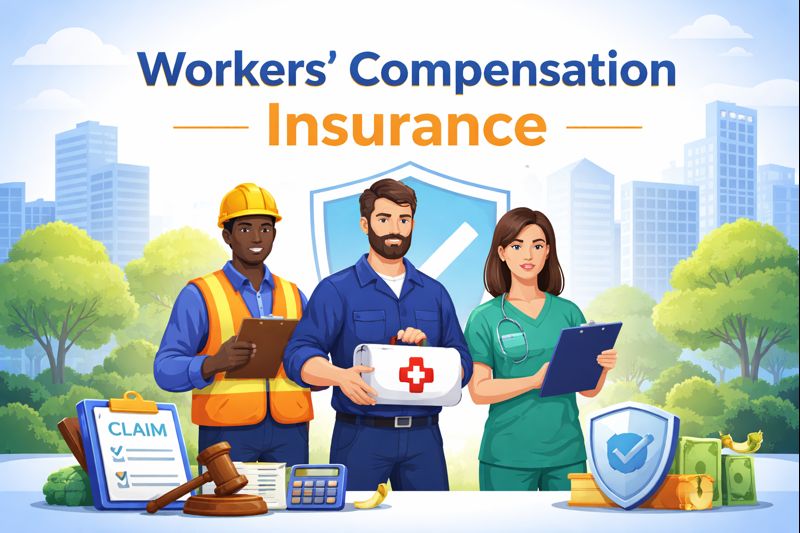
Workers’ compensation insurance helps protect employees after covered work injuries and helps protect businesses from major claim costs, compliance problems, contract delays, and payroll audit surprises.
Workers’ compensation insurance, often called workers’ comp or WC, is one of the most important commercial policies a business can carry in 2026. It is designed to help pay required benefits when an employee is injured or becomes ill because of work. Depending on the state and policy terms, that can include medical care, partial wage replacement, rehabilitation, and other statutory benefits. For employers, workers’ comp is also a risk management tool because it helps create a formal process for reporting, handling, and resolving work injury claims.
The part many business owners miss is that workers’ comp is not priced like a simple one-size-fits-all policy. Premiums are built around payroll, employee duties, class codes, state rules, claims history, subcontractor documentation, and the way the business actually operates. A cleaning company, a roofing contractor, a restaurant, an office consulting firm, a delivery operation, and a medical office can all need workers’ comp, but they do not carry the same risk profile or class-code structure.
That is why the best workers’ comp policy is not just the lowest first quote. The better goal is a policy that is properly classified, audit-ready, contract-ready, and aligned with your hiring plan. If you need workers’ compensation insurance near me, online quote tools can help you start fast, but the information you enter must be accurate. Payroll estimates, owner inclusion or exclusion, subcontractor use, and job duties can all change the final premium.
Quick facts: workers’ compensation insurance in 2026
Use this quick snapshot before you quote. Workers’ compensation can look simple at the surface, but the underwriting details matter. A clean quote should reflect your business operations, payroll split, employee duties, owner status, state exposure, and contract requirements.
| Topic | What it means | Why it matters | Smart move |
|---|---|---|---|
| Employee injury benefits | Helps cover covered work injuries or occupational illness claims. | Protects employees and gives the employer a structured claim process. | Report claims quickly and keep incident records organized. |
| Class codes | Codes that group employee duties by type of work and risk. | Incorrect class codes can cause wrong pricing and audit issues. | Describe actual duties, not just job titles. |
| Payroll estimate | The estimated annual payroll assigned to each class code. | Payroll is one of the main rating inputs. | Separate office, field, sales, and owner payroll when applicable. |
| COI readiness | Ability to issue a certificate of insurance for contracts or job sites. | Many contracts require proof of workers’ comp before work begins. | Send contract insurance requirements before binding when possible. |
| Audit exposure | Most policies reconcile estimated payroll against actual payroll later. | Audit bills can appear if payroll grows or records are incomplete. | Track payroll monthly and collect subcontractor COIs before work starts. |
How workers’ compensation works
A standard workers’ comp policy is commonly understood in two major parts. The first part provides workers’ compensation benefits required by law for covered employee injuries or illnesses. The second part, employers liability, can help protect the business in certain injury-related lawsuits or related claims that fall outside the basic statutory benefit lane, subject to policy limits and terms.
The practical takeaway is simple: workers’ comp helps employees get care and benefits after covered work injuries, while helping employers avoid handling workplace injury costs completely out of pocket. It also supports contract compliance. Many general contractors, property managers, municipalities, vendors, and commercial clients will not let a business begin work until a valid workers’ compensation certificate is on file.
Coverage snapshot: what workers’ comp typically includes
Workers’ compensation benefits vary by state and policy terms, but the structure below gives business owners a practical way to understand what the policy is designed to do. Always review state requirements and the issued policy before assuming a specific benefit applies.
| Feature | What it typically addresses | Why it matters | What to confirm |
|---|---|---|---|
| Medical benefits | Care related to covered work injuries or occupational illnesses. | Helps employees access treatment and supports recovery. | Claims reporting process, approved provider rules, and documentation deadlines. |
| Wage replacement | Partial wage benefits during qualifying disability periods. | Reduces hardship when an employee cannot work due to a covered injury. | State waiting periods, wage calculations, and claim forms. |
| Rehabilitation support | May help with recovery, therapy, or return-to-work planning. | Can reduce downtime and support a safer return to modified or regular duty. | Carrier claim resources and return-to-work expectations. |
| Employers liability | Can help defend certain employee-injury-related lawsuits. | Adds an important layer of protection for complex claim scenarios. | Part B limits, exclusions, and whether higher limits are available. |
| Certificates of insurance | Proof of workers’ comp coverage for clients, contractors, or job sites. | Often required before work begins or invoices are paid. | Certificate holder, waiver wording, contract requirements, and turnaround time. |
How workers’ compensation premium is calculated
Workers’ comp pricing starts with payroll and job duties. A clerical employee, an outside salesperson, a carpenter, a roofer, a restaurant server, a warehouse worker, and a delivery driver generally do not carry the same rating exposure. That is why correct classification matters so much. If payroll is assigned to the wrong code, the policy may look cheaper or more expensive than it should, and the error can surface later during audit.
| Factor | What it is | How it impacts cost | Best practice |
|---|---|---|---|
| Payroll | Estimated annual wages by employee duty or class code. | Higher payroll generally increases premium. | Track payroll by role and update estimates if hiring changes. |
| Class codes | Industry and duty-based classifications used for rating. | Higher-risk work usually carries higher rates. | Classify based on actual duties, not job titles alone. |
| Experience modification factor | A loss-experience adjustment used for eligible businesses. | A mod above 1.00 can increase cost; below 1.00 can reduce cost. | Use safety, fast reporting, and return-to-work processes to control long-term losses. |
| Owner inclusion or exclusion | Whether owners, officers, members, or partners are covered. | Can change premium and available benefits. | Align the election with state rules, contracts, and the owner’s actual role. |
| Subcontractor use | Whether uninsured subcontractors create chargeable exposure. | Missing COIs can lead to audit charges. | Collect subcontractor COIs and agreements before work begins. |
| Safety program | Training, supervision, PPE, written procedures, and incident response. | Can affect underwriting appetite and long-term claim outcomes. | Document safety meetings, corrective actions, and return-to-work steps. |
Payroll audits: how to avoid surprise bills
Most workers’ compensation policies are subject to a payroll audit because the policy is issued using estimated payroll. At the end of the policy term, the carrier may review actual payroll, job duties, subcontractor payments, owner status, and other rating details. If payroll was higher than estimated, or if uninsured subcontractors were used, additional premium may be due. If payroll was lower, a credit may apply depending on the policy and carrier rules.
The audit process is much easier when your records are organized throughout the year. Waiting until the audit notice arrives can create stress, especially if payroll is mixed across roles or subcontractor certificates were never collected.
| Record type | What to keep | Why it matters | Practical tip |
|---|---|---|---|
| Payroll reports | Monthly payroll by employee, role, state, and class-code category. | Supports accurate premium reconciliation. | Export payroll reports monthly and store them by policy year. |
| Subcontractor COIs | Current certificates showing workers’ comp coverage when required. | Missing proof can cause subcontractor payments to be charged as exposure. | Collect COIs before work starts and renew them before expiration. |
| Contracts and invoices | Signed agreements, scope of work, and payments to subcontractors. | Helps clarify whether a worker or subcontractor should be included. | Keep contracts and COIs in the same folder. |
| Job descriptions | Written duties for office, field, sales, driving, and supervisory roles. | Supports class-code accuracy. | Update job descriptions when employees start doing different work. |
| Claim records | Incident reports, witness notes, treatment updates, and return-to-work documentation. | Supports better claim handling and mod control. | Document incidents promptly and keep records consistent. |
Quote and buy workers’ compensation insurance online
Use the quote path that matches your business situation. If you need quick small-business coverage, a certificate for a contract, or a way to compare commercial insurance options, online quote tools can shorten the process. The key is to enter accurate information and confirm that the final policy matches the contract or compliance requirement you are trying to satisfy.
| Quote path | Best fit | What to prepare | Action |
|---|---|---|---|
| Thimble | Small businesses that want a fast commercial insurance quote path and simple online flow. | Business operations, payroll estimate, employee details, contract needs, and desired effective date. | Quote with Thimble |
| NEXT Insurance | Business owners who want to quote and buy online when eligible. | Business type, location, payroll, employees, coverage needs, and certificate requirements. | Buy with NEXT |
| Coterie | Small businesses that want a digital commercial quote path through an agency-supported workflow. | Business description, NAICS-style activity details, employee/payroll information, and coverage timing. | Quote with Coterie |
Coverage is not bound until the carrier or platform accepts the application, required information is complete, payment is made when required, and the effective date is confirmed.
What we need to quote workers’ comp accurately
The fastest quotes come from clear inputs. You do not need every answer before you start, but the more accurate your information is, the cleaner the quote will be. Workers’ comp is especially sensitive to payroll, employee duties, owner elections, subcontractor exposure, and prior claims.
| Item | What to provide | Why it matters | Quick tip |
|---|---|---|---|
| Business basics | Legal name, DBA, address, entity type, years in business, and contact details. | Aligns policy records and certificate information. | Use the exact legal name shown on payroll and contracts. |
| Operations summary | What the business does, where work is performed, and whether employees drive or work offsite. | Determines eligibility and class-code fit. | Describe actual daily work, not marketing language. |
| Payroll by role | Estimated annual payroll split by office, field, sales, driver, owner, and state. | Payroll is the core rating input. | Separate clerical payroll when eligible instead of blending it with field payroll. |
| Owner information | Names, titles, ownership percentage, duties, and inclusion or exclusion preference. | Owner treatment can change premium and benefits. | Match owner election to state rules and contract requirements. |
| Claims history | Prior claims, current carrier, loss runs, and safety improvements after losses. | Affects underwriting and renewal stability. | Provide loss runs when available, especially for established businesses. |
| Contract requirements | Certificate holder, waiver requirements, alternate employer wording, or project-specific language. | Prevents certificate delays after binding. | Upload or send the insurance requirement sheet before choosing a policy. |
Workers’ compensation insurance “near me”
If you searched for workers’ compensation insurance “near me,” you are probably trying to solve a real business deadline. You may have a new employee starting, a contract that requires a COI, a renewal that needs a second look, or a jobsite that will not let your crew begin until proof of coverage is filed. Blake Insurance Group helps business owners compare practical quote paths and understand what details matter before they buy.
Our licensed footprint includes AZ, AL, TX, CA, NY, OH, FL, NC, VA, GA, OK, NM, IA, KS, MI, NE, SC, SD, and WV. Workers’ comp requirements vary by state, and some industries need special handling, so always confirm state-specific rules before relying on a general quote.
| Region | Licensed states | Common workers’ comp needs |
|---|---|---|
| Southwest and West | AZ, CA, NM, TX | Contractor COIs, employee payroll setup, subcontractor tracking, jobsite requirements, and renewal reviews. |
| Southeast and Mid-Atlantic | AL, FL, GA, NC, SC, VA, WV | Hospitality, service businesses, trades, property maintenance, coastal contractors, and multi-location employers. |
| Midwest and Plains | IA, KS, MI, NE, OH, OK, SD | Severe weather trades, repair operations, rural employers, construction, transportation support, and payroll audit prep. |
| Northeast | NY | State-specific compliance review, service businesses, contractors, offices, and certificate requirements. |
Related commercial insurance topics
Workers’ compensation insurance FAQs
Is workers’ comp required if I only have one employee?
Many states require workers’ compensation once a business has employees, including part-time employees in many situations. Requirements vary by state, industry, ownership structure, and worker classification, so verify the rules that apply where your business operates.
What are workers’ comp class codes?
Class codes are rating categories tied to employee duties and workplace risk. They matter because workers’ comp pricing depends heavily on what employees actually do. A clerical employee and a field employee should not automatically be classified the same way.
What is a workers’ comp payroll audit?
A payroll audit reconciles estimated payroll against actual payroll for the policy period. The carrier may review payroll records, job duties, owner status, subcontractor payments, and certificates of insurance. Clean records help reduce surprises.
What is an experience modification factor?
An experience modification factor, often called a mod, is a loss-experience adjustment used for eligible businesses. A mod above 1.00 can increase workers’ comp cost, while a mod below 1.00 can reduce cost. Safety, claims management, and return-to-work practices help control long-term results.
Can I get a workers’ comp certificate of insurance online?
Many online quote and buy platforms can provide certificate support when coverage is issued. The speed depends on eligibility, application accuracy, payment, effective date, and whether the contract requires special wording or endorsements.
Should subcontractors have their own workers’ comp coverage?
In many cases, yes. If subcontractors do not provide acceptable proof of their own workers’ compensation coverage, their payments may create audit exposure for your policy. Collect certificates before work begins and keep them current.
Independent agency: Blake Insurance Group LLC is an independent insurance agency and is not affiliated with any single insurance company, quote platform, or carrier.
Licensing: Licensed insurance producer (NPN 16944666).
Important: Workers’ compensation requirements, benefits, owner inclusion or exclusion rules, class codes, audits, premiums, endorsements, and available carriers vary by state, industry, payroll, underwriting, and policy terms. This page is general information and is not legal advice.
Online quote notice: Online quote and buy options are subject to eligibility, underwriting approval, platform availability, payment, and carrier confirmation. Coverage is not bound until confirmed by the issuing carrier or platform.
Trademarks: Carrier, platform, and product names are trademarks™ or registered® trademarks of their respective owners. Names are used for identification only and do not imply affiliation or endorsement.





Reviews are loaded from Google when you click “View reviews.”