Personal Watercraft Insurance (2026) — Jet Ski, Sea-Doo & WaveRunner Coverage Made Simple
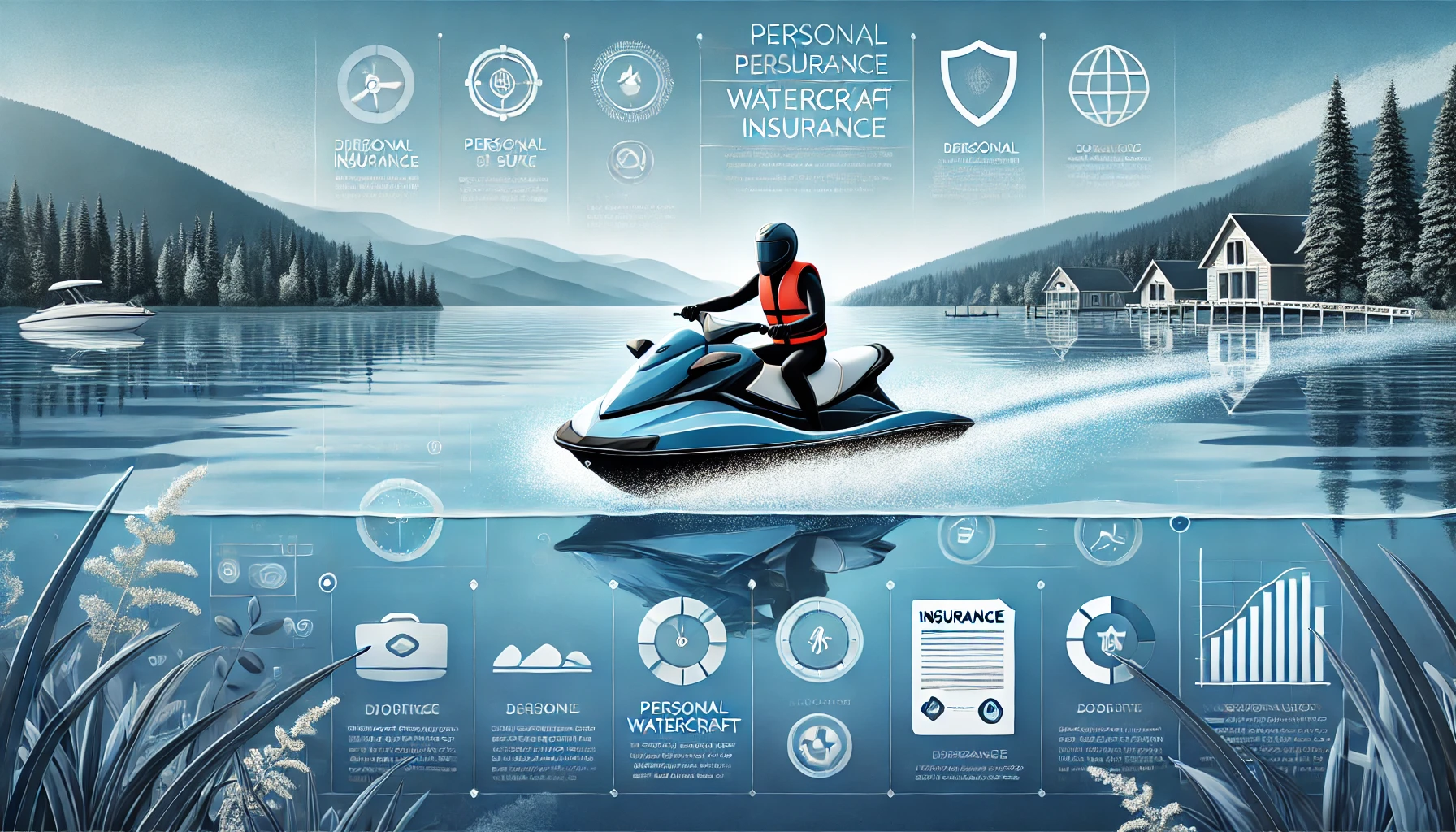
Small craft, big fun—don’t let a mishap sink the weekend. Personal watercraft (PWC) insurance helps cover liability for injuries and property damage, physical damage to your craft (hull), on-water towing, and options for trailers and accessories. The best policy is the one that matches your riding style, where you launch, and what you’re actually exposed to—especially on busy holiday lakes and river channels.
We compare options so your Jet Ski®, Sea-Doo®, or WaveRunner® is protected for what matters most: liability limits that align with your household, uninsured/underinsured watercraft where available, hull valuation (Agreed Value vs ACV), and the assistance coverages that keep a breakdown from becoming a towing nightmare.
Quick Facts — PWC Insurance
| Item | Typical range / note | Why it matters |
|---|---|---|
| Liability limits | $300k–$1M+ | Protects you for injuries and property damage if you’re at fault |
| Uninsured watercraft | Match liability where possible | Pays if another operator has too little/no insurance (availability varies) |
| Hull coverage | Agreed Value or ACV | Agreed Value avoids depreciation; ACV can lower premium |
| Medical payments | $1k–$10k+ | No-fault help for riders/guests—useful for family rides and tow sports |
| Towing & assistance | On-water towing + trailer roadside (form-dependent) | Breakdowns or soft-ungrounding won’t end the weekend |
| Accessories/gear | Electronics, wetsuits, safety gear | Confirm sublimits; schedule higher-value add-ons to close gaps |
Marinas and storage facilities may require proof of liability. We can provide documentation quickly when you need it.
Coverage Snapshot — What We Compare for PWC Owners
Liability + uninsured watercraft
Protects against injury and property damage claims. Uninsured/underinsured coverage helps if another operator has low limits (where available).
Hull + equipment
Physical damage to the craft and installed components. Choose Agreed Value for newer units; consider ACV to trim premium.
Medical payments
No-fault coverage for you and riders—especially useful if you bring guests or tow tubes regularly.
On-water towing + roadside
Help for towing/assistance on the water. Trailer roadside options vary by carrier form—verify before you rely on it.
Accessories + personal effects
Action cams, radios, dry bags, and gear can have caps. We confirm limits and close gaps where needed.
Salvage, wreck removal & fuel spill
Often included with sublimits. We confirm wording so recovery obligations aren’t unexpectedly out-of-pocket.
| Coverage area | What to verify | Best practice |
|---|---|---|
| Navigation territory | Where the policy allows operation (lakes/rivers/coastal use) | List the waters you actually use to avoid claim disputes |
| Operator/rider rules | Who is covered to operate; age or supervision rules | Match coverage to how your family and guests actually ride |
| Trailer coverage | Physical damage and theft coverage for the trailer | Coordinate with auto vs PWC policy to choose the broader/cheaper approach |
| Seasonal storage | Off-season storage location and theft protections | Secured storage + locks/GPS improve risk profile and can help pricing |
| Liability limit strategy | Limits that protect assets and household income | Don’t buy “minimums” by default—set limits intentionally and consider umbrella alignment |
Clean comparisons require the same inputs. If one quote uses Agreed Value and another uses ACV—or one includes towing and another doesn’t—the cheaper number can be misleading.
Agreed Value vs ACV: the hull valuation choice that changes everything
Hull coverage is where PWC insurance gets real. If your craft is stolen, totaled, or badly damaged, the policy’s valuation method drives the payout. In practical terms, this is the difference between “I can replace what I owned” and “I’m negotiating depreciation after a loss.”
| Valuation type | How payouts typically work | When it’s usually best | Trade-off |
|---|---|---|---|
| Agreed Value | Policy sets a specific value; payouts follow that value (subject to terms) | Newer PWCs, well-maintained units, owners who want payout certainty | Usually costs more than ACV |
| Actual Cash Value (ACV) | Payout reflects depreciation at time of loss | Older units, lower purchase price, owners optimizing premium | Less predictable payout after theft/total loss |
Document upgrades
Keep receipts/photos for add-ons (audio, GPS, performance parts). This supports underwriting and reduces claim friction.
Set the deductible deliberately
A higher deductible can lower premium, but only choose what your emergency fund can comfortably cover on a short timeline.
What Moves Your Rate (and How to Save)
Compare apples-to-apples: same liability limits, hull valuation choice, deductible, and towing/accessories coverage.
| Driver | Why it matters | Pro move |
|---|---|---|
| Make/model & horsepower | Higher-performance PWCs generally rate higher | Complete a boater safety course and document experience |
| Unit value & deductible | Higher value increases premium; lower deductibles increase premium | Use Agreed Value for newer crafts; adjust deductible to match your cash buffer |
| Operating area & usage | Busy waters and frequent use increase exposure | List actual waters; add towing; verify territory rules |
| Storage & anti-theft | Garage/secured storage reduces theft risk | Use locks/GPS; store indoors when possible; keep photos and serials |
| Bundles & pay mode | Multi-policy discounts and annual pay can reduce fees | Bundle when it lowers the total household cost—not just the PWC line |
Bring this to get a clean quote fast
- Year/make/model + VIN/HIN (if available) + engine details
- Hull value preference (Agreed Value vs ACV) and desired deductible
- Where it’s stored (garage, marina, trailer) + anti-theft devices
- Primary waters/territory and usage frequency
- Trailer details (if you want it covered) + accessories list (audio/GPS/cam)
Waters We Serve
We can quote and advise across common inland and coastal operating areas. Territory rules vary by carrier—so we match coverage to where you actually ride.
| Region | Popular waters | Common needs |
|---|---|---|
| Southwest | Lake Havasu, Colorado River, Lake Mohave | Liability/UM, towing, theft prevention |
| West & Mountain | Lake Powell, Lake Mead, Lake Tahoe | Territory confirmation; salvage and spill wording |
| Southeast & Gulf | Gulf bays, intracoastal waters | Higher liability, medical payments, storm/season planning |
| Midwest & Lakes | Great Lakes and inland chains | Agreed Value for newer crafts; accessories limits |
Personal Watercraft Insurance — FAQ
Is PWC insurance required?
Not everywhere, but marinas and lenders often require proof. Liability (and uninsured watercraft where available) is strongly recommended.
Does my boat policy cover my PWC?
Usually you need a separate PWC policy or an endorsement. We’ll place the most cost-effective option based on your craft, limits, and usage.
Are tow sports covered?
Often yes, but exclusions can apply (events, night operation, or certain high-risk activities). We’ll align liability and medical payments to how you ride.
Is my trailer included?
Trailer coverage can be added to the PWC policy or handled on your auto policy. We coordinate what’s broader and cheaper for your setup.
What about accessories?
Many policies include sublimits. We confirm caps and close gaps for higher-value accessories and electronics.
Independent agency: Blake Insurance Group LLC is an independent insurance agency and is not affiliated with any single insurance company. Licensed insurance producer (NPN 16944666). Availability, underwriting, navigation territory, deductibles, and valuation options vary by carrier and waterway. Your issued policy governs coverage, limits, and exclusions. Jet Ski®, Sea-Doo®, and WaveRunner® are trademarks of their respective owners.




