Tesla Model 3 • Loans and leases • Coverage requirements
Insurance for a Financed or Leased Tesla Model 3
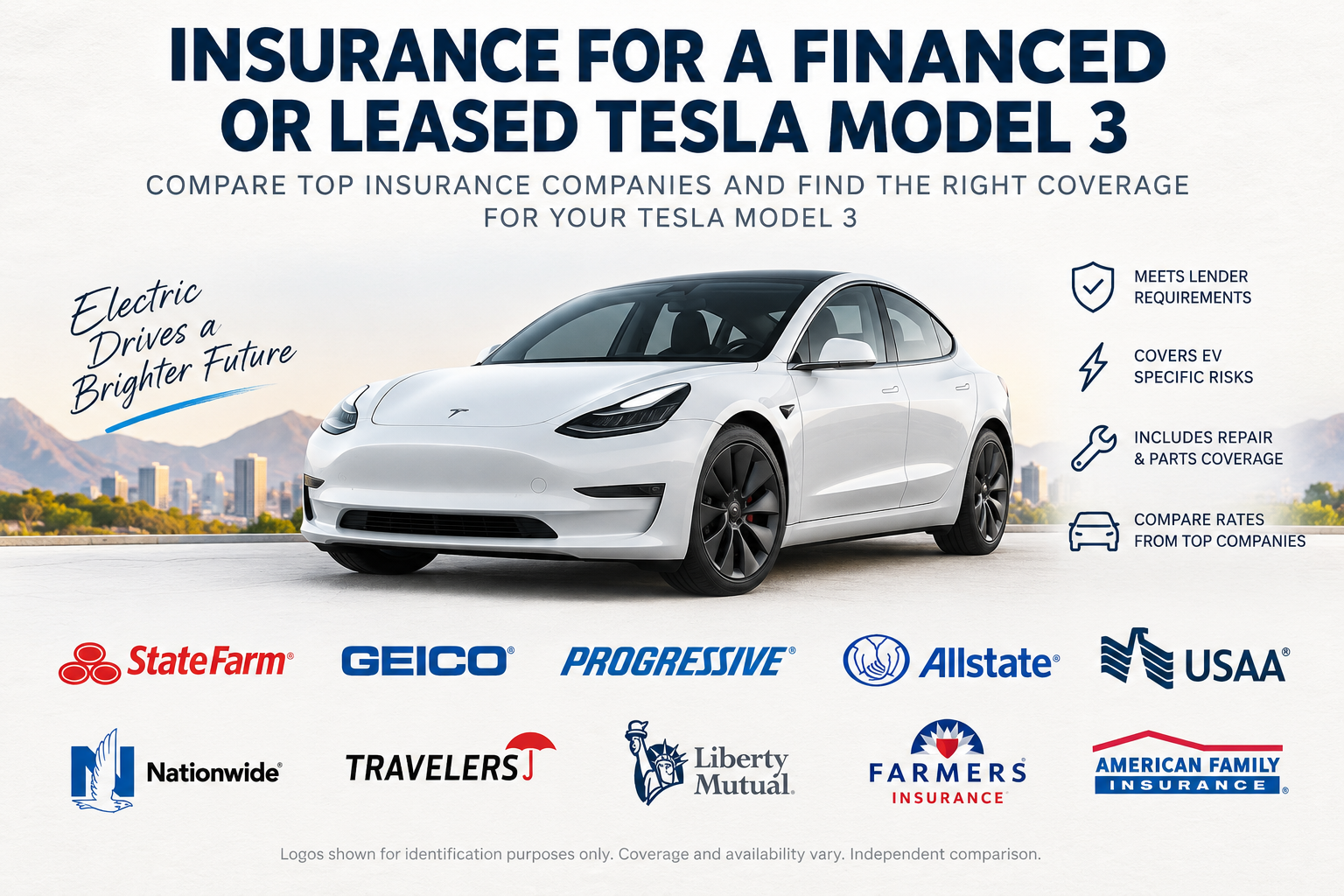
Insurance for a financed or leased Tesla Model 3 has to meet more than your state's minimum. Your lender or leasing company will require collision and comprehensive coverage, list itself on the policy, and often set minimum liability limits and a maximum deductible. Because a new Model 3 can lose value quickly, gap coverage also deserves a close look.
This guide explains what lenders and lessors typically require, how gap coverage works, what happens if a financed or leased Model 3 is totaled, and how to keep the cost under control. Blake Insurance Group is an independent agency that can compare several insurance companies for many Tesla owners. Always confirm the exact requirements in your own loan or lease contract.
Get a quote for a financed or leased Model 3
Tell us about your Model 3, your lender or lessor, and any coverage requirements in your contract, and a licensed agent will follow up. Submitting the form does not bind coverage.
If the form does not load, call 888-387-3687, Monday through Friday, 9:00 to 5:00, or email info@blakeinsurancegroup.com.
What lenders and leasing companies typically require
A lender or lessor has a financial stake in your Model 3 until the loan is paid off or the lease ends, so the contract requires insurance that protects the car. Requirements vary, but the table below shows what is common.
| Requirement | Financed (loan) | Leased |
|---|---|---|
| Collision and comprehensive | Required for the vehicle's full value | Required for the vehicle's full value |
| Maximum deductible | Often set by the lender; some have none | Commonly capped, often at $1,000 |
| Liability limits | At least your state minimum; some lenders require more | Often higher than state minimums; set by the lease |
| How the company is listed | Lienholder or loss payee | Loss payee and additional insured |
| Proof of insurance | Before delivery, and whenever the policy changes | Before delivery, and whenever the policy changes |
Requirements are examples of common practice, not the terms of any specific Tesla loan or lease. Toyota Financial Services, for example, sets a $1,000 maximum deductible on leases. Your contract controls.
If your coverage lapses or falls below the requirements, the lender may buy force-placed insurance and add the cost to your loan. Force-placed coverage is typically expensive and protects mainly the lender, not you.
Gap coverage for a Model 3
If your Model 3 is totaled or stolen, collision or comprehensive pays its actual cash value, minus your deductible. Early in a loan or lease, you may owe more than that amount, especially if you made a small down payment, rolled in negative equity from a previous car, or chose a long loan term. Gap coverage pays the difference.
Ways to get gap coverage:
- Through your auto insurer, often as an add-on to collision and comprehensive. This is frequently less expensive than other options.
- Through the dealer or lender, sometimes called a gap waiver, which may be rolled into the loan.
- Included in your lease. Many leases include gap protection. Check before buying it separately.
Gap coverage usually does not pay your deductible, overdue payments, or extended warranties rolled into the loan. Read the terms, and drop gap coverage once you owe less than the car is worth.
What happens if a financed or leased Model 3 is totaled
Teslas can be declared total losses after damage that would be repairable on some other cars, particularly damage near the high-voltage battery or structural castings. If that happens:
- The insurer determines the car's actual cash value based on comparable vehicles.
- The payment, minus your deductible, goes first to the lender or lessor because they are listed as loss payee.
- If the payment is less than the loan or lease payoff, gap coverage, if you have it, pays the difference.
- If there is money left after the payoff, it goes to you.
On a lease, the lease typically ends after a total loss. Ask your lessor how early termination charges are handled when gap coverage applies.
Why Model 3 physical damage coverage costs what it does
Lenders require the coverage that makes up much of a Tesla premium: collision and comprehensive. Several factors drive that cost:
- Repair costs. Aluminum castings, cameras, and sensors make collision repairs more involved than on many conventional cars.
- Repair network. Tesla certifies collision centers, and approved shops may be limited in some areas, which can lengthen repairs.
- Battery damage. Damage near the battery can require specialized inspection and may lead to a total loss.
- Low theft risk. The Model 3 has one of the lowest theft claim rates of any vehicle in HLDI data, which helps the comprehensive portion.
Our full coverage car insurance guide explains how each part of a full coverage policy works.
Ways to control the cost while meeting requirements
- Choose the highest deductible your contract allows and you can afford to pay.
- Compare several insurers, including Tesla Insurance where it is offered, using identical coverage.
- Buy gap coverage through your insurer if it costs less than the dealer's version, and only if your lease does not already include it.
- Bundle home, condo, or renters insurance.
- Consider telematics if you drive carefully. See our guide to usage-based insurance.
- Consider the Standard trim. A lower price can mean lower collision and comprehensive premiums than the Performance trim.
Our car insurance deductible calculator can help you see how different deductibles change your premium.
Coverage worth adding beyond the requirements
- Higher liability limits than the minimum your contract requires, to protect your own savings.
- Uninsured and underinsured motorist coverage at matching limits. See uninsured and underinsured motorist coverage.
- Rental reimbursement with limits high enough for a long repair.
- New car replacement, offered by some insurers for newer vehicles, which can pay more than actual cash value.
- Glass coverage for the large glass roof and camera-equipped windshield.
Lease-end and insurance: what is and is not covered
At the end of a lease, the lessor inspects the car for excess wear and mileage. Insurance does not pay for normal wear, worn tires, minor scuffs, or mileage overages; those are lease charges. Insurance pays for sudden accidental damage, so if your Model 3 was damaged in a covered incident during the lease, file the claim and complete the repair before turning the car in. Keep repair records in case the lessor asks about prior damage.
Changing insurers during a loan or lease
You can usually switch insurance companies at any time during a loan or lease, as long as there is no gap in coverage and the new policy meets the contract's requirements. To switch smoothly, start the new policy before canceling the old one, list the lender or lessor exactly as the contract requires, and send proof of the new coverage to the lender or lessor promptly. Many lenders track coverage electronically and will send a notice if they do not receive updated proof. If you are adding a driver, moving to a new state, or changing deductibles, confirm the change still meets your contract before it takes effect.
What you need to insure a financed or leased Model 3
Have these ready so the policy meets your contract on day one.
- Your loan or lease contract. Required coverages, liability limits, maximum deductible, and how the company must be listed.
- Lender or lessor details. Exact legal name and address for the loss payee or additional insured entry.
- VIN and trim. Confirms the model year, trim, and drivetrain.
- Drivers and history. Dates of birth, license numbers, and recent accidents or violations.
- Gap coverage plans. Whether your lease or loan already includes gap protection.
Financed or leased Model 3 insurance FAQs
What insurance is required for a leased Tesla Model 3?
Leases generally require collision and comprehensive for the car's full value, minimum liability limits set by the lease, a maximum deductible, and listing the lessor as loss payee and additional insured. Check your lease agreement.
Do I need gap insurance on a financed Model 3?
It is worth considering if you made a small down payment or have a long loan term. Many leases already include gap protection.
Can I choose any insurance company for a financed Tesla?
Usually yes, as long as the policy meets the lender's requirements and lists the lender correctly.
What is the maximum deductible on a leased car?
It depends on the lease. Many lessors cap it, often at $1,000. Your contract controls.
What happens if my coverage lapses on a financed Model 3?
The lender may buy force-placed insurance and add the cost to your loan. It is typically expensive and mainly protects the lender.
Does insurance cover lease-end wear charges?
No. Normal wear and mileage charges are lease costs. Insurance covers sudden accidental damage.
Is Tesla Insurance accepted by lenders?
Lenders generally accept any licensed insurer whose policy meets their requirements. Confirm with your lender or lessor.
Can I switch insurers during my Model 3 lease?
Usually yes. Start the new policy before canceling the old one, list the lessor correctly, and send proof of coverage promptly.
Related vehicle insurance guides
These guides cover closely related vehicles and situations:
Important information
Independent agency. Blake Insurance Group LLC is an independent insurance agency. Licensed insurance producer NPN 16117464. Licensed states: AZ, AL, TX, CA, NY, OH, FL, NC, VA, GA, OK, NM, IA, KS, MI, NE, SC, SD, WV, IL, NJ, PA, TN, and WA. Which insurance companies we can quote depends on our current appointments and your state.
Trademarks. Tesla and Model 3 and the insurance company names and logos shown in the image on this page are trademarks of their respective owners and are used for identification only. Blake Insurance Group is not affiliated with or endorsed by any vehicle manufacturer, and the logos do not mean we represent, partner with, or are endorsed by those insurance companies.
Independent comparison. Vehicle details on this page come from manufacturer and public safety sources and can change by model year and trim. Our explanations of how those details may affect insurance are general and are not a quote. Premiums, discounts, and eligibility vary by insurer, state, driver, vehicle, and coverage, and are subject to underwriting. The issued policy controls.
Your next step
Pull your loan or lease contract, note the required coverages and deductible limit, and request a quote. We will compare insurers and make sure your policy lists your lender or lessor correctly.