Enclosed is usually easier
A locked, enclosed private garage or secured storage unit generally limits access and reduces exposure to theft, vandalism, hail, falling objects, wind, animals, and routine parking damage.
How alternative storage can affect collector-policy eligibility
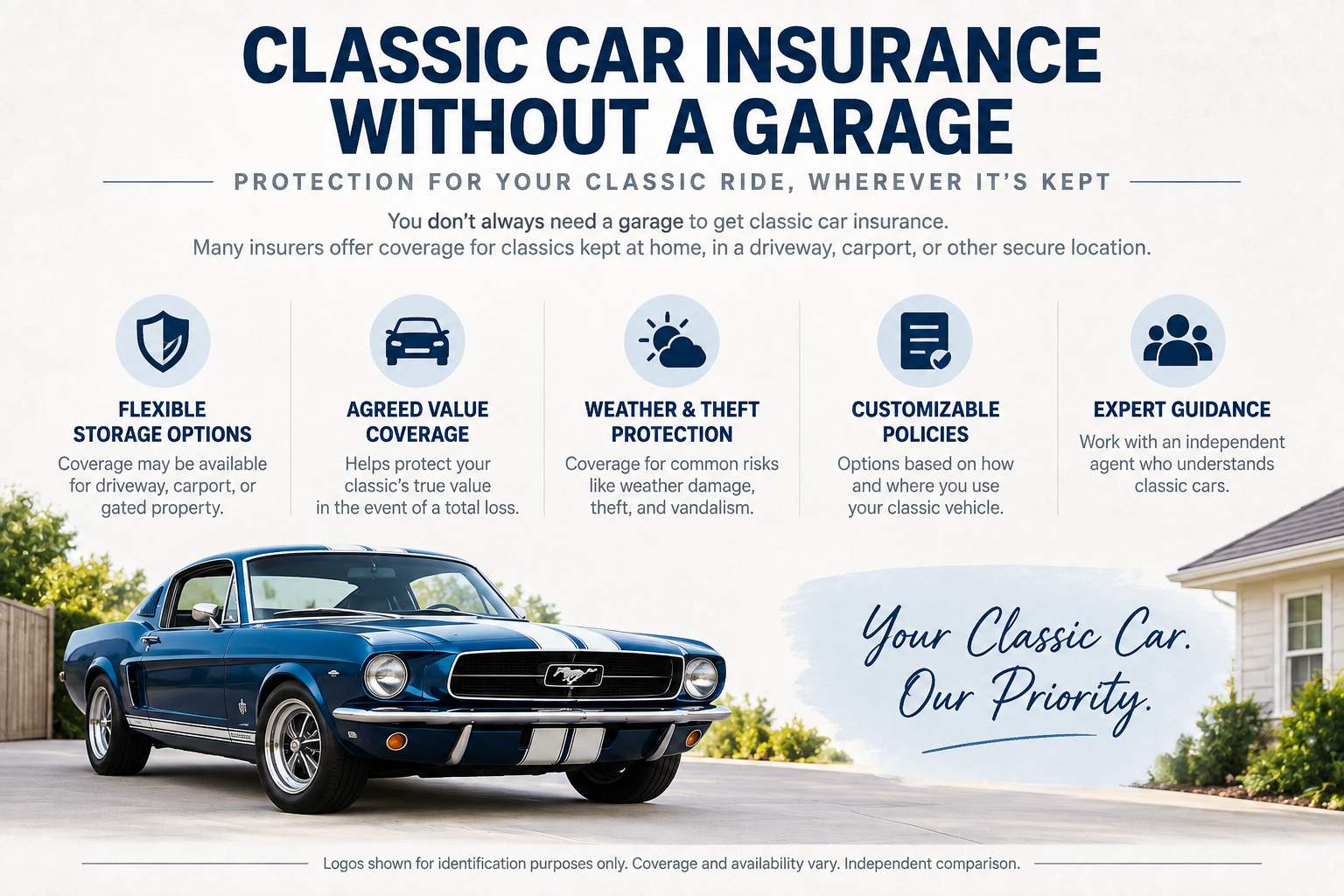
Classic car insurance without a garage may be possible, but no alternative storage arrangement is automatically acceptable. Some collector insurers prefer or require a locked, enclosed structure. Others may consider a carport, driveway, shared parking garage, secured storage facility, or vehicle trailer after reviewing the location, security, weather exposure, theft risk, vehicle, value, use, and applicant.
The best next step is to describe the arrangement accurately before requesting coverage. Do not call a carport a garage, list a home address when the vehicle is stored elsewhere, or assume a cover and alarm replace an enclosure. The insurer’s written approval and the issued policy—not a general web page—control.
Submitting the form requests licensed review and does not bind coverage. Insurer access, storage acceptance, eligibility, accepted value, terms, premium, and effective dates vary.
Possibly. Secure enclosed storage is a common collector-insurance expectation, but insurer rules are not uniform. Current specialty-market guidance shows that at least some programs will consider alternatives such as carports, driveways, parking garages, and car-hauling trailers. Consideration is not approval: the underwriter still decides whether the complete risk is acceptable.
A locked, enclosed private garage or secured storage unit generally limits access and reduces exposure to theft, vandalism, hail, falling objects, wind, animals, and routine parking damage.
Underwriting may need photographs, address, structure type, access control, lighting, surveillance, vehicle cover, anchoring, alarm, seasonal hazards, and how often the car is unattended.
The actual overnight location and storage method belong on the application. If the arrangement changes, notify the agency and obtain confirmation rather than assuming the original approval continues.
A garage is only one eligibility factor. The insurer can also review the car’s collectibility, condition, value, title, use, mileage, drivers, location, claims history, modifications, and household access to daily transportation.
The word “secure” means more than adding a cover. Underwriters look at physical protection, access, environmental exposure, how the car is used, and whether the arrangement is stable. The following table is a preparation guide, not a statement that any insurer will approve a particular setup.
| Storage arrangement | Likely underwriting concerns | Useful details to provide |
|---|---|---|
| Carport | Open sides, wind-driven weather, theft access, falling objects, visibility, and whether the structure is attached or freestanding. | Roof and wall construction, gates, lighting, cameras, alarm, locking device, distance from street, cover, and current photos. |
| Residential driveway | Public visibility, vehicle access, theft, vandalism, hail, wind, tree limbs, flooding, animals, and contact from other vehicles. | Off-street position, gate, lighting, cameras, immobilizer, neighborhood access, cover, drainage, and how often the car is moved. |
| Apartment or condominium garage | Shared access, assigned space, open entrances, foot traffic, door dings, flooding, theft, and limited control over building security. | Enclosure, gate type, access credentials, attendants, cameras, lighting, assigned space, floor level, and management rules. |
| Commercial storage facility | Who can enter, operating hours, fire protection, climate, custody, flood exposure, contract terms, and whether vehicles may be serviced onsite. | Exact address, individual locked unit or shared floor, access logs, alarms, sprinklers, cameras, staff, power, and facility agreement. |
| Vehicle trailer | Trailer theft, weather protection, locking and hitch security, transport use, location, fire, ventilation, and whether the trailer itself is insured. | Open or enclosed construction, vehicle tie-downs, coupler lock, wheel lock, alarm, tracker, trailer identification, parking location, and towing plan. |
| Friend’s or relative’s garage | Insurable interest, regular access, control of keys, unrelated property, garaging address, and whether the arrangement can change without notice. | Written permission, exact location, structure, security, occupants, access, distance from owner, and expected duration. |
| Restoration or repair shop | Temporary custody, business insurance, fire, theft, test drives, unfinished condition, changing value, parts storage, and time away from the primary location. | Shop address, expected dates, scope of work, custody agreement, insurance certificate if requested, project value, parts, and transport method. |
A carport attached to a residence behind a locked gate can present a different risk from an open structure facing a public street. Roof construction, side protection, anchoring, lighting, surveillance, vehicle immobilization, weather, surrounding trees, and local theft exposure may all matter. Supply photographs from several angles instead of relying on the label “carport.”
Covered parking reduces sun, hail, and some weather exposure, but an open or widely accessible garage can remain vulnerable to theft, vandalism, water intrusion, and contact from other vehicles. Explain whether the space is assigned, individually enclosed, gated, staffed, monitored, above or below grade, and accessible to visitors or delivery drivers.
A private locked unit may resemble a detached garage, while a shared warehouse or valet facility involves different custody and access. Confirm that vehicle storage is allowed, whether fuel or battery rules apply, who holds keys, whether the unit can be entered after hours, and whether maintenance or charging is permitted. The facility’s insurance may not cover your vehicle, and your collector policy may impose separate conditions.
Storage is evaluated as part of the complete submission. A highly secure alternative can still be declined if the vehicle is used daily, driven by ineligible operators, in poor condition, materially misdescribed, or outside the program’s vehicle guidelines.
Year, make, model, rarity, condition, restoration status, originality, modifications, performance, value, title, existing damage, and collectibility can affect how much protection the insurer expects.
Underwriting may consider the full garaging address, neighborhood, catastrophe exposure, crime experience, flood zone, wildfire, wind, hail, coastal exposure, building construction, and distance from fire protection.
Gates, doors, fencing, locks, keys, attendants, shared residents, visitors, delivery access, and the number of people who can reach the car help define theft and vandalism exposure.
Lighting, cameras, monitored alarms, immobilizers, battery cutoffs, steering locks, wheel locks, trackers, and trailer locks may support the submission. No device guarantees acceptance or prevents every loss.
Roof protection, drainage, elevation, nearby trees, construction sites, traffic, animals, salt air, snow load, wind-borne debris, and seasonal storms can be relevant.
A car kept outside but rarely driven may be reviewed differently from one regularly parked at workplaces, events, hotels, or public streets. Report annual mileage and actual trip purposes.
Underwriting acceptance and claim coverage are related but different. Acceptance means the insurer has agreed to issue the policy based on the submitted facts. A claim still depends on the cause of loss, policy term, covered auto, exclusions, duties, deductibles, limits, endorsements, and applicable law. A comprehensive deductible can apply to theft, weather, vandalism, or other covered non-collision damage.
Moving the car from a secured facility to a driveway—even temporarily—can change the risk. So can storing it in another state, at a seasonal residence, with a restoration shop, or inside a trailer parked elsewhere. Ask how long temporary storage is permitted, when notice is required, and what confirmation documents the change.
You cannot turn an ineligible arrangement into an eligible one by adding gadgets, but clear evidence helps an underwriter evaluate the real exposure. Focus on stable, verifiable information.
| Evidence | What it shows | Common mistake to avoid |
|---|---|---|
| Wide-angle photographs | The vehicle’s position, roof or walls, distance from street, gates, nearby structures, trees, drainage, and surrounding access. | Submitting only a close-up of the car that hides the storage environment. |
| Security description | How locks, alarms, cameras, lighting, immobilizers, trackers, attendants, or access controls operate. | Listing a device without saying whether it is installed, active, monitored, or used consistently. |
| Storage agreement | The exact unit or space, authorized use, access rights, custody, and duration at a commercial or third-party facility. | Assuming the facility contract or its insurance automatically covers vehicle damage. |
| Catastrophe information | Elevation, drainage, storm protection, wildfire clearance, wind resistance, and other location-specific controls. | Claiming that a cover protects against hazards it cannot withstand. |
| Use and mileage record | That the car is a limited-use collectible rather than daily transportation. | Understating commuting, errands, overnight trips, or public parking to fit a program. |
| Value and condition file | Why the requested amount is reasonable and how the vehicle is maintained. | Equating purchase or restoration cost with guaranteed market value. |
Layers can include controlling access to the property, delaying entry to the vehicle, disabling movement, detecting activity, documenting events, and helping recover a stolen car. A locked gate, lighting, a vehicle alarm, an immobilizer, and a tracker address different risks. Ask which measures the underwriter recognizes; do not assume a particular device earns approval or a discount.
A fitted cover may reduce dust, sunlight, bird droppings, and minor debris. It does not provide the structural protection of a garage against theft, hail, wind, falling branches, flooding, impact, or animals. An ill-fitting cover can trap moisture, abrade paint, or become wind-borne. Describe the cover accurately without presenting it as an enclosure.
If a friend, storage business, repair shop, museum, or club facility holds the vehicle, determine who has keys, who may move it, whether test drives occur, how it is protected after hours, and what contract governs damage. Your own policy and the custodian’s insurance can respond differently; neither should be assumed to cover every event.
An accepted alternative location does not make every storage-related loss covered. Understand which coverage would need to apply and what the policy requires after a loss.
Comprehensive generally addresses covered non-collision causes such as theft, vandalism, fire, hail, flood, wind, falling objects, glass damage, or animal contact. Definitions, exclusions, deductibles, and state rules vary.
Collision generally addresses impact with another vehicle or object or an overturn. A parked car struck by another vehicle can involve your collision coverage, the other driver’s liability coverage, or other options depending on the facts and state.
Many collector policies use an amount accepted before loss. Verify the total-loss clause, deductible, salvage treatment, and endorsements. Agreed value does not create coverage for an excluded cause.
Loose parts, tools, covers, memorabilia, and items stored near the vehicle may have separate limits or no vehicle-policy coverage. Home, renters, business, or facility policies may also contain exclusions.
Coverage for the collector car, the trailer, liability while towing, theft of the trailer, and equipment inside it can come from different policies. A trailer used as storage needs its own review.
Policies typically require reasonable steps to prevent additional damage after a loss. Move or protect the car only when safe, document conditions, report promptly, and keep receipts for authorized temporary measures.
A well-supported agreed amount helps answer how a covered total loss is valued. It does not excuse an inaccurate garaging address, undisclosed storage change, excluded use, or failure to meet a policy condition. Read the guide to agreed value versus stated value insurance for the valuation distinction.
If a specialty insurer will not accept the storage arrangement, a regular auto policy may be available. It may accommodate broader everyday use and less restrictive parking, but physical damage is commonly settled using actual cash value rather than a collector amount accepted in advance. Modifications, spare parts, specialist repair, and total-loss valuation need careful review.
See classic car insurance versus regular auto insurance for a full policy comparison.
Present the actual arrangement from the beginning. An underwriter can evaluate an unusual risk only when the application is complete.
Review the broader classic car insurance requirements to prepare the remaining eligibility details.
Possibly with some insurers, but driveway storage is subject to underwriting. Expect questions about the exact address, theft and weather exposure, gates, lighting, surveillance, immobilization, vehicle value, condition, use, and local risks. Other programs may require an enclosed structure.
Usually it should be described as a carport, not a garage. The underwriter may evaluate its roof, sides, construction, anchoring, gate, lighting, cameras, distance from the street, weather exposure, and security. Approval varies.
Some insurers may consider it. Provide details about enclosure, gates, visitor access, attendants, cameras, lighting, assigned space, flood exposure, floor level, and whether other vehicles can park next to the classic.
A cover is not equivalent to an enclosed structure. It may help with sun, dust, and minor debris but does not provide the same protection from theft, hail, wind, flooding, falling objects, or impact. Ask the underwriter what is required.
Possibly. Confirm that the facility allows vehicle storage and disclose whether the unit is individually locked or shared. Provide the address, access, security, fire protection, custody, climate, and facility agreement when requested.
Some programs may consider a car-hauling trailer, but the trailer’s construction, locks, anchoring, alarm, tracker, parking location, transport use, and separate insurance can matter. Approval of the car does not automatically insure the trailer.
Report the shop, dates, work, custody, test drives, parts, changing value, and transport plan. Ask how long off-premises storage is allowed and whether a vehicle-under-construction endorsement or other documentation is required.
No. Comprehensive is a coverage category for covered non-collision losses; it is not permission to change the garaging address or storage method. Eligibility and claim coverage remain subject to the application, policy, endorsements, and facts.
Contact the agency before or promptly after the change, provide the new address and details, and request written confirmation. Do not assume approval follows the vehicle automatically to a driveway, trailer, shop, another state, or a seasonal location.
Continue with the eligibility or coverage topic that matches your situation.
Share the exact location, storage type, security, vehicle, value, drivers, use, mileage, and regular transportation. Blake Insurance Group can review available collector-auto paths and help explain material requirements. The insurer makes the final storage, eligibility, value, pricing, coverage, and claim decisions.
The form does not create, change, renew, or bind insurance. Keep existing coverage in force until replacement coverage is confirmed in writing.




