Collector vehicles • Antique, classic, and special-interest cars
Classic Auto Insurance: Protecting Your Collector Car's Value
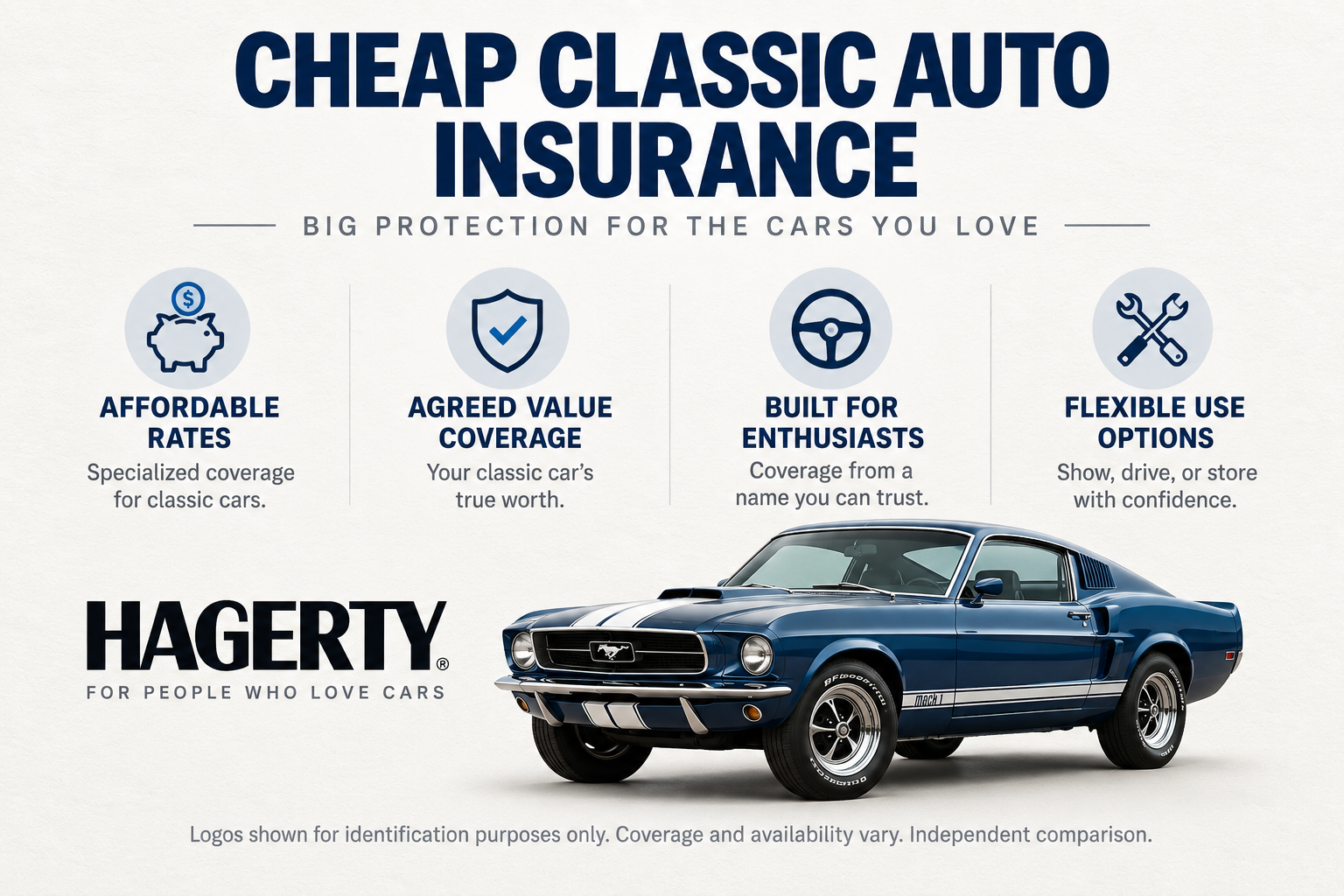
Classic auto insurance is specialty coverage for antique, classic, and collector vehicles that are driven occasionally and stored with care. Its key feature is agreed value: you and the insurer set the car's value in advance, so a total loss pays that amount rather than a depreciated market value.
This guide covers how classic coverage works, eligibility, valuation, options, and how to compare quotes. For a direct comparison, see classic vs. regular auto insurance. Blake Insurance Group is an independent agency; a licensed agent can compare options available to us.
Get a classic auto insurance quote
Tell us about your collector vehicle, and a licensed agent will follow up with options available to us. Submitting the form does not bind coverage.
If the form does not load, call 888-387-3687, Monday through Friday, 9:00 to 5:00, or email info@blakeinsurancegroup.com.
How classic auto insurance works
The most important difference is how a total loss is paid. A regular auto policy pays actual cash value: the market value at the time of loss, minus depreciation, which can be far below what a collector car is worth. Classic policies typically use agreed or guaranteed value, where you and the insurer agree on the car's value when the policy is written, and that amount is paid if the car is totaled, minus any deductible where one applies. Stated value policies are different: they may pay the lesser of the stated amount or actual cash value. Read the valuation wording carefully, and update the agreed value after restoration work or as market values rise. Keep appraisals, receipts, and photos.
Who qualifies
Specialty insurers set their own eligibility rules, but common requirements include:
- Vehicle age or status. Many insurers look for vehicles at least 20 to 25 years old, though some cover modern collectibles, exotics, and limited-production vehicles.
- Condition. The vehicle is maintained, restored, or being restored, and is not a daily driver.
- Storage. A locked, enclosed garage or storage unit.
- Regular-use vehicle. Each household driver has another car for daily transportation.
- Driving record. Clean records and minimum driver ages, often 25 or older.
- Usage limits. Pleasure use, club activities, and shows, sometimes with annual mileage caps.
Types of vehicles covered
| Type | Examples |
|---|---|
| Antique | Vehicles typically 25 or more years old |
| Classic | Older vehicles with collector interest |
| Muscle and pony cars | High-performance American cars of the 1960s and 1970s |
| Modern collectible | Limited-production or special-edition newer vehicles |
| Exotic | High-value sports cars |
| Restomod and hot rod | Modified classics |
| Military and vintage trucks | Collector trucks and military vehicles |
Definitions vary by insurer and state.
Coverage options to consider
- Spare parts coverage for parts you store for the vehicle.
- Restoration or under-construction coverage that increases value as work is completed.
- Flatbed towing to protect the vehicle during transport.
- Show and trip coverage, including transport to events.
- Inflation guard that increases agreed value over time.
- Roadside assistance designed for collector vehicles.
How to compare classic quotes
- Confirm the valuation type: agreed, guaranteed, or stated value.
- Match the agreed value and deductibles across quotes.
- Compare mileage limits and usage rules.
- Check storage, driver, and daily-vehicle requirements.
- Compare spare parts, restoration, towing, and show coverage.
- Ask how claims are handled and who repairs collector vehicles.
Documenting your car's value
Good documentation supports both the agreed value and a smooth claim. Keep a professional appraisal, receipts for restoration and parts, dated photos of the exterior, interior, engine bay, and undercarriage, and records of awards or provenance. Review the agreed value each year, especially after restoration work or when comparable vehicles sell for more.
State requirements still apply
Car insurance is regulated state by state, which affects any company comparison:
- Minimum liability limits differ widely. State minimums are often far below what a serious accident costs, so many drivers choose higher limits.
- No-fault states require personal injury protection, which changes how injury claims are paid.
- Rating factors differ. Some states limit or ban the use of credit-based insurance scores, gender, or occupation in pricing.
- Uninsured motorist rules differ. Some states require it; others require insurers to offer it and let you reject it in writing.
- Company availability differs. A company's programs, discounts, and appetite in one state may not match another.
A comparison that is accurate in one state can be wrong in the next, which is another reason to compare actual quotes for your address rather than national averages.
When an agent may help
Online tools work well for simple situations. A conversation with a licensed agent may be more useful when:
- You have a teen driver, several vehicles, or drivers with recent accidents or violations.
- You need an SR-22 or other state filing. See our SR-22 insurance page.
- You use a vehicle for rideshare, delivery, or other business purposes.
- You own a home, rental property, or significant savings and want liability limits that work with an umbrella policy.
- You have had a claim denied or a policy nonrenewed and need help understanding your options.
An agent can also explain differences in policy wording that are hard to see on a results page.
Insuring a car under restoration
A car being restored has a value that changes as work progresses. Some classic insurers offer restoration or under-construction coverage that increases the insured value on a schedule or as you document completed work. Keep receipts and dated photos of each stage. If the car is at a body shop or restoration shop for an extended period, ask whether your policy covers it while in the shop's care and whether the shop carries garagekeepers coverage.
Classic car claims
Collector car claims differ from everyday claims. Ask whether you can choose a restoration specialist, how original or reproduction parts are handled, and whether the policy pays for diminished value after repairs. With agreed value coverage, a total loss pays the agreed amount; some insurers let you buy back the salvage. Report claims promptly and document damage thoroughly.
Shows, clubs, and transport
Car shows, club rallies, parades, and track-style events are central to collector ownership, but coverage varies. Most classic policies cover driving to and from shows and club events. Racing, timed events, and track days are usually excluded and need separate coverage. When trailering a car to an event, confirm whether the policy covers it during loading, transport, and unloading, and whether the trailer itself is covered.
Common classic insurance mistakes
- Leaving a collector car on a regular policy that pays actual cash value.
- Not updating the agreed value after restoration or market increases.
- Using the car for commuting or errands that violate usage rules.
- Letting an unlisted driver use the car.
- Forgetting to insure spare parts and memorabilia stored separately.
Liability and umbrella for collectors
Collectors often have significant assets, and a serious accident in any vehicle can lead to a large claim. Classic policies include liability, but limits may be modest by default. Ask about higher liability limits, and consider an umbrella policy, checking whether the umbrella insurer requires the classic policy's liability limits to meet a minimum.
Storage and security
Most classic insurers require a locked, enclosed garage, and some accept secure storage facilities. Security measures such as alarms, cameras, battery disconnects, and steering locks reduce theft risk. Check whether the policy covers the car while stored at another location, such as a seasonal storage facility, and tell your insurer if storage changes.
Insuring several collector cars
Collectors with several vehicles may benefit from a single policy covering multiple cars, sometimes with multi-vehicle discounts or blanket options. Make sure each vehicle has an appropriate agreed value and that usage limits work for how often each is driven.
Appraisals and inspections
Many classic insurers set agreed value using your estimate supported by photos, with a professional appraisal required for higher-value vehicles. An appraisal from a recognized appraiser documents condition, originality, and comparable sales. Update it every few years or after significant work. Some insurers inspect vehicles or request additional photos before binding coverage on high-value cars.
Classic insurance and your daily driver
Most classic insurers require each household driver to have a separate vehicle for daily use, insured on a regular auto policy. Some insurers offer a discount when the daily driver and the classic are insured with the same company or group. Keeping both policies in place avoids usage disputes after a claim.
What to have ready for a classic quote
These details help produce accurate quotes.
- Vehicle details. Year, make, model, VIN, and modifications.
- Appraisal or value proof. Recent appraisal, receipts, and photos.
- Storage. Garage type, location, and security.
- Drivers. Records for anyone who will drive the car.
- Daily vehicles. Each driver's regular-use vehicle.
Classic auto insurance FAQs
Is classic car insurance cheaper than regular insurance?
Often, for qualifying vehicles, because of limited use and careful owners. Eligibility rules apply.
Can I drive my classic car every day?
Most classic policies prohibit daily driving and commuting. Regular insurance is needed for daily use.
What is agreed value?
A value you and the insurer agree on when the policy is written, paid if the car is totaled.
Do I need a garage?
Most classic insurers require a locked, enclosed garage or secure storage.
Does classic insurance cover modified cars?
Many insurers cover modified vehicles and restomods. Disclose modifications and include them in the agreed value.
Can I insure a car under restoration?
Some insurers offer restoration coverage that increases value as work progresses.
How old does a car have to be for classic insurance?
Many insurers look for 20 to 25 years, but some cover newer collectibles.
Who offers classic car insurance?
Specialty insurers and some standard insurers offer classic programs. Eligibility and options vary.
Does classic insurance cover track days?
Racing and timed events are usually excluded and need separate coverage.
Does classic insurance cover memorabilia?
Some policies include or offer coverage for automobilia and spare parts. Check limits.
How often should I update my agreed value?
Review it every year and after restoration work or market changes.
Do I need an appraisal?
It depends on the insurer and the car's value. High-value vehicles often require one.
Can teenagers drive my classic car?
Many classic insurers set minimum driver ages and experience requirements. Ask before allowing young drivers.
Related guides
Important information
Independent agency. Blake Insurance Group LLC is an independent insurance agency. Licensed insurance producer NPN 16117464. Licensed states: AZ, AL, TX, CA, NY, OH, FL, NC, VA, GA, OK, NM, IA, KS, MI, NE, SC, SD, WV, IL, NJ, PA, TN, and WA. Which insurance companies we can quote depends on our current appointments, the product, and your state. Mentioning a company on this page does not mean we represent it.
Availability. Coverage, prices, discounts, and eligibility vary by insurer, state, and applicant, and are subject to underwriting. The issued policy controls.
Your next step
Request a quote, and a licensed agent will compare classic auto options available to us.





Reviews are loaded from Google when you click “View reviews.”