Driving in Mexico
Mexico Free Zone Travel Guide
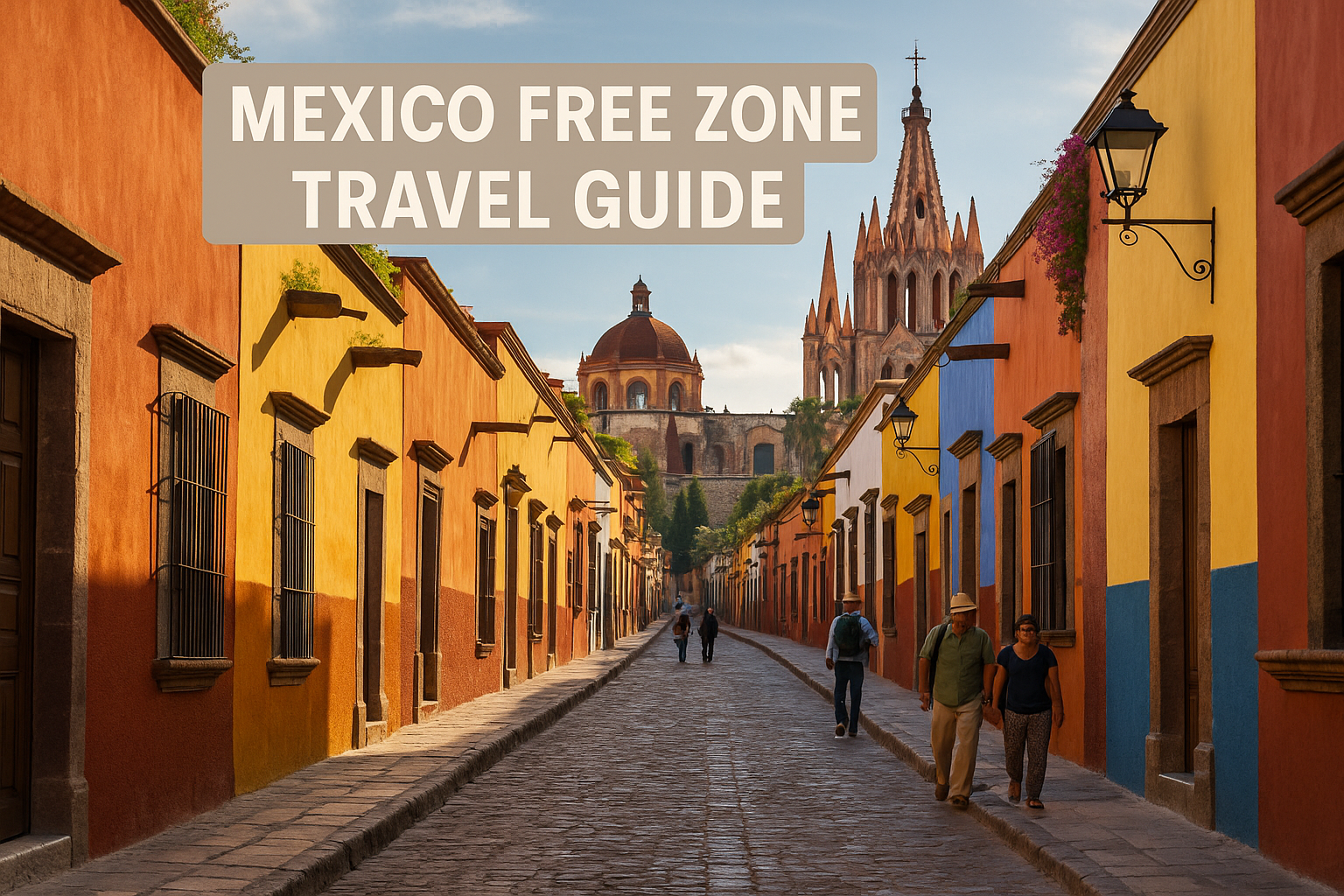
The Mexico free zone is where you can drive a U.S.-registered vehicle without a temporary vehicle import permit. It includes a strip along the border, the whole Baja California peninsula, and a large part of Sonora. You still need Mexican auto insurance and, depending on your stay, an immigration form.
Blake Insurance Group is an independent agency serving clients by phone, email, and online in states where we are licensed; coverage depends on the insurer, the policy, and underwriting.
Request Mexican auto insurance quotes
Tell us what you would like to cover, and a licensed agent will follow up with options available to us. Submitting the form does not bind coverage.
If the form does not load, call 888-387-3687, Monday through Friday, 9:00 to 5:00, or email info@blakeinsurancegroup.com.
What the free zone is
Two areas let you drive a U.S. car without a vehicle import permit. The border zone runs roughly 20 to 26 km (12 to 16 miles) south of the U.S. border; sources differ slightly on the exact width. The State Department also lists “hassle-free zones” in Baja California, Baja California Sur, and Sonora. Sonora’s free zone covers the northwest of the state, including Puerto Peñasco, Hermosillo, Bahía de Kino, and San Carlos, and ends at kilometer 98 southeast of Empalme, according to Mexpro; beyond that, or east of Federal Highway 15, you need a permit. A “Sonora Only” permit is available for cars, with no refundable deposit, according to Baja Bound.
Mexican auto liability insurance is still required inside these zones.
Baja California and Baja California Sur
The State Department lists Baja California and Baja California Sur as hassle-free zones where you can drive throughout without a vehicle permit, and Baja travel services confirm no permit is needed anywhere on the peninsula. That covers trips from Tijuana and Ensenada to La Paz and Los Cabos. If you take a ferry from Baja to the mainland, you’ll need a permit for the mainland.
Sonora’s free zone
Mexpro describes Sonora’s free zone as everything northwest of Federal Highway 2 from Agua Prieta through Cananea to Highway 15 at Imuris, and everything north and west of Highway 15 from there, ending at kilometer 98 southeast of Empalme. Puerto Peñasco, Hermosillo, Bahía de Kino, Caborca, Magdalena, Santa Ana, Guaymas, and San Carlos are inside it. Baja Bound says a Sonora Only permit for cars is available for trips beyond, with no refundable deposit.
What you still need in the free zone
- Mexican auto liability insurance for every day you drive.
- A passport book or card for each traveler.
- An FMM if required for your stay.
- Valid plates and current registration.
Mexican federal law requires every vehicle on federal roads and bridges to carry insurance covering damage and injury to third parties (Ley de Caminos, Puentes y Autotransporte Federal, article 63 Bis, added in 2013). Rules published in the Diario Oficial in 2014 set minimum coverage of MXN 100,000 for bodily injury or death and MXN 50,000 for property damage, phased in by model year until they applied to all vehicles from 2019. The rules allow those minimums to be reviewed each year, and they contemplate insurers authorized under Mexican law.
For U.S. visitors, the practical point is simple. The State Department says Mexican car insurance is required for all vehicles, and AAA says Mexico does not recognize U.S. or Canadian auto policies as proof of liability coverage.
The FMM question
Visitors entering Mexico by land generally need an immigration form called the FMM, which you can apply for online through Mexico’s immigration institute (INM) or at the border. Sources disagree on one point: the State Department says you don’t need an FMM if you stay within 12 miles (20 km) of the border for six days or less, while Baja Bound says every entrant needs one but that it is free for land stays of seven days or less. Because the guidance differs, check INM’s site before you go.
For longer land stays, the FMM fee rose to MXN 983 on January 1, 2026, according to law firm summaries of the federal fee schedule. Air travelers usually pay it in the airfare. Officials decide how many days to grant, up to 180; longer stays require a visa.
Driving beyond the zone
| Item | Details |
|---|---|
| Who issues it | Banjercito, at border modules, some Mexican consulates, and online |
| Permit fee | US$51 plus VAT at the border or a consulate; US$45 plus VAT online |
| Refundable deposit | US$400 for 2007 and newer; US$300 for 2001–2006; US$200 for 2000 and older |
| Validity | Up to 180 days, with multiple entries, within a 12-month period |
| Where it isn’t needed | The border zone, the Baja California peninsula, and Sonora’s free zone |
| Ending it | Cancel in person at a border Banjercito module before the permit expires to get the deposit back |
Sources: Consulate General of Mexico in Houston (updated Oct. 20, 2026), Consulates in Los Angeles and Denver, and the State Department. Fees can change; confirm with Banjercito.
The State Department says temporary vehicle import permits are required for U.S.-registered vehicles traveling beyond the border zone, and that driving without one can lead to towing and a fine equal to the vehicle’s value. Only U.S. citizens or lawful permanent residents may drive U.S.-registered vehicles in Mexico, and the owner must be in the vehicle if someone else is driving. Vehicles need valid plates and current registration; temporary or paper plates aren’t accepted.
Mexican consulates say you can hold only one temporarily imported vehicle at a time, and that the permit is canceled only at the border: crossing back into the U.S. isn’t enough, so stop at the Banjercito module to register the vehicle’s return.
Advisories inside the zone
Being in the free zone doesn’t mean an area is low-risk. The State Department rates Baja California and Sonora at Level 3 and Baja California Sur at Level 2, with specific restrictions for places like Puerto Peñasco and Nogales.
| State | Level | Notes |
|---|---|---|
| Baja California Sur (Los Cabos, La Paz) | 2 | No added restrictions for U.S. government employees |
| Quintana Roo (Cancún, Tulum, Playa del Carmen) | 2 | Stay in tourist zones; be alert after dark |
| Nayarit (Riviera Nayarit, Sayulita) | 2 | No added restrictions |
| Yucatán (Mérida) | 1 | Exercise normal precautions |
| Baja California (Tijuana, Rosarito, Ensenada) | 3 | Employee restrictions only in the Mexicali Valley |
| Sonora (Puerto Peñasco, Hermosillo) | 3 | Puerto Peñasco: employees use only Highway 8 from Lukeville |
| Jalisco (Guadalajara, Puerto Vallarta) | 3 | No restrictions in Puerto Vallarta or the Guadalajara area |
| Sinaloa (Mazatlán) | 4 | Employees reach Mazatlán by air or sea only |
| Guerrero (Acapulco) | 4 | Employees may not travel anywhere in the state |
Source: U.S. Department of State Mexico Travel Advisory, issued May 29, 2026. Levels: 1 normal precautions, 2 increased caution, 3 reconsider travel, 4 do not travel. Check for updates before you go.
Checking a plan and insurer
- Who issues the policy. Mexican auto policies should be issued by an insurer authorized in Mexico; find its name on the policy.
- Limits. Compare liability limits, not just price, and confirm legal assistance is included.
- Dates and territory. Make sure the policy covers every day you’ll be in Mexico and the states you’ll drive in.
- Proof. Carry the policy documents in the vehicle.
- Exclusions. Read exclusions for off-road driving, beaches, and drivers who aren’t listed.
What an independent agency does
An independent insurance agency is licensed to sell policies from several insurance companies. Instead of quoting one company's products, an independent agent can compare options from the insurers the agency represents, explain the differences in coverage, and help you re-shop at renewal. The insurance company, not the agent, makes underwriting and claim decisions.
Blake Insurance Group is an independent agency. We work with clients by phone, email, and online in states where we are licensed, and we will tell you which insurers we can quote for your situation.
How we work
Blake Insurance Group serves clients by phone, email, and online in states where we are licensed. The insurers and plans we can offer depend on our appointments and your location; a company named on this page may not be available through us.
How to verify an insurer or agency
Before buying through any website or app, confirm who is selling you the policy and who will issue it:
- Find the licensed agency or insurer named in the site's footer, terms, or license page.
- Look up the agency or producer on your state insurance department's license search, or through the National Insurance Producer Registry (NIPR).
- Look up the insurer on your state insurance department's company search to confirm it is authorized in your state.
- Save the insurer's name and policy number once issued, since that is who handles claims.
A legitimate service will make this information easy to find. Be cautious if you cannot identify the licensed entity.
Sources
We checked the facts on this page against the sources below in October 2026. Plans, prices, and rules change, so confirm current terms before you buy.
- U.S. Department of State: Mexico international travel information (Aug. 2026)
- Mexpro: What is the Mexico Free Zone? (Feb. 2022)
- Baja Bound: Sonora Only vehicle permit
- Baja Bound: Guide to the Mexican FMM tourist card
- Clark Hill: Mexico immigration fees effective Jan. 1, 2026
- INM: Electronic FMM application
- Diario Oficial de la Federación: SHCP Acuerdo 07/2014 (highway liability insurance rules)
- AAA Mountain West Group: Mexico auto insurance FAQ
- Consulate General of Mexico in Houston: Temporary vehicle import permits (Oct. 20, 2026)
- Consulate General of Mexico in Los Angeles: Banjercito permits
- U.S. Department of State: Mexico Travel Advisory (May 29, 2026)
What to have ready for Mexican auto insurance
These details help an agent quote accurately.
- Driver and vehicle. Names, license, and the vehicle’s year, make, model, VIN, and plate.
- Trip dates. When you cross and return, and which Mexican states you’ll visit.
- Vehicle value. Needed if you want physical damage coverage.
- Lienholder. If the car is financed or leased, the lender’s name and permission.
- Towed units. Trailers, boats, or ATVs you’ll bring along.
Mexico free zone FAQs
What is the Mexico free zone?
The areas where U.S. vehicles don’t need a temporary import permit: the border strip, the Baja peninsula, and northwestern Sonora.
Do I need insurance in the free zone?
Yes. Mexican auto liability insurance is still required.
Is Cabo in the free zone?
Yes. The whole Baja California peninsula is a hassle-free zone.
Where does the Sonora free zone end?
At kilometer 98 southeast of Empalme, and east of Highway 15, according to Mexpro.
Related guides
Partner quote options
Sponsored
Blake Insurance Group works with the partners below. Each link opens the partner's own website, where its terms, eligibility rules, and privacy policy apply. Blake Insurance Group may be compensated if you buy through these links.
- MexiPass Mexican auto insurance: Mexican auto insurance for driving in Mexico, from MexiPass.
- BCBS Global Solutions (formerly GeoBlue): Travel medical plans for trips abroad and international health plans for people living, working, or studying outside their home country.
Important information
Compensation. Links in the partner section of this page are sponsored, and Blake Insurance Group may be paid if you make a purchase. Sponsored placement does not affect the other information on this page.
Independent agency. Blake Insurance Group LLC is an independent insurance agency. Licensed insurance producer NPN 16117464. Licensed states: AZ, AL, TX, CA, NY, OH, FL, NC, VA, GA, OK, NM, IA, KS, MI, NE, SC, SD, WV, IL, NJ, PA, TN, and WA. Which insurance companies we can quote depends on our current appointments, the product, and your state. Mentioning a company on this page does not mean we represent it.
Rules and fees. Mexican requirements, fees, and advisory levels on this page were checked against the listed sources in October 2026 and can change. Confirm with Mexican authorities, the State Department, and your insurer before you travel. This page is not legal advice.
Coverage terms. Descriptions are general. The policy contract controls what is covered.
Availability. Coverage, prices, and eligibility vary by company, state, and applicant, and are subject to underwriting. The issued policy controls.
Your next step
Request a quote, and a licensed agent will compare options available to us for your trip or situation.