Fast Quotes • Coverage Reviews • Local Agent Support
Supplemental Insurance Plans in Texas (2025): Independent Guide to Accident, Hospital, Critical Illness & Dental/Vision
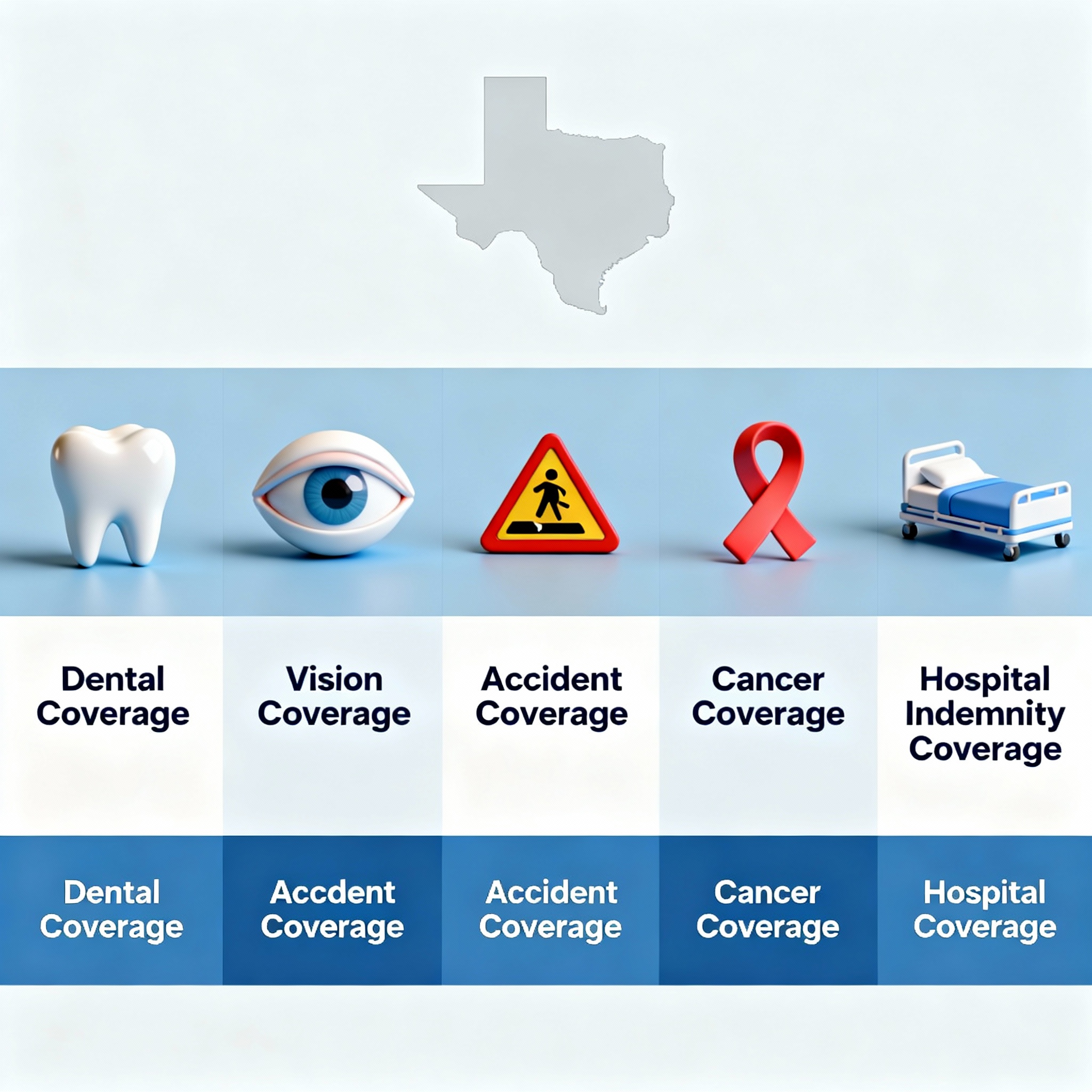
From Dallas–Fort Worth and Houston to Austin, San Antonio, El Paso, and the Panhandle, Texans are feeling higher deductibles and out-of-pocket costs. Supplemental insurance plans add focused, cash benefits on top of your employer medical, marketplace plan, or Medicare Advantage/Medigap. This local guide explains how accident, hospital indemnity, critical illness/cancer, and dental/vision plans work in Texas, when they make sense, and how to compare by cash paid to you—not just monthly premium. Neutrality note: Blake Insurance Group is an independent agency. We compare multiple carriers side-by-side using identical assumptions so you can protect your budget without overbuying.
Texas supplemental insurance — what it is (and isn’t)
Accident insurance
Accident plans pay lump-sum or schedule-based cash for covered injuries—ER/urgent care visits, X-rays, fractures/dislocations, ambulance, and follow-up. In large Texas metros with active lifestyles and youth sports, these plans are popular for families on high-deductible medical. Because benefits pay you, there’s no provider network restriction; use the cash for medical bills, lost wages, rides, or child care.
Hospital indemnity
Hospital indemnity pays set amounts per admission and per day in the hospital, often with ICU, observation, and surgical riders. Pair it with a bronze/silver marketplace plan or Medicare Advantage to blunt inpatient costs. In Texas, many short stays are coded as “observation,” so inexpensive plans that include observation (not only inpatient days) can be the difference between useful and disappointing benefits.
Critical illness & cancer
These policies pay a one-time lump sum when you are diagnosed with a covered condition such as heart attack, stroke, or cancer. The cash is flexible—meet deductibles, travel to specialty centers in Houston, Dallas, or beyond, or cover time off work. Review waiting periods, recurrence provisions, and whether dependent coverage is available for family history concerns.
Dental & vision add-ons
PPO dental (with optional implant/ortho) and standalone vision (exam, lenses, frames, contacts) can complete your protection stack. In smaller Texas markets, verify out-of-network reimbursement schedules if your dentist isn’t contracted. For many households, preventive-first dental saves more than the premium when cleanings are kept on schedule.
What supplemental plans are not
They are not major medical and do not satisfy ACA minimum essential coverage. They’re designed to put cash in your hands quickly during the first, most expensive days of a claim—so your emergency fund doesn’t take the hit.
Independent agent advantage
We normalize benefit amounts (admission/day limits, accident schedules, lump-sum levels) across carriers, then model likely out-of-pocket after an ER visit, a 2–3 day hospital stay, or a diagnosis. That way you see the real trade-off between premium and protection instead of comparing apples to oranges.
Texas supplemental plans — at a glance (benefit designs)
Always verify availability, eligibility, and exact terms in your Texas ZIP and with the carrier. Benefits vary by plan and county.
What actually changes your supplemental plan price in Texas
Compare apples-to-apples: match benefit amounts, elimination/waiting periods, recurrence rules, and riders—then evaluate annualized value, not just month one.
Shorter waits or favorable recurrence provisions cost more
Worth it if you plan procedures or face elevated risk.
Billing mode
Monthly may include modal fees
EFT/annual can trim cost and reduce missed payments.
Texas utilization
Observation frequency affects design needs
Add observation benefits if your area’s hospitals use it often.
Supplemental insurance “near me” — Texas cities & regions we serve
Searching for supplemental insurance plans Texas near me? We compare carriers for your ZIP, health situation, and budget, then help you enroll with clean, accurate paperwork.
Texas service area (examples)
Availability note: Not all products are offered in every county; waiting periods and riders vary.
Dallas–Fort Worth (Tarrant/Dallas/Collin/Denton)
Houston (Harris/Fort Bend)
Austin (Travis/Williamson)
San Antonio (Bexar)
El Paso
Corpus Christi
McAllen–Edinburg–Mission (Hidalgo)
Lubbock
Amarillo
Waco/Temple–Killeen
Tyler/Longview
Beaumont–Port Arthur
Midland–Odessa
Brownsville/Harlingen
College Station–Bryan
Local notes
Observation stays: In high-volume urban hospitals, observation status is common for short stays; make sure your plan includes it.
Sports & outdoor injuries: Families with school sports should consider richer fracture/dislocation schedules on accident plans.
Travel & rural care: Supplemental plans pay you directly—handy for network gaps in rural counties or when traveling across state lines.
Get personalized supplemental quotes
Tell us your current health plan (employer, marketplace, or Medicare), ZIP, household members, typical hospital/clinic usage, and your deductibles/copays. We’ll tailor accident, hospital indemnity, critical illness/cancer, and dental/vision options—showing how each reduces your potential cash exposure in Texas.
Do supplemental plans work with HSA-eligible high-deductible plans in Texas?
Yes. Accident, hospital indemnity, and critical illness/cancer plans are not primary medical coverage, so they don’t disqualify HSA eligibility. They pay cash directly to you for covered events.
Is hospital indemnity worth it for Medicare Advantage members?
Often. Many MA plans use per-day inpatient copays. Hospital indemnity that pays per admission and per day—and includes observation—can offset those costs. Match benefit amounts to your plan’s copays.
How much critical illness coverage should I buy?
Common starting points: $5,000–$10,000 for individuals and $10,000–$20,000 for families. Choose an amount that covers deductibles, travel, and a short income gap. Add recurrence riders only if they fit your risk profile and budget.
Can I use any doctor or hospital?
Generally yes. Supplemental benefits pay you cash regardless of network. That’s why they pair well with narrow-network HMOs or when you receive care out of area.
How do I avoid buying “junk” coverage?
Confirm observation coverage on hospital indemnity, realistic per-accident and per-admission maximums, clear exclusions, and transparent schedules for fractures/surgeries. We normalize these details across carriers before you enroll.
Licensed insurance producer (NPR/NPN 16944666). Blake Insurance Group is an independent agency. Availability, underwriting, benefits, and premiums vary by carrier and Texas county. Brand names belong to their owners; use does not imply endorsement. Review official policy forms for exact terms and costs.
Keywords: supplemental insurance plans Texas, accident insurance TX, hospital indemnity Texas, critical illness insurance Texas, cancer insurance Texas, dental and vision plans Texas, supplemental insurance near me, Dallas Houston Austin San Antonio El Paso.
Blake Insurance Group - Reviews & Info
Share This
Customer Reviews
Loading reviews...
Blake Insurance Group
Phone: (888) 387-3687
Email: info@blakeinsurancegroup.com
Hours: Mon-Fri 9:00 am to 5:00 pm
Sat-Sun: Closed
Blake Nwosu
Owner & Principal Agent
Expertise: All personal and commercial line insurance, including auto, home, business, health, and life insurance.