Insurance shopping • Reviews
Insurance Reviews: How to Compare Companies the Right Way
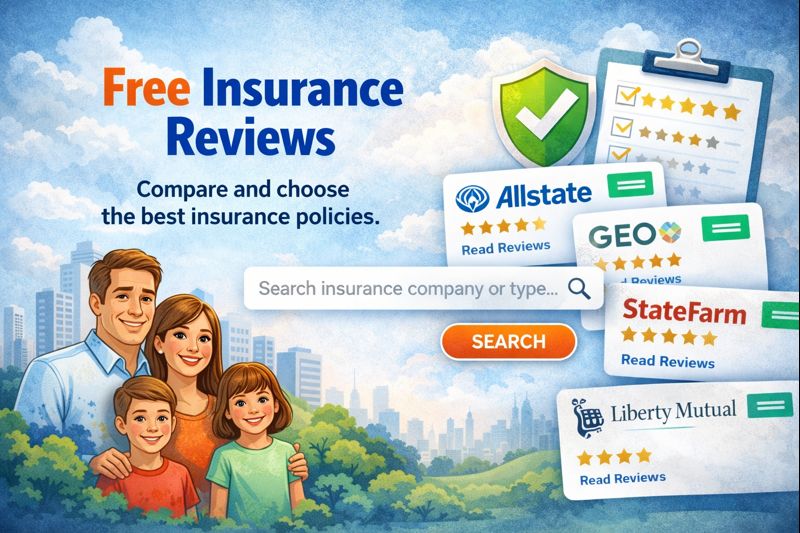
Insurance reviews can help you spot patterns in claims handling and service, but individual reviews are often extreme. Combining reviews with complaint data, satisfaction studies, and financial strength ratings gives a fuller picture.
Blake Insurance Group is an independent agency serving clients by phone, email, and online in states where we are licensed; which insurers we can quote depends on our appointments and your state.
Request insurance quotes
Tell us about your drivers and vehicles, and a licensed agent will follow up with options available to us. Submitting the form does not bind coverage.
If the form does not load, call 888-387-3687, Monday through Friday, 9:00 to 5:00, or email info@blakeinsurancegroup.com.
How to read insurance reviews
- Focus on reviews about claims, the moment insurance matters most.
- Look for repeated themes rather than single stories.
- Check the date; companies change over time.
- Consider your state, since service can vary by region.
- Remember that people with problems are more likely to post reviews.
Better sources than star ratings
| Source | What it shows |
|---|---|
| NAIC Consumer Insurance Search | Complaints compared with company size |
| State insurance department | Local complaint data and licensing |
| AM Best, S&P, Moody's | Financial strength |
| Independent satisfaction studies | Survey-based customer satisfaction |
Use several sources together.
Coverage you can compare
| Coverage | What it protects | Questions to bring |
|---|---|---|
| Auto | Liability, your car, and your injuries | Drivers, vehicles, and current limits |
| Home and condo | Your home, belongings, and liability | Rebuilding cost, roof age, and deductibles |
| Renters | Belongings, liability, and living expenses | Lease requirements and belongings value |
| Landlord | Rental buildings and loss of rents | Number of units and occupancy |
| Umbrella | Extra liability above home and auto | Assets to protect and underlying limits |
| Life | Income replacement for your family | Coverage goals and health history |
| Small business | Liability, property, and workers' compensation | Business type, payroll, and contracts |
| RV, boat, and motorcycle | Recreational vehicles | Use, storage, and value |
Products and insurers available depend on the agency's appointments and your state.
Agents, direct sales, and independent agents
How a company sells affects your experience as much as price. Exclusive agents represent one insurer and can help with every policy that company writes. Independent agents represent several insurers and can compare quotes side by side. Direct insurers sell online and by phone, which can be convenient if you are comfortable managing your own coverage.
None of these models guarantees a lower price. The best approach is to request quotes with identical coverage from the companies that sell in your state, through whichever channels you prefer.
Coverage to match before comparing
| Item | What to check |
|---|---|
| Liability limits | Bodily injury per person and per accident, and property damage. Many drivers choose 100/300/100 or higher. |
| Uninsured and underinsured motorist | Limits that match your liability limits, and whether property damage is included. |
| Collision and comprehensive | Included on each vehicle that needs them, with the same deductibles. |
| Medical payments or PIP | Included where required or wanted, at the same limits. |
| Optional coverages | Rental reimbursement, roadside assistance, gap, and glass terms. |
| Drivers and vehicles | Every household driver and the correct VINs and garaging address. |
| Term and fees | Six-month vs. annual pricing, installment fees, and any broker fees. |
A lower price that reflects lower limits or missing coverage is not a like-for-like saving.
Data, credit checks, and follow-up contact
Every quote platform needs personal details to price insurance: names, dates of birth, license numbers, vehicle details, and insurance history. Before you submit:
- Read the consent text beside the submit button. It explains who may contact you and how, including calls, texts, and automated or prerecorded messages.
- Check who receives your information. Some services share it with named partners or partner categories; others say they do not sell it.
- Understand credit checks. Many insurers use a credit-based insurance score where state law allows. Viewing quotes usually involves a soft inquiry, but confirm with each company.
- Keep records. Save screenshots of quotes and the consent you agreed to, and note the legal name of any insurer that quotes you.
Comparing claims service
Claims service matters most when you need it. Check each company's complaint record with the National Association of Insurance Commissioners, which compares complaints to company size, and look at your state insurance department's complaint data. Independent customer satisfaction studies can add context, but results vary by region.
Ask how claims are filed, whether you can choose your repair shop, how rental cars are handled, and whether glass claims have a separate deductible.
Discounts to ask every insurer about
- Multi-policy bundling with home, renters, or condo.
- Multi-vehicle and multi-driver discounts.
- Safe driver and claims-free discounts.
- Driving-data program discounts.
- Good student and distant student discounts.
- Paid-in-full, paperless, and automatic payment discounts.
- Vehicle safety and anti-theft discounts.
- Affinity, employer, or membership discounts where offered.
Reviewing coverage at renewal
Insurance prices change at every renewal, and the insurer that was cheapest last year may not be this year. Review your declarations page before each renewal, update the agent on changes such as a new driver, a home renovation, or a move, and ask for a re-shop if the price rises significantly.
Checking an agent's license
Every agent who sells insurance must be licensed in the state where the customer lives. You can look up an agent or agency license through your state insurance department or the National Insurance Producer Registry. A license lookup shows the lines of authority, such as property and casualty or life and health, and whether the license is active.
Ask any agent which insurers they represent, how they are paid, and how they will help if you have a claim. A good agent explains coverage choices clearly and puts recommendations in writing when asked.
Questions to ask before you buy
- What is the legal name of the insurance company that will issue the policy?
- Is this price a final, bindable quote, or an estimate that can change?
- Which discounts are included, and do I qualify for each one?
- Are there installment fees, policy fees, or broker fees?
- How do I report a claim, and who handles it?
- Who do I contact for policy changes, such as adding a driver or vehicle?
- When does coverage start, and when should I cancel my current policy?
How to check any insurer
Before you buy from any company, take a few minutes to check it:
- License. Confirm the insurer is licensed in your state through the state insurance department's company lookup.
- Complaints. The NAIC's Consumer Insurance Search shows complaint counts and a complaint index for each company, where 1.00 is the expected level for the company's size.
- Financial strength. Ratings from agencies such as A.M. Best describe an insurer's ability to pay claims.
- Legal name on the quote. Large groups write policies through several companies with different rates and rules. Make sure you know which one issues your policy.
- Claims process. Ask how claims are reported, whether there is a preferred repair-shop program, and how quickly adjusters respond after storms.
Coverage terms to match on every quote
| Coverage | What it pays for | What to match |
|---|---|---|
| Bodily injury liability | Injuries you cause to others | Per-person and per-accident limits, such as 100/300 |
| Property damage liability | Damage you cause to others' property | Same limit on both quotes, such as $100,000 |
| Uninsured/underinsured motorist | Your injuries when the at-fault driver lacks enough coverage | Same limits; ideally equal to your liability limits |
| Collision | Damage to your car from a crash | Same deductible |
| Comprehensive | Theft, fire, hail, flood, animal strikes, glass | Same deductible; note any glass option |
| Medical payments or PIP | Medical costs for you and passengers | Same limit; PIP rules depend on your state |
| Rental and roadside | Transportation during repairs; towing | Same daily and total limits |
Limits shown are examples, not recommendations. State minimum requirements differ.
Ways to lower your premium
- Compare at least three quotes with identical coverage every year or two, and whenever your premium jumps at renewal.
- Raise collision and comprehensive deductibles to an amount you could pay tomorrow without strain.
- Drop collision and comprehensive on an older car only when the car's value is low enough that you could replace it yourself.
- Ask about every discount: multi-policy, multi-vehicle, good student, defensive driving, paperless, paid-in-full, and safety equipment.
- Try a driving-data program if you drive carefully and are comfortable sharing driving data. See usage-based insurance.
- Keep continuous coverage. Even a short lapse can raise future rates.
- Report accurate mileage. Lower annual mileage can mean a lower premium.
- Bundle auto with renters or homeowners insurance where the combined price is lower.
Coverage you should think twice about cutting
Some coverage cuts save very little and expose you to large losses. Be cautious about:
- Buying only the state minimum liability. Minimum limits can be exhausted by a single serious injury, leaving you personally responsible for the rest.
- Rejecting uninsured motorist coverage. It protects you when the at-fault driver has no insurance or too little. See uninsured and underinsured motorist coverage.
- Dropping collision on a financed car. Lenders and lessors usually require it.
- Letting the policy lapse between vehicles or during a move.
How insurers set your price
Most insurers price a policy using your driving record, years licensed, age where allowed, the vehicle, where it is garaged, annual mileage, coverage limits, deductibles, prior insurance history, and, where state law permits, a credit-based insurance score. Each insurer weighs these factors differently, which is why quotes for the same driver can differ by hundreds of dollars. Improving the factors you control, especially your record and continuous coverage, pays off over several renewals.
Payment plans and fees
How you pay can change your total cost. Many insurers charge installment fees for monthly payments, and some offer discounts for paying the full term upfront, enrolling in automatic payments, or going paperless. If paying in full is not possible, ask which payment plan has the lowest fees. Missing a payment can cancel your policy and create a lapse, which raises future rates, so set up reminders or autopay.
Switching insurers without a gap
If a new quote is lower, switch carefully so you are never uninsured:
- Confirm the final price after the insurer verifies your information.
- Set the new policy to start on or before the date the old one ends.
- Give the new insurer your lender or lessor information if the vehicle is financed.
- Save your new ID cards and declarations page.
- Cancel the old policy effective the same day, and ask about any refund of unused premium.
- If you have an SR-22, confirm the new insurer files it before the old filing ends.
What to have ready for quotes
These details help produce accurate quotes.
- Driver details. Licenses and dates of birth for every household driver.
- Vehicle VINs. For accurate rating.
- Current declarations page. To match limits and deductibles.
- Driving history. Accidents and violations in recent years.
- Desired limits. Decide on liability and deductibles before comparing price.
Insurance reviews FAQs
Are online insurance reviews reliable?
Use them for patterns, along with complaint data.
Where can I check complaints?
The NAIC Consumer Insurance Search.
What matters most in reviews?
Claims experiences.
Related guides
Important information
Independent agency. Blake Insurance Group LLC is an independent insurance agency. Licensed insurance producer NPN 16117464. Licensed states: AZ, AL, TX, CA, NY, OH, FL, NC, VA, GA, OK, NM, IA, KS, MI, NE, SC, SD, WV, IL, NJ, PA, TN, and WA. Which insurance companies we can quote depends on our current appointments, the product, and your state. Mentioning a company on this page does not mean we represent it.
Independent comparison. Company names are trademarks of their owners and are used for identification only. This comparison is based on public information reviewed in October 2026 and our own analysis. It is not a ranking, an endorsement, or a statement that Blake Insurance Group represents, partners with, or is affiliated with any company named. Features, partners, and policies change, so confirm details with each company.
Legal requirements. State requirements summarized here are general information as of October 2026 and can change. This page is not legal advice; confirm current rules with your state's insurance regulator or motor vehicle agency.
Availability. Coverage, prices, discounts, and eligibility vary by insurer, state, and applicant, and are subject to underwriting. The issued policy controls.
Your next step
Request a quote, and a licensed agent will compare options available to us using the coverage you choose.




