
Home Insurance vs Home Warranty (2026): What Each Covers, What It Excludes, and When Homeowners May Need Both
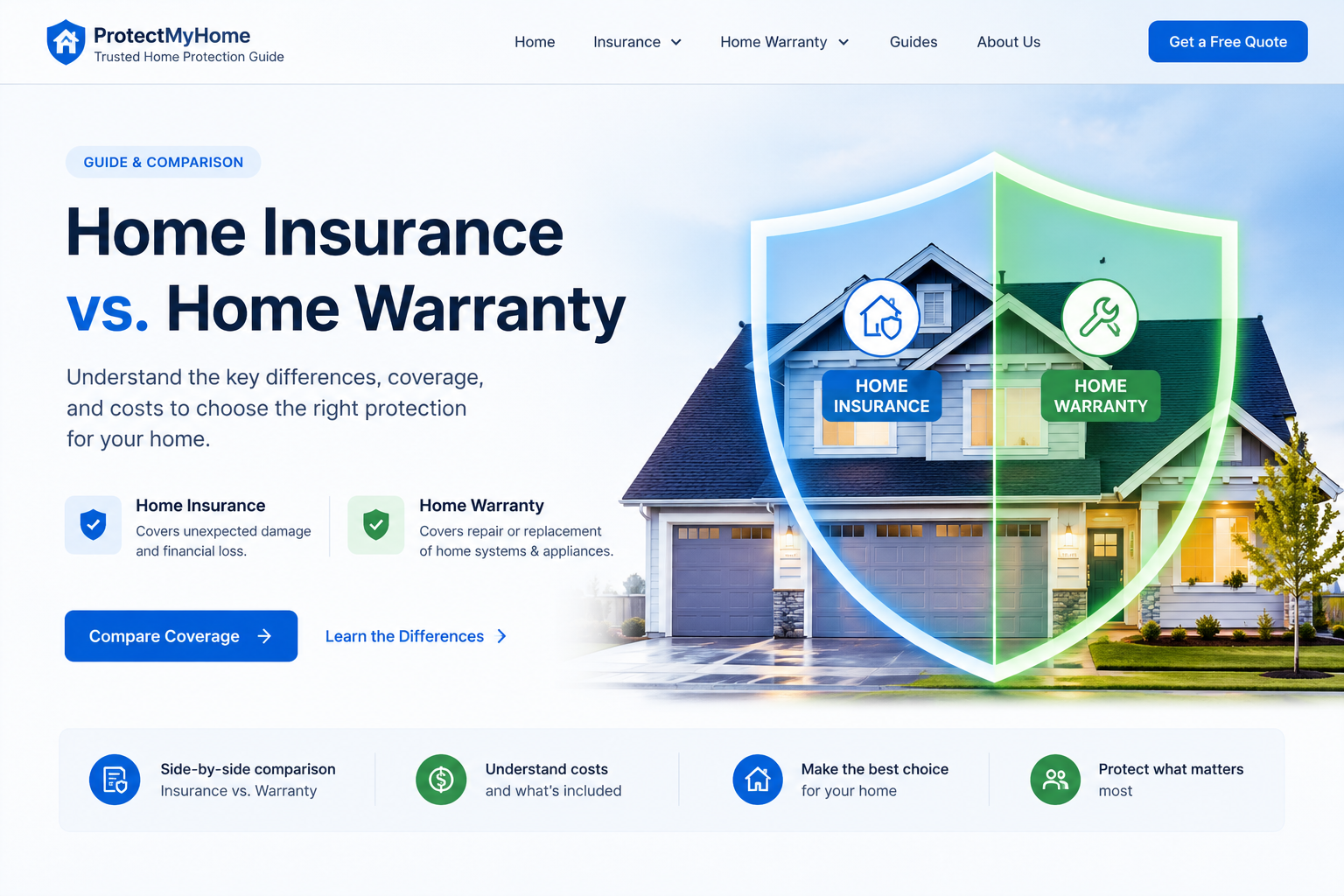
Comparing home insurance vs home warranty is one of the most important decisions for homeowners, first-time buyers, landlords, and families searching for home protection near me. The two products sound similar, but they solve different problems. Homeowners insurance is designed for covered sudden losses such as fire, wind, theft, liability claims, and certain types of accidental damage. A home warranty is usually a service contract that may help with eligible repair or replacement costs for covered appliances and major home systems that break down from normal use.
The mistake is treating one as a replacement for the other. A home insurance policy generally does not pay to replace an aging air conditioner simply because it stops working. A home warranty generally does not rebuild your house after a fire, pay a liability claim, or replace belongings stolen during a covered burglary. The right approach is to understand which risk belongs in which bucket, then decide whether your household needs insurance only, a warranty only for certain systems, or both working together.
Quick facts: home insurance vs home warranty in 2026
Use this snapshot before buying either product. It separates covered loss protection from repair-contract protection so you can avoid duplicate expectations and expensive gaps.
| Topic | Home insurance | Home warranty | Why it matters |
|---|---|---|---|
| Primary purpose | Protects against covered property losses and liability claims | Helps with eligible repairs for covered systems and appliances | They are built for different financial risks |
| Mortgage connection | Usually required by mortgage lenders | Usually optional | A warranty does not satisfy lender insurance requirements |
| Common trigger | Covered events such as fire, theft, wind, hail, or liability | Mechanical breakdown from normal use, subject to contract terms | The cause of damage decides where the claim belongs |
| Major exclusions | Wear and tear, maintenance, flood, earthquake, and some specialty risks unless added separately | Pre-existing issues, improper maintenance, excluded parts, code upgrades, cosmetic items, and caps | Exclusions control the real value |
| Best use | Protecting the home, belongings, loss of use, and liability exposure | Budgeting for covered appliance and system repair calls | Many homeowners compare both instead of choosing only one |
The main difference: sudden covered loss vs mechanical breakdown
Homeowners insurance is a risk-transfer policy. You pay premium, choose limits and deductibles, and rely on the policy when a covered loss occurs. That may include damage to the dwelling, other structures, personal property, additional living expense after a covered loss, medical payments to others, or liability protection if someone is injured and you are legally responsible.
A home warranty is usually not insurance. It is commonly structured as a service contract. You pay a plan cost, and when a covered appliance or system breaks down, the warranty company may coordinate a technician and apply contract benefits after a service fee, subject to limitations, exclusions, coverage caps, availability, and plan terms. This can be useful for homeowners who want help managing repair calls, but it should not be confused with full home insurance protection.
Home insurance vs home warranty comparison table
The cleanest comparison is to look at the item, the cause, and the type of financial loss. The same object can fall under different rules depending on what happened. For example, a built-in appliance damaged by a covered fire is different from an appliance that stops cooling because it wore out.
| Category | Home insurance may respond when... | Home warranty may respond when... | Important watch-out |
|---|---|---|---|
| Dwelling structure | The home is damaged by a covered peril such as fire, wind, hail, or vandalism | Usually not designed to cover the home’s structure | Roof leaks, wear, maintenance, and age issues require careful review |
| Personal property | Belongings are stolen or damaged by a covered event | Usually not designed to cover household belongings | High-value items may need scheduled coverage or endorsements |
| Liability | A covered injury or property damage claim is made against you | Generally no liability protection | Homeowners should review liability limits and umbrella eligibility |
| Appliances | An appliance is damaged by a covered loss such as fire or certain water events | A covered appliance breaks down from normal use | Warranty caps, exclusions, service fees, and replacement rules matter |
| HVAC / plumbing / electrical | Damage is tied to a covered peril or resulting covered loss | A covered system fails mechanically under contract terms | Pre-existing conditions and maintenance records can affect approval |
| Temporary housing | Loss of use may apply after a covered home insurance claim | Usually not a core warranty benefit | Warranty repair delays do not automatically create insurance loss-of-use coverage |
Real-world examples: which one do you use?
The examples below show why the cause of loss matters more than the item itself. A water heater, roof, air conditioner, or appliance can involve insurance, warranty, or neither depending on the facts.
| Situation | Likely path | Why | What to check |
|---|---|---|---|
| Kitchen fire damages cabinets and appliances | Home insurance | Fire is commonly reviewed as a covered peril under homeowners policies | Deductible, dwelling limit, personal property limit, and replacement cost terms |
| Air conditioner stops cooling from age and normal use | Home warranty | Mechanical breakdown may fit a covered systems contract | Service fee, HVAC cap, maintenance requirements, and excluded components |
| Floodwater enters the home from outside | Separate flood insurance review | Standard homeowners insurance generally does not cover flood | NFIP/private flood options, waiting period, lender acceptance, and contents coverage |
| Old roof fails because it was not maintained | Often neither | Wear, tear, deterioration, and maintenance issues are commonly excluded | Roof age, inspection, endorsements, storm history, and policy language |
| Dishwasher leaks and damages flooring | May involve both | Warranty may address dishwasher repair; insurance may review resulting covered water damage | Cause of leak, suddenness, exclusions, deductible, and contract limits |
Who may need both home insurance and a home warranty?
Homeowners insurance is the foundation. If you own a home with a mortgage, your lender usually requires it. Even without a mortgage, homeowners insurance helps protect against major property and liability losses that could be financially devastating. A home warranty is a separate decision based on repair tolerance, appliance age, system age, contractor access, and how you prefer to budget for breakdowns.
A warranty may be most useful for first-time buyers, homeowners purchasing an older home, landlords who want a more organized service-call process, and households that prefer predictable service fees over surprise repair bills. It may be less useful if your systems are new and already under manufacturer warranty, you have strong emergency savings, you prefer choosing your own contractors, or the contract caps are too low for your risk.
| Question | Why it matters | Smart next step |
|---|---|---|
| How old are the major systems? | Older HVAC, plumbing, electrical, and appliances can create repair pressure | List ages and compare contract caps against realistic repair costs |
| Can you choose your own contractor? | Some warranty companies assign contractors or require approval | Review service process, technician rules, and appointment expectations |
| What is the service fee? | Each repair call may require a fee even if coverage is limited | Compare annual cost plus likely service calls |
| What are the coverage caps? | A cap can leave you responsible for part of an expensive repair | Check per-item, per-system, and annual maximums |
| What is excluded? | Excluded parts, code upgrades, pre-existing issues, and poor maintenance can reduce value | Read the sample contract before buying |
Home protection help by state and household need
Blake Insurance Group supports homeowners and property owners across a multi-state footprint. For home insurance, the goal is to compare policy limits, deductibles, roof terms, replacement cost, water backup, flood needs, liability, and exclusions. For home warranty decisions, the goal is different: review appliance and system risks, service fees, coverage caps, contractor rules, and contract exclusions.
| Region / states | Common homeowner concerns | What to compare |
|---|---|---|
| Southwest AZ, NM, CA, OK, TX |
Roof age, heat, wildfire, monsoon, hail, plumbing, HVAC strain | Home insurance deductibles, flood/wildfire concerns, HVAC warranty caps |
| Southeast AL, GA, FL, NC, SC, VA |
Wind, hurricanes, water damage, flood exposure, older systems | Wind/hail deductibles, flood options, appliance and systems service contracts |
| Midwest and Plains OH, MI, IA, KS, NE, SD |
Hail, wind, freezing pipes, sump pumps, roof condition | Roof settlement terms, water backup, equipment breakdown, warranty exclusions |
| Northeast and Appalachia NY, WV |
Winter weather, older homes, heating systems, liability concerns | Replacement cost, service line, heating coverage, warranty contractor access |
| Property situations | First-time buyer, landlord, older home, new build, inherited home | Insurance policy fit plus whether a warranty contract adds practical value |
Compare home warranty options online
Start by listing your major systems and appliances: HVAC, water heater, electrical, plumbing, refrigerator, dishwasher, washer, dryer, oven, garage door opener, and any optional add-ons. Then compare the warranty contract against your home insurance policy so you know which product responds to which type of problem.
Before buying, review the sample contract, service fee, covered items, exclusions, caps, waiting period, and contractor process.
Related topics
Home insurance vs home warranty FAQs (2026)
Is a home warranty the same as homeowners insurance?
No. Homeowners insurance is an insurance policy for covered property and liability losses. A home warranty is usually a service contract for eligible repair or replacement of covered appliances and systems.
Does a home warranty replace homeowners insurance?
No. A home warranty does not replace homeowners insurance and usually does not satisfy mortgage lender insurance requirements. It also does not provide the same dwelling, belongings, loss-of-use, or liability protection.
Does home insurance cover appliance breakdowns?
Usually not when the appliance simply fails from age, wear, or mechanical breakdown. Home insurance may review appliance damage when the damage is caused by a covered loss, such as fire or certain sudden events.
Does a home warranty cover roof damage?
Most home warranties are not designed to replace homeowners insurance for roof damage. Some contracts may offer limited roof-leak options, but structural damage, weather damage, deterioration, and full roof replacement rules require careful review.
Should first-time home buyers consider a home warranty?
Many first-time buyers compare home warranties because repair costs can be hard to predict after closing. The value depends on system age, contract exclusions, service fees, caps, contractor rules, and whether the covered items match the home’s real risks.
Independent agency: Blake Insurance Group LLC is an independent insurance agency and is not affiliated with any single insurance company, warranty company, or service-contract provider.
Licensing: Licensed insurance producer (NPN 16944666).
Important: Home insurance availability, premiums, policy forms, deductibles, exclusions, inspections, underwriting decisions, claims handling, endorsements, and coverage limits vary by insurer, state, ZIP code, property condition, claim history, and policy design.
Home warranty note: Home warranties are commonly service contracts, not homeowners insurance. Contract availability, covered items, service fees, caps, exclusions, waiting periods, contractor rules, and repair or replacement decisions vary by provider and plan.
Separate coverage note: Flood, earthquake, landslide, sewer backup, service line, equipment breakdown, business use, short-term rental, high-value property, and maintenance-related issues may require separate policies, endorsements, or contracts.
Trademarks: All product and company names are trademarks™ or registered® trademarks of their respective holders. Use of them does not imply affiliation or endorsement.





Reviews are loaded from Google when you click “View reviews.”