Business insurance • Contractors
Contractor Insurance Quote: Coverage Contractors Need
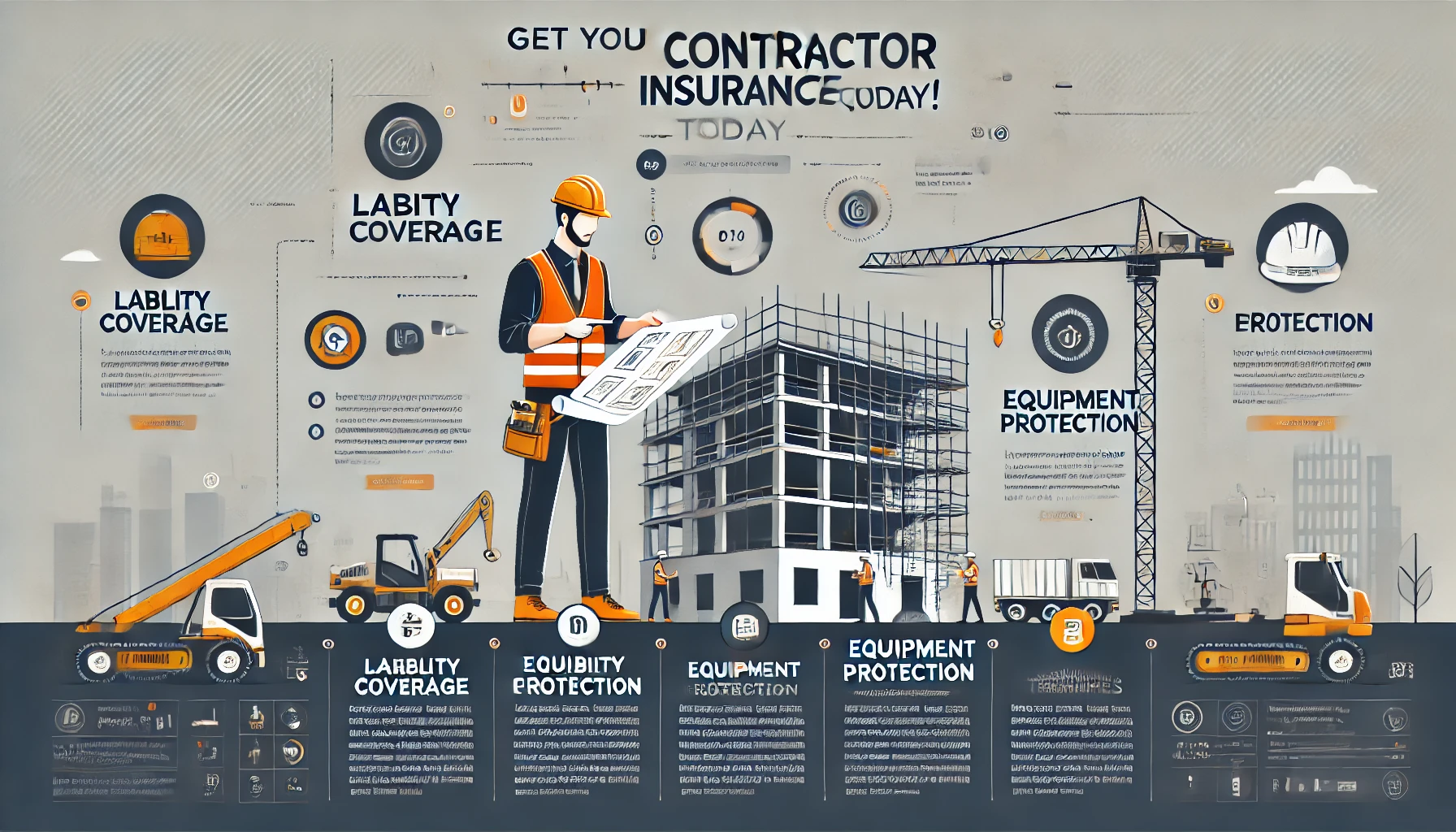
A contractor insurance quote typically includes general liability, workers' compensation, commercial auto, and coverage for tools and equipment. Licensing boards, project owners, and general contractors often set minimum requirements.
Blake Insurance Group is an independent agency serving clients by phone, email, and online in states where we are licensed; coverage depends on the insurer, the policy, and underwriting.
Request a contractor insurance quote
Tell us what you would like to cover, and a licensed agent will follow up with options available to us. Submitting the form does not bind coverage.
If the form does not load, call 888-387-3687, Monday through Friday, 9:00 to 5:00, or email info@blakeinsurancegroup.com.
Coverage a contractor business commonly needs
| Coverage | What it covers |
|---|---|
| General liability | Third-party injuries and property damage |
| Completed operations | Claims after a job is finished |
| Workers' compensation | Employee injuries |
| Commercial auto | Trucks, vans, and trailers |
| Tools and equipment (inland marine) | Tools and equipment on and off site |
| Builder's risk | Structures under construction |
| Contractor license and surety bonds | Required by licensing boards and many projects |
| Umbrella | Higher liability limits |
General descriptions; terms vary by insurer and state.
Subcontractors
If you hire subcontractors, collect their certificates of insurance and require them to name you as additional insured. Uninsured subcontractors can increase your workers' comp and liability premiums at audit, because insurers may charge for their payroll.
Bonds vs. insurance
Surety bonds guarantee your performance or payment obligations to a project owner, while insurance protects you. License bonds, bid bonds, performance bonds, and payment bonds each serve different purposes, and the surety can seek repayment from you after a claim.
Premium audits
General liability and workers' comp premiums are often based on estimated payroll or revenue and adjusted by audit after the policy year. Keep accurate payroll records by job classification and certificates for subcontractors to avoid surprise charges.
Business owner's policies
A business owner's policy (BOP) bundles general liability and commercial property, often with business interruption coverage, usually at a lower price than buying each separately. BOPs are designed for small and midsize businesses with typical risks; businesses with higher hazards or large revenues may need separate policies.
Certificates of insurance and contract requirements
Clients, landlords, and general contractors often ask for a certificate of insurance (COI) before work starts. A COI summarizes your policies and limits. Some contracts also require that the client be named as an additional insured, a waiver of subrogation, or primary and noncontributory wording, which may need endorsements. Read insurance clauses before you sign or bid.
Workers' compensation
Most states require workers' compensation once you have employees, though thresholds and exemptions vary by state and industry. Workers' comp pays medical bills and lost wages for job-related injuries and usually includes employer's liability coverage. Sole proprietors may be able to exclude themselves, but some clients require coverage anyway.
What affects your quote
- Annual revenue and payroll.
- Number of employees.
- Location and the states where you work.
- Claims history.
- Coverage limits and deductibles.
- Trade classification.
- Use of subcontractors.
- Residential or commercial work.
Cyber risks
Cyber insurance can pay for breach response, notification costs, data recovery, ransomware, and liability if client data is exposed. Even small businesses that store client records, payment details, or project files face these risks, and general liability policies usually exclude them.
What an independent agency does
An independent insurance agency is licensed to sell policies from several insurance companies. Instead of quoting one company's products, an independent agent can compare options from the insurers the agency represents, explain the differences in coverage, and help you re-shop at renewal. The insurance company, not the agent, makes underwriting and claim decisions.
Blake Insurance Group is an independent agency. We work with clients by phone, email, and online in states where we are licensed, and we will tell you which insurers we can quote for your situation.
How our quote process works
- Tell us what you want to insure and share current declarations pages.
- We review coverage, limits, and deductibles with you.
- We request quotes from insurers available to us using matching coverage.
- We explain differences in price and coverage so you can choose.
- After you buy, contact us for changes, renewals, and claim questions.
Questions to ask before you buy
- What is the legal name of the insurance company that will issue the policy?
- Is this price a final, bindable quote, or an estimate that can change?
- Which discounts are included, and do I qualify for each one?
- Are there installment fees, policy fees, or broker fees?
- How do I report a claim, and who handles it?
- Who do I contact for policy changes, such as adding a driver or vehicle?
- When does coverage start, and when should I cancel my current policy?
Questions to ask any insurer
Whatever company you are considering, a short list of questions can prevent surprises later:
- What is the legal name of the company that will issue my policy, and is it licensed in my state?
- Which coverages and limits does this price include, and what would it cost to raise liability limits?
- How will my price be recalculated at renewal, and which factors can raise it?
- Are there installment, late, or cancellation fees?
- How do I report a claim, and will I work with a staff adjuster or an outside firm?
- If I use a driving-data or app feature, what data is collected and how long is it kept?
- What happens if I move to another state where the company does not sell?
Write down the answers, or ask for them in writing, so you can compare companies on the same terms.
Protecting your personal information
Every quote platform needs personal details to price insurance: names, dates of birth, license numbers, vehicle details, and insurance history. Before you submit:
- Read the consent text beside the submit button. It explains who may contact you and how, including calls, texts, and automated or prerecorded messages.
- Check who receives your information. Some services share it with named partners or partner categories; others say they do not sell it.
- Understand credit checks. Many insurers use a credit-based insurance score where state law allows. Viewing quotes usually involves a soft inquiry, but confirm with each company.
- Keep records. Save screenshots of quotes and the consent you agreed to, and note the legal name of any insurer that quotes you.
How to check any insurer
Before you buy from any company, take a few minutes to check it:
- License. Confirm the insurer is licensed in your state through the state insurance department's company lookup.
- Complaints. The NAIC's Consumer Insurance Search shows complaint counts and a complaint index for each company, where 1.00 is the expected level for the company's size.
- Financial strength. Ratings from agencies such as A.M. Best describe an insurer's ability to pay claims.
- Legal name on the quote. Large groups write policies through several companies with different rates and rules. Make sure you know which one issues your policy.
- Claims process. Ask how claims are reported, whether there is a preferred repair-shop program, and how quickly adjusters respond after storms.
Independent vs. captive agents
An independent agent represents several insurance companies, so one conversation can produce quotes from multiple carriers. A captive agent represents one company. Direct writers sell online and by phone. Working with an independent agent can help when you want to bundle home and auto, need help with coverage choices, or want someone to re-shop at renewal. The insurer, not the agent, makes underwriting and claims decisions.
How to choose an agent
- Confirm the agent is licensed in your state through the state insurance department.
- Ask which companies the agency represents and whether the company you want is among them.
- Ask how the agency helps with claims and renewals.
- Compare quotes with identical limits and deductibles.
- Check the bundled total, not just the discount.
Checking an agent's license
Every agent who sells insurance must be licensed in the state where the customer lives. You can look up an agent or agency license through your state insurance department or the National Insurance Producer Registry. A license lookup shows the lines of authority, such as property and casualty or life and health, and whether the license is active.
Ask any agent which insurers they represent, how they are paid, and how they will help if you have a claim. A good agent explains coverage choices clearly and puts recommendations in writing when asked.
Working with an agency remotely
Many people now buy insurance from agencies by phone, email, video call, and e-signature. Remote service can widen your choice of agencies and insurers, as long as the agent is licensed in your state. Documents such as declarations pages, ID cards, and certificates are usually delivered electronically.
Local knowledge still matters. A good agent asks about local risks, such as hail, wildfire, hurricanes, flooding, theft, or traffic, and makes sure each quote addresses them.
Comparing agents fairly
When you compare agents, compare the advice and the coverage, not only the premium. Ask each agent to quote identical limits and deductibles so differences in price are real, and ask what each would recommend changing and why. Agents who explain trade-offs, such as a higher deductible versus a lower premium, help you make a better decision.
How an agent helps with claims
When something goes wrong, your insurer handles the claim, but an agent can help you understand what your policy covers, how to report the loss, and what to expect from the adjuster. Report claims promptly, document damage with photos, and keep receipts for emergency repairs and temporary living costs.
If you disagree with a claim decision, ask the insurer to explain it in writing and to point to the policy language. Your state insurance department can help if you cannot resolve a dispute.
Reviewing coverage at renewal
Insurance prices change at every renewal, and the insurer that was cheapest last year may not be this year. Review your declarations page before each renewal, update the agent on changes such as a new driver, a home renovation, or a move, and ask for a re-shop if the price rises significantly.
How to verify an insurer or agency
Before buying through any website or app, confirm who is selling you the policy and who will issue it:
- Find the licensed agency or insurer named in the site's footer, terms, or license page.
- Look up the agency or producer on your state insurance department's license search, or through the National Insurance Producer Registry (NIPR).
- Look up the insurer on your state insurance department's company search to confirm it is authorized in your state.
- Save the insurer's name and policy number once issued, since that is who handles claims.
A legitimate service will make this information easy to find. Be cautious if you cannot identify the licensed entity.
What to have ready for a contractor insurance quote
These details help produce accurate quotes.
- Business details. Entity type, years in business, and licenses.
- Revenue and payroll. Annual estimates and number of employees.
- Operations. Services you provide as a contractor and where you work.
- Property. Equipment, tools, and any location you own or lease.
- Claims history. Past three to five years.
Contractor insurance quote FAQs
What insurance do contractors need?
Usually general liability, workers' comp, commercial auto, and tools coverage.
What is completed operations?
Coverage for claims after a job is finished.
Are bonds insurance?
No; they guarantee obligations to others.
Why did my premium go up at audit?
Payroll, revenue, or uninsured subcontractors may have been higher than estimated.
Related guides
Partner quote options
Sponsored
Blake Insurance Group works with the partners below. Each link opens the partner's own website, where its terms, eligibility rules, and privacy policy apply. Blake Insurance Group may be compensated if you buy through these links.
- Thimble small business insurance: Short-term and on-demand business insurance quotes from Thimble.
Important information
Compensation. Links in the partner section of this page are sponsored, and Blake Insurance Group may be paid if you make a purchase. Sponsored placement does not affect the other information on this page.
Independent agency. Blake Insurance Group LLC is an independent insurance agency. Licensed insurance producer NPN 16117464. Licensed states: AZ, AL, TX, CA, NY, OH, FL, NC, VA, GA, OK, NM, IA, KS, MI, NE, SC, SD, WV, IL, NJ, PA, TN, and WA. Which insurance companies we can quote depends on our current appointments, the product, and your state. Mentioning a company on this page does not mean we represent it.
Coverage terms. Descriptions are general. The policy contract controls what is covered.
Legal requirements. State requirements summarized here are general information as of October 2026 and can change. This page is not legal advice; confirm current rules with your state's insurance regulator or motor vehicle agency.
Availability. Coverage, prices, discounts, and eligibility vary by insurer, state, and applicant, and are subject to underwriting. The issued policy controls.
Your next step
Request a quote, and a licensed agent will compare options available to us using the coverage you choose.