
Commercial Flood Insurance: Protect Your Building, Equipment, Inventory, and Business Property
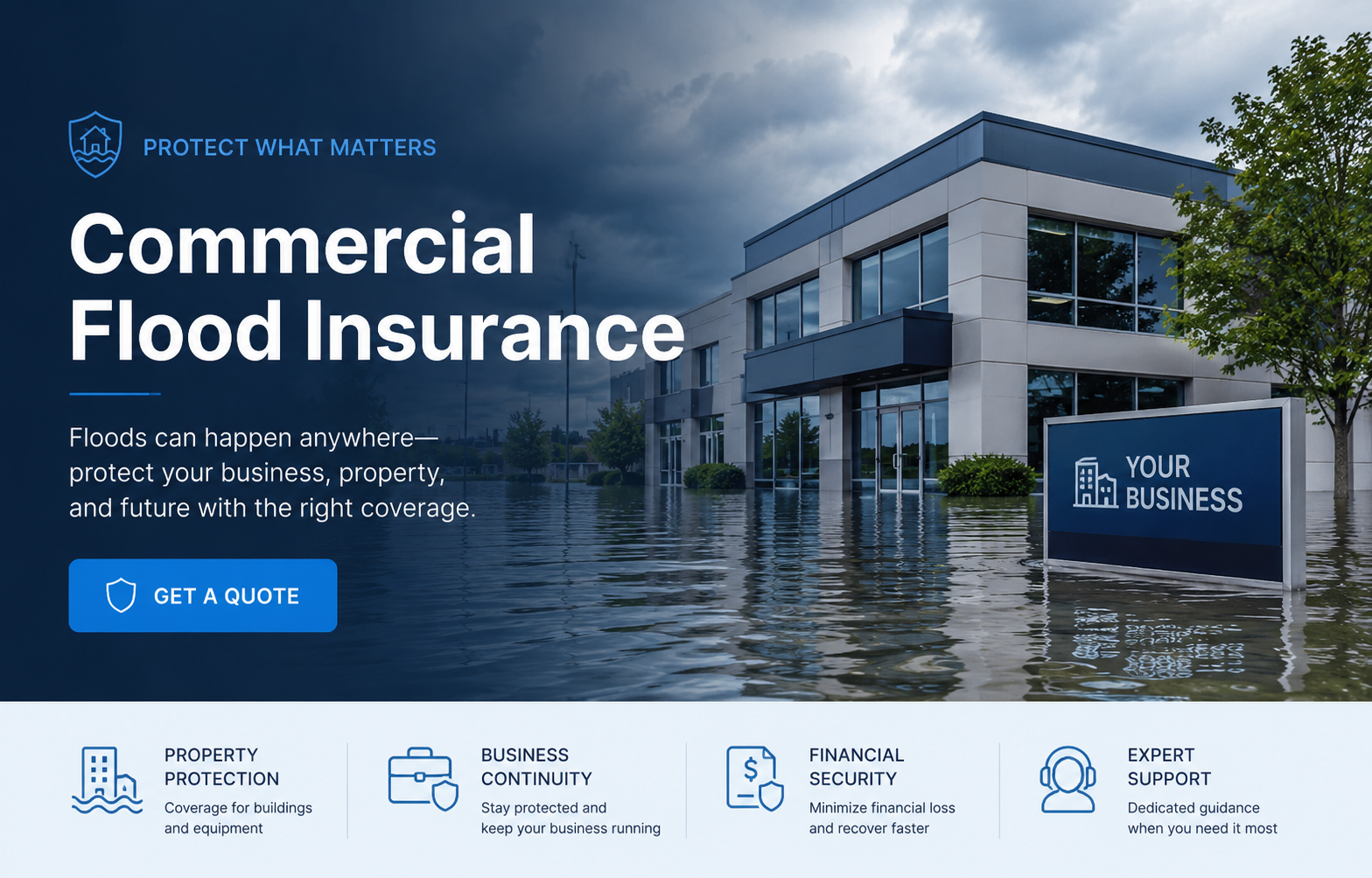
Commercial flood insurance helps protect business property from direct physical flood damage. For business owners, landlords, investors, property managers, and commercial tenants, flood risk is not limited to coastal buildings. A severe flood can come from storm surge, heavy rain, overflowing rivers, blocked drainage, flash flooding, snowmelt, levee problems, or rapid runoff from nearby development. A standard commercial property policy typically excludes flood, which means a separate flood policy or private flood option may be needed to protect the building, contents, equipment, inventory, tenant improvements, and other business property.
The right commercial flood policy depends on what you own, what your lease says, what your lender requires, and what would happen financially if the business location was damaged by floodwater. A building owner may need flood coverage for the structure, HVAC systems, electrical systems, plumbing, flooring, walls, permanently installed fixtures, and common areas. A tenant may need coverage for business personal property, inventory, furniture, equipment, tools, computers, records, and build-outs. A landlord may need to coordinate building coverage with tenant responsibilities and loan requirements. A business with expensive inventory or specialized equipment may need more than a basic limit.
Commercial flood insurance should be planned around total recovery cost—not just the minimum amount required by a bank or lease. Lender compliance may protect the loan, but it may not fully protect your operations, equity, contents, or cash flow.
Quick snapshot: how commercial flood insurance works
Commercial flood insurance can help pay for covered flood damage to insured business property. Coverage should be reviewed separately for building property, business contents, equipment, inventory, tenant improvements, and any lender or lease obligations.
| Coverage question | What to review | Why it matters |
|---|---|---|
| Who owns the building? | Building owner, landlord, business owner, investor, or association. | Ownership determines who should insure the structure and who handles lender requirements. |
| Who owns the contents? | Equipment, furniture, inventory, tools, computers, records, and tenant-owned property. | Contents may need separate limits from the building policy. |
| What does the lease require? | Tenant improvements, insurance obligations, waiver language, deductible allocation, and restoration duties. | Lease language can shift flood responsibility between landlord and tenant. |
| Is the limit enough? | Replacement cost, inventory value, equipment value, and business personal property exposure. | A policy that satisfies a lender may still be too low for real recovery. |
What commercial flood insurance may cover
Commercial flood coverage is usually reviewed in two major buckets: building coverage and contents coverage. Building coverage is generally focused on the insured structure and eligible permanently attached systems. Contents coverage is generally focused on business personal property located inside the insured building. The exact covered property, valuation method, deductible, exclusions, waiting period, and claims conditions depend on the policy form and insurer.
For a commercial property owner, building coverage may be the most important starting point. Floodwater can damage foundations, walls, flooring, electrical systems, plumbing, HVAC systems, elevators, permanently installed fixtures, and other building components. For a business tenant, contents coverage may be the bigger concern. A restaurant, medical office, retail store, warehouse, contractor, salon, daycare, or professional office may have expensive property inside the building that is not protected by the landlord’s policy.
| Coverage area | Examples | Who should review it |
|---|---|---|
| Building property | Structure, walls, flooring, HVAC, electrical, plumbing, permanently installed fixtures. | Building owners, landlords, investors, owner-occupied businesses. |
| Business contents | Furniture, computers, tools, equipment, records, shelving, supplies. | Tenants, retailers, offices, contractors, service businesses. |
| Inventory and stock | Retail inventory, warehouse goods, raw materials, finished goods. | Retailers, distributors, wholesalers, manufacturers. |
| Tenant improvements | Interior build-outs, counters, fixtures, flooring, specialty installations. | Tenants and landlords with lease-defined build-out responsibilities. |
| Special equipment | Medical equipment, restaurant equipment, production machinery, diagnostic tools. | Businesses with equipment-heavy operations or high replacement costs. |
A commercial flood quote should separate building value from contents value. Combining the numbers mentally can lead to underinsuring one side of the loss.
Commercial flood limits: where businesses get underinsured
NFIP commercial flood policies have standard maximum limits for non-residential buildings and contents. Those limits may be helpful, but many commercial properties need a deeper review because replacement cost, inventory value, and equipment exposure can exceed standard limits quickly. A small retail space may have more inventory than expected. A restaurant may have expensive kitchen equipment. A medical office may have costly diagnostic tools and specialized furniture. A warehouse may hold seasonal inventory that changes throughout the year. A landlord may own a building with a replacement cost far above a basic policy limit.
Private flood insurance and excess flood options may help when the business needs a different limit structure, faster quote experience, broader underwriting flexibility, or higher available coverage. The best fit depends on the property, flood zone, elevation, construction, occupancy, lender acceptance, prior losses, and requested limits. The key is to review the coverage before the flood—not after a claim reveals the limit was too low.
| Gap | Why it happens | Smart review step |
|---|---|---|
| Building limit below replacement cost | Commercial rebuilding costs may exceed basic flood limits. | Compare limits to current replacement cost, not old loan values. |
| Contents limit too low | Equipment, fixtures, tools, and business personal property are underestimated. | Create a contents schedule by category and location. |
| Inventory swings | Seasonal inventory can be much higher during peak months. | Quote limits based on peak exposure, not average inventory alone. |
| Tenant improvements unclear | The lease may assign build-out responsibility to tenant or landlord. | Review the lease and insure improvements under the correct party. |
| Lender minimum mistaken for full protection | Loan compliance may not match total business recovery needs. | Treat lender requirements as the floor, not the complete plan. |
Business types that should review commercial flood insurance
Any business with a physical location should review flood exposure, even if it is outside the highest-risk flood zone. Flood maps are useful, but they do not capture every drainage issue, infrastructure failure, development change, storm pattern, or local runoff problem. Businesses in strip centers, office buildings, industrial parks, warehouses, medical offices, restaurants, auto shops, and mixed-use properties can all face flood-related losses.
| Business / property type | Common flood exposure | Coverage focus |
|---|---|---|
| Retail stores | Inventory, display fixtures, POS systems, furniture, leasehold improvements. | Contents, stock, tenant improvements, and peak inventory values. |
| Restaurants | Kitchen equipment, refrigeration, food stock, furniture, flooring, build-out. | Equipment-heavy contents and tenant improvements. |
| Medical and dental offices | Specialized equipment, computers, records, cabinetry, diagnostic tools. | High-value equipment schedules and contents limits. |
| Warehouses and distributors | Inventory, racking, forklifts, packaging materials, loading areas. | Inventory valuation and business personal property limits. |
| Commercial landlords | Building structure, common areas, tenant spaces, mechanical systems. | Building limits, lender requirements, lease allocation, and deductible planning. |
| Contractors and service businesses | Tools, supplies, office equipment, shop space, stored materials. | Contents coverage and separate review of mobile equipment or vehicles. |
Lender and lease requirements: commercial flood insurance can be mandatory
Commercial flood insurance may be required when a building is located in a Special Flood Hazard Area and the loan is tied to a regulated or federally connected lender. The lender may require flood coverage for the building, and in some cases contents coverage may be required when contents are also taken as collateral. This is common during purchases, refinances, loan renewals, and servicing reviews.
Tenants should also review lease requirements. A commercial lease may require the tenant to carry certain insurance, insure tenant improvements, protect business personal property, or be responsible for repairs after a loss. The landlord’s flood policy may protect the building but not the tenant’s inventory, equipment, furniture, or loss of use. A tenant who assumes the landlord has everything covered may discover after a flood that their own property was never insured.
Commercial flood risk review: what drives pricing and eligibility
Commercial flood pricing and eligibility can be influenced by the address, flood zone, elevation, foundation type, construction, occupancy, distance to water, prior flood losses, deductible choice, requested limits, and whether building and contents coverage are both included. For private flood options, underwriting may also consider property-specific data, catastrophe modeling, drainage characteristics, and the type of business occupying the space.
Flood risk should also be reviewed operationally. A building might be repairable, but a business can still suffer if inventory is destroyed, equipment is unavailable, access roads are closed, records are damaged, or a key location is unusable. Commercial flood insurance is one part of a broader resilience plan that may include emergency response, off-site backups, vendor planning, inventory controls, water mitigation, elevation of critical systems, and clear claim documentation.
| Risk factor | Why it matters | What to gather |
|---|---|---|
| Building details | Construction, foundation, occupancy, and year built can affect underwriting. | Address, year built, square footage, foundation type, occupancy, and photos. |
| Flood zone and elevation | Can affect lender requirements, eligibility, and pricing. | Flood determination, elevation certificate if available, and prior policy documents. |
| Contents and inventory | Business personal property values may change throughout the year. | Equipment list, inventory estimate, furniture, fixtures, and seasonal peak values. |
| Prior flood history | Prior losses or mitigation work may affect underwriting and quote options. | Claims history, repair documentation, mitigation improvements, and current condition. |
| Loan or lease requirements | Required limits and wording can affect whether a policy is accepted. | Lender request, lease insurance section, mortgagee clause, and additional insured requirements. |
How to prepare for a commercial flood insurance quote
To quote commercial flood insurance accurately, gather the property address, business type, building ownership details, lease or loan requirements, current flood policy if any, current commercial property declarations page, building replacement cost, contents value, inventory estimate, equipment schedule, foundation type, year built, square footage, number of floors, occupancy, prior flood loss history, elevation certificate if available, and any flood mitigation details. If you lease your space, gather the insurance section of your lease and clarify whether you are responsible for tenant improvements or only business personal property.
A good commercial flood quote should answer five practical questions: What building property is covered? What contents are covered? What is the deductible? Is the limit enough for a serious flood loss? Will the policy satisfy the lender or lease requirement? For business owners, the best policy is not automatically the lowest premium. The best policy is the one that fits the property, protects the right insured party, and reduces the chance of an uncovered loss that interrupts operations.
Coverage is not bound until the application is completed, underwriting requirements are satisfied, payment is accepted where required, and the insurer confirms the effective date.
Commercial flood insurance FAQs
Does commercial property insurance cover flood damage?
Standard commercial property insurance typically excludes flood damage. A separate flood policy or private flood option is usually needed to insure covered building property, contents, equipment, inventory, and other business property against flood.
Who needs commercial flood insurance?
Building owners, landlords, tenants, investors, warehouses, retailers, restaurants, offices, medical practices, contractors, and other businesses with physical property should review flood coverage. The need depends on location, lender requirements, lease obligations, and property values.
What are common NFIP limits for commercial flood insurance?
NFIP non-residential flood coverage can provide up to $500,000 for building coverage and up to $500,000 for contents coverage. Businesses with larger buildings, equipment, or inventory may need to compare private flood or excess flood options.
Does a landlord’s flood policy cover a tenant’s property?
Usually, the landlord’s policy is focused on the building. Tenants should review separate flood coverage for business personal property, inventory, equipment, furniture, records, and tenant improvements assigned to them by the lease.
Can a lender require commercial flood insurance?
Yes. If a commercial building is in a Special Flood Hazard Area and the loan is subject to flood insurance rules, the lender may require coverage. Requirements can also apply to contents when contents are part of the collateral.
What information do I need for a quote?
Prepare the property address, business type, ownership or lease details, lender requirements, building replacement cost, contents and inventory values, equipment list, foundation type, year built, square footage, current policy, and any prior flood loss or mitigation information.
Independent agency: Blake Insurance Group LLC is an independent insurance agency and is not affiliated with any single insurance company, flood insurer, commercial lender, landlord, or government program.
Licensing: Licensed insurance producer (NPN 16944666).
Important: Commercial flood insurance availability, eligibility, premiums, limits, deductibles, waiting periods, policy forms, lender acceptance, lease requirements, underwriting approval, private flood options, excess flood options, and claim outcomes vary by property, state, insurer, program, and policy. Your issued policy and lease or loan documents govern coverage and responsibility. This page is general information only and is not legal, tax, lending, engineering, risk-management, or claims advice.
Trademarks: Neptune Flood® and any carrier, lender, landlord, or program names are trademarks™ or registered® trademarks of their respective owners. Use of them does not imply affiliation or endorsement.





Reviews are loaded from Google when you click “View reviews.”