
Condo Flood Insurance: Protect Your Unit, Belongings, Improvements, and Association Coverage Gaps
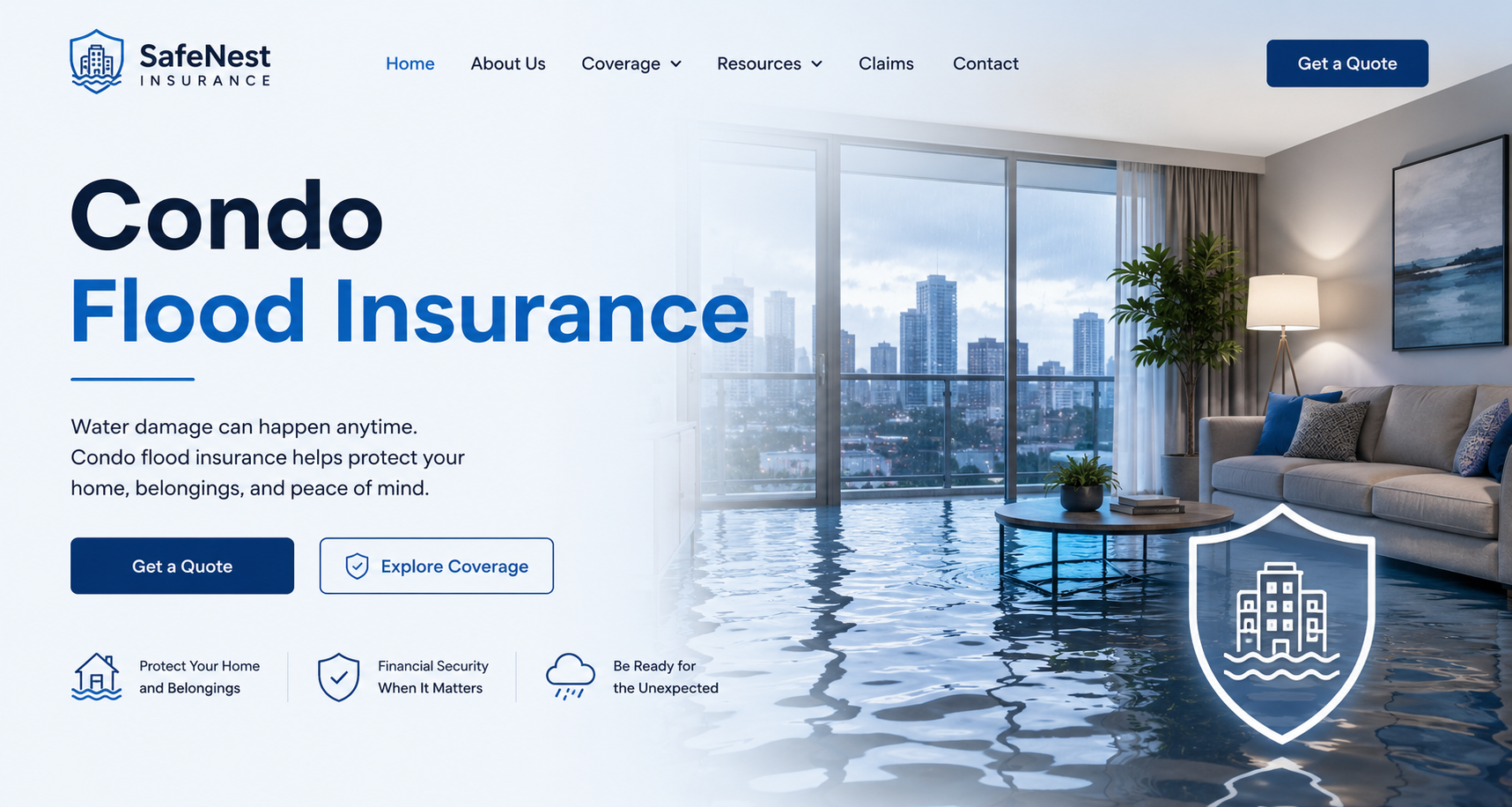
Condo flood insurance can be confusing because one flood loss may involve several coverage layers at once: the condominium association’s master flood policy, the unit owner’s personal flood policy, the condo documents, the mortgage lender’s requirements, and the real cost to repair or replace damaged property. The biggest mistake is assuming that a master policy automatically protects everything inside your unit. In many cases, the association policy may focus on the building structure and shared property, while the unit owner still needs separate protection for contents, improvements, betterments, and coverage gaps assigned by the condo documents.
If you own a condo, the right flood plan starts with one question: who is responsible for each part of the property after a flood? The answer may be different for the building shell, drywall, flooring, cabinets, appliances, HVAC equipment, interior walls, personal property, association-owned contents, parking areas, storage units, and common spaces. Flood insurance should be reviewed before a storm, before closing, before refinancing, and before renewing coverage—because policy limits, deductibles, flood maps, lender requirements, and association decisions can change.
Most standard property policies do not cover flood damage. For condo owners, that means your HO-6 condo policy and the association’s standard property policy may not be enough unless flood coverage has been purchased and properly coordinated.
Quick snapshot: how condo flood insurance works
Condo flood insurance is not one-size-fits-all. Coverage depends on whether you are insuring a single condo unit, personal property, association-owned building property, shared contents, or a gap between the master policy and your personal responsibility.
| Coverage question | What to review | Why it matters |
|---|---|---|
| Does the association carry flood coverage? | Ask for the master flood policy, declarations page, deductible, covered buildings, and limits. | The master policy may protect the building, but it may not protect your personal contents or every unit-owner improvement. |
| What does your unit need? | Review contents, upgrades, betterments, interior finish responsibility, and any lender requirement. | Your personal exposure may be larger than the association coverage suggests. |
| Is the flood limit enough? | Compare the master policy and unit policy to replacement cost and the association’s governing documents. | A low limit or high deductible can shift costs back to owners after a loss. |
| Is private flood a better fit? | Compare private flood options, underwriting, limits, waiting period rules, and lender acceptance. | Private flood may offer a different structure than an NFIP-only approach. |
Condo association master flood policy: what it may cover
Condominium associations often use a master flood policy to insure the residential condominium building and eligible association-owned property. Under the NFIP, the Residential Condominium Building Association Policy, commonly called an RCBAP, is designed for eligible condominium associations and can insure direct physical flood damage to the insured building. Examples of association-owned or building-related property may include the building structure, foundation walls, central air-conditioning systems, furnaces, heat pumps, electrical systems, elevators, staircases, water heaters, and certain finished floors, walls, ceilings, or built-ins in common areas or association management areas.
The master policy is important because a single flood event can damage shared structural components and multiple units at the same time. However, unit owners should not assume the master policy is automatically broad enough, high enough, or designed to protect personal property inside the unit. The association’s governing documents, bylaws, declarations, insurance section, and maintenance responsibilities determine who is responsible for different pieces of property after a loss.
| Master policy item | What to ask for | Owner impact |
|---|---|---|
| Policy type | RCBAP, private flood master policy, or another flood arrangement. | Policy form affects limits, coverage scope, and lender acceptance. |
| Covered buildings | Confirm each insured building, address, and building description. | Some condo projects have multiple buildings or shared structures. |
| Building limit | Review total limit and whether it reasonably matches replacement cost. | Underinsured buildings can create special assessments or owner exposure. |
| Deductible | Confirm deductible amount and how the association allocates it. | A large deductible may be passed through to unit owners after a claim. |
| Association contents | Ask whether common-area contents are insured. | Furniture, tools, office equipment, and shared property may need separate attention. |
Unit-owner condo flood insurance: what your personal policy should review
A condo unit owner may need personal flood coverage even when the association has a master flood policy. This is especially true if you have personal belongings, upgraded floors, custom cabinets, appliances, interior improvements, storage items, or a lender that requires individual flood insurance. A unit-owner flood policy may be used to address contents and, depending on the policy and situation, certain building items assigned to the unit owner.
The practical issue is that condo ownership splits responsibility. The association may insure the structure and shared areas, while you may be responsible for your belongings and parts of the interior. Your HO-6 policy may handle certain condo losses, but flood is a separate peril. If water rises from outside and meets the definition of flood, your standard condo policy may not respond unless flood coverage is separately arranged.
| Unit-owner item | Why it matters | How to review it |
|---|---|---|
| Personal property | Furniture, electronics, clothing, small appliances, and stored property can add up quickly. | Build a room-by-room contents estimate before choosing limits. |
| Interior improvements | Flooring, cabinetry, counters, fixtures, and betterments may be owner responsibility. | Compare your condo documents with the master policy and personal policy options. |
| Mortgage requirement | Your lender may require evidence of flood coverage if the unit or building is in a high-risk area. | Ask the lender what policy evidence and limits they require before closing or renewal. |
| Deductible exposure | Master policy deductibles and personal policy deductibles may both affect your out-of-pocket cost. | Confirm how deductibles are allocated after an association-level flood claim. |
Ask your association for the current flood declarations page, then compare it to your condo documents and your lender’s request. That simple step often reveals whether you need personal flood coverage, higher contents limits, or a private flood option.
Common condo flood insurance gaps that surprise owners
Condo flood gaps usually appear after everyone assumes someone else has coverage. The association may believe the unit owner is responsible for certain interior items. The owner may assume the master policy covers everything inside the walls. The lender may only check minimum compliance. The result can be a costly surprise after flood water enters the building.
| Gap | Why it happens | Smart review step |
|---|---|---|
| Personal contents not covered | Association coverage often focuses on building property, not unit-owner belongings. | Buy or quote contents coverage based on your belongings and storage exposure. |
| Upgrades and betterments unclear | Condo documents may assign interior finishes to the unit owner. | Review flooring, cabinets, fixtures, built-ins, and appliances line by line. |
| Master policy limit too low | Building replacement cost may exceed the policy limit or require excess flood planning. | Ask whether the association has reviewed replacement cost and extended limits. |
| High association deductible | Associations may choose larger deductibles to manage premium. | Confirm whether deductible assessments can be charged to unit owners. |
| Lender minimum mistaken for full protection | Lender requirements often focus on loan protection, not your total financial exposure. | Use lender requirements as the floor, not the complete coverage target. |
Condo flood insurance and lender requirements
If a condo building or unit is located in a Special Flood Hazard Area and the mortgage is tied to a lender with flood requirements, proof of flood insurance may be required. The lender may ask for the association’s master flood policy, a unit-owner policy, or both, depending on the loan, property type, project structure, and documentation. This is common during a purchase, refinance, loan servicing review, or escrow audit.
Lender compliance is important, but it should not be the only benchmark. A lender may be satisfied by evidence of a policy that protects the loan, while the owner may still have gaps for contents, improvements, deductible assessments, or rebuilding costs above the minimum. Condo owners should compare lender requirements against personal exposure, association documents, and the actual flood policy terms.
For condo associations: flood coverage should match the building, documents, and owner expectations
Condo boards and community managers should treat flood coverage as a governance and risk-management issue—not just an annual premium decision. The master flood policy should be reviewed against the replacement cost of each insured building, flood map information, lender requirements affecting owners, the association’s governing documents, claim deductible allocation, and whether commonly owned contents need coverage.
Associations should also communicate clearly with owners. Unit owners need to know what the master policy does and does not cover, whether contents coverage is included for association-owned property, whether individual unit owners should carry separate flood coverage, and how deductibles or uncovered costs may be assessed after a claim. Clear communication before a flood can reduce conflict after a flood.
| Association action | Purpose | Owner benefit |
|---|---|---|
| Review replacement cost | Make sure limits are aligned with current rebuilding costs. | Reduces the risk of underinsurance and special assessments. |
| Confirm covered property | Identify buildings, shared structures, mechanical systems, and common areas. | Helps owners understand what the association policy protects. |
| Explain owner responsibilities | Clarify contents, interior finishes, betterments, and improvements. | Gives owners a reason to quote personal flood coverage where needed. |
| Evaluate deductible strategy | Balance premium savings against claim-time assessment exposure. | Helps owners prepare for possible out-of-pocket costs after a flood. |
| Consider extended or private options | Compare coverage if the building’s value exceeds standard limits or needs broader terms. | Creates a more complete flood plan for the community. |
How to prepare for a condo flood insurance quote
To quote condo flood insurance accurately, gather the property address, unit number, occupancy type, lender request if applicable, association master flood declarations page, condo documents if available, current HO-6 declarations page, estimated contents value, estimated value of upgrades or improvements, and any flood-related closing documents. If you are part of a condo association or board, also gather the number of units, building replacement cost, building construction details, foundation type, flood zone information, current master policy, deductible, and any past flood loss details.
A good quote conversation should separate association coverage from unit-owner coverage. The association may need building protection and shared contents coverage. The unit owner may need personal property coverage, coverage for unit improvements, lender-compliant documentation, or a private flood policy that better fits their situation. Matching the quote to the real responsibility map is what keeps the policy useful when a claim happens.
Coverage is not bound until the application is completed, underwriting requirements are satisfied, payment is accepted where required, and the insurer confirms the effective date.
Condo flood insurance FAQs
Does my condo association’s flood policy cover my personal belongings?
Usually, association flood coverage is designed around the building and eligible association-owned property. Your personal belongings may require separate unit-owner contents coverage. Always confirm the master policy, condo documents, and your own policy options before assuming contents are protected.
What is an RCBAP?
An RCBAP is the NFIP Residential Condominium Building Association Policy. It is designed for eligible condominium associations and can insure direct physical flood damage to the insured residential condominium building, subject to policy terms, limits, exclusions, and requirements.
Do condo unit owners need separate flood insurance?
Many unit owners should at least review separate flood coverage. You may need protection for contents, upgrades, improvements, lender requirements, or gaps not handled by the association’s master policy.
Can a condo lender require flood insurance?
Yes. If the condo is in a flood hazard area and the loan is subject to flood requirements, the lender may require evidence of acceptable flood coverage. The requirement may involve the association policy, a unit-owner policy, or additional documentation.
Is private flood insurance available for condos?
Private flood options may be available depending on the property, location, underwriting, coverage amount, occupancy, and lender acceptance. Private flood can be useful when a unit owner or association wants to compare alternatives to a standard NFIP-only approach.
What should a condo board review before buying flood insurance?
A condo board should review replacement cost, covered buildings, association-owned contents, deductible strategy, governing documents, lender concerns, owner communication, and whether higher or extended flood limits are needed.
Independent agency: Blake Insurance Group LLC is an independent insurance agency and is not affiliated with any single insurance company, flood insurer, condominium association, mortgage lender, or government program.
Licensing: Licensed insurance producer (NPN 16944666).
Important: Flood insurance availability, eligibility, limits, deductibles, underwriting approval, policy forms, waiting periods, lender acceptance, association requirements, master policy terms, private flood options, and claim outcomes vary by property, state, insurer, program, and policy. Your issued policy and condominium governing documents control coverage and responsibility. This page is general information only and is not legal, tax, engineering, lending, association governance, or claims advice.
Trademarks: Neptune Flood® and any carrier, lender, association, or program names are trademarks™ or registered® trademarks of their respective owners. Use of them does not imply affiliation or endorsement.





Reviews are loaded from Google when you click “View reviews.”