Short-Term Health Insurance in Arizona (2026): Current Duration Rules, Coverage Limits and ACA Alternatives
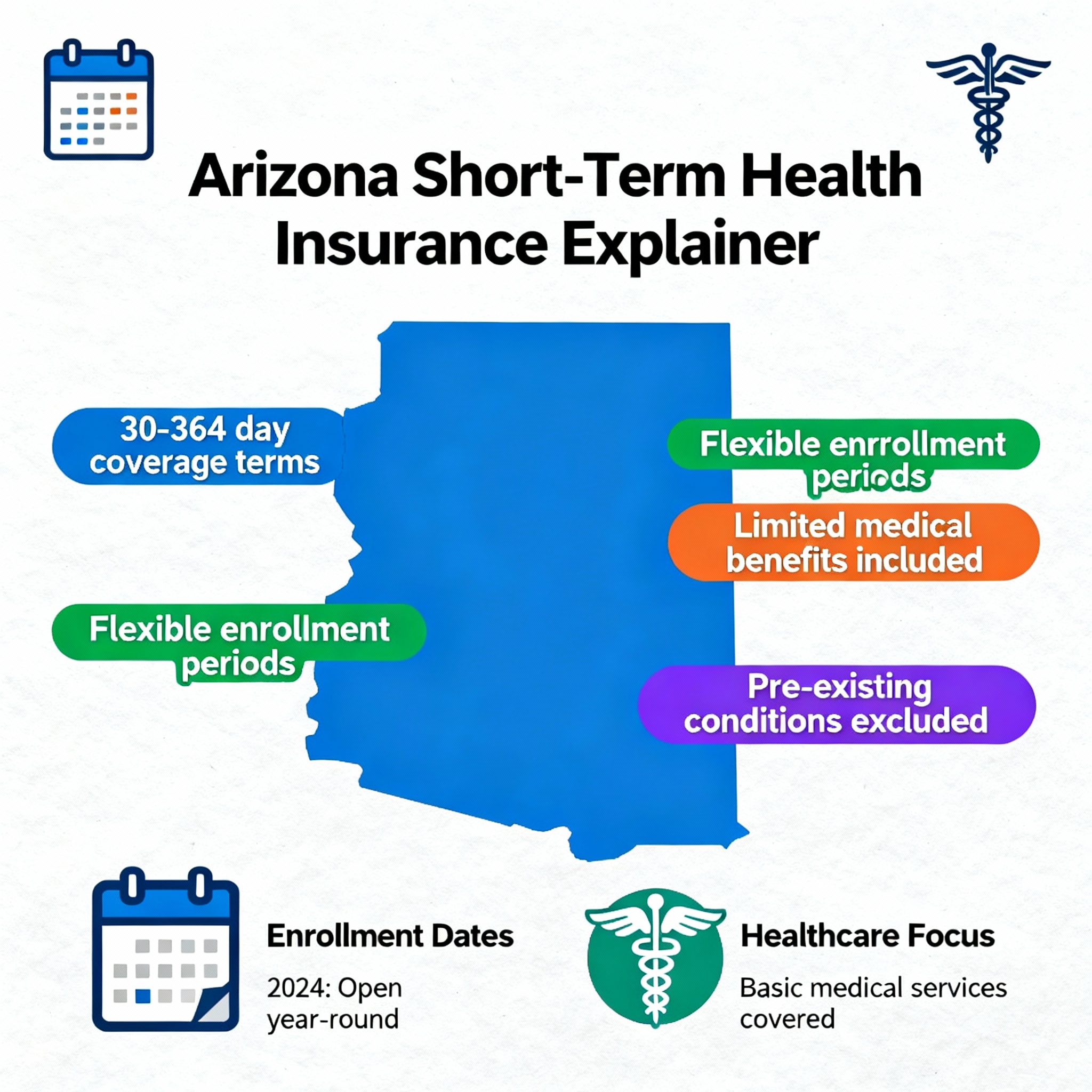
Short-term health insurance in Arizona can provide temporary medical coverage during a defined gap, such as the period between job-based plans or before new employer benefits begin. It is not ACA-compliant comprehensive health insurance. Approval may depend on medical underwriting, pre-existing conditions may be excluded, and benefits can omit or limit services that Marketplace plans must cover. Anyone searching for coverage near me should compare the policy term, exclusions, deductible, coinsurance, benefit maximums and provider access—not only the monthly premium.
Arizona law defines short-term limited-duration insurance as coverage with an initial expiration date less than 12 months after the effective date and a total duration no longer than 36 months when renewals or extensions are counted. Arizona DIFI Regulatory Bulletin 2025-12 states that the department will not enforce the shorter duration limits from the 2024 federal rule and will instead follow Arizona’s statutory duration framework. An insurer may offer shorter terms, may decline renewal, and may not make every option available in every ZIP code. The exact contract offered at quote time controls.
The federal departments also announced enforcement discretion in August 2025 while considering future rulemaking. Because law, enforcement policy and available products can change, verify the effective date, expiration date and renewal provisions in the current application and issued policy.
Quick facts: Arizona short-term health insurance in 2026
Short-term medical plans are temporary health insurance products. They can provide limited protection for unexpected illness or injury, but they are not ACA-compliant major medical plans.
| Question | 2026 review point | Why it matters |
|---|---|---|
| Can I apply year-round? | Usually yes, subject to carrier rules and eligibility. | Helpful if you missed ACA Open Enrollment or need temporary coverage quickly. |
| Is it ACA-compliant? | No. Short-term medical coverage is not ACA major medical insurance. | Benefits, exclusions, underwriting, and consumer protections differ from Marketplace plans. |
| Are pre-existing conditions covered? | Often excluded or limited. | Applicants with ongoing health needs should compare ACA options carefully. |
| Can plans ask health questions? | Yes. Medical underwriting may apply. | Approval is not guaranteed for every applicant. |
| What is the allowed duration? | Arizona law permits an initial term under 12 months and total duration up to 36 months, including renewals or extensions. | Available terms may be shorter, and renewal is not guaranteed unless the contract says otherwise. |
| Does surprise-billing protection apply? | Arizona DIFI states that the federal No Surprises Act does not apply to short-term limited-duration plans. | Out-of-network emergency and facility-based bills require especially careful policy review. |
| What is the best use? | Temporary gap coverage for unexpected illness or injury. | It may help reduce exposure during transitions, but it is not ideal for every situation. |
How short-term health insurance works in Arizona
Short-term health insurance is designed to provide temporary medical protection for a defined coverage period. Depending on the plan, it may help pay for covered doctor visits, urgent care, emergency care, hospitalization, surgery, imaging, lab work, and other eligible services related to new illnesses or injuries that occur after the policy begins. The policy documents control what is covered, what is excluded, how deductibles apply, and whether a network discount is available.
These plans are different from ACA Marketplace coverage. ACA plans cannot deny coverage because of health history, must cover pre-existing conditions, include essential health benefits, and may qualify for premium tax credits based on household income. Short-term plans can be less expensive for some applicants, but the lower premium usually comes with trade-offs such as underwriting, benefit caps, exclusions, and less comprehensive coverage.
Arizona residents should compare short-term medical coverage against ACA Marketplace plans, COBRA, employer coverage, Medicaid/AHCCCS eligibility, and other available options before enrolling. If you qualify for a special enrollment period or a Marketplace subsidy, an ACA plan may be the stronger long-term choice. If you need a short bridge and understand the limitations, temporary medical coverage may fill the gap.
Arizona requires prominent consumer notice language on short-term policies and enrollment materials. The notice warns that the coverage does not have to comply with key ACA market requirements and may limit pre-existing conditions, hospitalization, emergency services, maternity care, preventive care, prescriptions, and mental health or substance-use treatment. It also warns that losing or exhausting the policy may leave the insured waiting for the next Marketplace Open Enrollment period. Treat that notice as a starting point and read the complete exclusions and definitions.
Short-term health insurance vs. ACA Marketplace coverage
The most important decision is not simply “which plan is cheaper?” The better question is whether the plan fits your medical risk. A healthy person between jobs for two months may evaluate coverage differently than someone with prescriptions, planned surgery, pregnancy, diabetes, cancer history, heart disease, or frequent specialist visits.
| Feature | Short-term medical plan | ACA Marketplace plan |
|---|---|---|
| Enrollment timing | Typically available year-round, subject to eligibility. | Open Enrollment or Special Enrollment Period required. |
| Medical underwriting | Often required. | Not used for eligibility or pricing. |
| Pre-existing conditions | Often excluded or limited. | Covered under ACA rules. |
| Essential health benefits | Not required to cover all ACA essential benefits. | Required. |
| Premium subsidies | Not eligible for ACA premium tax credits. | May qualify based on household income and eligibility. |
| No Surprises Act | DIFI says the federal protections do not apply to short-term limited-duration plans. | Federal surprise-billing protections generally apply to covered individual-market plans. |
| Best use case | Temporary protection during a coverage gap. | Comprehensive ongoing major medical coverage. |
Who should consider short-term medical coverage in Arizona?
Short-term medical coverage may be worth reviewing if you are in a limited transition period and do not need comprehensive ACA-level benefits. It is commonly considered by people who recently left a job, are waiting for new employer coverage, missed ACA Open Enrollment, moved to Arizona, aged off a parent’s health plan, are between school and employment, or need temporary protection while comparing longer-term options.
It may not be a good fit if you need guaranteed coverage for pre-existing conditions, maternity care, prescription drug needs, mental health treatment, ongoing specialist care, or a known upcoming procedure. In those situations, ACA-compliant coverage, employer coverage, COBRA, Medicaid/AHCCCS, or another comprehensive solution should be reviewed first.
Arizona’s 2026 Marketplace Open Enrollment ran from November 1, 2025, through January 15, 2026. Outside that period, a qualifying life event may create a Special Enrollment Period. Loss of job-based or other qualifying coverage commonly provides 60 days before or after the loss, while loss of Medicaid or CHIP currently provides 90 days afterward. The scheduled expiration of a short-term plan does not necessarily create a Marketplace enrollment right, so establish the next coverage path before buying temporary insurance.
| Situation | May fit | Review carefully |
|---|---|---|
| Between jobs | Yes, if the coverage gap is short and you are generally healthy. | Compare COBRA, new employer start date, and ACA SEP options. |
| Missed Open Enrollment | Possibly, if no Special Enrollment Period is available. | Check whether a move, loss of coverage, marriage, birth, or income change creates another option. |
| Ongoing medical condition | Usually not ideal. | Pre-existing condition exclusions may create major uncovered exposure. |
| Healthy temporary gap | Often the strongest use case. | Still compare deductibles, caps, and exclusions before enrolling. |
What affects short-term health insurance costs in Arizona?
Short-term health insurance premiums can vary by age, ZIP code, household size, tobacco status, selected deductible, coinsurance, benefit maximums, plan duration, network, and underwriting results. A lower monthly premium may look attractive, but it must be measured against the deductible, coinsurance, policy maximum, excluded services, and your realistic risk of needing care.
When comparing quotes, review the total cost picture. Look at the monthly premium, deductible, out-of-pocket exposure, plan maximum, hospital benefits, emergency room rules, doctor visit benefits, prescription drug treatment, and whether your preferred providers participate. Also check whether the plan uses a PPO network, fixed indemnity structure, limited benefit design, or a more traditional short-term medical format.
| Cost factor | What to compare | Why it matters |
|---|---|---|
| Monthly premium | Base monthly cost before any add-ons. | Lower premiums may come with larger gaps or higher deductibles. |
| Deductible | Amount you pay before major benefits apply. | A low premium with a high deductible may still be expensive after a claim. |
| Coinsurance | Your share of covered costs after the deductible. | Important for hospitalization, surgery, or large claims. |
| Benefit maximum | Policy maximum or covered benefit limit. | Some plans cap what they will pay. |
| Provider access | Network participation and provider discounts. | Out-of-network care can significantly affect real costs. |
Arizona service-area and provider-network review
Arizona residents in Phoenix, Tucson, Mesa, Chandler, Gilbert, Scottsdale, Glendale, Peoria, Tempe, Surprise, Yuma, Flagstaff, Prescott, and surrounding communities should compare temporary medical coverage based on local provider access as well as price. A plan that looks inexpensive may not be the best fit if the hospitals, urgent care centers, or physicians you prefer are not part of the plan’s network or discount arrangement.
| Arizona area | Common coverage need | Review point |
|---|---|---|
| Phoenix metro | Job transitions, employer waiting periods, self-employed gaps. | Compare network access across large hospital systems and urgent care locations. |
| Tucson | Temporary coverage between employer or Marketplace plans. | Review doctor access, prescription needs, and hospital benefit structure. |
| Mesa, Chandler, Gilbert | Family transitions, contractor coverage gaps, missed enrollment windows. | Confirm whether each applicant qualifies medically before relying on the plan. |
| Scottsdale and Tempe | Independent contractors, early retirees, and professionals between plans. | Compare short-term plans against ACA and COBRA alternatives. |
| Northern and rural Arizona | Provider access can be more limited by location. | Verify participating providers before enrolling. |
How to prepare for an Arizona short-term health insurance quote
Before starting a quote, gather your ZIP code, date of birth, household members needing coverage, desired effective date, expected coverage length, preferred doctors, preferred hospitals, current prescriptions, and any health history that may affect underwriting. Also decide whether your priority is the lowest monthly premium, stronger hospital protection, a lower deductible, broader provider access, or a balanced plan.
If you are unsure whether short-term medical coverage or ACA Marketplace coverage is better, compare both before enrolling. The right answer depends on whether you need temporary protection or long-term comprehensive coverage. Do not choose a short-term plan solely because the premium is lower if you have known medical needs that could be excluded.
Information and documents to gather
- Applicant details: names, dates of birth, Arizona residential ZIP code and each person who needs coverage.
- Coverage timeline: the exact last day of current insurance, requested effective date and confirmed start date of the next comprehensive plan.
- Health information: complete answers to every application question about diagnoses, symptoms, prescriptions, advice, testing, treatment and upcoming care.
- Provider list: exact names of preferred doctors, hospitals, laboratories, urgent-care sites and pharmacies for network verification.
- Prescription list: medication name, dosage and frequency so exclusions or limited drug benefits can be identified.
- Alternative-coverage documents: employer termination notice, COBRA election packet or Marketplace Special Enrollment documentation when applicable.
Use the quote tool to compare available temporary medical options and review plan details before applying.
Coverage is not active until the application is approved, payment is accepted where required, and the insurer confirms the effective date.
Short-term health insurance Arizona FAQs
Can I buy short-term health insurance anytime in Arizona?
Short-term medical plans are generally available year-round, subject to carrier availability, eligibility, underwriting, and ZIP code. They do not follow the same Open Enrollment rules as ACA Marketplace plans.
How long can an Arizona short-term policy last in 2026?
Arizona law defines short-term coverage as having an initial expiration date less than 12 months after the effective date and a total duration no longer than 36 months, including renewals or extensions. DIFI Bulletin 2025-12 says Arizona will not enforce the shorter 2024 federal duration cap. An insurer may offer a shorter term, and renewal or extension is not guaranteed unless the contract provides it.
Does short-term health insurance cover pre-existing conditions?
Many short-term medical plans exclude or limit pre-existing conditions. Review the policy wording carefully before enrolling, especially if you have ongoing care, prescriptions, planned treatment, or a recent diagnosis.
Is short-term health insurance ACA-compliant?
No. Short-term medical coverage is not ACA-compliant major medical insurance. It may not include all essential health benefits, cannot receive ACA premium tax credits, and may use medical underwriting.
Who is short-term medical coverage best for?
It is typically best for healthy applicants who need temporary protection between major medical plans, while waiting for employer coverage, after missing enrollment, or during a short transition period.
Should I compare short-term coverage with ACA coverage?
Yes. Arizona residents should compare short-term medical plans with ACA Marketplace options, COBRA, employer coverage, Medicaid/AHCCCS eligibility, and any special enrollment opportunities before deciding.
Can I use my doctor with a short-term plan?
Provider access depends on the plan and network. Always verify doctors, hospitals, urgent care centers, and pharmacies before enrolling.
Does an Arizona short-term plan have federal surprise-billing protections?
Arizona DIFI states that the federal No Surprises Act does not apply to short-term limited-duration plans. Review emergency, out-of-network, balance-billing and allowed-amount provisions carefully before enrolling.
Independent agency: Blake Insurance Group LLC is an independent insurance agency and is not affiliated with any single insurance company, health insurer, government agency, Marketplace, or healthcare provider.
Licensing: Licensed insurance producer (NPN 16944666).
Important: Short-term health insurance is temporary medical coverage and is not ACA-compliant major medical insurance. Benefits, exclusions, pre-existing condition limitations, eligibility, medical underwriting, provider access, deductibles, coinsurance, premiums, renewability, policy duration, and availability vary by carrier, ZIP code, and policy form. Review the full policy documents before enrollment.
Trademarks: UnitedHealthcare®, UHOne®, and any carrier or program names are trademarks™ or registered® trademarks of their respective owners. Use of them does not imply affiliation or endorsement.




