Personal property
This coverage can help repair or replace covered belongings after a covered loss, such as eligible theft, fire, smoke, or certain other listed causes of loss, subject to policy terms.
Renters insurance guidance and online quote access
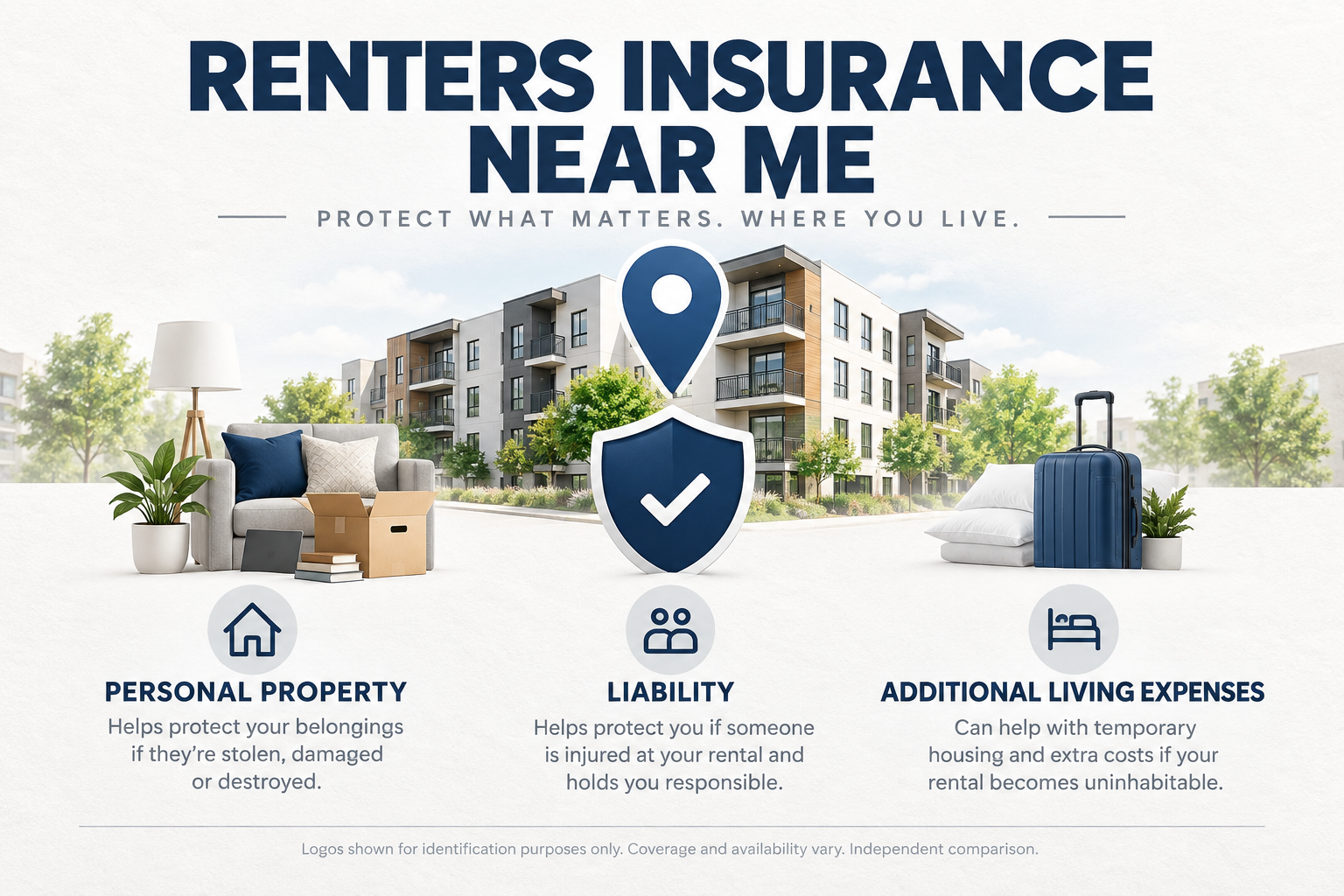
If you are searching for renters insurance near me, start by comparing the coverage your lease may require with the protection you actually need for your belongings, personal liability, and temporary living expenses after a covered loss. A renters policy can be affordable, but the useful comparison is not simply the first premium displayed—it is the combination of limits, deductible, exclusions, and the exact policy terms available for your rental address.
Blake Insurance Group LLC is an independent insurance agency licensed in 24 states, including Arizona, Alabama, California, Florida, Georgia, Illinois, Iowa, Kansas, Michigan, Nebraska, New Jersey, New Mexico, New York, North Carolina, Ohio, Oklahoma, Pennsylvania, South Carolina, South Dakota, Tennessee, Texas, Virginia, Washington, and West Virginia. Licensing and online service do not mean that Blake Insurance Group has a physical office in every community or that every carrier, policy, rate, or quote tool is available in every ZIP code.
This button opens a separate ePremium renters insurance website. Review its privacy notice, consent language, available insurers, policy details, and quote terms before submitting personal information. A quote is not a binder, policy, or guarantee of coverage.
The essentials before you buy
Renters insurance is designed for people who lease an apartment, house, condo, townhome, duplex, room, or other eligible residence. While the property owner generally insures the structure, a renters policy can provide coverage for the tenant’s personal property and personal liability. It may also include limited medical payments to others and help with certain additional living costs if a covered claim makes the rented residence uninhabitable.
Do not confuse a landlord policy with tenant coverage: The owner’s insurance may repair a covered loss to the building, but it may not replace your clothes, furniture, electronics, kitchen items, personal liability protection, or temporary housing costs. Read your lease and review the policy you are considering before assuming the property owner’s insurance protects you.
A renters policy may be useful even if you do not think you own many expensive items. Replacing ordinary household property all at once can be costly: a mattress, couch, clothing, laptop, phone, television, cookware, small appliances, linens, books, work equipment, and personal items can add up quickly. A room-by-room inventory provides a better estimate than relying on memory or guessing at a low personal-property limit.
Know what the policy is designed to do
Most renters policies are organized around several categories of protection. The precise coverage names, deductible, available limits, covered causes of loss, settlement method, and exclusions differ among insurers and policy forms. The declarations page and issued policy control what is covered—not a general web summary, a landlord’s statement, or an initial quote screen.
This coverage can help repair or replace covered belongings after a covered loss, such as eligible theft, fire, smoke, or certain other listed causes of loss, subject to policy terms.
This may help if you are legally responsible for covered bodily injury or property damage to another person. It can also include a legal-defense component, subject to the policy.
This is typically a smaller coverage that may help pay certain medical expenses for a guest or other person who is injured, subject to policy terms and conditions.
If a covered loss makes the residence uninhabitable, this may help with certain necessary increased living expenses, such as temporary lodging, within the policy limit.
Some policies offer limited coverage for eligible personal property away from the residence. Conditions, location limits, and special property restrictions may apply.
Scheduled valuables, water backup, identity-related services, replacement-cost coverage, and other endorsements may be available from some insurers, subject to state and carrier rules.
Personal-property coverage commonly works on a named-perils basis in a renters policy. That means the policy identifies the types of events that may be covered rather than promising payment for every accidental breakage, unexplained disappearance, maintenance problem, or loss. Commonly listed events can include fire, theft, vandalism, smoke, windstorm, certain water damage, and damage caused by vehicles, but only the actual policy can confirm how a particular event would be handled.
When reviewing a quote, ask whether it offers actual cash value or replacement-cost treatment for personal property. Actual cash value generally reflects depreciation. Replacement-cost coverage may provide more for covered property after applicable requirements are satisfied, but it may cost more, may require an endorsement, and may not apply equally to every class of property. The difference can materially affect the amount available after a covered loss.
Read your lease before selecting limits
Many landlords and property managers require renters insurance as part of a lease. The requirement may specify a minimum personal liability limit, list the property manager or landlord as an interested party for proof-of-coverage purposes, require policy documentation before move-in, or require ongoing coverage throughout the lease term. The wording of your lease is the best place to start.
Do not assume that a landlord request makes the landlord an insured on your policy. Different arrangements can have different meanings. A request for proof of insurance or notice if the policy cancels is not necessarily the same as adding a person as an additional insured. Ask the property manager what they need and provide only the designation the insurer permits. The policy should still be selected for your own exposure, not solely for the minimum requested in the lease.
| Lease or property-manager request | What it can mean | What to verify |
|---|---|---|
| Minimum personal liability limit | The lease may require a specified amount of personal liability insurance. | Whether the proposed policy meets or exceeds the required limit and whether a higher limit suits your circumstances. |
| Proof of renters insurance | The landlord may want evidence that an active policy exists before move-in or renewal. | What document is accepted, when it is due, and whether the policy start date matches the lease requirement. |
| Interested party or additional-interest notation | The property manager may want policy notices or verification for its records. | The exact name, address, and designation requested, along with what the insurer allows. |
| Pet, roommate, or occupancy rule | Your lease may allocate responsibility for residents, guests, animals, or damage. | Whether the renter policy’s definitions and exclusions align with your household and lease situation. |
Renters insurance can also be relevant if you unintentionally cause damage to another unit or to another person’s belongings, although the policy’s liability terms, exclusions, and facts of the situation control. A claim involving damage to the rental building is not automatically covered simply because you have renters insurance. Review the personal-liability coverage and your lease obligations rather than relying on a broad assumption.
Coverage has boundaries
Insurance works best when its limits and exclusions are understood before a loss occurs. A renters policy is not intended to pay for every loss involving property or liability. The policy may exclude or limit losses related to flooding, earth movement, wear and tear, maintenance issues, pests, intentional acts, certain business activities, certain animals, or other events. Endorsements may be available for some concerns, but availability varies.
| Situation or property type | Why it needs attention | What to review |
|---|---|---|
| Flood or storm surge | Standard renters insurance usually does not cover flood damage, even if water enters during a severe storm. | Whether separate flood coverage for contents is available and appropriate for your location and risk. |
| Earthquake or earth movement | Earth movement is commonly excluded or requires separate coverage. | Whether an endorsement or separate policy is available, the deductible, and covered property rules. |
| Jewelry, cash, collectibles, firearms, and business property | Base policies can impose special sublimits that are lower than an item’s value. | Scheduled-property choices, documentation requirements, appraisals, and valuation terms. |
| Roommates’ belongings | A shared address does not automatically make all residents insured on one policy. | Who is named on the policy, household definitions, ownership of property, and whether separate policies are appropriate. |
| Water damage from plumbing or appliances | Sudden accidental water damage can be treated differently from seepage, backup, maintenance, or water entering from outside. | The exact water-damage language, exclusions, any water-backup endorsement, and deductible. |
| Damage to the building | The landlord generally insures the structure, while tenant liability depends on facts and policy language. | Lease responsibility, personal-liability terms, exclusions, and any property-manager requirements. |
Flood risk is not limited to beachfront or riverfront rental homes. Local drainage, heavy rain, plumbing systems, elevation, nearby development, and changing weather patterns can affect water exposure. If flooding is a concern, do not assume that renters insurance will handle it. Ask about separate flood insurance for personal property and compare any waiting periods, policy limits, and coverage terms before a storm threatens.
High-value items should be inventoried and considered individually. A jewelry sublimit, for example, may not be sufficient for an engagement ring, watch collection, camera equipment, high-end bicycle, musical instrument, or specialized work equipment. Keep receipts, photos, serial numbers, and appraisals where appropriate. Then ask whether the standard policy limit is sufficient or whether a scheduled-property endorsement may be available.
A deductible is the amount you generally pay before the policy pays a covered property loss. Selecting a higher deductible may reduce the premium, but it also means taking on more cost after a theft, fire, or covered event. A deductible should be an amount you could manage without causing a significant financial strain.
A better quote comparison
The most useful quote comparison keeps the key choices consistent. If one quote has a lower personal-property limit, a higher deductible, actual cash value settlement, lower liability protection, or fewer endorsements than another, a lower premium alone does not show which policy offers better protection. Set your desired limits first, then compare matching quotes.
| Coverage feature | Why it matters | Question to ask before enrolling |
|---|---|---|
| Personal-property limit | This is the maximum available for covered belongings, subject to terms and sublimits. | Would this limit reasonably replace what I own after a major covered loss? |
| Settlement method | Actual cash value and replacement-cost treatment can lead to different claim outcomes. | Will depreciation reduce the payment, or is replacement-cost coverage included or available? |
| Personal liability limit | A liability claim can involve legal defense and damages, subject to the policy. | Does this meet my lease requirement and fit my broader liability concerns? |
| Deductible | You may pay the deductible before a covered property claim is paid. | Could I pay this amount after an unexpected loss? |
| Additional living expense | Temporary housing after a covered loss can be expensive. | What expenses may be covered, for how long, and up to what limit? |
| Special limits and endorsements | Valuables, water backup, identity-related services, and other concerns may need different coverage. | Are the items and risks I care about addressed by the base policy or an available endorsement? |
Also consider the service process that works for you. Some renters prefer completing a straightforward application online. Others want help interpreting policy terms, discussing special property, or coordinating renters insurance with auto, umbrella, flood, or other coverage. An online tool can be an efficient starting point, but it does not replace reading the documents presented before you submit an application or pay for a policy.
The approved ePremium destination is a third-party renters insurance quote path. ePremium identifies itself as an insurance agency specializing in renters insurance. Because insurer access, appointments, availability, and underwriting may change, do not assume a particular carrier will appear in a quote result. Compare the actual options, coverage choices, and documents presented for your address.
Prepare before entering the quote flow
Organizing a few details before starting can make your renters insurance quote more accurate and easier to compare. Only submit information through a website after reviewing its privacy and consent language. The insurer or third-party platform controls its own questions, underwriting process, and available products.
When you are ready, use the approved quote button below to begin a separate renters insurance application or quote process with ePremium. The resulting quote is subject to the third party’s available insurers, the applicable insurer’s underwriting requirements, address eligibility, selected coverage, and the information you provide.
External destination disclosure: This link opens a separate ePremium website. Its available insurers, privacy practices, consent terms, quote questions, eligibility criteria, carrier appointments, policy forms, pricing, and issuance process are controlled by ePremium and the applicable insurer.
Common renter questions
Usually, yes, if you want protection for your own belongings and personal liability. A landlord’s policy generally insures the building and the landlord’s ownership interest; it may not cover your clothing, furniture, electronics, liability, or temporary living costs after a covered loss. Your lease may also require you to maintain renters insurance.
Start with a room-by-room inventory and estimate what it would cost to replace your belongings at current prices. Include furniture, clothing, electronics, kitchen items, books, décor, appliances you own, tools, sports equipment, and valuables. Consider special limits for categories such as jewelry, collectibles, firearms, or business property.
Not automatically. Coverage depends on who is named as an insured, the policy’s household definitions, ownership of property, and the insurer’s rules. Many roommates need separate renters policies. Confirm this with the insurer before assuming that a shared residence means every person and item is covered.
Some renters policies provide limited off-premises protection for eligible personal property, but coverage depends on the policy language, special limits, location, cause of loss, and circumstances. Review the issued policy before relying on it for travel, storage, a vehicle, or property outside your home.
Standard renters insurance usually does not cover flood damage. Sudden water damage from certain plumbing failures may be treated differently from water entering from outside due to flooding, storm surge, or surface water. If flooding is a concern, consider whether separate flood coverage for contents is appropriate.
Many renters can begin a quote or application online. Final availability, eligibility, insurer selection, premium, coverage terms, and policy issuance depend on the applicable insurer and the information submitted. Read the quote, declarations, application, and policy documents carefully before accepting coverage.
Continue your coverage research
Use these resources to continue reviewing coverage choices and to understand risks that a standard renters policy may not address. Insurance needs vary by rental property, location, lease terms, household, and personal property.
Independent agency and availability notice: Blake Insurance Group LLC is an independent insurance agency and is not affiliated with or endorsed by any single insurer. Blake Insurance Group is licensed to serve eligible clients in Arizona, Alabama, California, Florida, Georgia, Illinois, Iowa, Kansas, Michigan, Nebraska, New Jersey, New Mexico, New York, North Carolina, Ohio, Oklahoma, Pennsylvania, South Carolina, South Dakota, Tennessee, Texas, Virginia, Washington, and West Virginia. We do not imply a physical office, local branch, or in-person representative in every licensed state or community. Carrier access, appointments, products, service areas, underwriting, discounts, policy terms, quote availability, and pricing vary by state, address, applicant, and insurer.
Insurance notice: This page provides general educational information and is a solicitation for insurance. It is not a quotation, binder, policy, coverage determination, or legal advice. No coverage is bound or changed through this page. A policy’s declarations, forms, endorsements, conditions, exclusions, and applicable law govern coverage. The external ePremium link leads to a separate website and should not be described as a Blake Insurance Group quote form.
Review your lease, inventory your property, choose limits and a deductible you can manage, then compare the complete policy before enrolling. When you are ready, use the approved third-party quote path to explore renters insurance options for your address.




