Pet Insurance Cost Calculator (2026): Estimate Monthly Premiums, Deductibles, Reimbursement, and Annual Limits
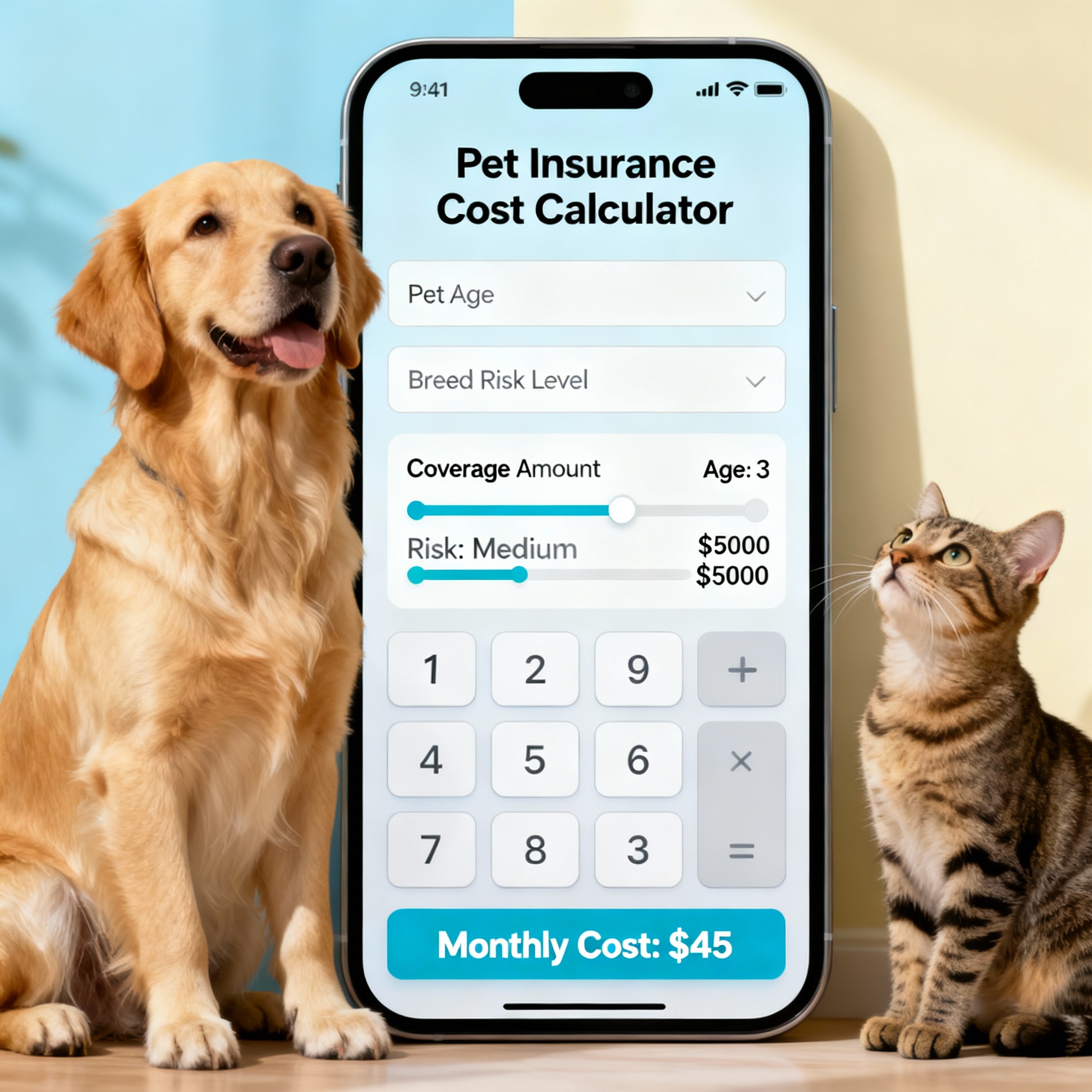
A pet insurance cost calculator helps you estimate what a policy may cost each month and what you may still pay when your dog or cat has a covered vet bill. The final price depends on your pet’s age, species, breed, ZIP code, coverage type, deductible, reimbursement percentage, annual limit, wellness options, and the insurer’s underwriting rules.
Pet insurance is not priced like a flat membership. A younger cat in a lower-cost area may quote very differently from an older large-breed dog in a higher-cost veterinary market. The cheapest premium may also create more out-of-pocket exposure if the deductible is high, the annual limit is low, or the reimbursement percentage is reduced. The best way to compare pet insurance is to look at both sides of the math: monthly cost and claim-time cost.
Pet insurance cost calculator
Use this calculator as an educational estimate. It does not produce a guaranteed premium, underwriting decision, or claim payment. It helps you understand how monthly premium, deductible, reimbursement percentage, annual limit, and wellness add-ons can change the total value of a pet insurance policy.
Educational estimate only. Real quotes vary by insurer and policy terms.
Monthly estimate multiplied by 12.
Based on the sample bill, deductible, reimbursement, and annual limit.
Calculator logic: the premium estimate starts with a sample baseline and adjusts for pet type, age, breed risk, coverage type, deductible, reimbursement percentage, annual limit, and local vet-cost level. The claim estimate applies the deductible first, then reimbursement, then the annual limit.
Quick facts: what controls pet insurance cost in 2026
Pet insurance pricing is driven by risk and plan design. A plan with a low deductible, high reimbursement percentage, high annual limit, and wellness benefits will usually cost more than a leaner plan. That does not automatically make it worse. It may simply shift more cost from claim time into the monthly premium.
| Cost factor | How it affects price | What to compare |
|---|---|---|
| Pet type | Dogs often cost more to insure than cats | Compare dog and cat quotes separately, not as one average |
| Age | Older pets usually cost more because claim risk tends to rise | Quote early, before major medical history develops |
| Breed | Breed risk can affect expected claims for orthopedic, hereditary, or chronic issues | Review breed-specific exclusions, waiting periods, and claim rules |
| Deductible | Higher deductibles usually lower monthly premiums | Make sure the deductible is affordable during an emergency |
| Reimbursement | Higher reimbursement usually increases the premium | Compare 70%, 80%, and 90% using the same sample vet bill |
| Annual limit | Higher limits usually cost more but reduce large-claim exposure | Match the limit to the level of risk you want to transfer |
How to use the pet insurance cost calculator correctly
Start by choosing the coverage type you actually want. Accident-only coverage may be cheaper, but it does not handle illnesses. Accident and illness coverage is broader and is usually the main comparison point for owners who want help with unexpected sickness, injuries, diagnostics, surgeries, prescriptions, and emergency care. Wellness or preventative care packages may help with routine items, but they should be evaluated separately from major medical protection.
Pet insurance claim math: premium is only half the decision
A common mistake is comparing pet insurance by monthly cost only. The better comparison is what happens after a claim. If your pet has a $2,500 eligible vet bill and your plan has a $250 deductible with 80% reimbursement, a simplified claim calculation subtracts the deductible first, then reimburses 80% of the remaining eligible amount. That means your estimated reimbursement would be $1,800 before any policy-specific exclusions, caps, or adjustments.
| Example item | Amount | Calculation step | Owner impact |
|---|---|---|---|
| Eligible vet bill | $2,500 | Starting claim amount | The bill must be for covered care and meet policy rules |
| Annual deductible | $250 | $2,500 minus $250 | Owner pays the deductible before reimbursement applies |
| Reimbursable balance | $2,250 | Remaining eligible amount after deductible | This balance is multiplied by the reimbursement percentage |
| 80% reimbursement | $1,800 | $2,250 × 80% | Estimated reimbursement before policy-specific adjustments |
| Owner share | $700 | $250 deductible + 20% coinsurance | This does not include non-covered services or amounts above limits |
Deductibles, reimbursement, and annual limits: the three levers that change cost
Pet insurance plans usually let you choose between different deductibles, reimbursement percentages, and annual limits. These settings work together. A higher deductible may lower the monthly premium, but you pay more before reimbursement starts. A higher reimbursement percentage may increase the premium, but it can reduce your share of an eligible claim. A higher annual limit may cost more, but it can matter during surgery, hospitalization, cancer treatment, or repeated claims in the same policy year.
| Plan setting | Lower-cost choice | Higher-protection choice | Best use case |
|---|---|---|---|
| Deductible | $500, $750, or $1,000 | $100 or $250 | Choose based on what you can comfortably pay during an emergency |
| Reimbursement | 70% | 80% or 90% | Higher reimbursement helps more when claims are large |
| Annual limit | $5,000 or $10,000 | $20,000 or unlimited-style options | Higher limits matter for surgery, cancer, emergencies, and repeat claims |
| Wellness package | No wellness add-on | Preventative care package | Use only when expected routine reimbursements justify the added cost |
Dog vs cat pet insurance costs
Dog insurance often costs more than cat insurance because dogs may have higher expected veterinary expenses, breed-specific risks, injury exposure, and treatment costs. Cat policies can still vary significantly, especially for older cats or breeds with known health concerns. The calculator should be treated as a directional tool, not a substitute for a live quote.
| Pet | Common cost pattern | Key risks to compare | Quote tip |
|---|---|---|---|
| Dogs | Often higher monthly premiums | Orthopedic injuries, cruciate ligament issues, allergies, digestive problems, breed risks | Review waiting periods and rehab or physical therapy coverage carefully |
| Cats | Often lower monthly premiums than dogs | Kidney disease, urinary issues, dental disease, chronic conditions, age-related illnesses | Compare illness coverage and annual limits, not just accident protection |
| Puppies and kittens | May quote lower before medical history develops | Vaccines, accidents, congenital concerns, early illness symptoms | Consider whether a wellness package makes sense during the first year |
| Senior pets | Usually higher premiums and stricter eligibility concerns | Chronic illness, prior symptoms, medication, diagnostics, surgeries | Read pre-existing condition language before relying on a quote |
Get a real pet insurance quote after using the calculator
Once you understand the cost levers, the next step is to compare a real quote. Use your pet’s actual age, breed, ZIP code, and medical history. Then compare the deductible, reimbursement percentage, annual limit, waiting periods, exclusions, claim process, and optional wellness benefits. The right pet insurance policy is not always the cheapest. It is the one that fits your monthly budget while reducing the financial shock of eligible veterinary care.
Use the calculator to prepare, then use the quote path to confirm actual pricing and policy terms.
Related topics
Pet insurance cost calculator FAQs (2026)
How much does pet insurance cost in 2026?
Pet insurance cost varies by pet type, breed, age, ZIP code, coverage type, deductible, reimbursement percentage, annual limit, and optional wellness benefits. Dogs often cost more than cats, and older pets usually cost more than younger pets.
Does a higher deductible lower pet insurance cost?
Usually yes. A higher deductible often lowers the monthly premium, but it also means you pay more before reimbursement starts. Choose a deductible you could realistically afford during an emergency.
Is 70%, 80%, or 90% reimbursement better?
Higher reimbursement can reduce your share of an eligible claim, but it usually increases the premium. The best choice depends on your budget, your pet’s risk, and how much claim-time cost you want to transfer to the insurer.
Should I add wellness coverage?
Wellness coverage can help with routine care costs, but it should be evaluated separately. Compare the added annual premium against the expected reimbursements for exams, vaccines, testing, or other routine services.
Does pet insurance cover pre-existing conditions?
Pet insurance generally does not cover pre-existing conditions. Conditions, symptoms, or related medical notes that existed before coverage started or before a waiting period ended may be excluded from reimbursement.
Independent agency: Blake Insurance Group LLC is an independent insurance agency and is not affiliated with any single pet insurance company.
Licensing: Licensed insurance producer (NPN 16117464).
Calculator limitation: This calculator is for educational estimating only and does not provide a guaranteed premium, claim decision, underwriting approval, or coverage determination.
Important: Pet insurance availability, pricing, deductibles, reimbursement percentages, annual limits, wellness options, waiting periods, exclusions, claim rules, and underwriting terms vary by insurer, state, ZIP code, pet type, age, breed, and medical history. Policy documents control all coverage decisions.
Trademarks: All product and company names are trademarks™ or registered® trademarks of their respective holders. Use of them does not imply affiliation or endorsement.




