Home insurance guide
Mobile Home Insurance Quotes
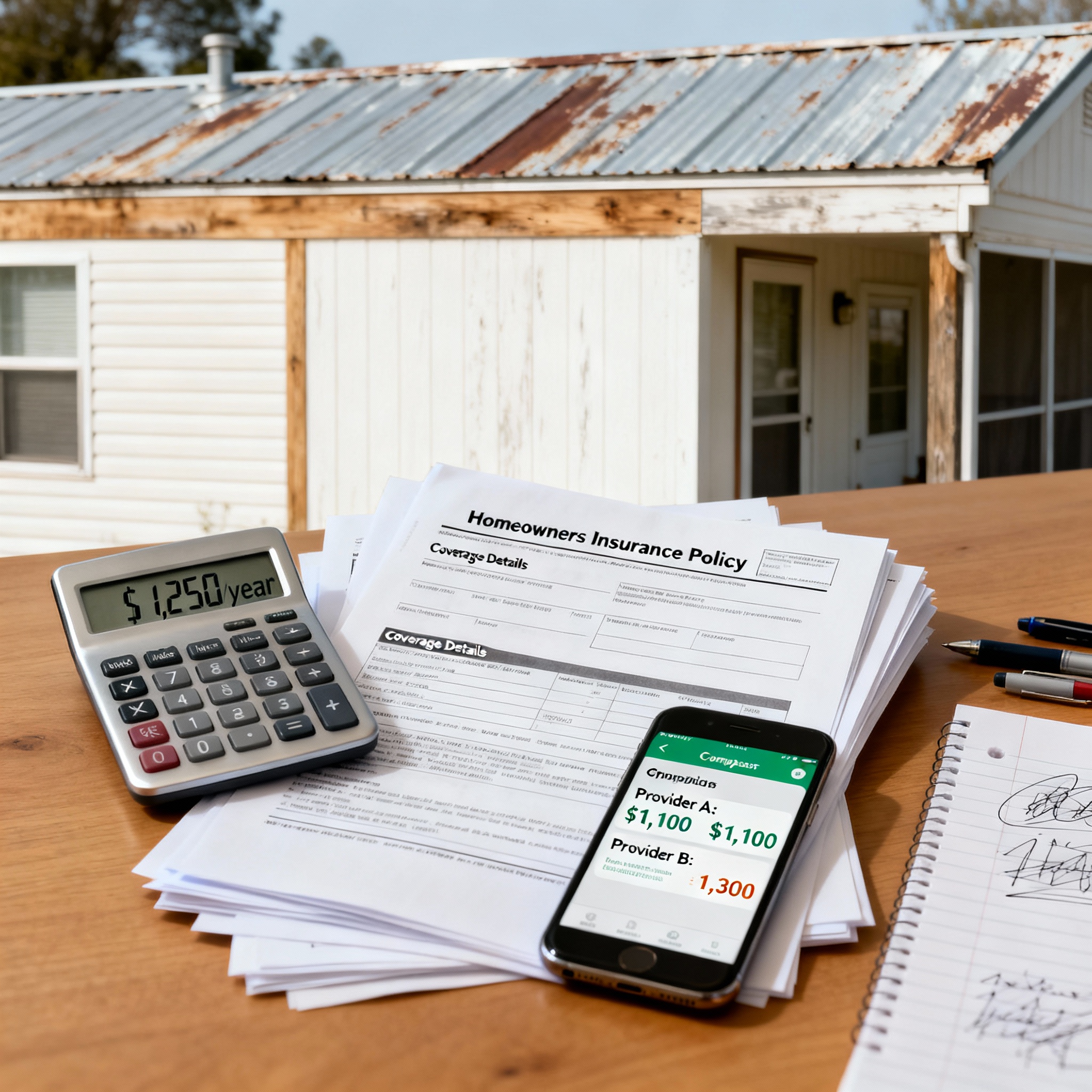
Gathering mobile home insurance quotes? Here’s what insurers ask about, how coverage usually works for HUD-code homes, and how to compare policies fairly, based on official sources checked in October 2026.
Blake Insurance Group is an independent agency serving clients by phone, email, and online in states where we are licensed; coverage depends on the insurer, the policy, and underwriting.
Request a quote
Tell us what you would like to cover, and a licensed agent will follow up with options available to us. Submitting the form does not bind coverage.
If the form does not load, call 888-387-3687, Monday through Friday, 9:00 to 5:00, or email info@blakeinsurancegroup.com.
How manufactured home insurance works
Manufactured homes built since June 15, 1976, must meet HUD’s construction code, which HUD strengthened for wind after Hurricane Andrew. Wisconsin’s insurance regulator says manufactured home insurance works much like a homeowners policy but typically costs more, most policies pay actual cash value, and insurers may require approved tie-downs and anchors. FEMA advises checking strap tension and replacing worn or rusted straps.
Typical coverages
| Coverage | What it pays for | Typical amount |
|---|---|---|
| A, Dwelling | The house and attached structures | Full replacement cost |
| B, Other structures | Sheds, fences, detached garages | About 10% of A |
| C, Personal property | Your belongings | About 50% of A |
| D, Loss of use | Extra living costs after a covered loss | About 20% of A |
| E, Personal liability | Injuries and damage you cause to others | Often $100,000 or $500,000 |
| F, Medical payments | Small injury claims for guests | Often $1,000 per person |
Source: New Jersey DOBI and NAIC consumer guides. Your policy’s amounts may differ.
What isn’t covered
- Flood. Homeowners policies don’t cover flood; buy it through the NFIP or a private insurer.
- Earthquake. Commonly excluded; available as an endorsement or separate policy.
- Wear and tear. Maintenance problems and gradual deterioration aren’t covered.
- Sewer or drain backup. Limited or excluded unless you add an endorsement.
- Wind in some coastal areas. Sometimes excluded, requiring a separate wind policy.
Replacement cost vs. actual cash value
Replacement cost pays to repair or rebuild with materials of similar kind and quality. Actual cash value is replacement cost minus depreciation, so it often doesn’t pay enough to fully replace what you lost. Many policies pay replacement cost on the house and actual cash value on belongings unless you add replacement cost contents coverage. NAIC’s guide notes that if your dwelling limit falls below 80% of replacement cost, the insurer may reduce claim payments.
Flood coverage
Homeowners and renters policies don’t cover flood. Flood insurance comes from the National Flood Insurance Program (NFIP) or private insurers. Most NFIP policies take effect 30 days after purchase, with exceptions such as buying with a new mortgage. NFIP limits are $250,000 for a home’s structure and $100,000 for contents. Since Risk Rating 2.0, NFIP premiums reflect each property’s flood risk and rebuilding cost, and most annual increases are capped at 18%.
Owned land vs. a rented lot
Insurers ask whether a manufactured home sits on land you own or a rented lot in a community, whether it’s permanently installed on a foundation, and how it’s anchored. A home on a permanent foundation that you own with the land may qualify for broader homeowners-style coverage, while a home in a park may need a policy written specifically for manufactured homes. Community rules can also require liability coverage, so check your lot agreement.
How to compare quotes
- Set the dwelling limit at the cost to rebuild, not the market value.
- Quote the same coverage: limits, deductibles, and endorsements.
- Check deductibles, including wind, hail, or hurricane percentage deductibles.
- Ask about endorsements such as water backup and replacement cost contents.
- Check the insurer with your state insurance department and AM Best or Demotech.
- Ask about discounts for bundling, security systems, and roof upgrades.
Deductibles explained
Your deductible is what you pay before insurance pays on a claim. Most homeowners policies have an all-perils deductible, often a flat dollar amount, and many also have a separate wind, hail, or hurricane deductible stated as a percentage of the dwelling limit. A 2% wind deductible on a home insured for $300,000 means you pay the first $6,000 of a wind claim. Choosing a higher deductible lowers your premium but raises what you pay after a loss, so pick one you could cover from savings.
Endorsements to consider
- Water or sewer backup. Standard policies limit or exclude it; Maryland requires insurers to offer it.
- Scheduled personal property. Covers jewelry, art, and collectibles above standard sub-limits.
- Replacement cost contents. Pays to replace belongings without subtracting depreciation.
- Ordinance or law. Helps pay for code upgrades required when you rebuild.
- Extended or guaranteed replacement cost. Pays above your dwelling limit if rebuilding costs more than expected.
- Earthquake. Available as an endorsement or separate policy in many areas.
Liability and umbrella coverage
Personal liability coverage pays if you’re legally responsible for someone’s injury or property damage, including legal defense. Homeowners policies often come with $100,000 or $300,000 of liability, and many people choose more. An umbrella policy adds liability coverage above your home and auto policies; Triple-I says insurers generally want about $250,000 of auto liability and $300,000 of homeowners liability underneath.
If insurers won’t cover you
If regular insurers won’t cover your home, most states have a fallback. NAIC says 33 states have a FAIR plan or similar residual mechanism, and some coastal states run separate beach or windstorm plans. These plans usually offer more limited coverage, often without liability or loss of use, and can cost more, so they’re a last resort; an independent agent can also check surplus lines insurers.
How to file a claim
- Protect people and property first. Make temporary repairs to prevent more damage and keep receipts.
- Report the claim promptly to your insurer or agent; policies require prompt notice, and some states set deadlines (Florida, for example, now gives one year to report a new claim).
- Document everything with photos, video, and your home inventory.
- Keep receipts for extra living expenses if you can’t stay home.
- Get the adjuster’s estimate in writing and ask questions about anything you don’t understand.
- If you disagree, ask about the policy’s appraisal process and contact your state insurance department.
Questions to ask before you buy
- Which company issues the policy, and how is it rated?
- Is the dwelling covered for replacement cost, and is there extended replacement cost?
- Are belongings covered for replacement cost or actual cash value?
- What deductibles apply, including wind, hail, or hurricane?
- What discounts are available for bundling, alarms, or roof upgrades?
- How are claims reported, and what are the deadlines?
Checking a plan and insurer
- Insurer license. Confirm the insurer is licensed in your state.
- Financial strength. Check AM Best or Demotech, depending on the insurer.
- Complaints. NAIC’s Consumer Insurance Search shows complaint data.
- Exclusions. Read what isn’t covered, especially flood and water damage.
- Deductibles. Know every deductible that applies.
What an independent agency does
An independent insurance agency is licensed to sell policies from several insurance companies. Instead of quoting one company's products, an independent agent can compare options from the insurers the agency represents, explain the differences in coverage, and help you re-shop at renewal. The insurance company, not the agent, makes underwriting and claim decisions.
Blake Insurance Group is an independent agency. We work with clients by phone, email, and online in states where we are licensed, and we will tell you which insurers we can quote for your situation.
How we work
Blake Insurance Group serves clients by phone, email, and online in states where we are licensed. The insurers and plans we can offer depend on our appointments and your location; a company named on this page may not be available through us.
How to verify an insurer or agency
Before buying through any website or app, confirm who is selling you the policy and who will issue it:
- Find the licensed agency or insurer named in the site's footer, terms, or license page.
- Look up the agency or producer on your state insurance department's license search, or through the National Insurance Producer Registry (NIPR).
- Look up the insurer on your state insurance department's company search to confirm it is authorized in your state.
- Save the insurer's name and policy number once issued, since that is who handles claims.
A legitimate service will make this information easy to find. Be cautious if you cannot identify the licensed entity.
Sources
We checked the facts on this page against the sources below in October 2026. Plans, prices, and rules change, so confirm current terms before you buy.
- HUD: Office of Manufactured Housing Programs 50th anniversary
- Wisconsin OCI: Manufactured home insurance
- FEMA: Manufactured home tie-downs
- Maryland Insurance Administration: Homeowners insurance guide
- Triple-I: What is an umbrella liability policy?
- NAIC: FAIR plans
- Triple-I: Average premiums for homeowners and renters insurance by state, 2022 (NAIC data)
- NAIC: Homeowners insurance report (2022 data) release
- NAIC: A Consumer’s Guide to Home Insurance (2022)
- Alabama DOI: Homeowners insurance forms
- New Jersey DOBI: Insuring your home
- Triple-I: Inflation, replacement costs, and homeowners insurance (Dec 2025)
- Triple-I: Homeowners market shows early signs of stabilization (Dec 2025)
- AM Best: Ratings search
- NAIC: Consumer Insurance Search
What to have ready for a quote
These details help an agent quote accurately.
- Property address. And the year built, square footage, and construction type.
- Roof and systems. Roof age and material, plus electrical, plumbing, and heating updates.
- Current policy. Your declarations page, so quotes match your coverage.
- Claims history. Any losses in the last five years.
- Safety features. Alarms, sprinklers, and storm protection.
Mobile Home Insurance Quotes FAQs
Is mobile home insurance different from homeowners insurance?
It works similarly, but most policies pay actual cash value and may require tie-downs.
What is the HUD code?
Federal construction standards for manufactured homes built since June 15, 1976.
Does it cover moving the home?
Only with optional trip or transportation coverage.
Does it cover flood?
No.
Related guides
Important information
Independent agency. Blake Insurance Group LLC is an independent insurance agency. Licensed insurance producer NPN 16117464. Licensed states: AZ, AL, TX, CA, NY, OH, FL, NC, VA, GA, OK, NM, IA, KS, MI, NE, SC, SD, WV, IL, NJ, PA, TN, and WA. Which insurance companies we can quote depends on our current appointments, the product, and your state. Mentioning a company on this page does not mean we represent it.
Company names. Company names are trademarks of their owners. Blake Insurance Group isn’t affiliated with the companies described unless a partner link says so, and a company named here may not be available through us. Facts checked October 2026.
State figures. NAIC average premiums are from 2022 data reproduced by Triple-I and aren’t quotes; prices have changed since. State rules were checked against official sources in October 2026.
Coverage terms. Descriptions are general. The policy contract controls what is covered.
Availability. Coverage, prices, and eligibility vary by company, state, and applicant, and are subject to underwriting. The issued policy controls.
Your next step
Request a quote, and a licensed agent will compare options available to us.




