Quick facts before you make a Medicare enrollment decision
There is more than one enrollment clock
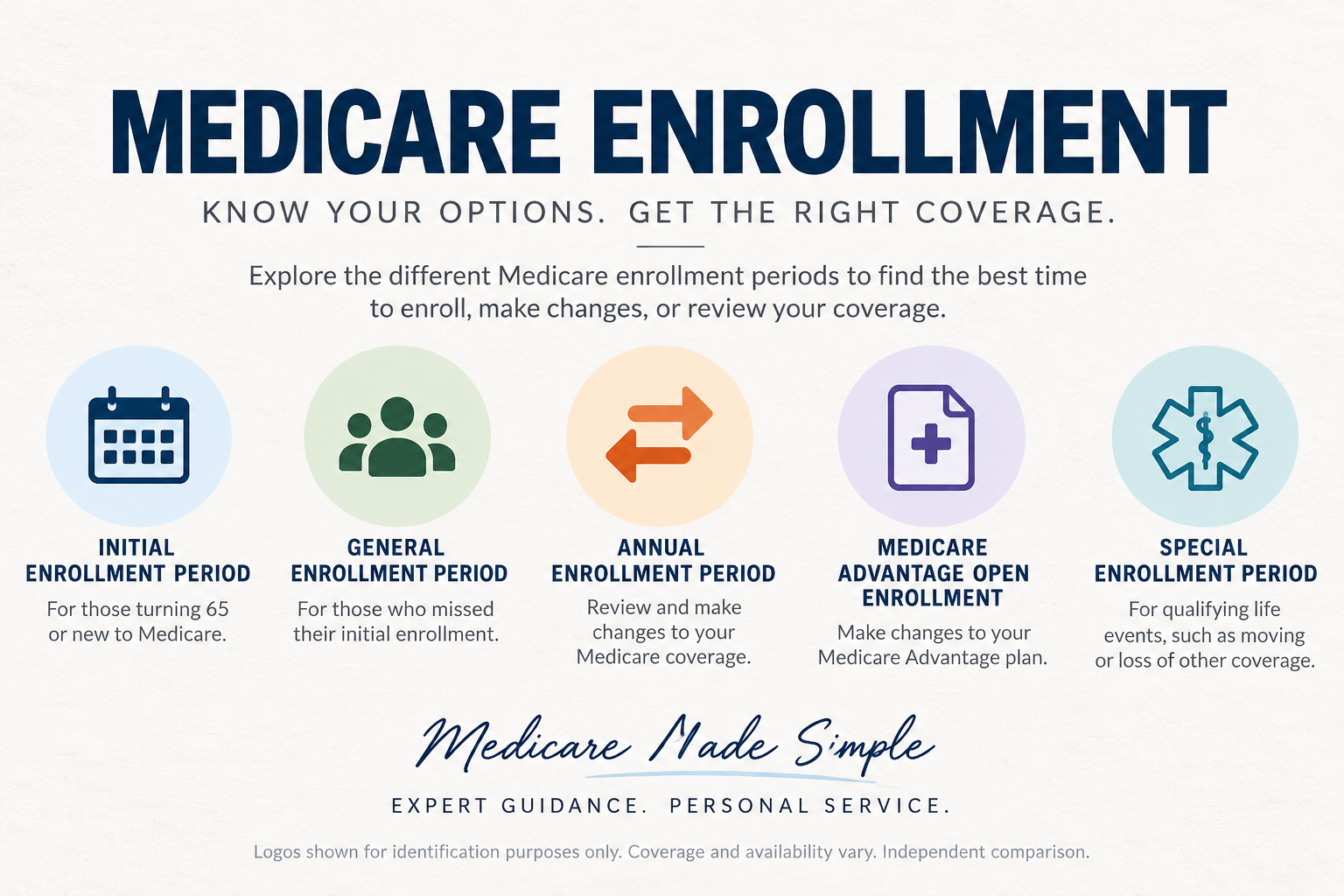
Initial, general, annual, Medicare Advantage open, special, and Medigap enrollment periods have different triggers and different purposes. The date alone does not tell you which one applies.
Part A and Part B come before most plan choices
Medicare Advantage generally requires both Part A and Part B. A stand-alone Part D drug plan has its own eligibility and timing rules. Confirm your Medicare start dates before comparing plan names.
The exact plan record matters
Service area, provider network, formulary, pharmacy terms, benefits, costs, and rules can differ by plan, county, and plan year. A carrier name is not a complete comparison.
Medicare enrollment is not simply a form to complete once. It is a sequence of decisions that may begin with Social Security or the Railroad Retirement Board, then continue with a health-plan or drug-plan choice when that is appropriate. Some people are enrolled in Part A and Part B automatically; others need to take action. Some people have active employer coverage and may have a Special Enrollment Period, while others may need to decide during their Initial Enrollment Period. A person who is already enrolled may only be reviewing annual plan changes.
For that reason, it helps to write down the purpose of the review before looking at benefits. Are you becoming eligible for Medicare? Adding Part B after work coverage? Reviewing a Medicare Advantage plan for the next year? Returning to Original Medicare? Replacing or adding prescription drug coverage? Exploring Medicare Supplement Insurance? The answer narrows the relevant rules and prevents a plan comparison from getting ahead of eligibility and timing.
It is also important not to treat an online inquiry, a saved quote, an agent conversation, or an application draft as proof that coverage has been selected or is active. Enrollment has to occur through the applicable authorized process, within an available enrollment period, and in accordance with the plan’s confirmation and effective-date rules. Keep copies of confirmations and any final enrollment materials.
Know which Medicare enrollment period actually applies
Enrollment periods overlap in everyday conversation, which is why terms such as “open enrollment” can be confusing. The Initial Enrollment Period commonly relates to first eligibility for Medicare. The General Enrollment Period is a route for certain people who missed Part B or premium Part A enrollment. The fall Open Enrollment Period is about health and drug plan changes for the following year. The Medicare Advantage Open Enrollment Period is a more limited change window for people who are already enrolled in Medicare Advantage. Special Enrollment Periods depend on specific qualifying circumstances.
The table below is a planning tool, not an eligibility determination. It intentionally avoids treating a broad timeline as a substitute for the exact Medicare rule that applies to the person. If you are close to a deadline, have employer or retiree coverage, recently moved, lost coverage, receive Medicaid or Extra Help, or have another major change, confirm the applicable period before taking action.
| Enrollment period | General timing | What it may allow | Important planning point |
|---|---|---|---|
| Initial Enrollment Period | Generally a 7-month period around age 65: the 3 months before the birthday month, the birthday month, and the 3 months after. | For eligible people, a first opportunity to sign up for Part A and Part B. Health and drug plan timing is related but has separate details. | Coverage start dates can depend on when the person signs up. Do not assume that delaying action has no consequence. |
| General Enrollment Period | January 1 through March 31 each year. | May allow sign-up for Part B and premium Part A when another enrollment route is not available. | Coverage generally starts the month after sign-up. Late-enrollment consequences can apply unless a Special Enrollment Period applies. |
| Medicare Open Enrollment | October 15 through December 7 each year. | May allow Medicare Advantage and Part D changes, including changes between Original Medicare and Medicare Advantage. | The plan must receive the enrollment request by the deadline. Changes generally take effect January 1 of the next year. |
| Medicare Advantage Open Enrollment Period | January 1 through March 31 for people already enrolled in Medicare Advantage. | May allow a switch to another Medicare Advantage plan or a return to Original Medicare, with a separate drug-plan decision when appropriate. | It is not a general annual shopping period for everyone. Confirm the person’s current coverage before relying on it. |
| Special Enrollment Period | Timing varies by the qualifying event and the applicable rule. | May allow changes following circumstances such as a move, a change or loss of certain coverage, Medicaid, or Extra Help. | The event, dates, documentation, plan type, and location can all affect whether and when the opportunity exists. |
| Medigap Open Enrollment Period | A one-time 6-month period starting the first month a person has Part B and is 65 or older. | For eligible people, an important window to consider Medicare Supplement Insurance with Original Medicare. | This is not the same as fall Medicare Open Enrollment. State rules and individual circumstances can also affect options outside this period. |
Employer coverage is one reason an individualized timing check is important. Active job-based coverage, retiree coverage, COBRA, Marketplace coverage, and coverage through a spouse are not automatically treated the same way for Medicare enrollment. The employer size, the reason for Medicare eligibility, the type of coverage, and the employment end date can matter. Before delaying Part B or leaving existing coverage, verify the details with the employer benefits administrator and the appropriate Medicare or Social Security resource.
Special Enrollment Periods should receive the same care. A move, a change in a plan’s service area, the loss of certain coverage, a change in Medicaid or Extra Help status, or another qualifying event can create an opportunity, but not every life event creates the same window. Keep relevant notices, dates, and address information. Those details make it easier to ask the right question and avoid relying on a generalized deadline.
After Parts A and B, compare the coverage path—not just the plan name
Once Part A and Part B are in place, a person may be comparing different ways to organize Medicare coverage. Original Medicare is Part A and Part B. Some people who use Original Medicare also review a stand-alone Part D drug plan and may consider Medicare Supplement Insurance, commonly called Medigap, to help with certain out-of-pocket costs. Medicare Advantage is an alternative way to receive Medicare-covered benefits through a private plan and generally requires both Part A and Part B.
Neither path should be reduced to a marketing label, a monthly premium, or a neighbor’s recommendation. The meaningful comparison uses the same personal information for every exact plan or policy being reviewed: permanent address, doctors, hospitals, preferred pharmacies, prescription list, expected care needs, budget priorities, travel pattern, and coverage already in place. That record gives the person a way to compare actual tradeoffs rather than assumed ones.
| Review area | Question to answer | What to check | Why a general answer is not enough |
|---|---|---|---|
| Residence and service area | Is the exact plan offered at the person’s permanent address? | Current service area, residence requirements, county, and the enrollment period that applies. | A plan may be advertised in a state or region without being available to every address. |
| Doctors, hospitals, and care locations | Can the person use the clinicians and facilities that matter? | The exact plan’s current provider directory, office locations, facility participation, referral rules, and authorization requirements. | A provider can participate with one plan or network and not another, even under the same carrier name. |
| Prescriptions and pharmacies | How will each current prescription be handled? | Formulary status, tier, restrictions, preferred pharmacy status, deductible, quantity limits, and cost sharing. | A drug search result without the exact plan and pharmacy context can miss meaningful conditions. |
| Costs and protections | What costs could apply when care or prescriptions are used? | Premiums, deductibles, copayments, coinsurance, maximum out-of-pocket information where applicable, and policy or plan documents. | The lowest displayed premium does not, by itself, show the full cost structure for a particular person. |
| Timing and continuity | When can the change take effect, and what happens to current coverage? | Enrollment window, requested effective date, current coverage, drug coverage, Medigap considerations, and written confirmation. | Changing one part of Medicare can affect another decision. Do not cancel existing coverage based only on a preliminary comparison. |
Plan documents are the comparison record. For a Medicare Advantage or Part D plan, that can include the current Summary of Benefits, Evidence of Coverage, provider directory, formulary, pharmacy information, and enrollment materials. For a Medigap policy, read the policy outline and the information describing enrollment protections and terms that apply in the relevant state. A page like this can help frame the questions, but it cannot replace the documents for the exact plan or policy under consideration.
When continuity of care is especially important, document the check. Write down the full plan name, the provider or facility location, the pharmacy, the date, and the source used to confirm the information. If a medication, specialist, facility, or expected treatment is a deciding factor, confirm it in the current materials and with the provider or plan when appropriate. Network and formulary information can change, and an enrollment decision should not rely on a remembered conversation from a prior year.
Use fall Open Enrollment as a plan-year review, not a last-minute switch
For people who already have Medicare health or prescription drug coverage, the fall Open Enrollment Period is an opportunity to review whether the next year’s plan still fits. Medicare plans can change their costs, benefits, provider or pharmacy arrangements, formularies, and administrative rules from one plan year to the next. If the current plan remains offered and still fits the person’s needs, a change may not be necessary. But that conclusion should follow a review of the next year’s documents, not an assumption.
Start with the Annual Notice of Change and the next year’s Evidence of Coverage when they become available. Then compare the person’s doctors, hospitals, prescriptions, pharmacies, and anticipated use of care against the exact 2027 options available at the permanent address. A review is more useful when it begins before October 15, so the person has time to collect missing records, ask questions, and avoid choosing under deadline pressure.
A simple annual-review sequence
- Read next year’s notices. Identify any changed benefits, coverage rules, drug terms, pharmacies, provider access, premiums, or cost-sharing that could affect the person.
- Update the personal record. Add any new doctors, specialists, hospital preferences, prescriptions, strengths, dosing, pharmacy changes, and expected procedures.
- Compare like with like. Use the exact same address, care list, drug list, and pharmacy list for every plan being considered.
- Check the transition impact. If moving from Medicare Advantage to Original Medicare, or the other way around, review drug coverage and Medicare Supplement considerations before submitting a request.
- Keep the final confirmation. Treat the confirmed effective date and final plan materials as the record of the outcome, not an informal comparison or an incomplete form.
Annual review is also the time to separate an immediate concern from a broad preference. If a prescription has changed, start with the formulary and pharmacy question. If a clinician or hospital is central to care, start with the exact network and location. If budget is the concern, look at the entire cost structure and expected use of care rather than only one headline number. That focus makes it easier to explain why a particular plan is under consideration.
For the 2027 plan year, the fall period is October 15 through December 7, 2026, for eligible changes that generally take effect January 1, 2027. Medicare Advantage Open Enrollment from January 1 through March 31 is not a substitute for an early, careful fall review because it is limited to people already enrolled in Medicare Advantage and allows only certain changes. Do not wait for that period unless you have confirmed it is relevant to your current coverage.
Prepare the facts before requesting Medicare enrollment help
A guided review works best when it begins with complete information. That does not mean you need to predict every future medical need. It means the comparison should use the information that is known today, the coverage date that matters, and the care relationships that are important to preserve. Accurate details also make it less likely that a plan is evaluated for the wrong county, pharmacy, physician office, drug strength, or enrollment period.
- Your Medicare card or the Part A and Part B effective dates, if already available.
- The reason for the review: first eligibility, work coverage ending, an annual plan review, a move, a coverage change, or another possible special circumstance.
- Your permanent address and any known move date, because Medicare Advantage plan availability is address-specific.
- A current list of doctors, specialists, hospitals, therapy providers, laboratories, and other care locations that are important to you.
- A medication list with drug name, strength, dosage form, frequency, and preferred pharmacy.
- Current plan or policy documents, including the Annual Notice of Change, Evidence of Coverage, Medicare card, and any notices about employer, COBRA, retiree, Medicaid, or other coverage.
- The date you want coverage to begin and any deadline that could affect the decision.
- Your priorities, such as provider access, prescription handling, monthly budget, total cost exposure, travel, or an expected procedure.
Use the information in two stages. First, identify the enrollment period and coverage objective. Second, review the actual plan or policy materials for the exact option available to the person. This approach is especially valuable for people who are still working or who are transitioning from another type of health coverage. The decision to delay Part B, enroll in a plan, drop a plan, or move to a different coverage path should be based on current rules and the person’s actual coverage facts.
When you use a third-party plan website or a quote form, read the consent and authorization language before submitting personal information. A carrier-specific website may show only its own products and may not display every plan or coverage route available in an area. An independent review should make that limitation clear and should keep the person’s doctors, drugs, pharmacy, timing, and coverage objectives at the center of the conversation.
Medicare enrollment frequently asked questions
Is Medicare Open Enrollment the same as my first chance to get Medicare?
No. Initial Enrollment Period rules generally relate to first eligibility for Part A and Part B around age 65. Medicare Open Enrollment, October 15 through December 7 each year, is generally for health and prescription drug plan changes for the following year. The right period depends on whether you are new to Medicare, already enrolled, or experiencing a qualifying special circumstance.
Do I need to change Medicare coverage every fall?
Not necessarily. If your current plan is still offered and continues to fit your doctors, prescriptions, pharmacy, budget, and coverage goals, you may decide to keep it. The key is to review next year’s plan materials first because benefits, costs, formularies, networks, pharmacies, and rules can change from one year to the next.
Can I change a Medicare Advantage plan between January and March?
People who are already enrolled in Medicare Advantage may have a Medicare Advantage Open Enrollment Period from January 1 through March 31. It can allow a switch to another Medicare Advantage plan or a return to Original Medicare, subject to the applicable rules. It is not a general change period for every Medicare beneficiary, so confirm your current coverage and situation before relying on it.
What if I am still working when I become eligible for Medicare?
Do not assume that active employer coverage, retiree coverage, COBRA, Marketplace coverage, or coverage through a spouse is treated the same for Medicare timing. Confirm the type of coverage, employer details, and your Part B options with the employer benefits administrator and the appropriate Medicare or Social Security resource before deciding to delay or enroll.
Is the Medigap enrollment period the same as fall Open Enrollment?
No. The federal Medigap Open Enrollment Period is generally a one-time 6-month period that begins when a person is 65 or older and has Part B. It is distinct from the annual fall Medicare Open Enrollment Period. State rules and guaranteed-issue rights can affect options in particular circumstances, so review the current rules that apply to you.
Does completing a quote or review form enroll me in a Medicare plan?
No. A form can start a conversation or gather information for a comparison. It does not itself create Medicare coverage, switch an existing plan, guarantee plan availability, or establish an effective date. Enrollment occurs only through the applicable authorized process after the required information and confirmations are completed.
Start with the enrollment period, then make the coverage comparison
The most useful Medicare enrollment decision starts with timing and then tests the coverage against the person’s actual doctors, hospitals, prescriptions, pharmacies, location, and budget priorities. Gather the relevant documents, identify the enrollment period that applies, and compare current plan records before you submit a request or make a change.
A request for help does not enroll you in a Medicare plan or change your current coverage. Eligibility, availability, enrollment, and effective dates must be confirmed through the applicable process.