Long-Term Care Insurance Arizona: Compare Traditional Coverage, Hybrid Policies, Home Care Benefits, Costs, and Planning Options
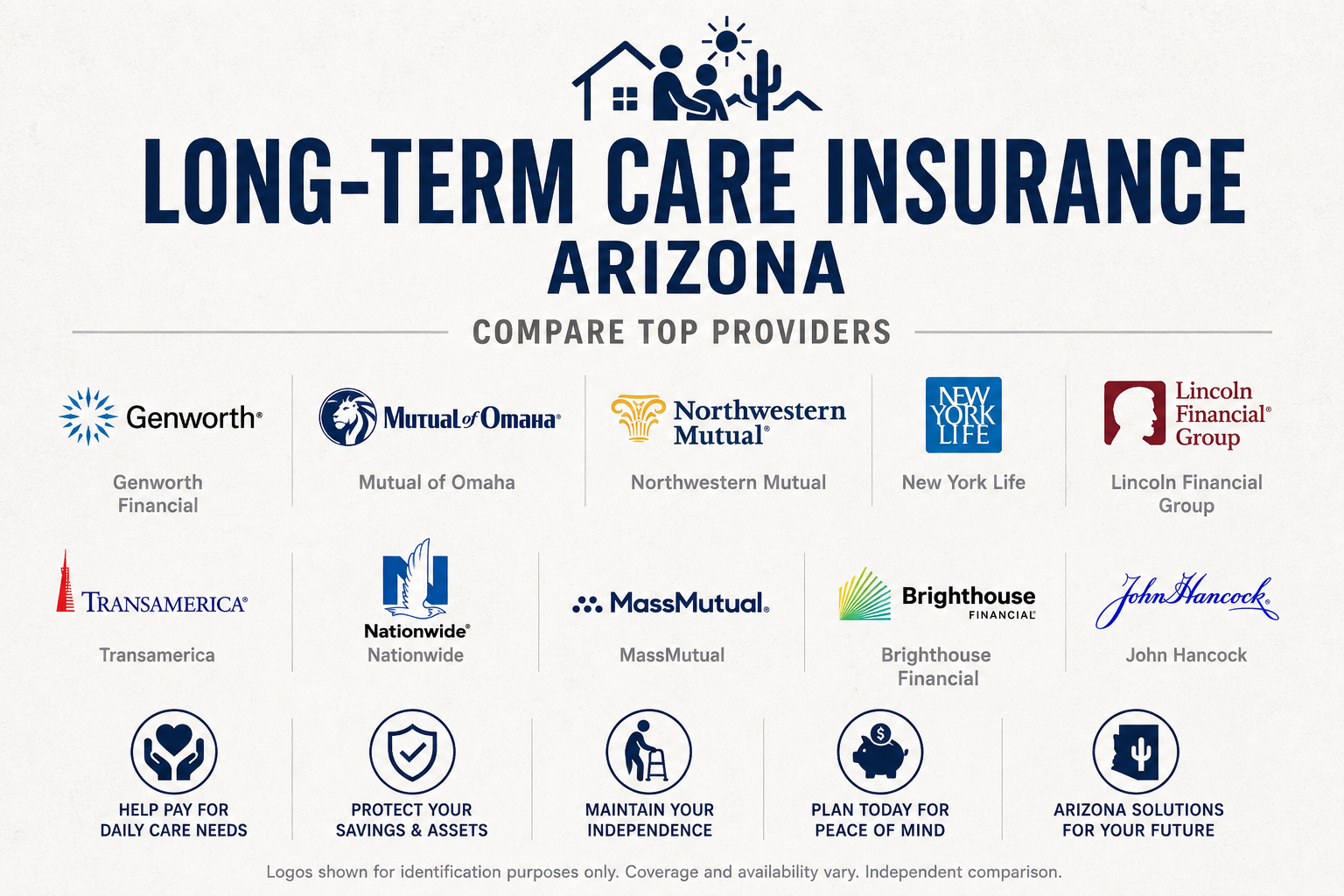
Long-term care insurance in Arizona can help eligible policyholders pay for qualifying care when a chronic illness, physical limitation, cognitive impairment, or age-related condition creates a need for ongoing assistance. Depending on the policy, benefits may support care at home, in an adult day setting, in assisted living, through hospice, or in a nursing facility.
Long-term care is different from ordinary medical treatment. Health insurance and Medicare primarily address medical services, while long-term care often involves assistance with daily activities such as bathing, dressing, eating, toileting, continence, and transferring between a bed and chair. It may also involve supervision when a person has a severe cognitive impairment such as qualifying dementia or Alzheimer’s disease.
Arizona residents can approach this risk through traditional long-term care insurance, life insurance with long-term care or chronic illness benefits, asset-based or hybrid policies, personal savings, family caregiving, public benefits for eligible applicants, or a coordinated combination. Each approach has different premiums, guarantees, underwriting requirements, benefit triggers, tax considerations, and consequences if care is never needed.
The best time to explore coverage is generally before a major health event occurs. Long-term care insurance is medically underwritten. An applicant who already needs care or has certain diagnoses, functional limitations, medication histories, cognitive concerns, or pending procedures may have fewer options or may not qualify.
This page provides general insurance education. Long-term care, tax, Medicaid, estate-planning, and legal decisions should be coordinated with appropriately qualified professionals who can evaluate your complete circumstances.
Quick facts: Arizona long-term care insurance in 2026
Long-term care insurance must be evaluated by benefit trigger, covered setting, daily or monthly benefit, benefit period, elimination period, inflation protection, exclusions, and premium structure.
| Planning point | What it means | Why it matters |
|---|---|---|
| Coverage is medically underwritten | Health, medications, diagnoses, cognitive history, mobility, and current care needs can affect eligibility. | Waiting until care is needed may eliminate private insurance options. |
| Benefits require a trigger | Tax-qualified policies commonly require an inability to perform at least two activities of daily living or a severe cognitive impairment. | A diagnosis by itself may not automatically qualify for payment. |
| Medicare is limited | Medicare does not generally pay for ongoing custodial long-term care when that is the only care needed. | Retirees should not treat Medicare as a complete long-term care funding plan. |
| Care settings vary | Policies may cover home care, adult day care, assisted living, hospice, respite care, and nursing facilities. | Verify that preferred care settings and providers meet the policy’s definitions. |
| Inflation matters | Inflation protection can increase available benefits over time. | A benefit purchased years before a claim may otherwise lose substantial purchasing power. |
| Premiums are not always guaranteed | Traditional policy premiums may be subject to approved class-wide increases. | Buyers should evaluate affordability today and at potential future premium levels. |
What can long-term care insurance cover?
Long-term care insurance is designed to help with qualifying care and support rather than ordinary doctor visits, surgery, prescription drugs, or acute hospital treatment. Covered services depend on the contract, but modern comprehensive policies may include several care settings so the policyholder can receive assistance in the least restrictive appropriate environment.
Home care
Many Arizona residents want to remain at home for as long as safely possible. Eligible home-care benefits may help pay for a home health aide, personal care, homemaker services, skilled nursing, therapy, or other services defined by the policy. Some plans may include care coordination, caregiver training, home modifications, medical alert systems, durable equipment, or respite services.
Policy definitions matter. A plan may require care from a licensed agency, approved provider, or person who is not an immediate family member. Informal care from relatives may not qualify unless the policy specifically allows it. Reimbursement policies generally require proof of eligible expenses, while cash or indemnity-style benefits may operate differently.
Assisted living and residential care
Assisted living communities combine housing with personal support. Residents may receive help with bathing, dressing, medication reminders, meals, mobility, housekeeping, and supervision. Long-term care insurance may reimburse qualifying assisted living expenses up to the policy’s limit, but room, board, entrance fees, and facility charges should be reviewed carefully.
Nursing facility care
Nursing facilities provide higher levels of support and supervision. Long-term care insurance may help with qualifying skilled, intermediate, or custodial care delivered in an eligible facility. The facility must satisfy the policy’s definition, licensing requirements, and plan-of-care provisions.
Adult day care, respite, and hospice
Adult day programs can provide supervision, activities, meals, and certain services while allowing a person to continue living at home. Respite benefits may give an unpaid family caregiver temporary relief. Hospice benefits may apply when the policyholder meets the plan’s eligibility and provider requirements. These benefits can help support both the person receiving care and the family coordinating it.
| Care setting or service | Possible support | What to verify |
|---|---|---|
| Care at home | Personal care, homemaker help, home health aides, skilled services, and care coordination. | Provider eligibility, family caregiver rules, covered tasks, and documentation. |
| Adult day care | Supervision, activities, meals, and support during part of the day. | Program licensing, daily limits, transportation, and plan-of-care requirements. |
| Assisted living | Housing-related care, help with daily activities, meals, and supervision. | Eligible facility definition, benefit amount, room and board, and excluded charges. |
| Nursing facility | Qualifying custodial, intermediate, or skilled nursing care. | Facility eligibility, benefit trigger, daily or monthly maximum, and elimination period. |
| Respite care | Temporary care that provides relief for an unpaid caregiver. | Annual maximum, approved providers, frequency, and whether the elimination period applies. |
| Hospice care | Qualifying comfort-focused care and support. | Provider qualifications, eligibility, benefit limit, and coordination with health coverage. |
Traditional, hybrid, and asset-based long-term care options
Traditional long-term care insurance
Traditional long-term care insurance is designed primarily to provide long-term care benefits. The policyholder pays an ongoing or limited-payment premium in exchange for a defined pool of benefits. The available pool is determined by the monthly or daily benefit, benefit period, and inflation option.
Traditional coverage can offer substantial leverage for the premium, but it generally does not provide a death benefit if care is never needed. Premiums may also be subject to approved class-wide increases. Buyers should evaluate the carrier’s options for reducing benefits if a future premium increase creates affordability concerns.
Hybrid life and long-term care insurance
A hybrid policy combines life insurance with long-term care or qualifying chronic illness benefits. If the insured needs covered care, the policy may allow access to a portion of the death benefit or a separate benefit pool. If long-term care is not needed, a death benefit may remain for beneficiaries, subject to policy terms, withdrawals, loans, and benefits previously used.
Hybrid policies may appeal to people who dislike the use-it-or-lose-it nature of traditional coverage. Some offer single-premium or limited-payment designs, while others use ongoing premiums. Guarantees, cash value, surrender provisions, benefit extension, residual death benefits, and long-term care definitions vary considerably.
Life insurance with a chronic illness rider
A chronic illness rider can permit early access to qualifying life insurance benefits when the insured meets the rider’s trigger. It is not automatically equivalent to comprehensive long-term care insurance. Benefits may be discounted, limited to permanent conditions, based on a percentage of the death benefit, or subject to different tax and licensing treatment.
Annuity-based long-term care solutions
Certain annuities may provide enhanced benefits when qualifying long-term care is needed. These products involve insurance, liquidity, surrender, tax, and suitability considerations. They are not appropriate for every applicant and should be evaluated alongside available assets, income needs, emergency reserves, beneficiaries, and time horizon.
| Option | Potential advantage | Important tradeoff |
|---|---|---|
| Traditional LTC insurance | Coverage is designed specifically for long-term care and may provide substantial care benefits. | Premiums may increase, and there may be no death benefit if care is never needed. |
| Hybrid life/LTC policy | May provide long-term care benefits plus a remaining death benefit if care is not fully used. | Can require a substantial premium and may provide less care leverage than traditional coverage. |
| Life policy with chronic illness rider | Provides life insurance with potential early access after a qualifying chronic illness. | Definitions, benefit calculations, permanency requirements, and tax treatment can differ from LTC coverage. |
| Annuity with LTC benefits | May multiply qualifying benefits available from assets placed into the contract. | Liquidity, surrender charges, guarantees, taxation, and suitability require careful review. |
| Self-funding | Provides maximum flexibility and avoids insurance underwriting or premiums. | The household retains the full risk of care costs, longevity, market conditions, and inflation. |
How to design long-term care insurance benefits
Benefit amount
The monthly or daily benefit determines the maximum amount available for qualifying care during a covered period. A reimbursement policy generally pays eligible documented expenses up to that maximum. An indemnity or cash-style policy may pay a stated amount after requirements are met, regardless of the exact eligible expense, subject to the contract.
The benefit does not have to equal the complete cost of care. Some Arizona households use insurance to cover part of the anticipated expense while Social Security, pension income, retirement withdrawals, savings, or family support cover the balance. This can make the premium more manageable while still protecting a portion of retirement assets.
Benefit period and pool of money
The benefit period is often described in years, but many policies create a pool of money by multiplying the initial benefit by a stated duration. If actual eligible expenses are below the maximum, the pool may last longer. If the full maximum is used continuously, the pool may be exhausted according to the illustrated period.
Elimination period
The elimination period functions like a waiting period before benefits begin. It may be measured in calendar days or service days. Under a service-day provision, only days on which qualifying paid care is received may count. A 90-day elimination period can therefore take longer than 90 calendar days to complete if care is provided only several days per week.
Applicants should verify whether the elimination period applies once per lifetime, once per episode, or separately to different benefits. Some home-care or respite benefits may use a shorter period or no elimination period, while facility benefits follow the main waiting period.
Inflation protection
Inflation protection can increase the monthly benefit and total pool over time. Common structures may include simple increases, compound increases, future-purchase options, or another scheduled adjustment. Compound inflation protection may produce greater long-term growth but usually costs more.
The appropriate option depends partly on the applicant’s age and how long benefits may need to grow before a claim. A younger buyer may place more importance on automatic compound growth, while an older buyer may compare lower-growth or no-inflation designs with a larger starting benefit. The analysis should consider both affordability and purchasing power.
Shared care and survivorship features
Shared-care riders may allow spouses or eligible partners to access a combined pool according to the policy’s rules. Survivorship provisions may waive a surviving insured’s premium after stated conditions are met. These riders can provide flexibility but increase cost and should be compared with two separate policies.
| Design feature | Decision to make | Why it matters |
|---|---|---|
| Monthly benefit | Choose how much of the expected monthly care cost the policy should address. | A higher benefit increases protection and generally increases premium. |
| Benefit period | Select the intended duration or total pool of available benefits. | A longer period protects against a longer claim but costs more. |
| Elimination period | Decide how long expenses can be self-funded before benefits begin. | Service-day and calendar-day definitions can produce different waiting times. |
| Inflation option | Select how benefits may increase before and possibly during a claim. | Long delays between purchase and claim can erode a level benefit’s purchasing power. |
| Reimbursement or indemnity | Compare expense-based reimbursement with available cash or indemnity designs. | Documentation, payment flexibility, maximums, and premiums can differ. |
| Shared care | Determine whether eligible couples should share a combined benefit pool. | One person’s claim can reduce benefits available to the other. |
What affects long-term care insurance costs in Arizona?
There is no single Arizona long-term care insurance price. Premiums depend on the applicant’s age, health, sex where permitted, marital or partner status, benefit amount, benefit period, elimination period, inflation selection, policy type, riders, payment schedule, and insurer. Traditional and hybrid products should not be compared by premium alone because they solve the risk differently.
Age at application matters because older applicants generally face higher premiums and a greater likelihood of health conditions affecting underwriting. Applying earlier can improve eligibility and lower the initial premium, but it also means paying premiums for more years. Waiting reduces the payment period but increases the risk of higher cost or declining health.
Health history can result in a preferred rate, standard rate, modified offer, postponement, or decline. Insurers may review prescription databases, medical records, height and weight, mobility, memory, mental health, cardiovascular conditions, diabetes, neurological conditions, joint disorders, prior cancer, and other factors. Each carrier’s underwriting guidelines differ.
Couples or partners may qualify for discounts or shared-benefit options depending on the insurer. A discount should not be assumed to remain available if only one applicant is approved. Compare the combined premium, individual benefit pools, shared benefits, survivorship terms, and the effect of one person using a substantial portion of the shared pool.
Traditional long-term care premiums are generally intended to remain level but are not necessarily guaranteed. An insurer may request a class-wide increase, subject to regulatory review and applicable policy terms. Policyholders may be offered options such as paying the higher premium, reducing benefits, changing inflation protection, or modifying other features.
| Cost factor | Potential effect | Comparison step |
|---|---|---|
| Age | Premiums generally increase as the age at application increases. | Compare the cost of applying now with the underwriting risk of waiting. |
| Health and medications | Health history can change eligibility, rate class, or available benefits. | Provide complete information and compare carriers when appropriate. |
| Benefit amount and period | Larger monthly benefits and longer periods generally increase premium. | Insure the funding gap rather than automatically selecting maximum benefits. |
| Inflation protection | Stronger automatic growth usually increases the initial premium. | Compare starting benefits and projected future purchasing power. |
| Elimination period | A longer waiting period may reduce premium. | Confirm whether savings are sufficient to cover care during the waiting period. |
| Traditional or hybrid design | Traditional coverage and asset-based products use different premium and benefit structures. | Compare care benefits, guarantees, death benefits, liquidity, and surrender provisions. |
Arizona Long Term Care System, Medicare, Medicaid, and Partnership planning
Medicare and long-term custodial care
Medicare should not be treated as comprehensive long-term care coverage. Medicare may cover qualifying short-term skilled nursing or home health services when its medical, provider, and eligibility rules are satisfied. It generally does not pay for ongoing custodial care when help with daily activities or supervision is the only care needed.
Medicare Supplement insurance helps with certain cost-sharing for Medicare-covered services. It does not convert non-covered custodial care into a Medicare benefit. Medicare Advantage plans may offer limited supplemental services under specific conditions, but those benefits should not be treated as a substitute for comprehensive long-term care planning.
Arizona Long Term Care System
The Arizona Long Term Care System, commonly called ALTCS, is Arizona’s Medicaid program for qualifying individuals who need long-term services and supports. Eligibility generally involves medical or functional criteria as well as financial requirements. Covered services and settings depend on eligibility, assessment, program rules, and available providers.
ALTCS is not private long-term care insurance. Applicants must satisfy current program requirements, and eligibility rules involving income, resources, transfers, spouses, trusts, homes, and estate recovery can be complex. Families should obtain current guidance from the appropriate Arizona program and qualified legal or financial professionals rather than transferring assets based on general internet advice.
Arizona Partnership-qualified policies
Arizona participates in long-term care Partnership planning. A qualifying Partnership policy may provide dollar-for-dollar asset disregard based on benefits paid when the insured later applies for Medicaid long-term care. For example, if a qualifying policy pays a stated amount in benefits, a corresponding amount of otherwise countable assets may receive protection under applicable Partnership rules.
Partnership status does not automatically make someone eligible for ALTCS, eliminate income rules, guarantee coverage for every asset, or remove all estate-recovery considerations. The policy must satisfy applicable Partnership and inflation-protection requirements, and the applicant must still meet current medical and financial eligibility standards.
Tax-qualified long-term care insurance
Federally tax-qualified policies must satisfy statutory requirements involving benefit triggers, consumer protections, and other provisions. Benefits from qualifying policies may receive favorable federal tax treatment within applicable rules. Eligible premiums may be treated as medical expenses up to age-based annual limits, subject to federal tax law, itemization, adjusted-gross-income rules, self-employed deductions, business structure, and other requirements.
Tax limits and rules change. Do not purchase coverage solely because someone describes it as tax-deductible. Ask the insurer whether the policy is intended to be federally tax-qualified and consult a tax professional regarding your eligibility, deduction limits, benefit taxation, and business treatment.
| Funding source | Potential role | Important limitation |
|---|---|---|
| Private LTC insurance | Helps pay qualifying care expenses according to selected benefits. | Requires underwriting, premiums, benefit triggers, and policy compliance. |
| Hybrid insurance | Combines life insurance or another asset-based contract with care benefits. | Premium, liquidity, guarantees, surrender, and death benefits vary. |
| Medicare | May cover qualifying short-term skilled care and limited home health services. | Does not generally cover ongoing custodial long-term care. |
| ALTCS | Can provide long-term services and supports for qualifying Arizona applicants. | Medical, functional, financial, transfer, and program requirements apply. |
| Personal assets and income | Can pay for any desired care without insurance benefit triggers. | The household retains inflation, longevity, investment, and care-cost risk. |
| Unpaid family caregiving | Can support care at home and preserve financial resources. | May affect caregiver health, income, employment, availability, and family relationships. |
How long-term care insurance underwriting works
Long-term care underwriting evaluates both medical history and current functional independence. The application may ask about diagnoses, prescriptions, physicians, tests, surgeries, memory concerns, falls, mobility aids, driving, work status, daily activities, home care, facility use, and pending medical recommendations.
The insurer may request medical records, prescription history, a telephone or video interview, cognitive screening, financial information, or an in-person assessment. Applicants should answer completely and consistently. Omitting a diagnosis, medication, recommendation, or current limitation can delay underwriting and create problems after issuance.
Certain circumstances may result in postponement rather than a permanent decline. Examples can include recent surgery, an unresolved test, active physical therapy, a medication change, or a pending specialist evaluation. The carrier determines whether and when a new application can be considered.
Do not cancel an existing long-term care or life insurance policy until the replacement policy is issued, reviewed, accepted, and in force. A replacement can restart contestability provisions, create new exclusions, require new underwriting, change tax or Partnership status, and sacrifice valuable older policy features.
Request Arizona long-term care insurance options
Blake Insurance Group helps Arizona residents explore long-term care planning based on age, health, family circumstances, existing coverage, assets, income, desired care setting, and affordable premium. Traditional and hybrid products should be compared according to the actual benefits and guarantees—not simply by the lowest illustrated payment.
Before requesting options, consider how much monthly care expense you want insurance to address, how long you can self-fund an elimination period, whether inflation protection is important, and whether you prefer traditional coverage or a policy that may also provide a death benefit.
Submitting information does not guarantee eligibility, a specific premium, tax treatment, Partnership status, policy issuance, or benefits. Coverage is subject to application, underwriting, policy approval, payment, and the issued contract.
Arizona long-term care insurance FAQs
What does long-term care insurance cover in Arizona?
Depending on the policy, coverage may include qualifying care at home, adult day care, assisted living, respite care, hospice, and nursing facility services. Benefit triggers, provider requirements, elimination periods, limits, and exclusions apply.
Does Medicare cover long-term care?
Medicare does not generally cover ongoing custodial long-term care when assistance with daily activities or supervision is the only care needed. It may cover qualifying short-term skilled nursing or home health services when Medicare’s requirements are satisfied.
What triggers long-term care insurance benefits?
Federally tax-qualified policies commonly require certification that the insured cannot perform at least two of six activities of daily living without substantial assistance for an expected period, or that the insured has a severe cognitive impairment requiring substantial supervision. The policy controls the exact trigger.
What is an elimination period?
The elimination period is the waiting period before qualifying benefits begin. It may count calendar days or only days when eligible paid services are received. Review whether it applies once per lifetime, per claim episode, or differently by care setting.
Can long-term care insurance pay a family caregiver?
Some policies may permit payment for qualifying care provided by certain family members, while others exclude immediate family or require a licensed agency. Review the provider definition, plan-of-care rules, reimbursement requirements, and informal-care benefits.
What is an Arizona Partnership long-term care policy?
A qualifying Arizona Partnership policy may provide dollar-for-dollar asset disregard based on eligible benefits paid if the insured later applies for Medicaid long-term care. The applicant must still satisfy current ALTCS medical, functional, financial, and program requirements.
Can long-term care insurance premiums increase?
Traditional policy premiums may be subject to approved class-wide increases even when the individual policyholder’s health has changed. Hybrid products may offer stronger premium guarantees, but guarantees, payment schedules, and benefit terms vary by contract.
Can Blake Insurance Group help with long-term care insurance near me?
Yes. Blake Insurance Group can help eligible Arizona residents compare traditional, hybrid, and asset-based long-term care planning options based on health, age, budget, care preferences, and financial goals.
Independent agency: Blake Insurance Group LLC is an independent insurance agency and is not affiliated with AHCCCS, ALTCS, Medicare, Medicaid, the Internal Revenue Service, or any federal or Arizona government agency.
Licensing: Licensed insurance producer, NPN 16944666.
Important: Long-term care, life insurance, chronic illness, annuity, Partnership, and hybrid product availability varies by insurer, state, applicant, age, health, finances, and underwriting. Premiums, guarantees, benefit triggers, elimination periods, covered settings, providers, inflation options, exclusions, surrender values, death benefits, and tax treatment vary by contract. The issued policy and endorsements govern. This page provides general educational information and is not legal, tax, investment, Medicaid, Medicare, estate-planning, medical, or financial advice.
Public benefits: ALTCS, Medicaid, Medicare, tax, Partnership, transfer, estate-recovery, income, and resource rules can change. Confirm current requirements with the appropriate agency and qualified professional before taking action.




