Insurance in Augusta, Georgia: Compare Auto, Home, Renters, Landlord, Flood, and Business Coverage
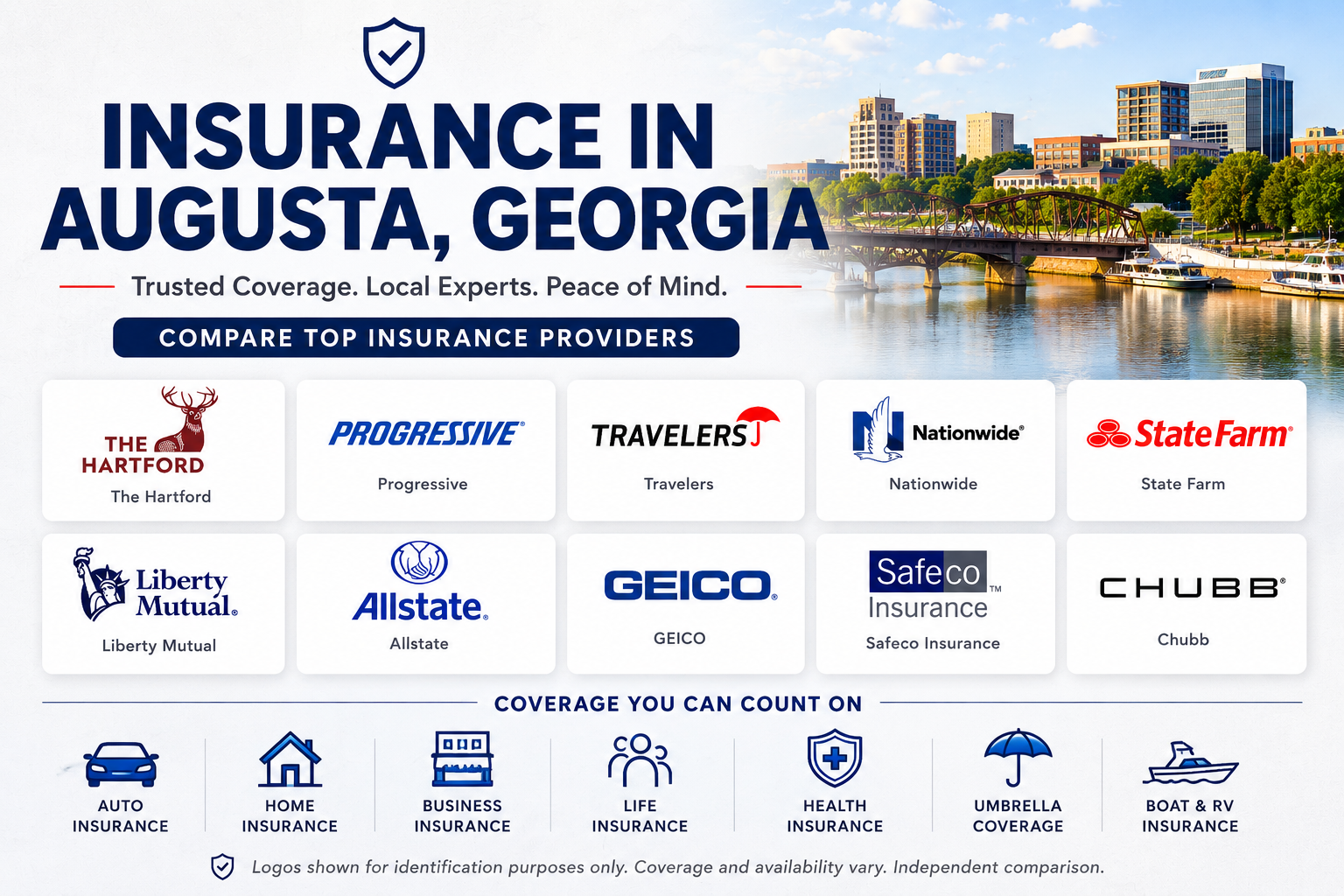
Insurance in Augusta, Georgia should reflect how you actually live, drive, own property, or operate a business—not merely satisfy a lender, landlord, or legal minimum. Augusta households may need protection for daily travel, family vehicles, homes near wooded areas, rental properties, personal belongings, liability claims, storm damage, flooding, and other losses that can disrupt finances. Local businesses may also need coverage for buildings, equipment, vehicles, employees, customers, professional services, and cyber risks.
Blake Insurance Group is an independent insurance agency that helps Augusta-area consumers compare coverage based on their needs. Instead of assuming one carrier or policy structure works for everyone, an independent review can consider the drivers, vehicles, property characteristics, deductibles, liability limits, claims history, mortgage requirements, household exposures, and available insurance markets. The objective is not simply to find a low initial price. It is to identify a policy that provides useful protection and is reasonably sustainable at renewal.
Augusta-Richmond County includes established neighborhoods, apartments, historic properties, suburban developments, rental homes, commercial corridors, military-connected households, college students, contractors, health care professionals, and growing businesses. Those differences matter. A homeowner near the Savannah River may have different flood concerns than a household farther inland. A renter near downtown may primarily need protection for personal property and liability. A landlord may need dwelling coverage, loss-of-rents protection, and premises liability. A contractor may need commercial auto, general liability, tools coverage, and workers’ compensation.
Insurance coverage is controlled by the issued policy, endorsements, exclusions, declarations, and insurer underwriting rules. Online information and quotes are estimates until the insurer accepts the application, required documentation and payment are received, and an effective date is confirmed.
Augusta insurance at a glance
A practical insurance plan often combines several policies. Auto insurance protects against covered vehicle-related losses and liability claims. Homeowners insurance can protect the dwelling, other structures, belongings, additional living expenses, and personal liability. Renters insurance can protect a tenant’s personal property and liability. Flood insurance addresses a hazard normally excluded from standard home policies. Umbrella insurance can provide additional liability protection over eligible underlying policies. Business insurance addresses commercial property, liability, employee, vehicle, and operational exposures.
| Insurance need | What it may protect | Important Augusta review point |
|---|---|---|
| Auto insurance | Liability, vehicle damage, medical-related benefits, uninsured motorists, towing, and rental reimbursement when selected. | Do not confuse Georgia’s legal minimum with the amount needed to protect income, savings, and assets. |
| Homeowners insurance | Dwelling, detached structures, personal property, loss of use, personal liability, and medical payments. | Review replacement cost, roof settlement, wind deductibles, water losses, trees, and flood exclusions. |
| Renters insurance | Personal belongings, additional living expenses, personal liability, and guest medical payments. | A landlord’s policy generally does not insure the tenant’s furniture, clothing, electronics, or personal liability. |
| Landlord insurance | Rental dwelling, other structures, landlord-owned property, premises liability, and covered loss of rents. | Occupancy, tenant type, vacancy, short-term rental activity, and property condition affect eligibility. |
| Flood insurance | Eligible flood damage to insured buildings and contents under the selected policy. | Standard homeowners and renters policies generally exclude flood caused by rising surface water. |
| Business insurance | Commercial property, liability, vehicles, employees, tools, equipment, income, and professional exposures. | Coverage should match the business activity, contracts, payroll, revenue, vehicles, and customer interaction. |
Insurance coverage options for Augusta residents
The best insurance portfolio depends on ownership, legal obligations, contracts, and the financial impact of a loss. A person who owns a home and two vehicles may need auto, homeowners, flood, and umbrella coverage. A tenant may need auto and renters insurance. A real estate investor may need landlord, commercial umbrella, flood, and builder’s risk coverage. A small business owner may need both personal and commercial policies because a personal auto or homeowners policy may not cover business-related exposures.
| Policy | Common buyer | Coverage decision to review |
|---|---|---|
| Personal auto | Drivers, vehicle owners, families, commuters, and students. | Liability limits, physical damage deductibles, uninsured motorist coverage, rental, and roadside assistance. |
| Homeowners | Owner-occupants with a house, townhome, or eligible residential property. | Dwelling replacement cost, roof coverage, contents valuation, water backup, liability, and scheduled valuables. |
| Condo | Condominium unit owners. | Master-policy responsibilities, interior improvements, loss assessment, contents, and personal liability. |
| Renters | Apartment, house, or condo tenants. | Replacement cost for belongings, liability limit, loss of use, and valuable-item sublimits. |
| Landlord or dwelling fire | Long-term rental owners and residential investors. | Correct occupancy, landlord furnishings, loss of rents, premises liability, vacancy, and tenant requirements. |
| Flood | Homeowners, renters, landlords, and businesses with flood exposure. | Building versus contents coverage, waiting period, deductibles, limits, and lender requirements. |
| Umbrella | Households seeking liability protection above eligible home and auto limits. | Required underlying limits, drivers, vehicles, rental property, watercraft, and excluded activities. |
| Business owners policy | Eligible offices, stores, service businesses, and small commercial operations. | General liability, commercial property, business income, equipment, cyber, and endorsements. |
Auto insurance in Augusta, Georgia
Georgia drivers must maintain liability insurance meeting the state’s minimum requirements. The commonly stated minimum limits are $25,000 of bodily injury liability per person, $50,000 per accident, and $25,000 of property damage liability. These limits may allow a driver to comply with state law, but they may be insufficient after a serious collision involving multiple injuries, a newer vehicle, a commercial vehicle, or extensive property damage.
Liability coverage does not pay to repair your own car. Collision coverage generally addresses covered impact damage to the insured vehicle, subject to the deductible. Comprehensive coverage generally addresses covered non-collision losses such as theft, vandalism, falling objects, animal impact, fire, and certain storm-related damage. A lender or leasing company commonly requires both collision and comprehensive coverage while it has a financial interest in the vehicle.
Augusta drivers should also review uninsured and underinsured motorist coverage. This coverage can help when an at-fault driver has no insurance or does not carry enough liability insurance to address a covered loss. The exact structure, limits, offsets, and available options depend on Georgia law and the selected policy, so the rejection or selection form deserves careful attention.
If a covered claim exceeds your liability limit, you may remain personally responsible for the unpaid portion. Higher limits and an umbrella policy may provide more meaningful asset protection for eligible households.
Homeowners insurance in Augusta
Homeowners insurance can protect the house, attached structures, detached structures, belongings, additional living expenses, personal liability, and guest medical payments when a loss is covered. The dwelling limit should reflect the estimated cost to rebuild the home using current labor and materials—not the home’s market value, land value, tax assessment, or remaining mortgage balance.
Augusta homeowners should review wind and storm damage, roof settlement, tree damage, water backup, service lines, equipment breakdown, ordinance or law coverage, and flood exclusions. Policies can differ significantly in how roofs are valued after a loss. Some provide replacement-cost treatment when eligibility requirements are met, while others may settle older roofs using actual cash value, a roof-payment schedule, or a percentage-based limitation.
Personal property may also be insured on a replacement-cost or actual-cash-value basis. Replacement-cost coverage can help replace covered belongings with new property of like kind and quality, subject to policy terms. Actual cash value generally accounts for depreciation. Jewelry, firearms, art, collectibles, business property, money, watercraft, and other categories may have special limits that require scheduling or endorsements.
| Coverage area | What to examine | Why it matters |
|---|---|---|
| Dwelling | Replacement-cost estimate, square footage, construction, finishes, additions, and attached features. | An outdated dwelling limit can leave a homeowner underinsured after a major loss. |
| Roof | Age, material, condition, settlement method, wind deductible, and cosmetic-damage limitations. | Roof claim payments can vary substantially by endorsement and roof age. |
| Water losses | Sudden plumbing loss, water backup, seepage, maintenance, flood, and service-line coverage. | Different types of water damage are treated differently by insurance policies. |
| Personal property | Replacement cost, inventories, special limits, off-premises coverage, and high-value items. | Standard sublimits may not fully protect valuable or specialized belongings. |
| Liability | Visitors, pets, pools, trampolines, rental activity, household employees, and property conditions. | A serious injury claim can exceed a low homeowners liability limit. |
| Loss of use | Time needed to rebuild, temporary housing costs, pet boarding, and additional living expenses. | Major repairs can make a home uninhabitable for an extended period. |
Photograph rooms, record serial numbers, retain receipts for significant purchases, and store a copy securely away from the property. A current inventory can make it easier to document covered belongings after a theft, fire, or severe storm.
Renters, condo, and landlord insurance in Augusta
Renters insurance
A landlord’s insurance generally protects the building and the landlord’s interests—not the tenant’s clothing, furniture, electronics, kitchenware, or personal liability. Renters insurance can provide personal-property coverage, additional living expenses after a covered loss, personal liability, and medical payments to others. Tenants should estimate the cost to replace everything they own rather than selecting a limit based only on major electronics or furniture.
Condo insurance
Condo owners need to coordinate their HO-6 policy with the condominium association’s master policy and governing documents. The unit owner may be responsible for interior walls, flooring, cabinets, fixtures, improvements, personal property, deductibles assessed by the association, and certain loss assessments. The master policy should be reviewed before choosing the building-property limit.
Landlord insurance
A home converted from owner occupancy to rental use generally needs a landlord or dwelling-fire policy rather than a standard owner-occupied homeowners policy. Landlord coverage may address the building, other structures, landlord-owned appliances or furnishings, premises liability, and covered loss of rental income. Tenant-caused damage, intentional acts, wear and tear, maintenance, vacancy, and short-term rental activity require careful review because coverage can be limited or excluded.
A renters-insurance requirement can help tenants protect their property and maintain personal liability coverage, but it does not replace the landlord’s own property and liability insurance.
Flood insurance and Augusta-Richmond County property risk
Standard homeowners, renters, condo, and commercial property policies generally exclude flood caused by rising or overflowing surface water. Augusta’s location along the Savannah River, local waterways, drainage systems, low-lying areas, and storm patterns make address-specific flood review important. A property does not need to be directly beside a river to experience flooding from heavy rainfall, drainage backup, runoff, or overflowing water.
Augusta-Richmond County provides floodplain-management resources and directs property owners to FEMA and local mapping tools. A flood-zone designation can influence lender requirements, but it should not be treated as a complete prediction of whether flooding can occur. Flooding can happen outside mapped Special Flood Hazard Areas, and maps can change as drainage, construction, topography, and flood studies are updated.
Flood insurance may be available through the National Flood Insurance Program or private insurers, depending on the property and market. Compare building and contents limits, deductibles, exclusions, basement or below-grade limitations, loss-settlement terms, waiting periods, additional living expense provisions, replacement-cost requirements, and lender acceptance. Renters can often purchase contents-only flood coverage, while landlords and homeowners may need separate building and contents limits.
| Question | What to review | Why it matters |
|---|---|---|
| Is the property in a mapped flood zone? | FEMA map, local floodplain information, lender determination, and elevation data. | The designation may affect loan requirements and pricing but does not identify every flood exposure. |
| Who needs building coverage? | Homeowner, landlord, condo association, commercial owner, or lender requirements. | The party responsible for the structure should verify that the correct interest is insured. |
| Who needs contents coverage? | Homeowner, tenant, landlord, or business personal property. | A building policy may not cover another party’s furniture, equipment, inventory, or belongings. |
| Is there a waiting period? | Requested effective date, closing date, lender exception, and policy rules. | Flood coverage often cannot be purchased after a storm is already threatening the area. |
A homeowners policy may cover certain water losses, such as a sudden covered plumbing event, while excluding rising surface water. The cause of the damage—not simply the presence of water—can determine which policy may respond.
Business insurance in Augusta, Georgia
Augusta businesses range from contractors, restaurants, retailers, offices, consultants, landlords, transportation companies, health care operations, beauty professionals, and home-based businesses to larger commercial organizations. Each industry creates a different combination of property, liability, employee, vehicle, professional, contractual, and cyber exposures.
A business owners policy may combine commercial property and general liability for eligible small businesses. Commercial property can protect covered buildings, equipment, furniture, inventory, and other business property. General liability can address covered claims involving bodily injury, property damage, and certain personal or advertising injuries. Business income coverage may help replace qualifying lost income and continuing expenses when operations are suspended because of a covered direct physical loss.
Georgia businesses with three or more employees generally must maintain workers’ compensation insurance, including qualifying full-time, part-time, and seasonal workers. Requirements can be more complicated for contractors, corporate officers, limited-liability-company members, subcontractors, and multistate operations. A business should confirm its obligations with qualified insurance and legal professionals rather than assuming a worker’s independent-contractor label removes every exposure.
| Coverage | Common exposure | Who should review it |
|---|---|---|
| General liability | Customer injury, property damage, completed operations, and certain advertising claims. | Contractors, retailers, offices, restaurants, landlords, and service businesses. |
| Commercial property | Buildings, equipment, inventory, furniture, improvements, and business personal property. | Owners and tenants with physical assets or locations. |
| Commercial auto | Business-owned vehicles, employee driving, deliveries, service calls, and transporting tools or property. | Contractors, delivery businesses, sales operations, transportation firms, and mobile services. |
| Workers’ compensation | Employee job-related injuries and occupational illnesses. | Employers subject to Georgia workers’ compensation requirements. |
| Professional liability | Alleged errors, omissions, negligence, or failure to provide professional services. | Consultants, technology firms, health professionals, designers, and other advisers. |
| Cyber insurance | Data breaches, ransomware, privacy incidents, fraud, recovery expenses, and notification costs. | Businesses storing customer, payment, employee, medical, or confidential information. |
| Inland marine | Tools, equipment, property in transit, installation materials, and mobile property. | Contractors, installers, photographers, technicians, and equipment-heavy businesses. |
What affects insurance prices in Augusta?
Insurance pricing is individualized. Auto premiums may be influenced by drivers, ages, driving records, claims history, vehicles, garaging location, annual mileage, coverage limits, deductibles, household composition, prior insurance, and available discounts. Home premiums may be influenced by location, construction, roof age, replacement cost, prior claims, deductible, protective devices, occupancy, credit-based insurance information where permitted, and proximity to emergency services.
Business premiums may depend on industry, revenue, payroll, employee count, property values, building characteristics, vehicles, driving radius, contracts, claims, limits, deductibles, and risk controls. Quotes should use accurate information. Incorrect occupancy, mileage, driver, payroll, revenue, or business-operation details can affect underwriting and create problems if a claim occurs.
Match liability limits, deductibles, valuation methods, endorsements, drivers, vehicles, property details, and optional benefits. A cheaper quote may reflect less coverage rather than a better rate.
How to get an insurance quote in Augusta
For an auto quote, gather each driver’s name, date of birth, license information, driving history, vehicle identification number, annual mileage, garaging address, current declarations page, desired limits, and lender or leasing information. Include every regular household driver and disclose delivery, rideshare, business, commuting, or out-of-state use.
For a home quote, prepare the address, year built, square footage, construction type, roof age and material, foundation, heating and electrical details, updates, prior claims, mortgagee information, occupancy, detached structures, valuable items, and current policy. Disclose rentals, home-sharing, vacancy, business activity, animals, pools, trampolines, or renovations because they can affect eligibility.
A complete application produces a more reliable quote than a partial estimate. The lowest displayed price may change after reports, underwriting reviews, property inspections, driver verification, prior-loss information, replacement-cost calculations, or documentation requirements are completed.
Start your Augusta personal insurance quote
Use the secure online quote experience to enter your household, vehicle, and property details and review available personal insurance options.
A quote is not a binder or policy. Coverage begins only after the insurer accepts the application, all underwriting requirements are satisfied, required payment is received, and the effective date is confirmed.
Insurance in Augusta, Georgia FAQs
What are Georgia’s minimum auto insurance limits?
Georgia’s commonly stated minimum automobile liability limits are $25,000 for bodily injury to one person, $50,000 for bodily injury per accident, and $25,000 for property damage. Higher limits may provide more meaningful protection after a serious accident.
Does homeowners insurance cover flooding in Augusta?
Standard homeowners insurance generally excludes flood caused by rising or overflowing surface water. Separate flood insurance may be available through the National Flood Insurance Program or a private flood insurer.
Do Augusta renters need renters insurance?
Renters insurance is not a replacement for the landlord’s building policy. It can protect the tenant’s belongings, additional living expenses, personal liability, and guest medical payments after an eligible covered loss. A landlord may also require it under the lease.
Can I bundle auto and home insurance in Augusta?
Many insurers offer multipolicy discounts when eligible auto and home, condo, renters, or landlord policies are placed together. Compare the total premium, limits, deductibles, endorsements, and carrier quality because bundling is not automatically the best option.
How much homeowners insurance do I need?
The dwelling limit should generally be based on the estimated cost to rebuild the structure with comparable materials and labor, subject to the insurer’s valuation. It is not the same as the sale price, land value, tax assessment, or mortgage balance.
Does Georgia require uninsured motorist coverage?
Georgia auto insurers generally offer uninsured motorist coverage, but available options and rejection requirements are governed by state law and the policy forms. Review the selection carefully before declining or reducing this protection.
When does a Georgia business need workers’ compensation insurance?
Georgia businesses with three or more employees generally must maintain workers’ compensation coverage. Full-time, part-time, and seasonal employees may count. Business structure and worker classification can affect the requirement, so obtain advice for the specific operation.
Will personal auto insurance cover business driving?
It depends on the activity and policy. Commuting may be treated differently from deliveries, rideshare services, transporting customers, visiting job sites, or carrying tools and commercial property. Commercial auto insurance or an endorsement may be required.
What information is needed for an Augusta insurance quote?
Prepare driver and vehicle details, the garaging or property address, current declarations pages, claims history, desired coverage, property characteristics, mortgage or lender information, and accurate information about occupancy, business use, and household members.
Why should I use an independent insurance agency?
An independent agency can review available options from participating insurers rather than representing only one company. Carrier access varies, and no agency can guarantee the lowest premium, but broader comparison may help identify a suitable combination of coverage and price.
Independent agency: Blake Insurance Group LLC is an independent insurance agency. We are not affiliated with or endorsed by Augusta-Richmond County, the State of Georgia, the Georgia Office of the Commissioner of Insurance and Safety Fire, FEMA, the National Flood Insurance Program, BOLT, or any single insurance company.
Licensing: Licensed insurance producer. NPN 16944666.
Availability: Insurance products, carriers, appointments, eligibility, premiums, limits, deductibles, discounts, policy forms, endorsements, inspections, payment plans, and underwriting requirements vary by applicant, risk, property, vehicle, business, ZIP code, state, and insurer.
No coverage bound: A quote, discussion, website visit, uploaded document, or submitted application does not create insurance coverage. Coverage is effective only after the insurer accepts the risk, required documentation and payment are received, and a binder or policy effective date is confirmed.
Policy controls: This page summarizes common insurance concepts and is not a complete description of coverage. The issued declarations, policy, endorsements, exclusions, conditions, and insurer claim determination govern.
Flood information: Flood maps and zone designations can change and do not identify every property that may flood. Consult official FEMA and Augusta-Richmond County resources and qualified floodplain, engineering, lending, and insurance professionals for property-specific guidance.
General information only: This content is not legal, tax, engineering, lending, financial, real estate, safety, claims, or risk-management advice. Consult appropriately qualified professionals regarding your circumstances.
Trademarks: BOLT®, FEMA®, National Flood Insurance Program®, insurer names, and other company or program names are trademarks or registered trademarks of their respective owners. Their use is for identification only and does not imply endorsement.





Reviews are loaded from Google when you click “View reviews.”