Grace period (insurer-side)
- Triggered by missed or late payment.
- May allow reinstatement without interruption.
- Still risky if you assume you’re covered without confirmation.
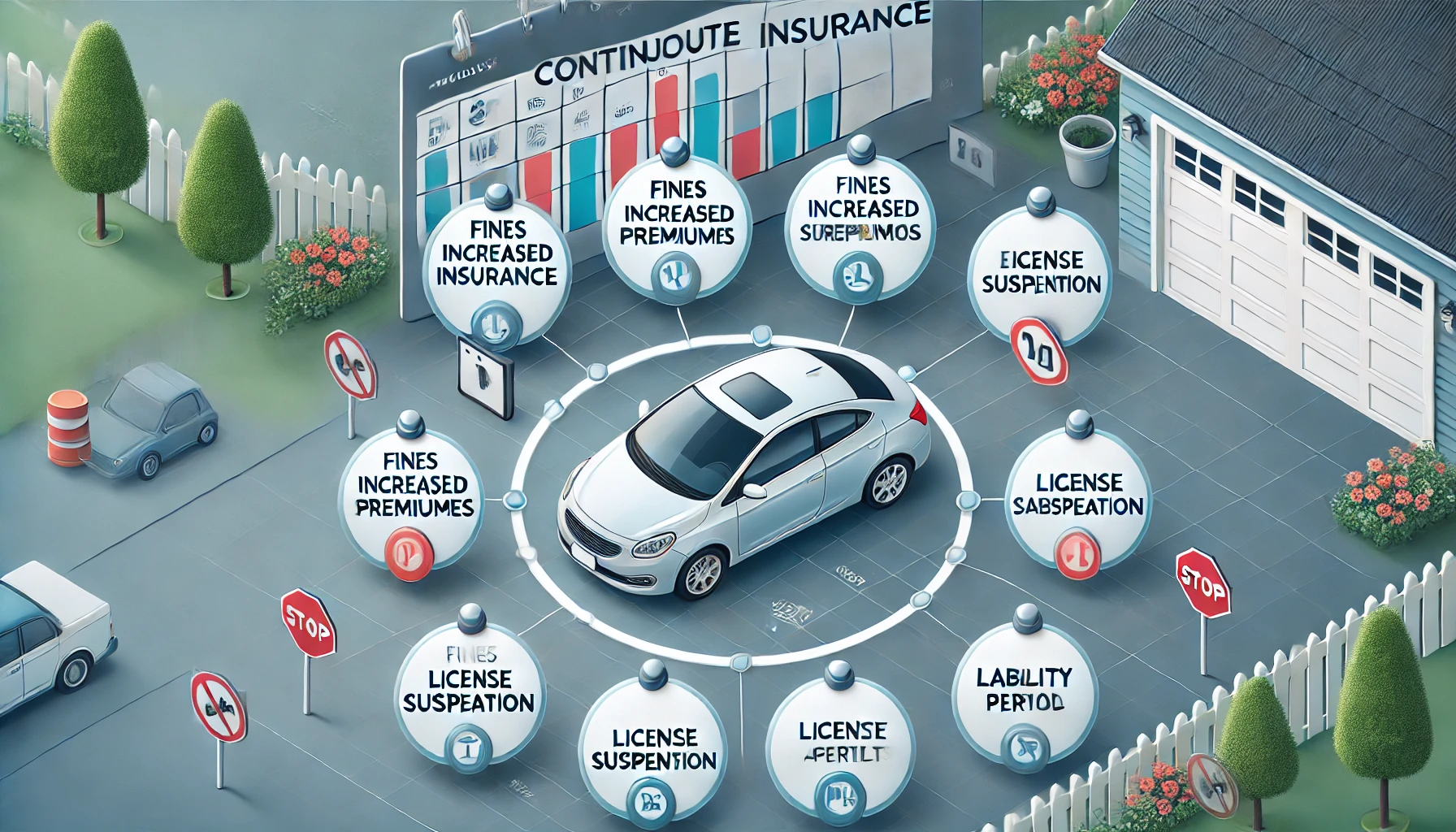
A car insurance lapse can trigger rate increases, DMV headaches, and financial risk. Learn grace periods, how states detect lapses, and how to restore coverage fast.
The honest answer to “how long can you be without car insurance?” is: as close to zero days as possible. Even a short lapse can create expensive problems—because there are two separate clocks running at the same time: your insurer clock (payment due, notice, cancellation) and your state/DMV clock (continuous insurance expectations tied to your vehicle registration). If you drive during the gap, the risk jumps from “administrative hassle” to “financial disaster.”
If you’re searching for auto insurance near me, you can start a quote online in minutes and compare options fast. The bigger win is avoiding the gap in the first place. This guide shows you what typically happens at each stage of a lapse and the cleanest way to restart coverage without creating long-term damage.
A lapse can be caused by a missed payment, a policy cancellation, a card that expired on autopay, or a gap between switching carriers. The consequences usually fall into three buckets:
If you’re not driving a vehicle and you truly need it uninsured for a period, the safe approach is typically to follow your state’s process for properly storing it (often involving registration/plate steps). Don’t guess—administrative mistakes are expensive.
A grace period is an insurer practice where you may have a short window after a missed payment to bring the account current without losing coverage. In many situations, it’s often around 10–20 days, but it depends on carrier rules and state regulations. The key point: grace period is not a guarantee, and it doesn’t mean you can safely drive without checking your policy status.
A lapse is any period—even a single day—where you have no active auto policy covering the vehicle. Once a policy is canceled and the effective date passes, you’re exposed. If you’re switching insurers, the safest move is to set the new policy effective date to start immediately when the old one ends.
The longer the gap, the harder it gets to clean up. Use this timeline as a practical guide (your state and carrier rules can vary).
| Time without coverage | What usually happens | What to do immediately |
|---|---|---|
| 0–1 day | Coverage gap begins. If you drive, you’re uninsured. If you get pulled over or crash, the consequences can be severe. | Stop driving. Attempt reinstatement or start a new policy effective immediately. |
| 2–7 days | Reinstatement may still be possible depending on the carrier. Rates may not spike as much as long gaps, but the risk is real. | Pay past-due premium (if eligible) or bind a new policy today. |
| 1–4 weeks | Underwriting can tighten; some carriers may require down payment or stricter terms. DMV notices may start (depending on state verification). | Bind coverage, keep proof, and address any DMV letters immediately. |
| 1–3 months | The lapse becomes a major rating factor. You may see higher premiums and fewer carrier options. | Lock in coverage, consider higher deductibles, and rebuild stability for 6–12 months. |
| 3+ months | Higher-risk pricing becomes common; some carriers may decline or require non-standard placement. | Start coverage as soon as possible and focus on continuous insurance going forward. |
Bottom line: the quickest “rate repair” strategy is simply re-establishing continuous coverage and keeping it active.
Many states tie insurance status to vehicle registration. That means the state’s systems can detect when coverage is canceled and may send a notice asking you to prove you have insurance or to take an action related to the registration. The details vary, but the pattern is consistent: registered vehicles are expected to be insured, and gaps can trigger administrative penalties.
| Common DMV action | What it means | How to fix it |
|---|---|---|
| Insurance verification notice | The state wants proof that a registered vehicle is insured. | Provide proof of active coverage promptly and keep copies. |
| Registration suspension / hold | You may not be able to renew or legally drive until coverage is proven. | Bind coverage and complete the state’s reinstatement steps. |
| Fees / reinstatement requirements | Some states charge fees once a lapse is recorded. | Pay required fees and confirm the registration status is cleared. |
| Proof of responsibility requirement | After certain events, some drivers must file proof (often SR-22) for a period. | Place the correct policy type and maintain continuous coverage. |
The practical rule: if the vehicle is registered and you plan to drive it, keep it insured continuously. If you’re not driving it, don’t “just cancel” and hope for the best—handle it the right way for your state and document everything.
The biggest reason we push continuous coverage is simple math: a single accident can cost more than years of premiums. If you’re uninsured and at fault, you can be responsible for:
Even if you aren’t driving much, it’s usually safer to reduce costs with smarter coverage choices than to go uninsured.
If you’re already uninsured, the goal is speed and accuracy. Here’s the checklist we use to fix lapses without creating additional problems.
| Step | What you do | Why it matters |
|---|---|---|
| 1 | Stop driving until coverage is active. | Prevents a small lapse from becoming a catastrophic loss. |
| 2 | Try reinstatement first if the lapse is recent. | Reinstatement may preserve continuity and reduce pricing impact. |
| 3 | If reinstatement isn’t available, bind a new policy effective immediately. | Stops the clock on the lapse and stabilizes underwriting. |
| 4 | Verify limits, deductibles, drivers, garaging address, and usage are accurate. | Incorrect info can cause claim issues and compliance problems. |
| 5 | Save proof of insurance (digital + printable). | Helps with traffic stops, claims, and any state verification requests. |
| 6 | Resolve any DMV notices quickly. | Prevent registration or renewal complications. |
Most lapses happen for boring reasons: an autopay card expired, an email went to spam, a renewal was missed, or someone canceled a policy before the new one started. The fix is a repeatable system.
If the budget is tight, ask us for a “keep me legal” option that maintains required liability while optimizing the rest.
Many insurers offer a short grace period after a missed payment, but it depends on your carrier and state rules. Never assume—confirm your policy status. If you’re unsure, treat it as urgent and fix it immediately.
In many states, yes—because insurance requirements are tied to vehicle registration. If the vehicle is registered, the state may expect continuous coverage. If you truly won’t drive the vehicle, handle it correctly through your state’s process rather than simply canceling and hoping.
It can be. A one-day lapse creates a period where you’re uninsured if you drive, and it can still be recorded as a lapse depending on how verification is handled. The safest move is to prevent the gap or fix it immediately.
Try reinstatement first if the lapse is recent. If reinstatement isn’t available, bind a new policy effective immediately and save proof of coverage. Then address any DMV notices promptly.
Often, yes. Lapses can be treated as higher risk by insurers. The best way to improve pricing over time is to re-establish continuous coverage and keep it active.
Independent agency: Blake Insurance Group LLC is an independent insurance agency. We are not affiliated with any single carrier.
Licensing: Licensed insurance producer (NPN 16944666). This page provides general information and is not legal or coverage advice.
State variation: Insurance requirements, verification systems, penalties, fees, and reinstatement rules vary by state and can change. Always confirm your specific state requirements.
Trademarks: Trademarks and brand names belong to their respective owners.




