Home Warranty vs Homeowners Insurance (2026): What Each Covers, What It Excludes, and When You May Need Both
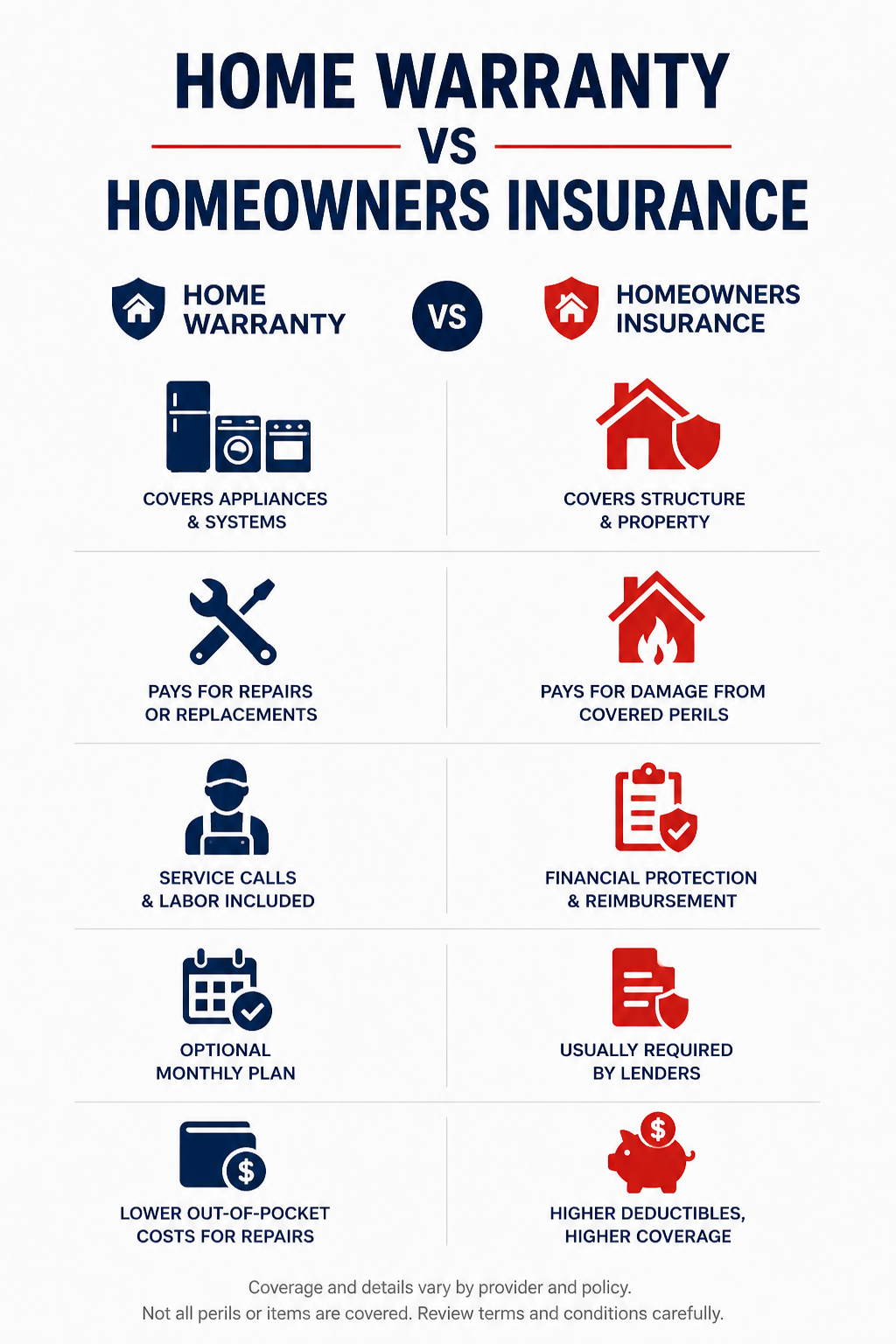
Home warranty vs homeowners insurance is one of the most important comparisons for homeowners, buyers, sellers, and landlords. The two products sound similar, but they solve different problems. Homeowners insurance generally protects the structure, belongings, and liability exposures tied to covered sudden losses. A home warranty generally helps with repair or replacement costs when covered home systems and appliances break down from normal wear and tear.
If you are searching for home protection near me, the key is not choosing one label over the other. The key is understanding which risk you are trying to cover. A fire, theft, windstorm, liability claim, or covered water-damage event is usually an insurance question. A dishwasher that stops washing, an air conditioner that fails from normal use, a water heater that quits, or a covered garage door opener that breaks may be a home warranty question.
Many homeowners use both because they do not overlap perfectly. Homeowners insurance is often required by mortgage lenders, while a home warranty is usually optional. Insurance claims commonly involve deductibles and policy limits. Home warranty claims commonly involve service call fees, covered-item limits, contractor dispatch rules, waiting periods, and contract exclusions. The smartest comparison is not “which one is better?” It is “which one applies to the problem I am trying to solve?”
Quick facts: home warranty vs homeowners insurance
The easiest way to separate the two is to look at the cause of the problem. Homeowners insurance is built for covered sudden and accidental losses. A home warranty is built for covered breakdowns from normal use. Both have rules, exclusions, and limits, but they are not interchangeable.
| Topic | Home warranty | Homeowners insurance |
|---|---|---|
| Product type | Residential service contract | Insurance policy |
| Main purpose | Helps with covered breakdowns of systems and appliances | Helps with covered property damage, belongings, liability, and loss of use |
| Common trigger | Normal wear and tear on covered items | Covered sudden events such as fire, theft, wind, hail, or liability claims |
| Usually required? | Optional | Often required by mortgage lenders |
| Out-of-pocket structure | Service call fee plus uncovered costs or costs above caps | Deductible plus uncovered causes or costs above policy limits |
The simple difference: breakdowns vs sudden losses
A home warranty is generally used when an included home system or appliance stops working because of normal use. Examples include an air conditioner that fails, a dishwasher that stops cleaning, a water heater that quits, a garage door opener that breaks, or a covered refrigerator component that stops functioning. The plan may send a technician, charge a service fee, and repair or replace the item if the contract terms are met.
Homeowners insurance is generally used when a covered event causes damage to the home, other structures, personal property, or creates a liability claim. Examples include a fire damaging the kitchen, a windstorm damaging the roof, theft of personal property, or a guest injury that leads to a covered liability claim. Insurance is broader in financial protection, but it does not normally pay just because an appliance wears out or a system reaches the end of its useful life.
Home warranty vs homeowners insurance: side-by-side comparison
Use this table as the practical baseline. The actual answer always depends on your policy, warranty contract, state rules, endorsements, exclusions, and the facts of the loss or breakdown.
| Comparison point | Home warranty | Homeowners insurance | Why it matters |
|---|---|---|---|
| Core purpose | Repair or replacement help for covered systems and appliances | Financial protection for covered property damage, belongings, liability, and loss of use | They solve different homeowner risks |
| Common covered cause | Normal wear-and-tear breakdown | Covered sudden and accidental events | The cause usually determines which product applies |
| Typical items | HVAC, plumbing, electrical, water heater, appliances, garage door opener | Dwelling, other structures, personal property, liability, additional living expenses | Warranty focuses on named items; insurance focuses on covered losses |
| Payment method | Service call fee and contract limits | Deductible and policy limits | Both can leave out-of-pocket costs |
| Required by lender? | Usually no | Often yes when there is a mortgage | Insurance is usually part of mortgage compliance; warranty is usually optional |
| Wear and tear | May be covered if the item is included and the contract terms are met | Generally excluded as a maintenance issue | This is one of the biggest differences |
| Storm damage | Usually not the purpose of the contract | May be covered if the event and damage meet policy terms | Storm claims generally belong in the insurance lane |
When would you use a home warranty, and when would you use homeowners insurance?
A claim is easier to route when you focus on what happened first. Did a covered item fail from normal use? Start with the warranty contract. Did a sudden covered event damage the home, belongings, or create liability? Start with homeowners insurance. If both issues happen at once, the answer may require reviewing both contracts.
| Scenario | Likely product to review first | Reason | Important caution |
|---|---|---|---|
| Air conditioner stops working from age or normal use | Home warranty | Mechanical breakdown of a covered system may fit warranty terms | Caps, maintenance rules, refrigerant limits, and exclusions may apply |
| Fire damages the kitchen and appliances | Homeowners insurance | Fire is a sudden covered peril under many homeowners policies | Deductible, limits, and policy exclusions still apply |
| Water heater fails from normal wear | Home warranty | Covered water heater breakdown may fit the service contract | Damage caused by leaking water may be handled differently |
| Wind damages the roof | Homeowners insurance | Wind damage is generally an insurance coverage question | Roof age, deductible, exclusions, and policy form matter |
| Refrigerator stops cooling | Home warranty | Appliance breakdown may be covered if included | Food spoilage, cosmetic parts, and smart features may be limited or excluded |
| Guest slips and is injured on the property | Homeowners insurance | Personal liability is part of many homeowners policies | Coverage depends on facts, negligence, exclusions, and limits |
Cost differences: premium, service fee, deductible, and coverage limits
Home warranties and homeowners insurance both involve out-of-pocket costs, but they work differently. A home warranty usually has a plan price and a service call fee. Homeowners insurance usually has a policy premium and a deductible. Both can have exclusions, maximum payouts, waiting periods, and claim rules.
A warranty may look cheaper on a monthly basis, but it is narrower. It is designed for specific covered systems and appliances, not the entire financial risk of owning a home. Homeowners insurance usually costs more because it can cover major property damage, personal belongings, liability, and additional living expenses after a covered loss. The price is not the only comparison. You need to compare what financial risk each product is actually absorbing.
| Cost item | Home warranty | Homeowners insurance | Shopping tip |
|---|---|---|---|
| Recurring cost | Monthly or annual service contract cost | Policy premium, often paid annually or through escrow | Compare cost against the size of risk being protected |
| Claim cost | Service call fee or trade fee | Deductible | Check how often you may realistically use the product |
| Limits | Per-item caps, plan caps, repair/replacement limits | Dwelling, personal property, liability, and sublimits | Limits decide how much help you actually receive |
| Exclusions | Pre-existing issues, lack of maintenance, improper installation, certain parts | Wear and tear, maintenance, excluded perils, certain water or flood losses | Read the policy and contract before assuming coverage |
| Best value test | Does it reduce the cost and hassle of likely repairs? | Does it protect you from major financial loss? | Use both for different risk categories |
Do you need both a home warranty and homeowners insurance?
Many homeowners benefit from having both because they protect different parts of the homeownership risk picture. Homeowners insurance is the foundation. It protects against major covered losses that could create serious financial hardship. A home warranty is optional, but it can be helpful when you want a more predictable process for covered system and appliance breakdowns.
A home warranty may be especially useful for a first-time buyer, a homeowner with older systems, a seller trying to make a listing more attractive, a landlord managing repair calls, or a homeowner who wants service coordination when covered items break. Homeowners insurance remains essential because a warranty will not rebuild your home after a covered fire, replace stolen property, defend a liability claim, or pay additional living expenses after a covered loss.
| Homeowner situation | Home warranty may help when... | Homeowners insurance remains important because... |
|---|---|---|
| First-time home buyer | You want help with covered breakdowns after closing | Your lender may require insurance and major losses need broader protection |
| Older home | Systems and appliances are more likely to fail from normal use | Old homes still face fire, wind, liability, and property loss risks |
| Landlord or rental owner | You want a structured process for covered repair calls | Rental property damage and liability risks require insurance review |
| Seller or real estate transaction | A warranty may reduce buyer concern about early breakdowns | Insurance remains separate and must fit the owner’s property risk |
| Newer home | It may help after builder or manufacturer warranties expire | Insurance still protects against covered sudden loss and liability |
Get a home warranty quote
Start with your home’s actual repair risk: HVAC age, water heater age, appliance list, plumbing and electrical condition, home size, and whether you need add-ons. Then compare the service fee, covered items, exclusions, waiting period, contractor process, and payout limits. A home warranty should be evaluated as a service contract, not as a replacement for a homeowners insurance policy.
Review the sample contract before enrolling. Coverage, pricing, service fees, contractors, exclusions, waiting periods, claim limits, and replacement rules vary by provider and plan.
Related topics
Home warranty vs homeowners insurance FAQs (2026)
Can a home warranty replace homeowners insurance?
No. A home warranty is not homeowners insurance and should not be used as a substitute. It generally helps with covered breakdowns of named systems and appliances. Homeowners insurance protects against covered property damage, belongings, liability, and loss-of-use risks.
Does homeowners insurance cover appliances?
Homeowners insurance may cover appliances if they are damaged by a covered loss, such as a fire or certain storm events. It generally does not cover an appliance simply because it wears out, breaks down from age, or needs routine repair.
Does a home warranty cover roof damage?
A standard home warranty usually does not replace homeowners insurance for roof damage caused by wind, hail, fire, or other covered events. Some warranty contracts may offer limited roof-leak add-ons, but those are narrow and should be reviewed carefully.
Why do mortgage lenders require homeowners insurance but not a home warranty?
Lenders usually require homeowners insurance because it protects the property securing the mortgage from major covered losses. A home warranty is optional because it is a service contract for covered breakdowns, not broad property insurance.
Is a home warranty worth it if I already have homeowners insurance?
It can be worth comparing if you have aging systems or appliances, want help coordinating covered repairs, or prefer a more predictable service-fee structure for certain breakdowns. The value depends on the contract terms, exclusions, caps, and your home’s repair risk.
Independent agency: Blake Insurance Group LLC is an independent insurance agency and is not affiliated with any single home warranty company, service contract provider, or insurance carrier.
Licensing: Licensed insurance producer (NPN 16944666).
Important: Home warranty plans are service contracts, not homeowners insurance. Homeowners insurance policies and home warranty contracts both vary by provider, state, policy form, contract version, ZIP code, covered items, exclusions, deductibles, service fees, limits, and claim rules.
Trademarks: All product and company names are trademarks™ or registered® trademarks of their respective holders. Use of them does not imply affiliation or endorsement.




