Flood Insurance Quote South Carolina: Compare Neptune Private Flood, NFIP Options, Coverage Limits, Costs, Flood Zones, Waiting Periods, and Claims
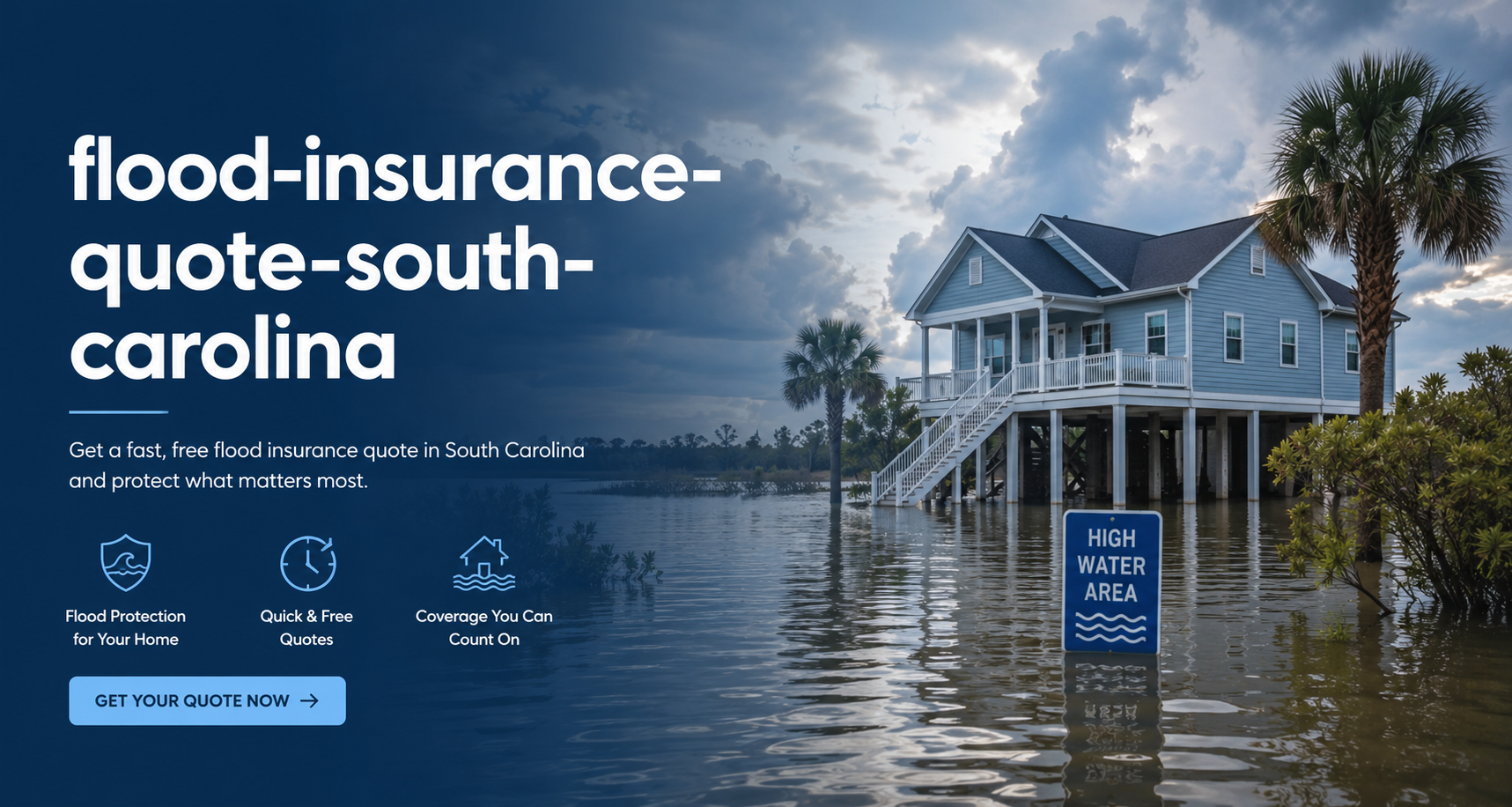
Flood insurance quote South Carolina shoppers need more than a quick premium. South Carolina has coastal storm surge, king-tide flooding, river flooding, heavy rainfall, drainage backups, hurricane exposure, low-country tidal creeks, inland flash flooding, and neighborhood-level flood map changes. A standard homeowners policy usually does not cover rising outside water, storm surge, river overflow, creek overflow, mudflow, or broad surface-water flooding. That is why a separate flood policy can be one of the most important coverage decisions for a South Carolina homeowner, landlord, condo owner, or property buyer.
South Carolina flood insurance should be compared by exact property address. A home in Charleston, Myrtle Beach, Hilton Head, Beaufort, Mount Pleasant, Pawleys Island, Georgetown, Columbia, Greenville, Spartanburg, Rock Hill, Florence, Summerville, or Conway can have very different risk characteristics. Elevation, distance to tidal water, local drainage, crawlspace or slab construction, flood zone, prior losses, replacement cost, foundation type, and lender requirements can all change the quote.
For 2026, many South Carolina property owners should compare private flood insurance, including Neptune Flood, against National Flood Insurance Program options. NFIP remains a familiar federal program and is commonly used when a lender requires flood insurance in a mapped high-risk area. Neptune Flood gives eligible homeowners a private flood quote path that may offer different limits, deductible options, waiting-period treatment, and coverage features. The strongest choice depends on the actual policy terms, not just the brand name.
If you are searching for flood insurance near me in South Carolina, compare coverage mechanics before choosing. Look at building coverage, contents coverage, other-structures treatment, basement or crawlspace rules, temporary living expense availability, waiting period, deductible, lender acceptance, and claim documentation. A low premium can be attractive, but the best flood policy is the one that leaves fewer surprises after a real flood event.
Flood insurance availability, premiums, limits, waiting periods, deductibles, lender acceptance, and claim rules vary by address, insurer, policy form, and underwriting rules. Review the issued policy before replacing, canceling, or relying on any flood coverage.
Quick snapshot: South Carolina flood insurance quotes in 2026
South Carolina homeowners should compare private flood and NFIP options because coastal, inland, tidal, river, and drainage risks can vary sharply by address.
| Review point | South Carolina guidance | What to compare |
|---|---|---|
| Best starting point | Quote private flood coverage and compare it against NFIP if available or required. | Premium, building limit, contents limit, deductible, waiting period, and lender acceptance. |
| Top exposures | Storm surge, tidal flooding, hurricanes, river flooding, drainage overflow, and flash flooding. | Flood zone, elevation, local drainage, foundation, distance to water, and prior losses. |
| Home policy gap | Standard homeowners insurance generally excludes rising outside floodwater. | Separate flood coverage for building and contents. |
| Private flood advantage | May provide flexible limits, digital quoting, and different waiting-period treatment for eligible homes. | Policy form, exclusions, covered property, and mortgage company rules. |
| NFIP advantage | Familiar federal program often used for lender-required flood insurance. | Program limits, 30-day waiting period, contents selection, and renewal timing. |
Why South Carolina homeowners need flood insurance
South Carolina flood risk is not limited to beachfront property. Coastal homes can face storm surge, tidal creeks, marsh proximity, wind-driven water, and hurricane rainfall. Inland homes can face swollen rivers, backed-up drainage, overwhelmed culverts, saturated soil, and rapid runoff after repeated storms. A property outside a high-risk flood zone can still flood if rainfall overwhelms neighborhood drainage or a nearby creek rises beyond its banks.
Flood insurance is important because disaster assistance is not a dependable substitute for insurance. Federal disaster aid may require a declared disaster, may be limited, and may not fully rebuild the home or replace damaged belongings. A flood policy provides a defined contract for eligible flood damage, subject to the policy’s limits, deductible, exclusions, and claim rules. That can matter when a homeowner faces flooring removal, drywall replacement, electrical work, HVAC repairs, debris cleanup, appliance replacement, and contents loss.
South Carolina homeowners should also review flood coverage when buying, refinancing, renewing coverage, improving the property, or receiving a flood map update. Mortgage requirements can change. Flood zones can be revised. New development can affect drainage. A home that did not require flood insurance before may later become subject to lender requirements or more obvious risk.
| Risk factor | Why it matters | Quote planning step |
|---|---|---|
| Coastal storm surge | Hurricanes and tropical storms can push water inland along coastal areas. | Compare building and contents limits with realistic rebuild and replacement needs. |
| Tidal creeks and marshes | Low-country water movement can affect neighborhoods away from open ocean frontage. | Review elevation, drainage, flood zone, and nearby water features. |
| River flooding | Major rivers and tributaries can overflow after prolonged rain. | Check flood maps and quote coverage even if flooding has not happened recently. |
| Drainage and road runoff | Street flooding and overwhelmed stormwater systems can cause property damage. | Do not rely only on mortgage requirements to decide whether coverage is needed. |
| Crawlspace or slab construction | Foundation type can affect claim outcomes and repair costs. | Confirm how the policy treats foundations, utilities, and below-grade areas. |
Private flood insurance in South Carolina: why Neptune is worth comparing
Private flood insurance gives South Carolina homeowners another option beyond the federal program. Neptune Flood is one of the most useful private flood quote paths to compare because it is built around digital quoting and address-level underwriting. For eligible properties, Neptune may offer flexible limits, private-market pricing, different deductible choices, and a shorter standard waiting-period structure than the traditional NFIP approach.
Private flood may be especially valuable for higher-value coastal homes, rental properties, second homes, homes with substantial contents exposure, and homeowners who want to compare policy features beyond basic building coverage. A private quote can also help during a real estate purchase when a buyer wants to know whether the property has more than one flood insurance path.
Private flood insurance should still be reviewed carefully. The policy form controls what is covered. Look at the declarations page, deductible, covered property, exclusions, waiting period, storm moratorium rules, replacement cost language, actual cash value provisions, loss-of-use options, other-structures treatment, and claim conditions. If a mortgage company requires flood insurance, confirm the lender will accept the private policy before replacing or declining an NFIP policy.
| Review area | Potential advantage | What to confirm |
|---|---|---|
| Online quote path | Fast address-based comparison for eligible homes. | Final eligibility, bind date, payment, and policy effective date. |
| Flexible limits | Private coverage may offer limits that better match higher-value properties. | Building limit, contents limit, other structures, and any maximums. |
| Waiting period | Private flood may offer shorter waiting-period treatment than NFIP. | Exact waiting period, closing exception, rollover exception, and storm restrictions. |
| Coverage features | Some private policies may include options not found in a basic NFIP policy. | Loss of use, contents treatment, debris removal, and replacement cost terms. |
| Lender use | Private flood may satisfy some mortgage flood requirements. | Get lender approval before replacing required flood coverage. |
NFIP flood insurance options in South Carolina
The National Flood Insurance Program remains an important flood insurance option in South Carolina. It is widely recognized by lenders and commonly used when a property is located in a Special Flood Hazard Area and the mortgage company requires flood coverage. NFIP policies have a standardized structure, known program limits, and a familiar process for many agents, lenders, and closing teams.
The NFIP can be the right fit when the property’s coverage needs fall within the program’s limits, the lender prefers federal flood coverage, or private flood insurance is not available or not competitive for the address. However, NFIP should not be treated as the only possible answer. Private flood coverage may offer different pricing, higher available limits, shorter waiting periods, or coverage features that better fit the home.
NFIP policies commonly include a 30-day waiting period unless a limited exception applies, such as certain loan-related situations or specific map-change conditions. That makes early quoting important. Waiting until a tropical storm is approaching can leave a homeowner without active flood coverage when it is needed most.
| Review area | NFIP strength | What to watch |
|---|---|---|
| Lender familiarity | Commonly accepted for required flood coverage. | Confirm required coverage amount, mortgagee clause, and escrow requirements. |
| Program structure | Standardized federal flood policy framework. | Standardization can limit flexibility for some properties. |
| Coverage limits | Clear program maximums for residential buildings and contents. | Higher-value homes may need private or excess flood options. |
| Waiting period | Known program rules and exceptions. | Generally not a last-minute storm solution. |
| Map-based requirements | Often tied to FEMA flood zones and lender notices. | Flood map status is not the same as full property risk. |
What affects a South Carolina flood insurance quote?
South Carolina flood insurance cost is property-specific. The quote can change based on exact address, flood zone, elevation, foundation type, distance to water, drainage, year built, occupancy, replacement cost, building limit, contents limit, deductible, prior flood losses, lender requirements, and the policy type selected. Two homes in the same ZIP code can receive very different flood quotes.
Coastal exposure can increase risk, but inland exposure should not be dismissed. Columbia, Greenville, Spartanburg, Rock Hill, and other inland communities can still experience river flooding, flash flooding, or drainage-related water damage. Homeowners should compare flood coverage even when a lender does not require it, because lender requirements are based on loan rules and mapped zones, not every possible flood scenario.
When comparing quotes, do not stop at the premium. Review what the policy pays after a covered loss. A lower price may come with a higher deductible, lower contents coverage, limited basement or crawlspace treatment, or fewer optional benefits. A stronger quote matches the property’s rebuild cost, personal property exposure, risk tolerance, and lender requirements.
| Cost factor | Why it matters | What to prepare |
|---|---|---|
| Exact property address | Flood risk is evaluated at property level. | Use the full street address, not only ZIP code. |
| Flood zone and elevation | Mapped risk and elevation can affect lender rules and pricing. | Check current flood zone and any elevation certificate if available. |
| Foundation type | Slab, crawlspace, basement, and elevated construction can affect coverage. | Confirm foundation details and utility locations. |
| Coverage limits | Higher building and contents limits generally change premium. | Estimate rebuild cost and personal property replacement needs. |
| Deductible | Higher deductibles may reduce premium but increase claim-time cost. | Choose a deductible you can pay after a flood. |
| Waiting period | Coverage may not start immediately. | Quote before storm season, closing, renewal, or lender deadline. |
Flood insurance quotes across South Carolina cities and coastal areas
Flood insurance needs vary across South Carolina. Coastal and low-country areas often need to evaluate storm surge, tidal creeks, marsh exposure, and hurricane rainfall. Inland cities may need to evaluate rivers, creeks, drainage, and flash flooding. A property in Charleston or Hilton Head may have a different quote profile than a home in Columbia, Greenville, Spartanburg, Rock Hill, or Florence, but each can still have meaningful flood exposure.
Local flood tools and FEMA flood maps can help identify mapped flood zones, but they should not be the only deciding factor. Flood maps are planning tools, not guarantees. A home outside the highest-risk zone can still flood from heavy rainfall, blocked drainage, nearby development, or a stormwater system that cannot handle a major event.
| Area | Common exposure to review | Coverage planning tip |
|---|---|---|
| Charleston and Mount Pleasant | Storm surge, tidal flooding, creeks, drainage, and historic low-country flooding. | Compare private flood and NFIP before renewal or closing. |
| Myrtle Beach, Conway, and Horry County | Coastal storms, river flooding, drainage, and hurricane rainfall. | Review both flood zone and local drainage exposure. |
| Hilton Head, Beaufort, and coastal islands | Storm surge, tidal water, marsh exposure, and elevated construction issues. | Confirm lender rules and building/contents limits carefully. |
| Columbia and Midlands | River flooding, flash flooding, neighborhood drainage, and heavy rainfall. | Do not assume inland means no flood risk. |
| Greenville, Spartanburg, and Upstate | Creeks, stormwater, flash flooding, and sloped runoff. | Quote coverage even if no mortgage requirement exists. |
Quote South Carolina flood insurance online
Blake Insurance Group helps South Carolina property owners compare flood insurance with a focus on coverage quality, private flood options, lender requirements, and total risk. Neptune Flood is a strong private flood quote path for eligible South Carolina homes, and NFIP may still be an important baseline when a lender requires federal flood coverage or when private options are not the best fit.
Before starting your quote, gather the property address, occupancy type, year built, foundation type, current flood declarations page if you have one, lender flood requirement if applicable, estimated replacement cost, desired contents limit, and preferred deductible. If you already carry NFIP or another flood policy, do not cancel it until replacement coverage is approved, active, and accepted by the lender if required.
Quote availability, premiums, limits, waiting periods, lender acceptance, deductibles, exclusions, and effective dates vary by property and insurer.
South Carolina flood insurance FAQs
Do I need flood insurance in South Carolina?
Many South Carolina homeowners should compare flood insurance, even when a lender does not require it. Coastal storm surge, tidal flooding, river flooding, heavy rainfall, drainage issues, and flash flooding can affect properties inside and outside high-risk flood zones.
Does homeowners insurance cover flooding in South Carolina?
Standard homeowners insurance generally does not cover rising outside floodwater, storm surge, river overflow, creek flooding, mudflow, or broad surface-water damage. A separate flood insurance policy is typically needed.
Is Neptune Flood available for South Carolina quotes?
Neptune Flood can be a private flood quote option for eligible South Carolina properties. Eligibility, limits, pricing, waiting periods, and coverage terms depend on the property and underwriting rules.
Is NFIP or private flood insurance better in South Carolina?
The better option depends on the exact property, lender requirements, limits needed, deductible, waiting period, and final policy terms. Compare both when possible before choosing.
When should I buy flood insurance?
Buy before storm season, closing, renewal, or lender deadlines. Flood policies often include waiting periods, so coverage may not begin immediately after purchase.
Can I quote South Carolina flood insurance online?
Yes. Use the online quote option on this page to start a South Carolina flood insurance quote and compare available private flood coverage.
Independent agency: Blake Insurance Group LLC is an independent insurance agency and is not affiliated with Neptune Flood, FEMA, NFIP, FloodSmart, any lender, carrier, administrator, government agency, or flood map provider.
Licensing: Licensed insurance producer (NPN 16944666).
Important: Flood insurance availability, premiums, deductibles, limits, waiting periods, covered causes of loss, basement or crawlspace treatment, contents coverage, replacement cost terms, lender acceptance, claims handling, and effective dates vary by property, state, insurer, underwriting rules, policy form, and lender requirements. Your issued policy, declarations page, endorsements, exclusions, and claim documents govern your coverage and obligations. This page is general information only and is not legal, tax, financial, engineering, mapping, claims, or disaster-recovery advice.
Trademarks: Neptune Flood®, FEMA®, NFIP®, FloodSmart®, and any carrier, platform, agency, program, or product names are trademarks™ or registered® trademarks of their respective owners. Use of these names does not imply affiliation or endorsement.




