Festival Insurance: Event Liability, Vendors, Weather & Cancellation Protection
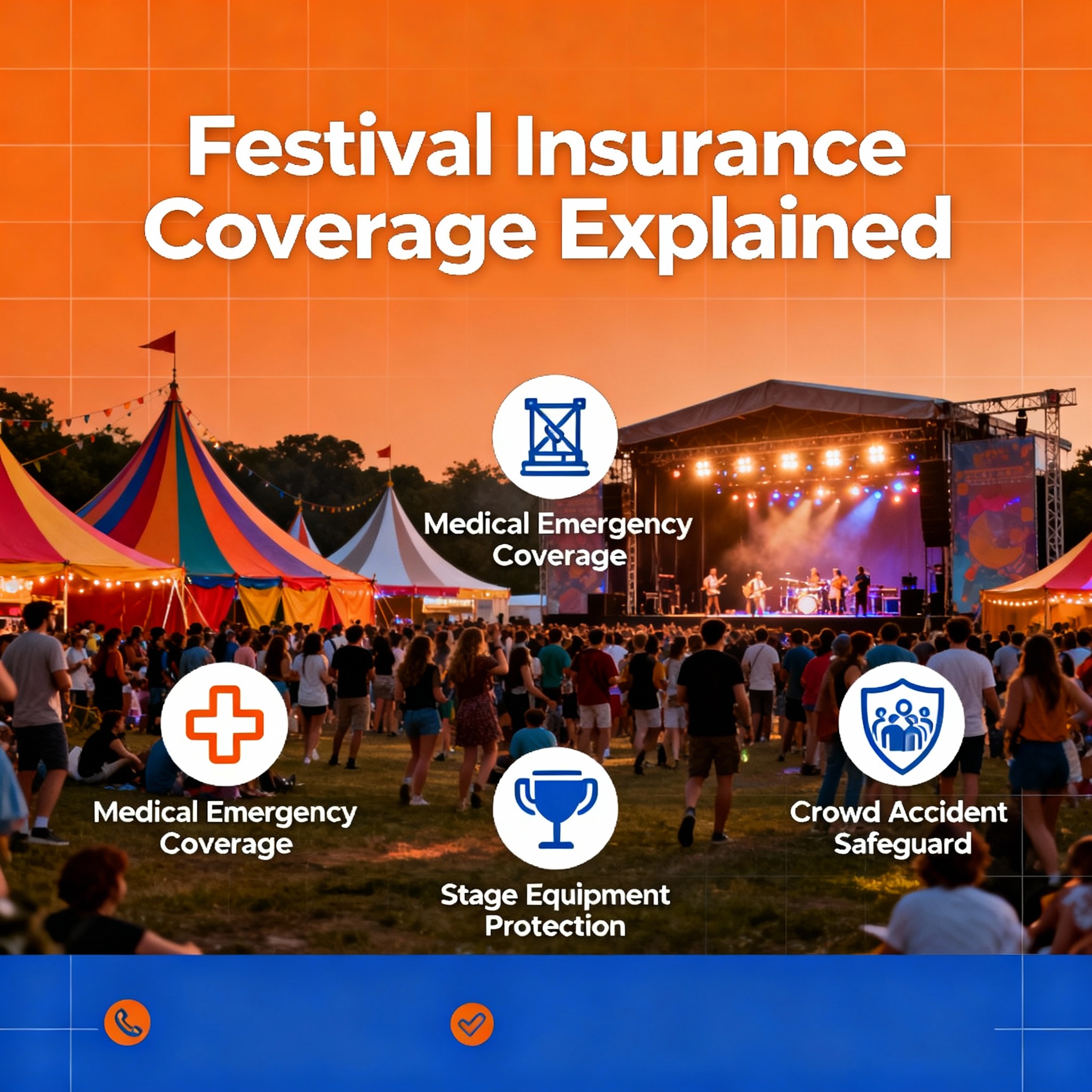
Planning a festival means managing crowd flow, vendors, staging, and weather exposure in one tight plan. The right festival insurance can satisfy venue contracts, protect your budget from injury or property claims, and keep operations moving when plans change. If you’re looking for an event specialist “near me,” we can help you compare options and issue certificates fast—without paying for extras you don’t need.
This guide explains the coverages most festival organizers use in 2026, how carriers price the risk, and how to prepare your paperwork so permits, vendors, and sponsors don’t stall. Blake Insurance Group LLC is an independent insurance agency. We match your festival’s needs to the right policy structure and help you deliver clean COIs with correct wording. Your issued policy controls coverage, limits, exclusions, waiting periods, and documentation requirements.
Why insure your festival
Contract compliance
Most venues and municipalities require specific liability limits, additional insured wording, and sometimes “primary and noncontributory” language and/or a waiver of subrogation. We align your policy and certificates to the contract so your move-in isn’t delayed and your permit packet stays clean.
Budget protection
Festivals have real fixed costs: staging, sound, lighting, fencing, security, marketing, deposits, and vendor logistics. One incident can disrupt cash flow fast. Proper limits and deductibles protect your operating budget and reduce sponsor conflict when something goes sideways.
Stakeholder confidence
Artists, vendors, city staff, and property owners move faster when insurance and safety planning are clear. A strong insurance packet supports permitting, improves vendor onboarding, and reduces last-minute objections.
Certificates & endorsements
COIs are only useful when the wording matches the contract. We help you gather certificate holder details, additional insured entities, and endorsement needs early, so certificates can be issued quickly with fewer revisions.
What festival insurance can cover
Coverage availability and policy wording vary by carrier and state. Your issued policy governs what is covered, limited, or excluded.
| Coverage / Rider | What it helps with | Who typically needs it |
|---|---|---|
| General Liability | Third-party injury or property damage claims arising out of event operations. | All organizers; frequently required by venues and cities. |
| Liquor Liability | Claims arising from alcohol service (when alcohol is served/sold and coverage is available). | Events with alcohol exposure; confirm who is the “insured” (organizer vs vendor). |
| Event Cancellation / Postponement | Reimburses certain covered losses when an event is canceled or postponed due to covered causes. | Ticketed or sponsor-backed events with deposits and fixed costs. |
| Inland Marine / Equipment | Stage, sound, lighting, fencing, rented gear, and other mobile property (often scheduled). | Organizers, production teams, and anyone responsible for rented gear. |
| Participant Accident / Medical | Medical benefits for participants/volunteers per policy terms (often no-fault style benefits). | Interactive experiences, volunteer crews, contests, and activities with physical risk. |
| Hired & Non-Owned Auto (HNOA) | Liability for rented/borrowed vehicles or staff vehicles used for festival business (liability—not physical damage). | Teams running errands, pickups, shuttles, or using personal vehicles for event tasks. |
| Vendor / Exhibitor Requirements | Defines minimum insurance vendors must carry and how they name additional insureds. | Festivals with food trucks, exhibitors, artisans, and third-party booths. |
The best festival programs aren’t “max coverage everywhere.” They’re right-sized: the correct limits for your crowd size and venue contract, plus the riders that match your operations (alcohol, equipment, participant activities, and cancellation exposure). If you want a clean plan, we start with the contract requirements, then build coverage around your true risk.
Festival insurance cost: key factors & ways to control premium
Pricing depends on the footprint, schedule, venue type, crowd controls, and add-ons (like liquor, cancellation, and equipment values). The fastest way to avoid wasted premium is to set accurate attendance numbers, define the full program (music, rides, inflatables, competitions, etc.), and clarify who is responsible for alcohol service and security.
| Driver | How it can affect cost | Ways to optimize (without weakening protection) |
|---|---|---|
| Attendance & days | More people and multi-day schedules increase exposure. | Timed entry, capacity caps, and staffed gates reduce severity risk. |
| Alcohol exposure | Liquor liability and controls may add premium. | Professional bartenders, ID checks, wristbands, and last-call controls. |
| Venue & geography | Urban cores, coastal winds, or wildfire zones can rate higher. | Document evacuation routes, weather monitoring, and shelter options. |
| Equipment values | High-value production gear increases property exposure. | Secure storage, check-in/out logs, and realistic deductibles. |
| Security & medical planning | Better staffing can reduce claim severity expectations. | Credentialed security, first-aid/EMS plans, incident reporting workflow. |
| Cancellation terms | Broader perils cost more but protect deposits and fixed costs. | Model break-even: cover hard costs first, then tailor perils. |
Pro tip: most “quote surprises” happen when the activity list changes late (added alcohol, inflatables, fireworks, extra stages, or more attendance). Lock the scope early so pricing stays stable.
Vendors, venues & certificates of insurance (COIs)
Venues and cities commonly require minimum liability limits, specific certificate holder names, and additional insured entities (sometimes including the property owner, promoter, and municipality). They may also request primary/noncontributory wording and a waiver of subrogation for certain lines. These are not “magic words”—they often require endorsements or specific policy forms. We gather this language up front so certificates are issued correctly and quickly. :contentReference[oaicite:0]{index=0}
- COI workflow: collect the venue’s insurance exhibit (limits + wording), then list all certificate holders and exact legal names.
- Additional insured list: confirm who must be named (venue, owner, city, sponsor, promoter) and whether blanket AI is acceptable.
- Vendor onboarding: include an insurance addendum in every vendor agreement with minimum limits, COI deadline, and AI wording.
- Incident logs: train staff to document injuries/property damage immediately (photos, witnesses, time, location, and supervisor sign-off).
When vendors have their own liability, it reduces pressure on the organizer’s policy and helps keep claims from piling onto one program. It also simplifies contract enforcement during check-in.
Event cancellation & weather: protect deposits, sponsors, and ticket obligations
Cancellation/postponement coverage is how many organizers protect hard costs (deposits, production, permits, marketing, nonrefundable vendor logistics) if a covered cause forces a cancel or delay. Covered causes vary by policy and underwriting, but severe weather is commonly addressed by cancellation programs (especially for outdoor events) when structured correctly. Documentation and timing matter, so it’s important to set rules for weather monitoring and decision authority before show day. :contentReference[oaicite:1]{index=1}
- Define your “trigger”: what conditions create an unsafe environment (wind thresholds, lightning radius, flooding, wildfire smoke, extreme heat).
- Assign decision authority: one person (or small committee) makes the call to delay/evacuate/cancel to avoid confusion.
- Keep receipts and contracts organized: cancellation coverage is documentation-driven; store invoices, deposits, and refund obligations in one folder.
- Align sponsor language: sponsor agreements should match your refund and postponement plan so you don’t create accidental liabilities.
Risk-management tips that reduce claims and keep operations smooth
Insurance is the financial backstop; safety planning is what prevents the loss. These are the practical controls that help festivals run cleaner and reduce the chance of a serious incident:
- Weather plan: define delay/evacuation steps; test radios and PA; post shelter locations.
- Crowd control: barrier design, staffed gates, clear egress routes, and staff training near stages and concessions.
- Power & fire: generator separation from tents; extinguishers placed and inspected; no-smoking zones posted.
- Food safety: handwashing stations, temperature logs, grease disposal, and vendor inspections at load-in.
- Accessibility: ADA routes and viewing areas clearly marked; accessible restrooms planned; staff briefed on service animal policies.
- Vehicle exposure: route plan for deliveries, separation of pedestrians and vehicles, and check whether HNOA applies for staff errands. :contentReference[oaicite:2]{index=2}
- Volunteer/participant injuries: consider participant accident coverage when volunteers or activities increase the chance of minor medical claims. :contentReference[oaicite:3]{index=3}
Service areas & licensing
We support festival and event insurance planning across many markets. For the fastest turnaround, provide your venue contract insurance exhibit, your site map, the activity list, and your estimated attendance.
| Target cities | Licensed states |
|---|---|
| Phoenix, Scottsdale, Tempe, Mesa, Chandler, Tucson, Glendale, Flagstaff, Sedona, Peoria, Dallas, Austin, Houston, Los Angeles, San Diego, Las Vegas | AZ, AL, TX, CA, NY, OH, FL, NC, VA, GA, OK, NM, IA, KS, MI, NE, SC, SD, WV |
Festival insurance: FAQ
Do I need insurance for a one-day festival?
Yes. Venues and cities commonly require general liability even for single-day events. Short-term policies can match your dates and limits and can add additional insureds for the venue and municipality.
What certificate wording do venues usually require?
Many contracts request specific limits, additional insured wording, and sometimes primary/noncontributory language and waiver of subrogation. We review the contract exhibit and issue COIs that match.
Is weather cancellation included automatically?
No. Cancellation/postponement is separate coverage with defined covered causes, documentation rules, and decision timing requirements. We tailor it based on your season, venue, and budget.
Do vendors need their own insurance?
Typically yes. Vendor agreements often require vendors to carry their own liability and name the organizer and venue as additional insureds. This reduces disputes and keeps your insurance packet stronger.
How far in advance should I buy coverage?
Earlier is better—especially if you need endorsements, multiple COIs, or cancellation options. Buying early also gives time to collect vendor certificates and resolve wording issues before load-in.
Independent agency: Blake Insurance Group LLC is an independent insurance agency.
Licensing: Licensed insurance producer (NPN 16944666).
Important: Coverage availability, limits, exclusions, and endorsements vary by carrier, state, and venue contract requirements. This page is general information, not legal advice.
Trademarks: All product and company names are trademarks™ or registered® trademarks of their respective holders. Use does not imply affiliation or endorsement.




