Subaru Forester • Compact SUV • Coverage and discounts
Subaru Forester Car Insurance: Coverage and Discounts
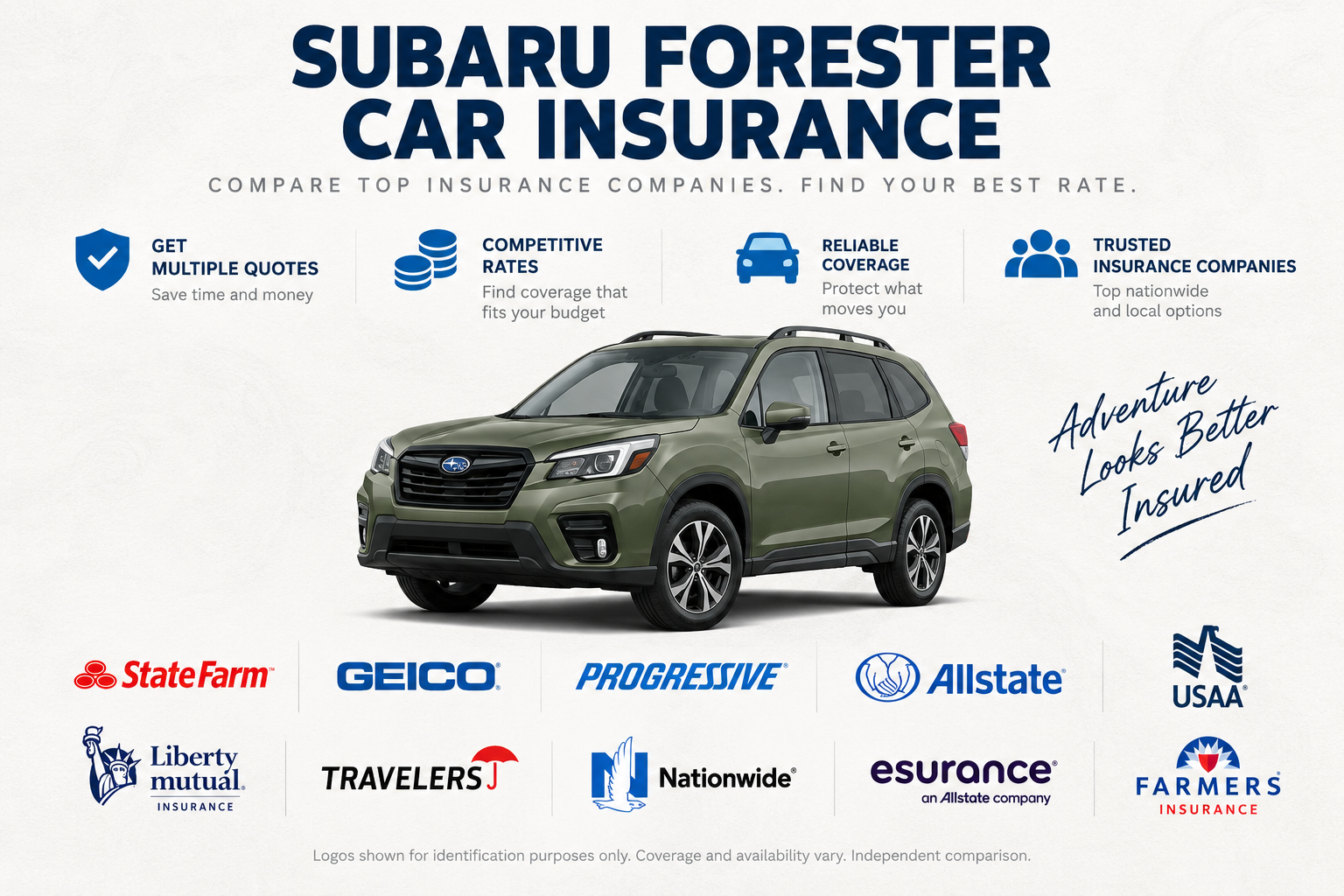
Subaru Forester car insurance is often competitively priced for a compact SUV, helped by standard all-wheel drive, Subaru's EyeSight driver-assistance system, and strong crash-test results. The 2026 Forester earned the Insurance Institute for Highway Safety's TOP SAFETY PICK+, and every trim comes with EyeSight.
This guide explains how those features factor into your premium, what changes with the Wilderness and hybrid versions, which coverages fit outdoor and winter driving, and which discounts to ask about. Blake Insurance Group is an independent agency that can compare several insurance companies for many drivers.
Get a Subaru Forester insurance quote
Share your Forester's details and drivers, and a licensed agent will follow up. Submitting the form does not bind coverage.
If the form does not load, call 888-387-3687, Monday through Friday, 9:00 to 5:00, or email info@blakeinsurancegroup.com.
How the Forester's features affect insurance
Insurers look at how often a model is involved in claims and how much those claims cost. Several Forester features influence both:
- EyeSight. Subaru's camera-based system includes automatic emergency braking and adaptive cruise control. Systems like this are designed to reduce rear-end crashes, which are among the most common claims. Some insurers offer a discount for automatic emergency braking; others reflect it in base rates.
- Standard all-wheel drive. AWD improves traction in rain and snow. It does not prevent every crash, and it adds some cost to repairs involving the drivetrain.
- Crash protection. The 2026 TOP SAFETY PICK+ indicates good occupant protection, which can help limit injury claim costs over time.
- Repair costs. EyeSight's cameras sit at the top of the windshield. Windshield replacement typically requires recalibrating them, which raises glass claim costs compared with a car without cameras.
The net effect varies by insurer, so the best way to see how a Forester prices for you is to compare quotes from several companies.
Forester trims, the Wilderness, and the Hybrid
Each trim has a different price and equipment level, and insurers rate the specific VIN. The table below summarizes the considerations for the 2026 lineup.
| Version | What is different | Insurance considerations |
|---|---|---|
| Base and Premium | Revised 2.5-liter boxer engine and CVT; standard AWD and EyeSight | Lowest replacement cost in the lineup |
| Sport, Limited, Touring | More equipment and larger wheels at higher trims | Higher value and repair costs can raise collision and comprehensive premiums |
| Wilderness | Off-road focus with 9.3 inches of ground clearance and rugged equipment | Off-road use and added accessories can affect claims; list any aftermarket equipment |
| Forester Hybrid | Separate hybrid model added for 2026 | Higher price and battery components can raise physical damage premiums |
Trim names and specifications reflect Subaru's 2026 pricing announcement. Earlier model years differ.
Coverage for outdoor, winter, and rural driving
Forester owners often drive on gravel roads, in snow, or to trailheads. These coverages are worth a closer look for that kind of use:
- Comprehensive. Pays for hitting an animal, falling trees and branches, hail, flooding, and fire. In rural areas, animal collisions are a common comprehensive claim.
- Collision. Pays for damage from hitting another vehicle or object, or a rollover, regardless of fault. Ask whether your policy limits coverage for off-road use, since some policies exclude organized off-road events or certain terrain.
- Roadside assistance. Towing from remote locations can be expensive. Check the towing distance limit on any roadside coverage. Our roadside assistance page explains typical options.
- Custom equipment. Roof boxes, bike racks, light bars, and aftermarket wheels may exceed a policy's standard allowance for accessories. Ask about custom equipment coverage.
- Personal property. Camping and sports gear stolen from the vehicle is usually covered by homeowners or renters insurance, not auto insurance.
Discounts Forester owners should ask about
Discounts vary by insurer and state. These are commonly available to Forester drivers:
| Discount | Typical requirement | Why it can fit a Forester |
|---|---|---|
| Safety equipment | Automatic emergency braking, lane departure warning, or similar features | EyeSight is standard on current Foresters |
| Multi-policy | Home, condo, or renters policy with the same insurer | One of the largest discounts many insurers offer |
| Safe driver | No at-fault accidents or violations for several years | Rewards a clean record regardless of vehicle |
| Low mileage | Driving fewer miles than a set threshold | Useful for households with a second vehicle |
| Telematics | Sharing driving data through an app or device | Careful drivers may earn a discount |
| Paid in full or autopay | Paying the term up front or automatically | Easy savings on most policies |
Telematics programs reward careful driving but may also consider hard braking or late-night trips. Our guide to usage-based insurance explains how they work.
Choosing limits and deductibles for a Forester
Start with liability. State minimum limits are low compared with the cost of a serious injury crash, so many drivers choose higher limits along with uninsured and underinsured motorist coverage at matching limits. If you have savings, a home, or future income to protect, ask about an umbrella policy for an additional layer.
For collision and comprehensive, choose a deductible you can comfortably pay. A higher deductible lowers the premium but increases your cost per claim. Because glass claims with camera calibration can be costly on a Forester, compare the price of full glass coverage or a lower glass deductible. Our comprehensive vs. collision coverage guide explains how each coverage pays.
On a financed or leased Forester, the lender requires collision and comprehensive and may cap your deductible. Gap coverage is worth considering on a new Forester financed with a small down payment.
Insuring an older Forester
Foresters are long-lived, and many owners insure one that is ten years old or more. EyeSight has been offered on Foresters for many years, but it was not standard on every trim in earlier generations, so an older Forester may not have automatic emergency braking. Insurers will know from the VIN.
As a Forester ages, compare the yearly cost of collision and comprehensive with its current value. If the cost approaches a meaningful share of what the car is worth, raising deductibles or moving to liability-only coverage may make sense. Keep comprehensive longer if you live where animal strikes, hail, or falling trees are common, because those are the losses it covers.
If you buy a used Forester, check NHTSA's recall lookup with the VIN and review the vehicle history report before you insure it.
Common Forester claims and how to prepare
Knowing which claims are common helps you set coverage before you need it. For Forester owners, these come up often:
- Windshield damage. Rock chips on gravel roads and highways can spread into cracks. Many insurers repair small chips at no cost when you carry comprehensive, and a replacement on an EyeSight-equipped Forester should include camera calibration. Ask your shop to confirm it.
- Animal strikes. Deer and other animals are a leading cause of comprehensive claims in rural and suburban areas, especially at dawn and dusk in the fall.
- Hail. In hail-prone states, a single storm can cause thousands of dollars in body damage. Comprehensive covers it, minus your deductible.
- Winter crashes. All-wheel drive helps with acceleration on snow, but it does not shorten braking distances. Winter tires make a bigger difference to stopping, and collision coverage pays when a slide ends in a crash.
Keeping photos of your Forester's condition and a list of added accessories makes any of these claims easier to document.
What you need for a Forester insurance quote
These details help insurers rate your exact Forester and apply the right discounts.
- VIN, model year, and trim. This confirms the generation, gas or hybrid version, and safety equipment such as EyeSight.
- Accessories. Any roof racks, light bars, aftermarket wheels, or off-road equipment you have added.
- Drivers and history. Dates of birth, license numbers, and recent accidents or violations for everyone who will drive.
- Current declarations page. To match your existing limits and deductibles.
- Garaging and use. Where the Forester is parked, annual mileage, and any rideshare or business use.
Subaru Forester insurance FAQs
Is the Subaru Forester cheap to insure?
It is often competitively priced for a compact SUV, helped by standard safety technology and strong crash-test results. Your driving record, location, and coverage choices have the biggest effect on the price.
Does EyeSight lower my insurance?
Some insurers offer discounts for automatic emergency braking and similar features, while others build them into base rates. EyeSight cameras can raise windshield replacement costs, so the overall effect varies.
Does standard all-wheel drive affect Forester insurance?
AWD may help prevent some weather-related crashes, but it can also add to repair costs. Insurers weigh both, and the net effect is usually small.
Is the Forester Wilderness more expensive to insure?
It may be slightly, depending on its price and equipment. List any aftermarket accessories so they are covered, and ask how the policy treats off-road use.
Does the Forester Hybrid cost more to insure?
It can cost slightly more for collision and comprehensive because of its higher price and hybrid components. Compare quotes on both versions.
Are my bike and camping gear covered if stolen from my Forester?
Usually not by auto insurance. Personal belongings are typically covered by homeowners or renters insurance, subject to that policy's deductible. Racks permanently attached to the car may need custom equipment coverage.
Do I need comprehensive on an older Forester?
It depends on the car's value and your risk. In areas with frequent animal strikes, hail, or falling trees, comprehensive can be worth keeping with a higher deductible.
Related vehicle insurance guides
These guides cover closely related vehicles and situations:
Important information
Independent agency. Blake Insurance Group LLC is an independent insurance agency. Licensed insurance producer NPN 16117464. Licensed states: AZ, AL, TX, CA, NY, OH, FL, NC, VA, GA, OK, NM, IA, KS, MI, NE, SC, SD, WV, IL, NJ, PA, TN, and WA. Which insurance companies we can quote depends on our current appointments and your state.
Trademarks. Subaru, Forester, and EyeSight and the insurance company names and logos shown in the image on this page are trademarks of their respective owners and are used for identification only. Blake Insurance Group is not affiliated with or endorsed by any vehicle manufacturer, and the logos do not mean we represent, partner with, or are endorsed by those insurance companies.
Independent comparison. Vehicle details on this page come from manufacturer and public safety sources and can change by model year and trim. Our explanations of how those details may affect insurance are general and are not a quote. Premiums, discounts, and eligibility vary by insurer, state, driver, vehicle, and coverage, and are subject to underwriting. The issued policy controls.
Your next step
Collect your Forester's VIN, a list of any accessories, and your current policy. Then request a quote so we can compare insurers and check for safety, multi-policy, and safe-driver discounts.