Usage-Based Insurance: How Telematics Tracks Driving, Affects Auto Rates, Protects Data, and Helps You Compare Coverage in 2026
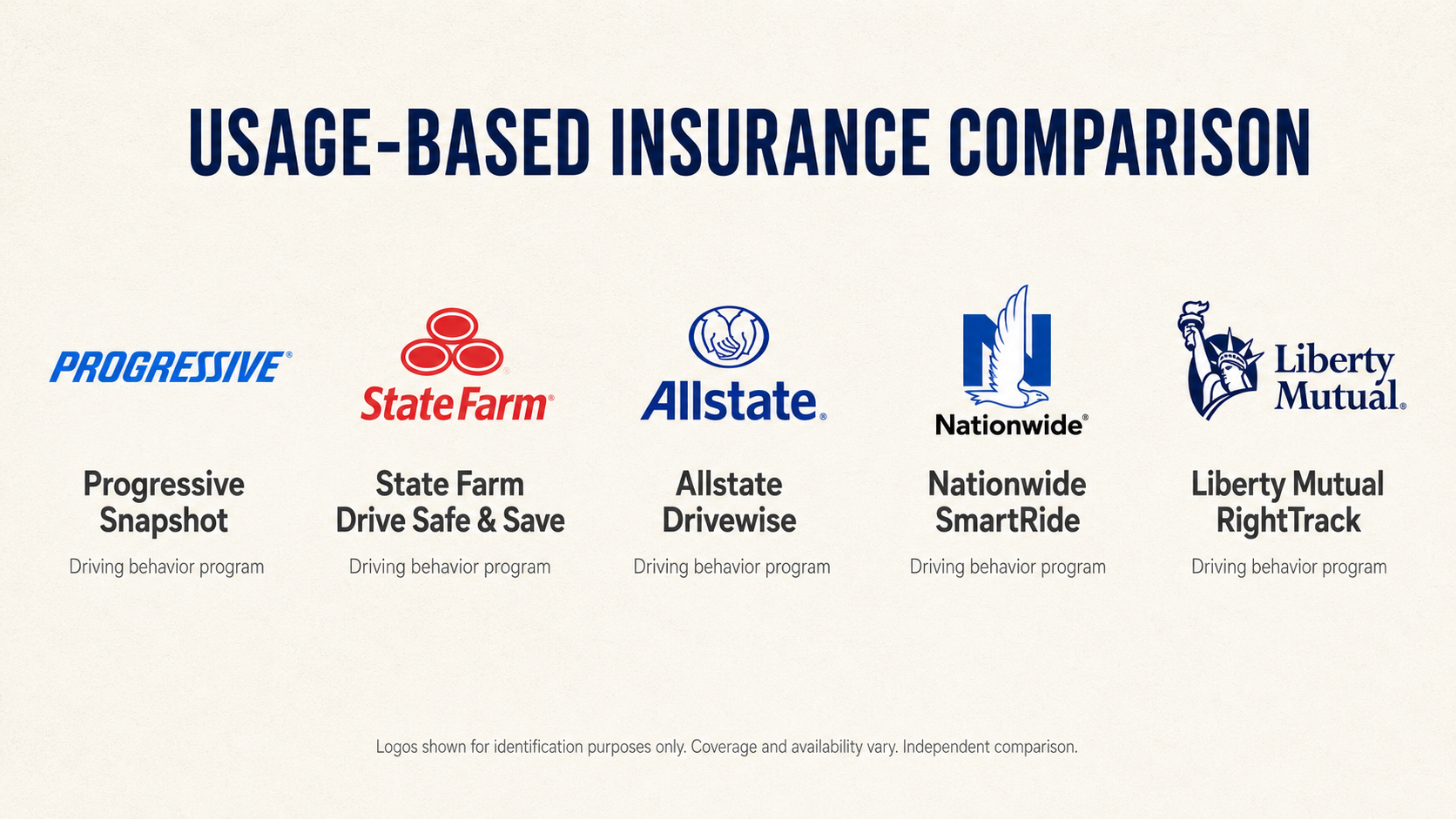
Usage-based insurance, often called UBI or telematics auto insurance, uses information about how much, when, and sometimes how you drive to help an insurer evaluate risk. Instead of relying only on traditional rating factors—such as location, vehicle, driving record, coverage selections, age where permitted, and prior insurance—a participating program collects driving information through a smartphone app, a plug-in device, connected-car technology, or another approved method. The insurer applies its filed rating plan and state rules to that information.
UBI is not one standardized product. Some programs emphasize mileage, sometimes described as pay-per-mile or pay-as-you-drive coverage. Others evaluate behaviors such as braking, acceleration, cornering, speed, phone distraction, trip timing, and trip duration. Some offer an enrollment discount followed by a renewal adjustment; others calculate a variable monthly mileage charge. A program may reward favorable driving, but participation does not guarantee savings. Depending on the insurer, state, recorded results, and program terms, the final effect may be a smaller discount, no discount, loss of a participation discount, or a higher rate.
The best decision is therefore not simply whether telematics sounds modern. Drivers should compare the full policy premium, coverage limits, deductibles, exclusions, claims service, data practices, program rules, and what happens at renewal. A careful low-mileage driver may find UBI attractive, while a driver with frequent late-night trips, long commutes, abrupt stops caused by dense traffic, or several household drivers may prefer to compare both telematics and non-telematics quotes.
Program names, eligibility, tracked variables, mobile-device requirements, discount ranges, rate effects, and availability vary by insurer and state. Read the current program agreement, privacy notice, quote, and issued policy before enrolling.
Quick facts about usage-based insurance in 2026
Usage-based insurance connects part of auto insurance pricing to measured vehicle use or driving behavior. The method is increasingly app-based, although plug-in devices, manufacturer-connected systems, and mileage verification may still be used. Participation is generally optional, but exact rules belong to each insurer’s approved program.
| Question | Practical answer | What to verify |
|---|---|---|
| What is UBI? | Auto insurance that uses measured mileage or driving behavior as part of rating or discount calculation. | Whether the program is behavior-based, mileage-based, or both. |
| How is data collected? | Common methods include smartphone apps, plug-in devices, connected vehicles, beacons, and odometer reporting. | Device compatibility, permissions, battery and data use, and trip-classification rules. |
| Is savings guaranteed? | No. Results depend on the driver, program, insurer, state, base rate, and renewal rules. | Whether unfavorable data can raise the rate or only reduce a potential discount. |
| Does coverage change? | Usually UBI changes rating rather than the core coverage contract, but policy options still differ. | Liability limits, deductibles, comprehensive, collision, UM/UIM, and endorsements. |
| Is location tracked? | Some systems collect GPS or trip-location information; others may rely on different signals. | The program privacy notice, retention period, sharing, access, and deletion procedures. |
How usage-based auto insurance works
The process begins when an eligible driver receives a quote or offer and chooses to enroll. The insurer explains the collection method and required setup. With an app-based program, the driver may need to enable location, motion, Bluetooth, background activity, or other phone permissions. A beacon may help associate a phone with a particular vehicle. A plug-in device generally connects to the vehicle’s diagnostic port. A connected-car program may receive eligible information from the vehicle manufacturer or an approved data service. Pay-per-mile coverage may require an odometer image, device, or periodic mileage reading.
After activation, the program records trips during a monitoring period or throughout the policy. The app may show trip details and driving feedback. Some programs let the user mark a trip as passenger travel, public transportation, or another non-driving event. Because phone-based detection is not perfect, drivers should learn how corrections work and how quickly a trip must be reclassified. A household should also know which drivers and vehicles must participate, because a vehicle-specific program may work differently from a policy-level program.
The insurer then converts eligible data into a score, tier, mileage amount, or rating variable according to its program. The scoring formula is proprietary and may weigh events differently. One hard brake in heavy traffic does not necessarily determine the result; frequency, severity, distance driven, timing, and patterns may matter. When the monitoring period ends—or at each renewal for continuous programs—the insurer applies the result as allowed by its filed rules. If the driver stops transmitting data, deletes the app, changes phones, or disconnects a device, the participation discount may be removed or another program rule may apply.
| Program structure | Primary focus | Best comparison question |
|---|---|---|
| Pay how you drive | Behavior such as braking, acceleration, speed, cornering, distraction, and driving time. | Can my result increase the rate, or does it only determine the size of a discount? |
| Pay as you drive | Mileage or vehicle usage, sometimes combined with other variables. | How is mileage verified, and what happens if I drive more than estimated? |
| Pay per mile | A base premium plus a charge tied to miles driven, subject to program terms. | Is there a daily mileage cap, minimum charge, or monthly adjustment? |
| Trial or test-drive program | A temporary observation period that may produce an offer or discount. | Is the data used only for the offer, and how long is it retained? |
| Continuous telematics | Ongoing data that may update the rate or discount at renewal. | How often is the result recalculated, and how can I leave the program? |
What driving data can telematics collect?
The National Association of Insurance Commissioners explains that UBI can measure miles driven, time of day, location, rapid acceleration, hard braking, hard cornering, cell phone use, and other vehicle events. That list describes possible data, not a promise that every insurer collects every item. A specific program’s disclosures control. Drivers should distinguish between information collected to make the technology function, information shown as coaching feedback, and information actually used to calculate a rate.
Mileage is important because more time on the road generally creates more opportunity for a loss. Time of day can matter because traffic conditions and crash severity vary. Braking and acceleration may indicate driving smoothness, but road design, congestion, weather, and other motorists can influence those events. Phone handling may be used as a distraction indicator. Speed may be evaluated against a program threshold or posted-limit data. Location can help identify a trip and its context, but it also creates obvious privacy questions.
Ask how the system distinguishes driver from passenger, handles shared vehicles, recognizes a replacement phone, and treats missing signals. If family members borrow the car, determine whose phone must be present and whose score receives the trip. If you drive for rideshare, delivery, or business purposes, disclose that use during the quote; telematics does not convert a personal auto policy into commercial or rideshare coverage.
| Possible data point | What it may indicate | Consumer question |
|---|---|---|
| Miles driven | Overall road exposure and low-mileage eligibility. | Is annual mileage projected, verified, or charged monthly? |
| Braking and acceleration | Frequency and severity of abrupt vehicle movements. | How are congestion, emergency maneuvers, and trip length considered? |
| Speed and cornering | Driving pace and vehicle handling patterns. | Which thresholds matter, and is road-context data used? |
| Time and duration | When and how long the vehicle is on the road. | Which times are treated as higher risk? |
| Phone interaction | Potential handheld distraction during a detected trip. | How are passenger phone use and hands-free activity handled? |
| Location or route | Trip detection, road context, and geographic movement. | Is precise GPS collected, who can access it, and when is it deleted? |
How telematics can affect your auto insurance rate
A UBI result is only one part of the premium. Your liability limits, physical damage coverage, deductibles, vehicle, garaging location, drivers, claims, violations, credit-based insurance score where permitted, prior coverage, and other state-approved variables may still matter. Even if telematics produces a discount, the total renewal premium can rise because the insurer’s base rates, vehicle repair costs, territory experience, coverage choices, or other factors changed. Compare the dollar premium before and after all changes—not merely the percentage attached to one discount.
Program language also matters. “Up to” describes a maximum opportunity, not a typical or guaranteed result. An enrollment discount may be temporary and replaced by a personalized adjustment after sufficient data is collected. A program that says poor driving will not surcharge may still remove the initial participation discount. Another program may allow the measured behavior to increase, decrease, or leave the renewal rate unchanged. State rules can produce different outcomes for the same branded program.
Drivers should compare quotes using identical liability limits, deductibles, optional coverages, drivers, and vehicle usage. Then request a telematics illustration and a traditional alternative where available. If the UBI option looks cheaper, confirm the first-term price, likely renewal mechanism, minimum participation requirements, and consequences of incomplete data. Low-mileage households should also compare a conventional low-mileage discount, because it may provide value without continuous behavioral tracking.
Privacy, consent, and control of telematics data
Privacy should be part of the purchase decision, not an afterthought. Before enrolling, read the program agreement and privacy notice. Identify the categories of information collected, the purposes for collection, whether precise location is included, how long information is retained, and which affiliates, service providers, vendors, regulators, law enforcement entities, or other parties may receive it. Also determine whether data may be used for underwriting, rating, claims handling, fraud detection, research, marketing, or services beyond driving feedback.
Consent can become complicated in a household. The named insured may enroll the vehicle, but other drivers could produce data. Tell regular drivers that telematics is active and follow the insurer’s consent instructions. For employer-owned or business vehicles, workplace monitoring and notice requirements deserve separate legal review. Parents of young drivers should discuss what information is visible in the app and who can access it.
Basic digital hygiene helps. Download only the insurer’s official app, use a unique password, enable account security features, keep the phone operating system current, and avoid sharing login credentials. If you replace or sell the vehicle, change phones, or leave the program, follow the formal removal steps rather than simply deleting the app. Ask whether historical information remains after withdrawal and how to request access, correction, or deletion when applicable.
| Review point | Why it matters | Action |
|---|---|---|
| Collection | The app may need more information than the score screen displays. | Read the complete data-category and phone-permission disclosures. |
| Use | Data may support rating, feedback, claims, fraud review, or other stated purposes. | Confirm which uses are required and which choices can be limited. |
| Sharing | Technology vendors or other permitted recipients may process information. | Review recipient categories and the insurer’s privacy policy. |
| Retention | Deleting an app does not necessarily delete historical records. | Ask how long trip and derived-score data remain. |
| Correction | Phone systems may misclassify passenger trips or transit. | Learn the correction deadline and dispute process. |
| Withdrawal | Leaving may affect a participation discount or future adjustment. | Follow the official opt-out process and request written confirmation. |
Who may benefit—and who should compare carefully?
UBI may appeal to remote workers, retirees, students who leave a vehicle at home, households with an occasional-use car, and drivers with short predictable trips. Smooth drivers who avoid phone handling and higher-risk driving times may also be comfortable with a behavior-based program. Newer drivers can value app feedback, although the whole household should understand how monitoring and rate treatment work.
Careful comparison is especially important for long-distance commuters, shift workers, medical professionals, hospitality employees, airport workers, and others who routinely drive late at night or during congested periods. A driver may be cautious yet still experience frequent braking in city traffic. Delivery, rideshare, sales, home-service, and multi-stop business driving can produce high mileage and complex usage; it also creates coverage questions that must be disclosed separately. Drivers uncomfortable with location or behavioral collection may prefer a traditional policy or mileage-verification option if available.
Vehicle and phone compatibility matter too. Older vehicles may not support connected services, while a plug-in device may not work with every model. App programs require an eligible smartphone and reliable permissions. Battery-saving modes, disabled location services, missed Bluetooth connections, or limited data can interrupt collection. Ask how much valid data is required and whether technical failures are treated differently from nonparticipation.
There is no universal winner. The right choice balances price, coverage, privacy preferences, driving pattern, technology comfort, and insurer service. Blake Insurance Group can help shoppers compare available auto options rather than assuming that either UBI or traditional rating will always be cheaper.
How to compare usage-based and traditional auto insurance quotes
- Prepare accurate information. Gather driver names, dates of birth, license details, vehicle identification numbers, garaging address, annual mileage, commute, vehicle use, current coverage, and loss history.
- Choose matching protection. Keep bodily injury, property damage, uninsured or underinsured motorist coverage, comprehensive and collision deductibles, rental, roadside, and other options consistent.
- Ask for both paths. When available, compare the policy with telematics against a non-telematics or low-mileage alternative.
- Review the data bargain. Understand collection, scoring, privacy, renewal, withdrawal, missing-data, and trip-correction rules before accepting an enrollment discount.
- Compare total cost. Evaluate the complete premium, installment fees, first-term discount, potential renewal range, and coverage—not a single promotional percentage.
- Recheck after life changes. A new job, commute, vehicle, driver, move, or business use can change both eligibility and value.
If you are searching for usage-based auto insurance near me, start by comparing available policy choices for your actual state, vehicle, and household. Not every carrier, program, or discount is available in every location, and online eligibility is subject to underwriting.
Start an auto insurance comparison
Use the secure quote path to review available auto insurance options. Provide complete and accurate information so coverage and pricing comparisons are meaningful.
Start Auto Insurance QuoteOnline quoting does not guarantee eligibility, a telematics option, a specific discount, coverage, or binding. Final terms depend on state availability, carrier underwriting, submitted information, and payment.
Usage-based insurance FAQs
What is usage-based insurance?
Usage-based insurance is auto insurance that uses measured mileage, driving behavior, or both as part of an insurer’s approved rating or discount program. Data may come from a smartphone app, plug-in device, connected vehicle, beacon, or mileage report.
Can usage-based insurance raise my rate?
It can, depending on the insurer, program, and state. Some programs only change the size of a discount, while others may increase, decrease, or leave a renewal adjustment unchanged. Losing an initial participation discount can also increase the amount due. Read the program-specific rules.
Does telematics track my location?
Some telematics programs collect GPS or trip-location data, while others may use different data. Review the specific privacy notice and permissions to learn what is collected, why it is used, who receives it, and how long it is retained.
Is pay-per-mile insurance the same as usage-based insurance?
Pay-per-mile is a form of usage-based insurance focused primarily on mileage, often with a base amount plus a mileage component. Behavior-based UBI may evaluate braking, acceleration, speed, distraction, timing, and other driving patterns. Some programs combine both.
What happens if my phone records me as the driver when I was a passenger?
Many app-based programs provide a way to reclassify a trip, but procedures and deadlines vary. Learn how corrections work when enrolling, review trips regularly, and contact the program if incorrect classifications cannot be fixed in the app.
Who is a good candidate for telematics auto insurance?
Low-mileage, remote, occasional-use, and smooth-driving customers may find UBI worth comparing. Long commutes, frequent late-night travel, dense traffic, business driving, shared vehicles, phone incompatibility, or privacy concerns can make a traditional option worth comparing too.
Does a telematics app replace auto insurance coverage?
No. Telematics is generally a rating or discount method. You still need to select liability limits and applicable coverages such as comprehensive, collision, uninsured or underinsured motorist, medical, rental, roadside, and state-required protection.
Can Blake Insurance Group help me compare usage-based insurance?
Yes. Blake Insurance Group is an independent agency that can help shoppers review available auto insurance options, coverage selections, deductibles, telematics considerations, and online quote paths. Availability varies by state and underwriting.
Independent agency: Blake Insurance Group LLC is an independent insurance agency. It is not affiliated with any insurer, telematics vendor, vehicle manufacturer, app provider, or technology platform referenced generally on this page.
Licensing: Licensed insurance producer (NPN 16944666).
Important: Usage-based insurance programs, data collection, eligibility, premiums, discounts, surcharges, deductibles, limits, policy forms, underwriting decisions, and effective dates vary by carrier and state. The quote, program agreement, privacy notice, declarations, policy, exclusions, and endorsements govern. This page provides general information and is not legal, privacy, tax, financial, or claims advice.
Last reviewed: July 20, 2026. Program details can change; confirm current terms before enrollment.




