Best Pet Insurance for Older Dogs: Compare Senior Dog Coverage, Costs, Waiting Periods, Claims, Pre-Existing Conditions, Deductibles, and Quote Options
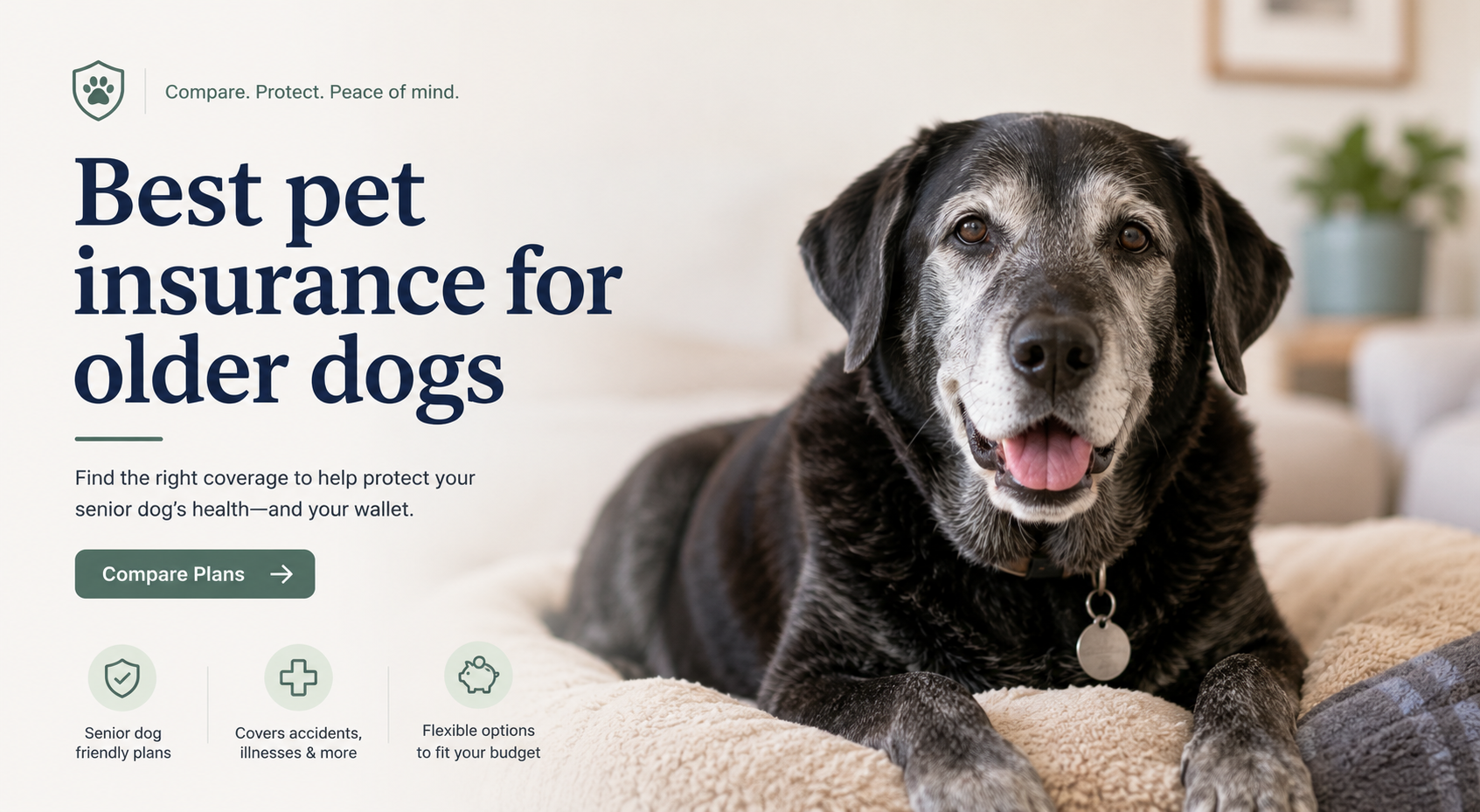
The best pet insurance for older dogs is the policy that still gives meaningful protection for new accidents and illnesses after your dog has already entered the senior stage. Older dogs are more likely to need diagnostics, prescription medication, emergency visits, surgery, arthritis care, cancer treatment, dental work, chronic-condition management, and specialist follow-up. That makes policy details more important than a low monthly premium.
Senior dog insurance is different from puppy insurance. A young dog may have fewer medical records and fewer prior symptoms. An older dog may already have a history of limping, allergies, ear infections, dental disease, arthritis, lumps, digestive issues, heart murmurs, kidney concerns, diabetes, or other documented symptoms. Pet insurance generally does not cover pre-existing conditions, so the best plan for an older dog is usually the one that gives strong protection for future, eligible, new issues while making the rules clear.
For 2026, older-dog shoppers should compare more than price. Review upper age limits, accident-and-illness eligibility, waiting periods, orthopedic rules, dental coverage, exam-fee treatment, prescription medication coverage, annual limits, deductible choices, reimbursement percentages, claim documentation, and whether wellness benefits are worth adding. Some companies allow senior dogs to enroll into full accident-and-illness coverage. Others may limit options by age, price older pets higher, or make certain conditions difficult to insure because of prior records.
If you are searching for pet insurance near me for an older dog, quote coverage while your dog is still stable. Waiting until after a diagnosis usually reduces your options because symptoms or treatment before the policy starts can become excluded. A senior dog can still be worth insuring, but the goal is realistic protection: future eligible accidents, new illnesses, diagnostic workups, medications, and costly surprises that are not already part of your dog’s medical history.
Pet insurance typically helps with eligible new accidents and illnesses after applicable waiting periods are satisfied. It generally does not cover pre-existing conditions. Older dogs may be eligible for coverage, but pricing, exclusions, age rules, waiting periods, and available benefits vary by insurer, state, breed, age, and medical history.
Quick snapshot: best pet insurance for older dogs in 2026
The best senior dog policy balances eligibility, clear pre-existing-condition rules, strong accident-and-illness coverage, useful annual limits, realistic deductibles, prescription support, diagnostic coverage, and claim handling that works when bills are high.
| Review point | Why it matters for older dogs | What to check before buying |
|---|---|---|
| Upper age rules | Some insurers limit new enrollment by age or change available plan options for senior pets. | Confirm your dog can enroll in accident-and-illness coverage, not just accident-only coverage. |
| Pre-existing conditions | Older dogs often have more medical history, symptoms, or prior diagnoses. | Review how the insurer defines symptoms, bilateral conditions, curable conditions, and record review. |
| Diagnostics | Senior dogs often need bloodwork, X-rays, ultrasound, specialist review, and ongoing monitoring. | Compare diagnostics, imaging, lab work, specialist care, and follow-up testing. |
| Prescription support | Older dogs may need long-term medications after an eligible new illness or injury. | Check prescription drugs, supplements, therapeutic diets, and pharmacy rules. |
| Claim value | Senior dog claims can be larger and more complex. | Compare deductible, reimbursement, annual limit, exam-fee coverage, and claim documentation. |
Coverage priorities for older dogs
Older dogs need coverage that responds to real senior-dog risks. A strong policy should be reviewed for accidents, illnesses, diagnostics, surgery, hospitalization, cancer care, arthritis-related complications, prescription medications, emergency care, specialist treatment, and chronic-condition follow-up when the condition is eligible and not pre-existing.
Accident coverage can still matter for senior dogs. Older dogs can slip, tear a ligament, get bitten, ingest a foreign object, suffer a wound, or need emergency surgery after an injury. Illness coverage is usually the bigger priority because senior dogs are more likely to develop new conditions that require testing and ongoing care. Cancer, endocrine disease, kidney issues, heart disease, digestive illness, urinary issues, respiratory disease, and mobility-related problems can produce expensive veterinary bills.
Diagnostics should receive special attention. Senior-dog veterinary care often begins with blood panels, urinalysis, imaging, X-rays, ultrasound, biopsies, cultures, and specialist consultations. A plan that looks affordable but weakens diagnostic coverage may not perform well when a serious condition appears. Exam-fee treatment also matters because specialist and emergency exam fees can be substantial.
| Coverage priority | Why it matters | What to compare |
|---|---|---|
| Accident-and-illness coverage | Senior dogs need protection for injuries and new sicknesses, not only routine care. | Confirm full accident-and-illness eligibility for your dog’s age and state. |
| Diagnostics | Testing can become a large part of the bill before treatment starts. | Compare X-rays, ultrasound, lab work, biopsies, advanced imaging, and specialist diagnostics. |
| Prescription medications | Older dogs may need long-term medication after a covered condition. | Review covered drugs, supplements, therapeutic diets, pharmacy rules, and refill limits. |
| Dental illness | Senior dogs often have dental history, periodontal issues, or extraction needs. | Check dental accident, dental illness, cleaning, periodontal, and prior-dental-history rules. |
| Exam fees | Emergency and specialist exam fees can be expensive. | Confirm whether exam fees are included, optional, or excluded. |
| Annual limits | Senior-dog claims can exceed low annual caps quickly. | Compare annual maximums against a realistic emergency or cancer-treatment bill. |
For older dogs, the strongest plan is usually not the cheapest plan. It is the plan that makes future eligible illness, diagnostics, prescription medication, surgery, emergency care, and ongoing treatment affordable enough to use.
Pre-existing conditions, waiting periods, and senior dog medical records
Pre-existing conditions are the most important issue when buying pet insurance for an older dog. If your dog had symptoms, treatment, diagnosis, abnormal lab findings, limping, vomiting, coughing, itching, ear problems, dental disease, tumors, weight loss, or other documented concerns before the policy started or before a waiting period ended, the insurer may treat that condition as pre-existing.
This does not mean pet insurance is useless for senior dogs. It means expectations must be realistic. A policy may not cover the arthritis already in your dog’s record, but it may help with a future eligible injury, new cancer diagnosis, new infection, unrelated emergency, covered surgery, or another new condition that begins after coverage rules are satisfied. The exact outcome depends on policy language and medical-record review.
Waiting periods also matter. A waiting period is the time between enrollment and when coverage begins for certain claim types. If a symptom occurs during the waiting period, it may be excluded as pre-existing. Some insurers have different waiting periods for accidents, illnesses, orthopedic conditions, cruciate ligament issues, or wellness benefits. Senior dogs with mobility risks need special attention to knee, hip, back, and orthopedic language.
| Review area | Senior dog concern | Smart review step |
|---|---|---|
| Prior symptoms | Symptoms can matter even without a formal diagnosis. | Read how the insurer defines signs, symptoms, and related conditions. |
| Medical records | Older dogs often have years of vet history. | Collect records from every veterinarian, emergency clinic, and specialist. |
| Orthopedic issues | Senior dogs may have arthritis, limping, cruciate concerns, hip problems, or back issues. | Review orthopedic waiting periods, bilateral exclusions, and prior-limping rules. |
| Dental history | Past dental disease may affect future dental claim eligibility. | Check cleaning requirements, periodontal rules, and pre-existing dental exclusions. |
| Curable conditions | Some insurers may reconsider certain resolved conditions after a symptom-free period. | Ask how curable conditions are defined and documented. |
| Waiting-period illness | Illness during the waiting period may become excluded. | Enroll before symptoms appear and avoid delaying coverage decisions. |
What affects the cost of pet insurance for older dogs?
Older dog pet insurance usually costs more than coverage for a younger dog because claim risk increases with age. Pricing can vary by species, breed, age, ZIP code, sex, spay or neuter status, deductible, reimbursement percentage, annual limit, wellness add-ons, and policy design. A senior small mixed-breed dog may price very differently from an older large-breed dog with orthopedic risk.
Cost should be compared against realistic veterinary exposure. A low monthly premium may come with a high deductible, lower reimbursement, a low annual limit, excluded exam fees, weaker dental benefits, or limited add-ons. A higher premium may be reasonable if it gives stronger protection for the expensive events older dogs are more likely to face: emergency hospitalization, surgery, cancer diagnosis, advanced imaging, prescription medication, chronic illness, and specialist treatment.
For older dogs, it can help to run sample claim math. Compare how each plan would reimburse a $1,200 diagnostic visit, a $3,500 emergency surgery, and an $8,000 cancer-treatment scenario. Then compare that against the annual premium. This gives a clearer picture than looking at the monthly cost alone.
| Cost factor | Why it changes price | What to compare |
|---|---|---|
| Dog age | Older dogs usually have higher expected claim risk. | Confirm enrollment eligibility and renewal rules. |
| Breed | Breed can affect orthopedic, cardiac, dental, cancer, and hereditary-condition risk. | Use the correct breed or mixed-breed size. |
| ZIP code | Veterinary costs vary by region. | Quote using your current home ZIP code. |
| Deductible | Higher deductibles lower premium but increase claim-time cost. | Choose a deductible you can pay during an emergency. |
| Reimbursement | Higher reimbursement may reduce your share of eligible bills. | Compare 70%, 80%, and 90% style options where available. |
| Annual limit | Low limits can run out quickly with senior-dog claims. | Compare annual maximums against emergency and chronic-care scenarios. |
Best-fit recommendations by senior dog situation
The best pet insurance for an older dog depends on the dog’s current health, prior records, breed, age, and the owner’s budget. A healthy seven-year-old dog with clean records may have more useful coverage options than a twelve-year-old dog with multiple prior diagnoses. Both may still benefit from a quote, but the expectations and policy value are different.
Owners of older dogs should prioritize future risk. If your dog already has arthritis, a policy may not help with that existing arthritis, but it may help with a future eligible infection, injury, cancer diagnosis, digestive emergency, urinary condition, or unrelated illness. If your dog is generally healthy but aging, coverage can still be valuable because senior-dog conditions can appear quickly and create large bills.
Wellness coverage deserves a separate decision. Routine senior exams, bloodwork, vaccines, parasite prevention, dental cleanings, and preventive testing may be useful, but wellness benefits often reimburse predictable expenses up to scheduled limits. Accident-and-illness coverage is the protection layer for larger unpredictable bills.
| Senior dog situation | What matters most | Best review strategy |
|---|---|---|
| Healthy older dog | Protecting against future eligible illnesses and injuries before symptoms appear. | Quote accident-and-illness coverage now and compare waiting periods. |
| Dog with prior conditions | Understanding what will be excluded and what may still qualify in the future. | Review medical records and ask how pre-existing conditions are evaluated. |
| Large-breed senior | Orthopedic, mobility, cruciate, hip, back, and arthritis-related concerns. | Read orthopedic waiting periods and bilateral-condition language carefully. |
| Dental-history dog | Dental illness, cleanings, extractions, periodontal disease, and prior oral health notes. | Check dental exclusions and preventive cleaning requirements. |
| Budget-focused owner | Premium, deductible, reimbursement, annual limit, and likely claim exposure. | Compare sample claims before selecting the lowest premium. |
| Chronic-care planner | Long-term medication, specialist care, diagnostics, and repeated visits. | Compare annual limits, refill rules, and recurring-condition treatment. |
Claims checklist for older dogs
Older-dog claims often require more documentation because there is more medical history to review. Before enrolling, gather records from every veterinary clinic your dog has visited, including wellness visits, dental cleanings, emergency visits, specialist reports, lab results, imaging, medication history, and notes about symptoms. This helps you understand what may be considered pre-existing before a future claim.
When a claim happens, ask the veterinarian for an itemized invoice, diagnosis notes, discharge summary, prescriptions, proof of payment, and any lab or imaging reports. Submit claims quickly and keep copies. If a claim is denied, review the denial reason against your policy language and medical records. Sometimes denials relate to missing documentation rather than a final coverage decision.
| Claim item | Why it matters | What to do |
|---|---|---|
| Full vet records | Insurers review older dogs for prior symptoms and conditions. | Request records from every clinic and specialist. |
| Itemized invoice | Claims require dates, services, diagnosis, and charges. | Ask for a detailed invoice before leaving the clinic. |
| Diagnosis notes | Diagnosis language helps determine eligible conditions. | Save visit notes, discharge summaries, and treatment plans. |
| Medication list | Older dogs may have recurring prescriptions. | Keep names, dosages, refill dates, and reason prescribed. |
| Proof of payment | Reimbursement claims usually require proof that the bill was paid. | Save receipts, card records, and claim confirmations. |
| Appeal documents | Some claim disputes require additional support. | Ask your vet for clarification letters when appropriate. |
Quote pet insurance for older dogs online
Blake Insurance Group helps pet owners compare coverage options before choosing a policy. Older dogs need special attention because age, medical history, breed risks, and prior symptoms can affect eligibility and claim outcomes. The right plan should be judged by real protection: future eligible accidents, new illnesses, diagnostics, prescriptions, emergency care, surgery, and claim process.
Before starting a quote, gather your dog’s age, breed, ZIP code, spay or neuter status, medical history, current medications, prior injuries, prior illnesses, dental history, and preferred deductible. Decide whether you want accident-and-illness coverage only or accident-and-illness with wellness support. Be realistic about pre-existing conditions and ask how your dog’s records may affect coverage.
Use the quote path below to start a pet insurance quote and compare options. Coverage is not active until the application is completed, eligibility is confirmed, payment is accepted where required, and the insurer or administrator confirms the policy effective date.
Quote availability, premiums, coverage terms, deductibles, reimbursement, waiting periods, exclusions, wellness benefits, age eligibility, and effective dates vary by dog, ZIP code, insurer, policy form, and underwriting rules.
Best pet insurance for older dogs FAQs
Can you get pet insurance for an older dog?
Yes, many older dogs can still qualify for pet insurance, but eligibility, pricing, plan options, and coverage rules vary by insurer, state, age, breed, and medical history. Always confirm whether your dog is eligible for accident-and-illness coverage.
Is pet insurance worth it for a senior dog?
Pet insurance can be worth it for a senior dog when the policy still provides meaningful protection for future eligible accidents, new illnesses, diagnostics, prescriptions, surgery, and emergency care. It is less useful when most likely issues are already pre-existing.
Does pet insurance cover pre-existing conditions in older dogs?
Pet insurance generally does not cover pre-existing conditions. If your older dog had symptoms, treatment, or diagnosis before the policy started or before a waiting period ended, that issue may be excluded.
What should I compare before buying senior dog insurance?
Compare upper age limits, accident-and-illness eligibility, waiting periods, orthopedic rules, dental coverage, exam-fee treatment, prescriptions, annual limits, deductibles, reimbursement percentages, wellness options, and claim documentation.
Is wellness coverage good for older dogs?
Wellness coverage can help with predictable routine care such as exams, vaccines, preventive testing, and dental cleanings, but it is different from accident-and-illness insurance. Compare the added cost against the benefits you expect to use.
When should I buy pet insurance for an older dog?
Buy coverage before new symptoms appear. Waiting until after a diagnosis, injury, or abnormal test result can cause that issue to be treated as pre-existing and excluded from coverage.
Independent agency: Blake Insurance Group LLC is an independent insurance agency and is not affiliated with Fetch, any veterinary provider, pet pharmacy, pet retailer, insurer, administrator, or quote platform.
Licensing: Licensed insurance producer (NPN 16944666).
Important: Pet insurance availability, premiums, discounts, deductibles, reimbursement percentages, annual limits, waiting periods, wellness benefits, age eligibility, covered conditions, exclusions, claim outcomes, and effective dates vary by state, ZIP code, pet species, breed, age, medical history, insurer, administrator, underwriting rules, and policy form. Your issued policy, declarations page, endorsements, exclusions, and claim documents govern your coverage and obligations. This page is general information only and is not veterinary, legal, tax, financial, or claims advice.
Trademarks: Fetch® and any carrier, platform, product, program, or veterinary-service names are trademarks™ or registered® trademarks of their respective owners. Use of these names does not imply affiliation or endorsement.




