Best Pet Insurance for Puppies: Compare Accident Coverage, Illness Protection, Wellness Benefits, Vaccines, Spay/Neuter Options, Waiting Periods, Deductibles, Claims, and Quote Choices
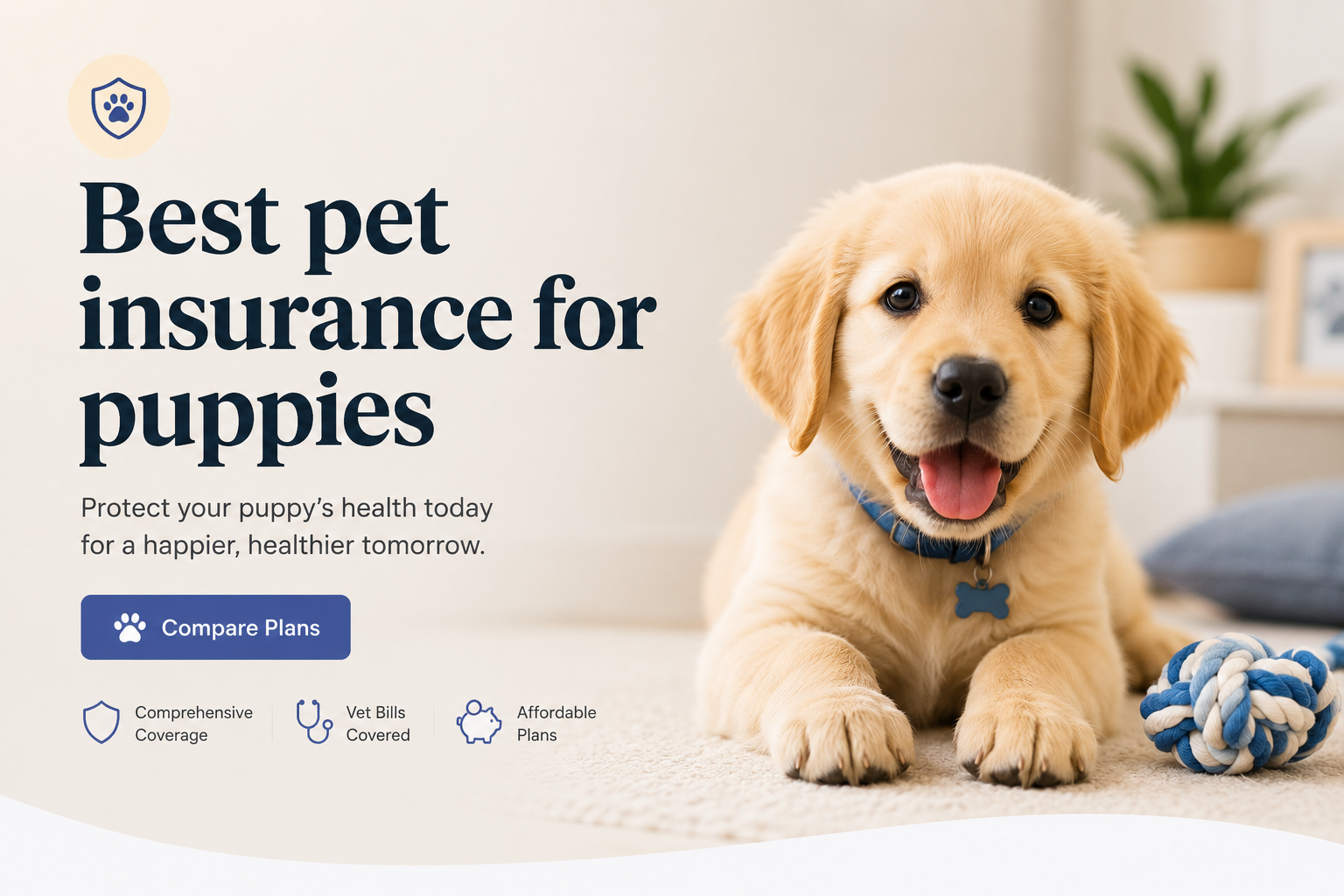
The best pet insurance for puppies is the policy that protects against expensive new accidents and illnesses while giving you a clear option for routine puppy care if you want wellness support. Puppies are energetic, curious, and still developing. That creates real claim risk from swallowed objects, broken teeth, cuts, digestive issues, allergic reactions, parasites, ear infections, orthopedic injuries, emergency visits, and early signs of hereditary or congenital conditions.
Puppy insurance is different from buying coverage for an older dog. When you enroll early, you may have a cleaner medical record, fewer prior symptoms, and a better chance of protecting future conditions that develop after coverage begins and waiting periods are satisfied. Waiting too long can create exclusions if your puppy develops symptoms before enrollment. Even a limp, vomiting episode, allergy flare, or ear infection can become important during a future claim review.
For 2026, the strongest puppy insurance comparison starts with accident-and-illness protection. That is the core coverage designed for unexpected veterinary bills. Wellness or preventive care is optional and separate. Wellness can help with predictable costs like puppy exams, vaccines, parasite prevention, microchipping, spay or neuter support, dental cleaning, and routine testing, depending on the plan. It does not replace accident-and-illness coverage for major medical events.
If you are searching for puppy insurance near me, compare quotes using the same puppy profile: breed, age, ZIP code, sex, expected adult size, medical history, deductible, reimbursement percentage, annual limit, and wellness preference. A cheap puppy insurance quote may look good today, but a weak annual limit, missing exam-fee coverage, long orthopedic waiting period, or narrow dental definition can create surprises later. The best plan balances monthly premium, claim-time affordability, and broad protection for the first years of your dog’s life.
Pet insurance generally helps with eligible new accidents and illnesses after policy terms and waiting periods are satisfied. Wellness benefits are different from insurance and may follow separate benefit limits. Pre-existing conditions are typically excluded.
Quick snapshot: best pet insurance for puppies in 2026
The best puppy insurance plan should cover eligible new accidents and illnesses, allow licensed vet access, offer practical deductible and reimbursement options, explain waiting periods clearly, and give you the choice to add wellness support when routine puppy care matters.
| Review point | What to look for | Why it matters for puppies |
|---|---|---|
| Core coverage | Accident-and-illness protection for eligible new injuries and sicknesses. | Puppies are prone to swallowed objects, injuries, infections, parasites, and unexpected emergency visits. |
| Wellness option | Optional routine-care benefits for vaccines, exams, parasite prevention, microchipping, and spay/neuter support where available. | Puppy routine care is frequent during the first year and can be easier to budget with wellness benefits. |
| Vet access | Ability to use licensed veterinarians, emergency hospitals, and specialists. | Puppies may need urgent care after hours or specialty follow-up after an injury or illness. |
| Claim math | Clear deductible, reimbursement percentage, annual limit, and covered expense rules. | A low premium can become expensive if the plan leaves too much unpaid during a major claim. |
| Best timing | Enroll while your puppy is young and before symptoms appear. | Early enrollment helps reduce the chance that future issues are treated as pre-existing. |
Coverage review: what puppy insurance should cover
A strong puppy insurance plan should protect against eligible new accidents and illnesses. Accident coverage can help after bite wounds, broken bones, torn nails, cuts, swallowed toys, toxic ingestion, broken teeth, emergency surgery, and injuries from running, jumping, or rough play. Illness coverage can help after eligible new infections, allergies, digestive issues, ear infections, skin problems, urinary issues, parasites, cancer, or chronic conditions that begin after coverage is active and waiting periods are satisfied.
Diagnostics are a major part of puppy insurance value. Before a veterinarian can treat a serious condition, the puppy may need bloodwork, fecal testing, X-rays, ultrasound, cytology, lab work, specialist consultation, hospitalization, or emergency monitoring. A plan that covers only limited treatment but leaves testing unclear can create frustration during a real claim. Review whether diagnostics, prescription medication, exam fees, emergency care, specialist care, hospitalization, surgery, rehabilitation, alternative therapies, dental injuries, and hereditary conditions are included or require an add-on.
Hereditary and congenital condition rules matter for puppies because some breed-related problems show up early. Large-breed puppies may face orthopedic risk. Flat-faced breeds may have airway or eye issues. Small breeds may have dental or patella concerns. Mixed breeds can still develop inherited conditions. The best puppy insurance policy should clearly explain how hereditary and congenital issues are handled, whether there are breed exclusions, and whether orthopedic conditions have separate waiting periods.
| Coverage area | Why it matters | What to check before buying |
|---|---|---|
| Accidents | Puppies chew, run, jump, explore, and get into trouble quickly. | Review emergency care, surgery, X-rays, swallowed objects, toxic ingestion, and broken teeth. |
| Illnesses | Young dogs can develop infections, allergies, digestive problems, parasites, and early chronic conditions. | Confirm illness waiting periods, diagnostics, prescriptions, hospitalization, and chronic-condition rules. |
| Exam fees | Emergency and specialist exam fees can add cost before treatment begins. | Check whether accident-and-illness exam fees are included, optional, or excluded. |
| Hereditary conditions | Breed-related issues may appear as a puppy grows. | Review congenital, hereditary, orthopedic, hip, knee, and breed-specific rules. |
| Dental coverage | Puppies can break teeth or need dental-related treatment after injury or illness. | Separate dental injury, dental illness, and routine dental cleaning rules. |
| Prescriptions | Medication may be needed after infection, injury, surgery, allergies, or chronic illness. | Confirm drug coverage, prescription food, supplements, and pharmacy limitations. |
For puppies, do not buy based on premium alone. Compare the real claim math: deductible, reimbursement, annual limit, exam-fee coverage, waiting periods, exclusions, and whether wellness is included or separate.
Puppy wellness needs: vaccines, parasite prevention, microchipping, and spay/neuter
Puppy wellness care is predictable, frequent, and often separate from accident-and-illness insurance. During the first year, many puppies need multiple vaccine visits, wellness exams, fecal testing, deworming, flea/tick and heartworm prevention, microchipping, and eventually spay or neuter planning. A wellness add-on can help reimburse some of these routine expenses if the listed benefits match your veterinarian’s schedule and your household budget.
Wellness benefits should be evaluated like a budgeting tool. Add up what your puppy will realistically use in a year, then compare that number against the additional premium and benefit caps. A wellness package can be useful when you will use vaccines, preventive testing, parasite prevention, dental cleaning, or spay/neuter benefits. It may be less useful if the plan reimburses items you do not need or if the annual benefit limit is lower than the added cost.
The most important distinction is that wellness does not replace medical insurance. A routine-care package may help with vaccines, but it will not necessarily protect you from a $3,000 emergency surgery or a major hospitalization. For many puppy owners, the strongest setup is accident-and-illness coverage first, then optional wellness if the numbers make sense.
| Routine-care need | Why puppies may need it | How to compare wellness value |
|---|---|---|
| Wellness exams | Puppies often need several visits during the first year. | Check annual visit limits, reimbursement caps, and whether exams are listed benefits. |
| Vaccines | Core puppy vaccine series can require multiple appointments. | Compare covered vaccine types, benefit caps, and timing rules. |
| Parasite prevention | Heartworm, flea, tick, roundworm, hookworm, and other prevention can be recurring. | Check whether preventives, fecal tests, and deworming are reimbursable. |
| Microchipping | Microchips help identify a lost puppy. | Confirm whether microchipping appears in the wellness benefit schedule. |
| Spay/neuter | Many owners plan this procedure during puppyhood. | Do not assume coverage; check whether a wellness add-on includes any benefit. |
| Dental cleaning | Routine dental care may be separate from dental injury or illness coverage. | Compare routine dental benefit language against medical dental coverage. |
Waiting periods and pre-existing conditions for puppies
Waiting periods are one of the most important puppy insurance details. A waiting period is the time between enrollment and when coverage can begin for certain claims. If your puppy develops symptoms during the waiting period, that issue may not be covered. This is why it is better to enroll while the puppy is healthy instead of waiting until after a limp, cough, stomach issue, ear infection, or injury appears.
Pre-existing conditions are typically excluded. For puppies, this can include symptoms, diagnoses, treatments, or related issues that appear before enrollment, during a waiting period, or before the first required exam if the policy requires one. A pre-existing condition does not always mean a formal diagnosis. A vet note showing recurring vomiting, limping, scratching, coughing, or digestive symptoms can affect a future claim.
Orthopedic and breed-related waiting periods deserve extra attention. Some plans treat cruciate ligament injuries, hip dysplasia, patella issues, or other orthopedic conditions differently. Large-breed puppies and active breeds may face higher orthopedic risk as they grow. Before choosing a plan, review accident waiting periods, illness waiting periods, orthopedic waiting periods, wellness timing, and whether a vet exam can reduce or document eligibility for certain conditions.
| Review area | Why it matters | Smart review step |
|---|---|---|
| Accident waiting period | Puppies can get hurt soon after coming home. | Confirm when injury coverage starts and whether emergency care is eligible. |
| Illness waiting period | New infections, digestive issues, and allergies may appear early. | Check when illness coverage begins and how symptoms during the waiting period are handled. |
| Orthopedic waiting period | Ligament, knee, hip, and growth-related issues can be costly. | Review breed-specific and orthopedic condition rules before enrolling. |
| Pre-existing symptoms | Even early symptoms can affect future claim eligibility. | Enroll before symptoms appear and keep complete vet records. |
| First exam rules | Some policies require or rely on recent veterinary records. | Schedule a puppy wellness exam and save the medical record. |
How to choose the best puppy insurance plan
The best puppy insurance plan depends on your puppy’s breed, expected size, medical history, lifestyle, budget, and your comfort with risk. A high-energy sporting breed may need strong accident and orthopedic protection. A toy breed may make dental and patella rules more important. A flat-faced breed may need careful review of hereditary, respiratory, eye, and specialty-care coverage. A rescue puppy with limited medical history may need a plan that handles records clearly and explains how unknown prior symptoms are evaluated.
Choose a deductible you can afford during an emergency. A higher deductible can lower monthly premium but increases the amount you pay before reimbursement begins. Choose a reimbursement percentage that matches your comfort with claim-time cost sharing. A higher reimbursement percentage may cost more monthly but can reduce your share of eligible large claims. Choose an annual limit that reflects real emergency-care costs, not just routine-care expenses.
Also compare claim experience. The best puppy insurance should make it clear how to submit invoices, what records are needed, whether direct deposit is available, whether any vet in the U.S. or Canada can be used, how fast claims are reviewed, and how appeal or reconsideration works. Fast app-based claims are helpful, but clear policy language matters more when a claim is expensive.
| Puppy owner type | What matters most | Best review strategy |
|---|---|---|
| New puppy owner | Early enrollment, wellness visits, vaccines, and future medical protection. | Start with accident-and-illness coverage and compare optional wellness. |
| Large-breed owner | Orthopedic, hip, knee, growth, and emergency-care rules. | Review hereditary, congenital, and orthopedic waiting-period language. |
| Small-breed owner | Dental, patella, digestive, and injury coverage. | Compare dental injury, dental illness, and breed-related rules. |
| Budget-focused owner | Monthly premium, deductible, reimbursement, annual limit, and wellness value. | Compare total annual cost and likely claim-time exposure. |
| Routine-care planner | Vaccines, exams, parasite prevention, microchipping, and spay/neuter planning. | Value wellness separately from accident-and-illness insurance. |
| Risk-focused owner | Emergency surgery, hospitalization, diagnostics, prescriptions, and specialist care. | Choose stronger accident-and-illness protection over the lowest premium. |
What affects puppy insurance cost?
Puppy insurance cost depends on breed, age, ZIP code, sex, expected adult size, deductible, reimbursement percentage, annual limit, wellness selection, discounts, and policy form. A large-breed puppy may price differently from a small-breed puppy because expected claim risks can differ. A plan with a lower deductible, higher reimbursement, and higher annual limit usually costs more than a plan designed mainly for catastrophic protection.
Wellness add-ons can increase the monthly premium but may help with predictable first-year costs. The right question is whether the benefit schedule matches your veterinarian’s recommendations. If the wellness plan helps with vaccines, exams, parasite prevention, and spay/neuter support you already planned to pay for, it may improve budgeting. If it covers items you will not use, the add-on may not be worth the cost.
Before quoting, gather your puppy’s breed or mixed-breed estimate, age, sex, ZIP code, expected adult weight, known medical history, adoption or breeder records, vaccination history, and current medications. Compare multiple plan structures using the same assumptions. A fair quote comparison should match deductible, reimbursement, annual limit, wellness choice, and included benefits.
| Cost factor | Why it changes value | What to prepare |
|---|---|---|
| Breed | Breed can affect expected claim risk for hereditary, dental, orthopedic, or chronic issues. | Use the correct breed or best mixed-breed estimate. |
| Age | Young puppies may be easier to insure before medical history develops. | Enter the accurate birth date or best adoption estimate. |
| ZIP code | Veterinary costs and plan availability vary by location. | Use the ZIP code where your puppy primarily lives. |
| Deductible | Higher deductibles may lower premium but increase claim-time costs. | Choose a deductible you can pay during an emergency. |
| Reimbursement | Higher reimbursement may reduce your share of eligible bills. | Compare 70%, 80%, 90%, or other available options carefully. |
| Annual limit | Higher limits can improve protection during major claims. | Compare maximum payout against realistic emergency-care costs. |
| Wellness add-on | Routine-care benefits can help with first-year puppy expenses. | Estimate vaccines, exams, parasite prevention, microchip, and spay/neuter costs. |
Quote puppy insurance online
Blake Insurance Group helps puppy owners compare coverage before committing to a policy. Puppy insurance should be selected before symptoms develop, while your dog’s medical record is as clean as possible. The quote process should focus on the coverage you need now and the risks you want to manage as your puppy grows.
Use the quote option below to compare available puppy insurance options. Before starting, have your puppy’s name, breed, age, sex, ZIP code, expected adult size, spay or neuter status, vaccination history, adoption or breeder paperwork, known medical history, current medications, and prior injuries or illnesses ready. Decide whether you want accident-and-illness coverage only or coverage with wellness support.
Coverage is not active until the application is completed, eligibility is confirmed, payment is accepted where required, and the insurer or administrator confirms the policy effective date. Keep a copy of the quote summary, declarations page, sample policy, exclusions, waiting periods, wellness terms, and claim instructions.
Quote availability, premiums, coverage terms, deductibles, reimbursement, waiting periods, exclusions, discounts, wellness benefits, and effective dates vary by puppy, ZIP code, insurer, product, policy form, and underwriting rules.
Best pet insurance for puppies FAQs
When should I buy pet insurance for a puppy?
The best time to buy puppy insurance is while your puppy is young and before symptoms, injuries, or illnesses appear. Early enrollment can reduce the chance that future conditions are treated as pre-existing.
What should puppy insurance cover?
Puppy insurance should cover eligible new accidents and illnesses, diagnostics, emergency care, surgery, hospitalization, prescriptions, hereditary conditions, and specialist care. Wellness can be added separately if routine-care reimbursement is important.
Does puppy insurance cover vaccines?
Vaccines are usually routine care, not accident-and-illness insurance. They may be reimbursable only if you add a wellness or preventive-care benefit that lists vaccines as an eligible expense.
Does puppy insurance cover spay or neuter?
Spay and neuter procedures are usually considered routine or elective care. Some wellness add-ons may include a benefit for spay or neuter, but accident-and-illness insurance alone typically does not cover it.
Do puppy insurance plans cover pre-existing conditions?
Pet insurance typically does not cover pre-existing conditions. Symptoms, diagnoses, or treatment before enrollment or during a waiting period can affect future claim eligibility.
Can I quote puppy insurance online?
Yes. Use the online quote button on this page to compare available pet insurance options for eligible puppies.
Independent agency: Blake Insurance Group LLC is an independent insurance agency and is not affiliated with Fetch, any veterinary provider, pet pharmacy, pet retailer, insurer, administrator, wellness platform, or quote platform.
Licensing: Licensed insurance producer (NPN 16944666).
Important: Pet insurance availability, premiums, discounts, deductibles, reimbursement percentages, annual limits, waiting periods, wellness benefits, covered conditions, exclusions, claim outcomes, and effective dates vary by state, ZIP code, pet species, breed, age, medical history, insurer, administrator, underwriting rules, and policy form. Wellness products may not be insurance and may be subject to separate terms, availability rules, benefit schedules, and reimbursement limits. Your issued policy, declarations page, endorsements, exclusions, wellness agreement, and claim documents govern your coverage and obligations. This page is general information only and is not veterinary, legal, tax, financial, or claims advice.
Trademarks: Fetch® and any carrier, platform, product, program, or veterinary-service names are trademarks™ or registered® trademarks of their respective owners. Use of these names does not imply affiliation or endorsement.




