Travel Medical Insurance • Emergency Assistance & Care Abroad • 2026
Emergency Medical Assistance and Primary Medical Care Abroad
If you get sick or injured during international travel, the last thing you want to worry about is finding a doctor, paying out of pocket, or navigating a foreign healthcare system alone. Travel medical insurance connects you with 24/7 emergency assistance, trusted doctors and hospitals, and coverage for both urgent treatment and primary medical care while you’re abroad.
Powered by GeoBlue / Blue Cross Blue Shield global solutions. Coverage subject to policy terms and eligibility.
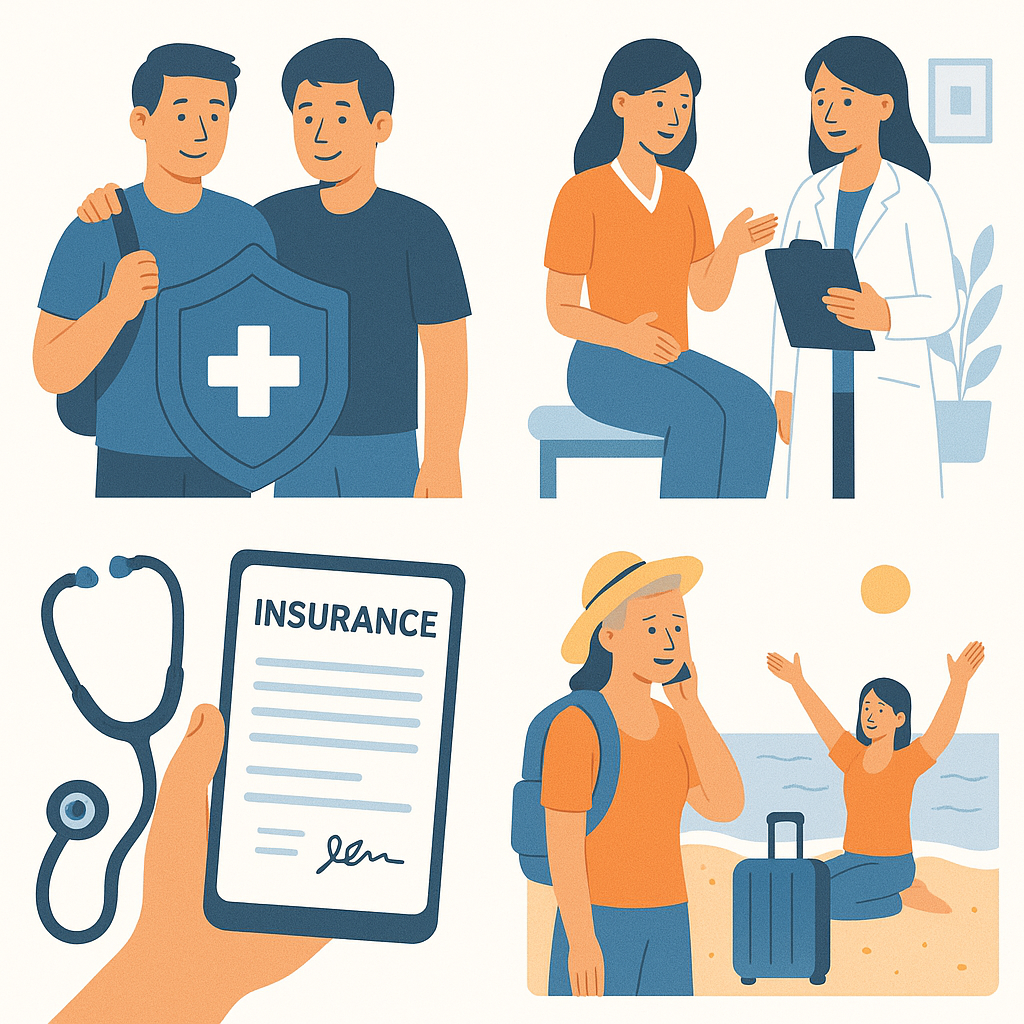
How emergency medical assistance works abroad
When you have travel medical insurance and something goes wrong, you don’t have to search for help on your own. Emergency assistance services are built to:
- Answer 24/7: You call a global assistance number any time, from any country.
- Assess your situation: Nurses and physicians help determine whether you need ER care, urgent care, or a next-day clinic visit.
- Locate trusted providers: They direct you to vetted hospitals and clinics—often with English-speaking staff.
- Arrange direct billing: In many cases, they can issue a guarantee of payment so you’re not asked to pay everything up front.
- Coordinate evacuation: If local facilities can’t treat you, the team arranges and oversees medical evacuation or repatriation.
- Update family & doctors: They keep your family at home informed and coordinate with your regular physician when needed.
Without a dedicated assistance team, you may be left to navigate local emergency numbers, language barriers, and payment requirements on your own—during one of the most stressful moments of your trip.
What counts as emergency medical care abroad?
Emergency care is for sudden, serious conditions that need immediate attention to prevent lasting harm. Examples include:
- Chest pain, shortness of breath, or signs of stroke
- Severe allergic reactions or anaphylaxis
- High fevers that don’t respond to medication
- Broken bones, deep cuts, or serious head injuries
- Uncontrolled bleeding
- Severe dehydration or persistent vomiting/diarrhea
Travel medical insurance is designed to respond quickly in these situations, covering ER treatment, hospital stays, and medically necessary transportation.
What is primary medical care while traveling?
Primary care abroad involves non-life-threatening issues that still require professional attention. Examples include:
- Minor infections, colds, or flu-like illnesses
- Ear infections or sinus problems from flying or diving
- Mild sprains, strains, or minor injuries
- Skin rashes, insect bites, or mild allergic reactions
- Refills for short-term prescriptions related to a new condition
Many travel medical plans cover these primary-care visits as long as the issue is new and unexpected. Routine checkups and long-term medication management are usually not covered.
Emergency assistance & care abroad: options compared
Here’s how relying on travel medical insurance compares with using only your domestic plan or walking into clinics abroad without coverage.
| Feature | Travel medical insurance | Domestic health plan only | No insurance (self-pay abroad) |
|---|---|---|---|
| Emergency medical coverage | Yes, with limits chosen for travel (e.g., US$100,000+) | Often limited or no coverage outside home country | You pay full cost of care |
| Primary care for new illnesses | Covered for new, unexpected conditions | May be out-of-network or not covered abroad | You pay for all visits and tests |
| Medical evacuation & repatriation | Usually a core benefit with high limits | Rarely included | Very expensive, often tens of thousands of dollars |
| 24/7 assistance hotline | Yes, included with most travel medical plans | No | No organized support |
| Help finding English-speaking doctors | Yes, via global network and local referrals | No | DIY research or hotel staff recommendations |
| Direct billing to hospitals | Often available through assistance team | Rare | Hospitals usually require payment or deposit |
When to seek emergency care abroad
Go straight to emergency care (ER or closest hospital) and call your assistance number as soon as possible if you experience:
- Signs of a heart attack or stroke
- Severe trouble breathing or chest pain
- Loss of consciousness or confusion
- Major trauma from a fall, vehicle accident, or water incident
- Severe fever, especially in malaria or dengue regions
- Uncontrolled bleeding or suspected poisoning
Your assistance team can help coordinate care while you are en route or soon after you arrive, but don’t delay emergency treatment waiting for a callback if the situation is critical.
When a local clinic or urgent care is enough
For less severe issues, a clinic or urgent-care setting is often more appropriate. Consider this route if you have:
- Mild to moderate flu or respiratory illness
- Minor injuries that still need stitches or splinting
- Stomach bugs that are uncomfortable but not life-threatening
- Rashes, bites, or mild allergic reactions that don’t affect breathing
- Medication questions or short-term refills for a newly prescribed drug
Your travel medical assistance team can point you to nearby clinics that are appropriately equipped and help you understand how your coverage applies.
Practical tips if you need medical care abroad
A little preparation can make getting care abroad much smoother. Before you travel, and especially if you have ongoing health needs, make sure to:
- Save your travel medical insurance ID card and emergency assistance number in your phone and wallet.
- Bring a list of your medications, allergies, and key medical history in English.
- Know how to dial local emergency numbers in the countries you’ll visit.
- Pack enough prescription medication for your entire trip, plus a few extra days.
- Tell trusted travel companions where your insurance documents are stored.
- Consider extra coverage for high-risk activities like scuba diving or trekking.
If something does happen, contact your assistance provider as soon as it’s safe. They can tell you where to go, what’s covered, and how billing will work so you can focus on feeling better.
Ready to line up emergency and primary care support?
Share your destinations, trip length, and any special medical considerations. Blake Insurance Group can help you compare travel medical plans through GeoBlue so you have clear benefits, strong limits, and real people to call if you need help abroad.
FAQs: emergency assistance & primary care abroad
What should I do first if I have a medical emergency in another country?
If the situation is life-threatening, go to the nearest emergency facility or call the local equivalent of 911 immediately. As soon as it’s safe, contact your travel medical assistance team using the phone number on your ID card. They can help coordinate care, notify your family, and work with the hospital on billing and evacuation decisions.
Does travel medical insurance cover regular checkups while I’m abroad?
No. Travel medical insurance is designed for unexpected illnesses and injuries, not routine preventive care. Annual physicals, long-term medication reviews, and elective procedures are generally excluded. You should handle those with your regular health provider before or after your trip.
Can I use travel medical insurance for minor illnesses or only emergencies?
In most cases, you can use travel medical coverage for new, non-emergency illnesses such as respiratory infections, stomach bugs, or minor injuries. These visits are often categorized as primary or urgent care and are covered up to the policy’s limits, subject to deductibles and co-insurance. Routine and long-term care remains excluded.
Will a travel medical plan pay the hospital directly?
Many travel medical insurers, including GeoBlue, can issue a guarantee of payment to network hospitals so you are not asked to pay the full bill upfront. In other cases, you may need to pay the provider and then submit a claim for reimbursement. Your assistance team can tell you which approach is likely at specific facilities.
Do I still need travel medical insurance if my domestic plan covers emergencies abroad?
Possibly. Some domestic plans reimburse for emergencies abroad, but they may treat all care as out-of-network, require high deductibles, or offer no evacuation benefits. A dedicated travel medical policy adds clearer limits, stronger evacuation coverage, and 24/7 assistance, which can be critical in unfamiliar healthcare systems. Review both your domestic and travel coverage before deciding.
Blake Insurance Group LLC is an independent insurance agency. We work with multiple carriers and program administrators; all product names, logos, and brands are property of their respective owners. Coverage, eligibility, benefits, and premiums are determined solely by the issuing insurer and are subject to the terms of the policy. This content is for general informational purposes only and is not a guarantee of coverage. Licensed insurance producer (NPN 16944666).




