Medical & virtual care
HMO/EPO/PPO/HDHP designs with integrated telehealth (virtual PCP, urgent care, behavioral health). HDHPs pair with HSAs for pre-tax savings.
New York group benefits
Send your census once and compare medical, dental, vision, life, and disability options for 2026.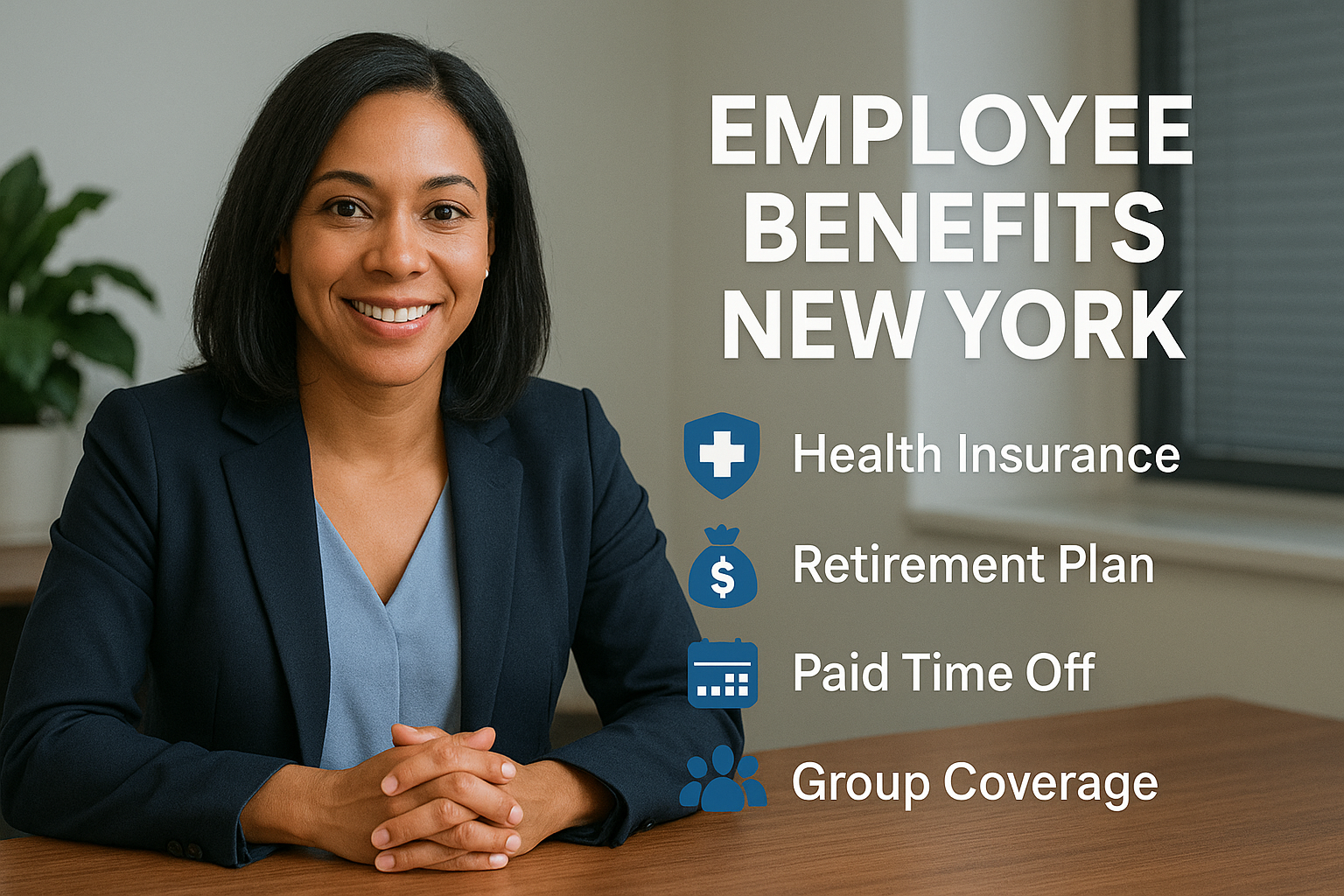
Design a New York benefits program employees actually use—medical, dental, vision, life/AD&D, STD/LTD, and HSA/HRA/ICHRA/QSEHRA—while aligning with New York’s small-group 1–100 rules, state continuation, and leave programs. We compare carriers, networks, and funding models (fully-insured vs. level-funded/ASO vs. ICHRA), then handle onboarding, payroll deductions, and renewals. If you’re searching “near me,” our local/virtual help covers the metros listed below.
| Topic | What to know |
|---|---|
| Small employer (NY) | New York small group is 1–100 employees for medical rating and market rules. |
| Waiting period (federal) | Employer plan waiting periods may not exceed 90 days. |
| State continuation (mini-COBRA) | New York continuation can extend coverage to a total of up to 36 months (including/after federal COBRA where applicable) on insured policies. |
| Telehealth coverage | New York law requires coverage for telehealth services on many insured plans; exact payment parity and modality rules depend on program/plan type. |
| Paid Family Leave (PFL) | NY Paid Family Leave is employer-facilitated and employee-funded via payroll deductions; 2026 contribution rate and cap are published annually by the state. |
| Disability Benefits Law (DBL) | Most NY employers must provide statutory short-term disability benefits (off-the-job) via an authorized carrier or self-insurance. |
| Effective dates | Groups can start any month; carriers set initial and annual open-enrollment processes. |
| Primary action | Start your group quote • Last updated: |
Notes: State insurance mandates generally apply to insured plans. Self-funded (ERISA) plans follow federal rules unless they opt to mirror state provisions.
We’ll map your workforce (locations, networks, risk tolerance) and compare total-year cost projections—not just month-one premiums.
| Option | How it works | Best for | Consider |
|---|---|---|---|
| Fully-insured (HMO/EPO/PPO/HDHP) | Predictable premiums; robust local networks; HDHP pairs with HSA. | Employers seeking stability and simpler admin. | Less claims transparency; renewal adjustments. |
| Level-funded / ASO | Claims-based funding with stop-loss; potential surplus refunds. | Groups with steady risk and good participation. | Variable costs; needs solid compliance/reporting. |
| ICHRA | Employer sets tax-free allowance; employees buy individual coverage. | Multi-site or variable-hour teams; recruiting flexibility. | Member experience depends on local individual market & guidance. |
| QSEHRA | For <50 FTEs without a group plan; reimburse within federal caps. | Very small employers needing predictable budgets. | Annual caps; coordinate with APTC rules & MEC requirements. |
HMO/EPO/PPO/HDHP designs with integrated telehealth (virtual PCP, urgent care, behavioral health). HDHPs pair with HSAs for pre-tax savings.
Dental PPO/DHMO and vision with hardware allowances. Bundling medical+dental+vision may unlock multi-line discounts and single-bill admin.
Employer-paid basic life with buy-up options; STD/LTD to protect income. Consider portability/conversion and pre-existing condition provisions.
HSA, LPFSA/FSA, HRA, ICHRA, and QSEHRA to tune tax efficiency and choice.
Rates reflect region, ages, network, plan design, claims history (where applicable), participation, and contribution strategy. Optimize for total value, not just sticker premium.
| Driver | What influences cost | How to save |
|---|---|---|
| Funding model | Fully-insured vs. level-funded/ASO vs. ICHRA/QSEHRA. | Quote all three; align to risk tolerance & cash flow. |
| Network & design | HMO/EPO vs. PPO; HDHP/HSA and copay vs. coinsurance tiers. | Map members to providers before choosing network. |
| Participation | Minimum enrolled after valid waivers. | Offer employer-paid base + buy-ups to lift take-up. |
| Contribution policy | Employer % or fixed dollar; composite vs. age-banded. | Set simple, equitable rules; audit waivers annually. |
| State programs | PFL & DBL payroll deductions/carrier rates. | Coordinate pay codes & communications to boost understanding and utilization. |
Rules vary by carrier and line of coverage. We’ll verify specifics for your business before setting effective dates.
| Topic | Typical rule | What we verify | Pro tip |
|---|---|---|---|
| Employer size | 1–100 for small-group medical; 101+ large group. | Common-law employees; controlled-group status. | Maintain clean payroll & org docs for underwriting and ACA reporting. |
| Waiting period | Max 90 days from eligibility to enrollment. | Orientation period & measurement/stability for variable-hour staff. | Time eligibility to reduce gaps for new hires while keeping compliance intact. |
| Participation | Carrier minimums after valid waivers. | Eligible vs. ineligible classes; probationary periods. | Use employer-paid base + voluntary buy-ups to lift participation and maintain carrier options. |
| Continuation | NY mini-COBRA can extend total continuation up to 36 months on insured policies. | Which law applies (COBRA vs. state) based on size and plan type. | Provide timely notices; publish a simple off-boarding checklist for HR and employees. |
| PFL & DBL | Employers facilitate PFL and provide DBL. | Carrier setup, payroll codes, posters, and employee notices. | Bundle PFL/DBL with medical admin where possible to simplify onboarding and billing. |
| Effective dates | Usually 1st of month; year-round starts possible. | Binder payment & census completeness. | Align medical+dental+vision renewals for admin ease and simpler employee communication. |
Virtual/local appointments available in:
AZ, AL, TX, CA, NY, OH, FL, NC, VA, GA, OK, NM, IA, KS, MI, NE, SC, SD, WV.
New York’s small-group market applies to employers with 1–100 employees for medical rating and market rules.
Federal COBRA applies to most employers with 20+ employees (generally 18–36 months by qualifying event). On insured policies, NY mini-COBRA can extend total continuation up to 36 months, including months after federal COBRA ends.
Most private employers must provide DBL (statutory short-term disability) and facilitate Paid Family Leave, which is typically employee-funded via payroll deductions with annual state-set rates and caps.
Yes—New York requires coverage of telehealth services on many insured plans. Specific reimbursement and modality rules vary by program/plan (commercial vs. Medicaid, etc.).
Often worth modeling. ICHRA works for any size employer and supports multi-location hiring; QSEHRA suits <50 FTEs that don’t offer group coverage. We’ll compare alongside fully-insured/level-funded options.
Independent agency: Blake Insurance Group LLC compares multiple carriers to align New York group benefits with your workforce and budget.
Brand ownership: All product/brand names are trademarks of their owners. Availability, benefits, and eligibility vary by carrier and state.
Licensing: Licensed insurance producer (NPN 16944666). Licensed in the states listed above.




